Affiliate disclosure: As an Amazon Associate we earn from qualifying purchases. This post contains affiliate links — if you buy through them we may earn a small commission at no extra cost to you. This never affects our recommendations.
As an Amazon Associate we earn from qualifying purchases at no extra cost to you.


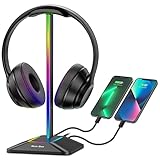


A good gaming headset is an investment — and most people leave it sitting flat on a desk, balanced on a keyboard, or hung off a monitor bezel. That’s how you end up with a cracked headband, tangled cables, and a desk that looks like a cable graveyard. A headset stand fixes all three problems for $25–$80. It keeps your headset off the desk surface, prevents unnecessary stress on the headband padding, and frees up usable workspace. The best ones add a USB hub or RGB lighting as a bonus. The worst ones wobble every time you set your headset down. This guide breaks down the five best gaming headset stands you can buy in 2026 — what they actually do well, where they cut corners, and which one is worth your money for your specific setup.
In a hurry? See the top-rated Gaming Headset Stand deals available right now:
🛒 Check Gaming Headset Stand Prices on Amazon →🛒 Best Price Today on Amazon
Prime members get fast, free shipping on everything above, plus member-only deals. New members get a 30-day free trial — cancel anytime.
Start 30-Day Prime Free Trial →See Today’s Amazon DealsThe 5 Best Gaming Headset Stands in 2026
Corsair ST100 RGB
The Corsair ST100 RGB is the most feature-complete headset stand in this price range, and it earns that reputation with solid build quality rather than just a spec sheet. The stand is constructed from brushed aluminum on the stem and weighted base, which gives it a premium feel that matches high-end gaming setups. It does not tip over when you toss a headset on it — the base is heavy enough that even a forceful one-handed placement does not shift it. The neck is tall enough to accommodate headsets with large ear cups without the cups touching the desk surface, which matters for cans like the Corsair HS80 or SteelSeries Arctis Nova Pro.
The headline feature is the built-in 3-port USB 2.0 hub on the back of the base, plus a 3.5mm audio pass-through on the front. The USB hub is genuinely useful for plugging in a mouse receiver, a USB-A cable, or a small LED controller without reaching behind your PC. The 3.5mm pass-through is a thoughtful touch for setups running analog audio — you can plug desktop speakers or a second headset into the front without rerouting cables. This is not a USB 3.0 hub, so do not plan on doing high-speed file transfers through it, but for accessories it works fine.
The RGB lighting runs along the base in a circular strip. It syncs with Corsair’s iCUE software, so if you are already in that ecosystem, the lighting integrates cleanly with the rest of your peripherals. If you are not using iCUE, the default rainbow cycle is acceptable and can be turned off. The LED strip is diffused well enough that it does not look cheap or overly bright.
Cable management is handled by a small routing channel underneath the base. It is not the most sophisticated solution, but it keeps the USB hub and 3.5mm cables from flopping around. At roughly $50, the ST100 RGB is the benchmark for mid-range headset stands with integrated features.
Pros: Premium aluminum build, USB hub + 3.5mm pass-through, iCUE RGB sync, stable base
Cons: USB 2.0 only, not USB-C, iCUE required for RGB customization
Check Price on Amazon
HyperX Cloud Stand
The HyperX Cloud Stand is the no-nonsense option in this list. There is no USB hub, no RGB, no software — it is a headset stand that holds a headset, and it does that one job well. The base is a wide steel plate that provides genuine stability, and the stem is coated steel rather than plastic. It feels more durable than its $25 price suggests. The mount point at the top is a simple curved hook design that works with virtually any headset, from slim in-ear wrap-arounds to bulky over-ear gaming cans.
HyperX designed this stand specifically with their own Cloud line in mind — the Cloud II, Cloud Alpha, and Cloud III all sit on it naturally — but the universal hook fits third-party headsets without issue. The lack of USB hub is the obvious trade-off, but if your desk already has a USB hub or your PC front panel has accessible ports, this is not a real drawback. The stand is also cleaner to look at because there are no cables attached to it at all.
The rubber feet on the base grip a desk surface firmly and prevent sliding even on smooth glass desk pads. One minor complaint is that the coating on the stem can show fingerprints over time, but a quick wipe with a microfiber cloth handles that. At $25, the HyperX Cloud Stand is the best value headset stand for people who just want something reliable and uncluttered.
Pros: Solid steel build, universal fit, stable weighted base, zero cable clutter, great price

Cons: No USB hub, no RGB, bare-bones by design
ASUS ROG Throne QI
The ASUS ROG Throne QI is the premium tier in this category, and the price reflects it. At around $80, it adds a feature that none of the other stands on this list have: a Qi wireless charging pad built into the base. If you use a phone while gaming — for Discord voice, stream monitoring, or just keeping it within reach — you can drop your phone on the base and keep it charged without adding another cable to your desk. The charging pad supports standard 5W Qi, which is not fast wireless charging, but it keeps a phone topped up during a session.
The stand is built from aluminum with ASUS ROG’s angular design language, so it fits well in aggressive gaming setups with RGB everywhere. Two USB-A 3.0 ports sit on the back of the base, which is an upgrade over the USB 2.0 ports found on competing stands. The USB 3.0 support makes these ports genuinely useful for flash drives and external SSDs, not just accessories. The base is wide and heavy — it does not move.
The RGB lighting is Aura Sync compatible and runs along the base plate. It follows ASUS’s lighting ecosystem cleanly, so if you have an ROG motherboard, monitor, or mouse, the colors sync automatically. The stand also includes a non-QI version (ROG Throne) for about $20 less if you do not need wireless charging.
The ROG Throne QI is overkill for a minimalist setup, but for a high-end ROG or ASUS gaming desk, it pulls together the ecosystem and eliminates a phone charger from the cable situation.
Pros: Qi wireless charging base, USB 3.0 hub, premium aluminum build, Aura Sync RGB
Cons: Expensive at ~$80, ROG aesthetic is not for everyone, Qi charging is slow
Check Price on Amazon
Razer Base Station V2 Chroma
The Razer Base Station V2 Chroma sits between the Corsair ST100 and the ROG Throne in both price and features. At around $60, it offers a three-port USB hub, full Chroma RGB lighting, and a wide aluminum base. The design is classic Razer — black matte base with clean lines and a single non-illuminated “R” logo. It is less flashy than some Razer products, which is actually a plus for setups where the headset stand is meant to blend in rather than compete with the monitors.
The USB hub delivers three USB-A ports, and the cable exits from the back of the base cleanly. Like the ST100’s hub, these are USB 2.0 — fine for accessories, not for data transfer. The Chroma lighting runs in a ring around the base and supports Razer Synapse integration, meaning it can react to in-game events if the game supports Razer Chroma SDK. This is a legitimately fun feature for compatible titles, though it requires Synapse to be running.
Build quality is solid but not exceptional. The aluminum base feels premium, but the stem has some plastic components that feel slightly cheaper than the all-metal Corsair and ASUS options. Stability is good — the base is heavy enough that the stand stays put under normal use. The universal headset hook fits any headset without adjustments.

The Razer Base Station V2 Chroma is the natural choice for Razer ecosystem users already running Synapse. For everyone else, the Corsair ST100 is comparable in features at a lower price.
Pros: Chroma RGB with game integration, 3-port USB hub, clean design, universal fit
Cons: USB 2.0 only, stem has plastic sections, Synapse required for full RGB control
Brainwavz Hengja
The Brainwavz Hengja is the outlier on this list, and for certain setups it is actually the best option. Instead of sitting on your desk, the Hengja clamps to the side of your monitor or the edge of your desk and hangs your headset off of it entirely. This completely frees up desk surface — there is no base footprint at all. For small desks, tight setups, or people who want to maximize usable surface area, this is a genuine advantage.
The clamp mechanism is simple and tool-free. A thumb screw tightens against the back of a monitor panel or a desk edge up to about 35mm thick. It grips firmly without scratching surfaces because the contact points are padded with rubber. The hook itself is powder-coated steel — no flex, no creaking. Installation takes about 30 seconds. The Hengja works on monitor bezels between about 15mm and 35mm thick, which covers most gaming monitors. If your monitor has an unusually thick bezel or a curved edge profile, measure first.
The trade-offs are obvious: no USB hub, no RGB, no weighted stability, and the clamping position is fixed to wherever you mount it. Cable management is entirely on you since there is nothing to route cables through. But the Hengja costs around $25 and lasts indefinitely — it is a piece of bent, coated steel with a screw clamp. There is nothing to break.
For anyone with limited desk space who wants the simplest possible solution, the Brainwavz Hengja is worth considering over any desk-based stand.
Pros: Zero desk footprint, strong clamp grip, universal headset hook, extremely durable, inexpensive
Cons: No USB hub, no RGB, limited to monitor/desk clamp mounting, fixed position
Comparison Table
| Stand | Material | USB Hub | RGB |
|---|---|---|---|
| Corsair ST100 RGB | Aluminum + weighted base | 3x USB-A 2.0 + 3.5mm | Yes (iCUE) |
| HyperX Cloud Stand | Steel | None | No |
| ASUS ROG Throne QI | Aluminum | 2x USB-A 3.0 + Qi | Yes (Aura Sync) |
| Razer Base Station V2 Chroma | Aluminum + plastic stem | 3x USB-A 2.0 | Yes (Chroma) |
| Brainwavz Hengja | Powder-coated steel | None | No |
How to Choose the Best Gaming Headset Stand
Do you need a USB hub? This is the most useful question to ask. If your PC’s front panel ports are occupied or awkwardly positioned, a stand with a built-in hub — the Corsair ST100, ASUS ROG Throne QI, or Razer Base Station V2 — adds real convenience. If you already have a dedicated USB hub on your desk or your ports are accessible, skip it and save money.

Are you tight on desk space? Standard stands with a weighted base require a 4–6 inch diameter footprint on your desk. If that real estate matters, the Brainwavz Hengja eliminates the footprint entirely by clamping to your monitor. This is a niche solution, but it is the right one for compact setups.
Are you already in a lighting ecosystem? RGB stands are only worth the premium if the lighting integrates with software you are already using. Corsair iCUE, Razer Synapse, and ASUS Aura Sync each require their respective software to be running for sync features to work. If you are not in any of those ecosystems, paying extra for RGB on a headset stand is hard to justify — you will end up with a default rainbow cycle that does not match anything else on your desk.
How heavy is your headset? Most premium gaming headsets weigh between 300g and 400g. Any of the steel or aluminum stands on this list handle that comfortably. Where weight matters is with the Brainwavz Hengja — the clamp mount needs to grip securely when a heavier headset swings against it. At the tested weights of common gaming headsets, it holds fine, but verify your headset weight if you own something unusually heavy.
What is your budget? The honest truth is that a $25 stand holds a headset just as well as an $80 stand. The additional cost buys USB hub ports, wireless charging, better RGB, and premium materials. If none of those extras matter to your setup, the HyperX Cloud Stand or Brainwavz Hengja is all you need. Buy up only when a specific feature justifies the price.
Final Verdict
For most gamers, the Corsair ST100 RGB is the best overall headset stand in 2026. It offers the right balance of build quality, practical USB hub functionality, and clean RGB lighting at a price that is not excessive. The 3.5mm pass-through is a thoughtful bonus that other stands skip entirely.
If budget is the priority, the HyperX Cloud Stand is the right choice. It is simple, stable, and well-built for $25 — there is nothing wrong with it, and nothing unnecessary either.
The ASUS ROG Throne QI is worth the premium specifically if you want Qi charging on your desk and are already in the ASUS Aura Sync ecosystem. The USB 3.0 ports are a genuine upgrade over the 2.0 hubs on every competing stand.
The Razer Base Station V2 Chroma is the pick for Razer setups. Synapse users will appreciate the Chroma integration, and the build quality is solid enough to justify the cost.
The Brainwavz Hengja is the best choice for anyone who wants to recover desk space entirely. It does one thing — hold a headset off your desk — and does it without taking up any surface area at all.
A headset stand is not a complex purchase. Pick based on whether you need USB ports, how much desk space you have, and what your budget allows. Any of the five options above will protect your headset and keep your desk cleaner than setting it flat on a surface.
Frequently Asked Questions
Why do I need a gaming headset stand?
A stand keeps your headset off the desk, freeing space, preventing the cable from tangling, and protecting the headband from being squashed. Many also add a tidy display element to a setup.
Do RGB headset stands have extra features?
Many do, combining a stand with RGB lighting, USB hub ports, or even a wireless charging pad. These turn a simple holder into a more functional desk accessory.
Will a headset stand fit my headset?
Most stands use a universal hook design that fits virtually any headset. Just check the stand is sturdy and the base is wide enough not to tip with a heavier headset.
Should a headset stand have a USB hub?
A built-in USB hub is a handy bonus, adding ports within easy reach for drives, dongles, or charging. It is not essential, but it makes the stand more useful.
Related Articles
Looking for more on this topic? Browse the hand-picked guides below — each one applies the same scoring rubric used in this review.