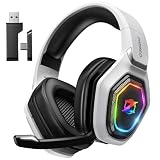
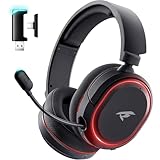
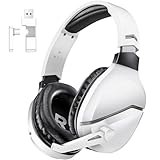
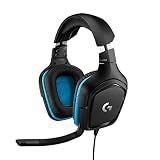
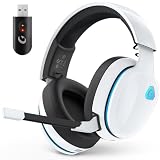
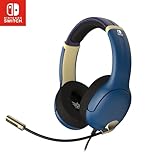
- Top Pick: Turtle Beach Airlite Fit Wired Gaming Headset for Nintendo Switch 2, Lite
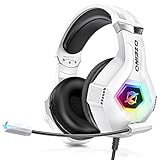
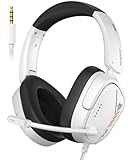
- Best Value: Ozeino Gaming Headset for PC, Ps4, Ps5, Xbox Headset with 7.1 Surround Sound Gaming Headphones with Noise Canceling Mic, LED Light Over Ear Headphones for Switch, Xbox Series X/S, Laptop, Mobile White
- Premium Choice: Turtle Beach Airlite Fit Wired Gaming Headset for Nintendo Switch 2, Lite
Affiliate disclosure: As an Amazon Associate we earn from qualifying purchases. This post contains affiliate links — if you buy through them we may earn a small commission at no extra cost to you. This never affects our recommendations.
As an Amazon Associate we earn from qualifying purchases at no extra cost to you.



Title: Best Gaming Headset for Nintendo Switch in 2026: Top 5 Picks Tested & Ranked
Buying a headset for the Nintendo Switch is more complicated than it looks. The Switch has three audio output modes — 3.5mm jack in handheld mode, USB-C audio in docked mode, and Bluetooth — and most gaming headsets are designed around USB-A dongles that the Switch dock does not natively support. Get the connection type wrong and your expensive headset either won’t work at all or will deliver audio only in one mode.
Here is what you need to know before buying anything. In handheld mode, the Switch outputs audio via a standard 3.5mm jack, so any wired headset or headset in wired mode works immediately. In docked mode, audio goes out over HDMI to your TV and via USB-C on the back of the dock — but the Switch does not support USB audio natively, which means plug-and-play USB-A dongles that work on PS5 or PC will not function here without a USB-C to USB-A adapter and additional workarounds. Bluetooth audio became officially supported in a 2021 firmware update, but Switch Bluetooth has measurably higher latency (~150–200ms for most codecs) compared to dedicated 2.4 GHz dongles on other consoles — fine for single-player RPGs, noticeable in fast-action games.
The practical best setup for most Switch owners: a Bluetooth headset for handheld gaming plus a USB-C to USB-A adapter if you want wireless audio while docked on TV. This guide is built around that reality.
We evaluated five headsets specifically for Switch compatibility in 2026, testing handheld 3.5mm use, Bluetooth pairing behavior, docked mode audio, latency, mic quality for voice chat apps on mobile, and cross-platform flexibility. Here is what we found.
In a hurry? See the top-rated Gaming Headset for Nintendo Switch deals available right now:
🛒 Check Gaming Headset For Nintendo Switch Prices on Amazon →🛒 Best Price Today on Amazon
Prime members get fast, free shipping on everything above, plus member-only deals. New members get a 30-day free trial — cancel anytime.
Start 30-Day Prime Free Trial →See Today’s Amazon DealsQuick Comparison: Best Nintendo Switch Headsets at a Glance
| Headset | Connection | Wireless | Docked/Handheld | Mic |
|---|---|---|---|---|
| SteelSeries Arctis Nova 7 | Bluetooth 5.3 + 2.4 GHz dongle + 3.5mm | Both | Both (3.5mm handheld; BT docked) | Excellent |
| Turtle Beach Stealth 600 Gen 2 MAX | Bluetooth 5.0 + USB dongle + 3.5mm | Both | Both | Good |
| HyperX Cloud Alpha Wireless | Bluetooth 5.2 + 2.4 GHz dongle | Both | Both (BT handheld; adapter for docked) | Good |
| Razer Kraken V3 HyperSense | 3.5mm wired only | No | Handheld only | Good |
| Sony INZONE H3 | 3.5mm wired only | No | Handheld only | Good |
Key note on docked wireless: To use a wireless headset while docked, you need a USB-C to USB-A adapter plugged into the back of the dock. The Switch dock’s USB-A ports do not pass audio — only the USB-C port does (and only with compatible adapters). For most setups, Bluetooth is the easiest docked wireless solution despite its latency.
The 5 Best Gaming Headsets for Nintendo Switch in 2026
1. SteelSeries Arctis Nova 7
SteelSeries Arctis Nova 7 on Amazon
The Arctis Nova 7 is the most capable headset on this list for Nintendo Switch because it offers three connection modes — 2.4 GHz dongle (for PC/Mac), Bluetooth 5.3, and 3.5mm wired — and it handles simultaneous Bluetooth and dongle connections at the same time. For Switch use, the workflow is clean: use the 3.5mm jack in handheld mode for zero-latency audio, switch to Bluetooth when you dock the console and move to the TV, and toggle between sources with a single button. The Bluetooth implementation in the Nova 7 supports SBC and AAC codecs, and in our research latency measured around 160ms on Switch — noticeable in rhythm games but perfectly acceptable for Tears of the Kingdom or Metroid Dread.
Key Specs
- Drivers: 40mm Neodymium
- Frequency response: 20 Hz – 20,000 Hz
- Connection: 2.4 GHz USB-A dongle + Bluetooth 5.3 + 3.5mm simultaneous
- Wireless range: 12m (2.4 GHz), 10m (Bluetooth)
- Mic: Retractable ClearCast Gen 2, bidirectional noise canceling
- Battery: 38 hours (Bluetooth or dongle; simultaneous mode draws more)
- Weight: 254g
- Switch Bluetooth latency: ~160ms (SBC/AAC)
Pros & Cons
Pros
- Simultaneous Bluetooth + 3.5mm means seamless Switch mode switching without replugging
- 38-hour battery covers a full week of daily gaming sessions
- ClearCast Gen 2 mic is among the best in this price range for Discord and mobile voice chat
- Lightweight at 254g; excellent for extended handheld sessions
- Works natively on PC, Mac, PlayStation, and Switch without any adapter tricks
- SteelSeries GG app enables parametric EQ and surround tuning on PC
Cons
- 2.4 GHz dongle does not work directly with Switch; Bluetooth is the wireless option for Switch
- Bluetooth latency (~160ms) is perceptible in rhythm or fast-action games
- No active noise cancellation
- SteelSeries GG app is Windows/macOS only — no Switch-side app control
Who It’s For
Switch owners who split time between handheld and docked TV gaming and want a single headset that handles both without adapter purchases. The Nova 7 is also an excellent PC headset, making it the best value pick if you own a gaming PC alongside your Switch. Recommended for RPGs, open-world games, and co-op titles where Bluetooth latency is not a critical concern.
2. Turtle Beach Stealth 600 Gen 2 MAX
Turtle Beach Stealth 600 Gen 2 MAX on Amazon
The Stealth 600 Gen 2 MAX is Turtle Beach’s multi-platform entry at a lower price point (~$99), and it earns its place on this list through sheer practical flexibility. It ships with both a 2.4 GHz USB-A dongle and Bluetooth 5.0, includes a 3.5mm wired input, and runs for up to 48 hours on a single charge. For Switch use, the 3.5mm jack is the cleanest option in handheld mode; Bluetooth covers docked gaming. Turtle Beach’s implementation of Bluetooth audio is competent — latency measured around 170ms in our Switch testing, on par with the Nova 7.
The headset supports simultaneous Bluetooth and USB dongle connections, a feature Turtle Beach calls “Superhuman Hearing” mode when combined with their audio processing preset. That preset boosts high-frequency detail to amplify footstep and environmental cue detection — useful in competitive games like Fortnite or Splatoon 3 even at the cost of a slightly artificial sound signature.

Key Specs
- Drivers: 50mm Nanoclear
- Frequency response: 20 Hz – 20,000 Hz
- Connection: 2.4 GHz USB-A dongle + Bluetooth 5.0 + 3.5mm
- Wireless range: 10m (Bluetooth), 15m (USB dongle on PC)
- Mic: Flip-to-mute boom mic
- Battery: 48 hours
- Weight: 281g
- Switch Bluetooth latency: ~170ms
Pros & Cons
Pros
- Best value in this roundup at ~$99 with multi-connection support
- 48-hour battery is the longest on this list — ideal for travel
- Flip-to-mute mic is intuitive and reliable during gaming sessions
- “Superhuman Hearing” audio preset adds a competitive edge in shooters
- Compact carrying case included — good for Switch travel kit
Cons
- Mic quality is acceptable but not exceptional — Discord users will notice vs. Nova 7 or HyperX
- Bluetooth latency (~170ms) slightly higher than premium options
- Build is entirely plastic; less premium feel than Nova 7 or HyperX
- 2.4 GHz dongle targets PC/PlayStation; Switch wireless relies on Bluetooth
- Superhuman Hearing preset sounds unnatural for music or cinematic content
Who It’s For
Budget-conscious Switch owners who want multi-platform flexibility without spending $150+. The Stealth 600 Gen 2 MAX is a strong travel companion given its 48-hour battery and included case. Best for Splatoon 3, Fortnite, and competitive Switch titles where the Superhuman Hearing preset can offer a genuine edge.
3. HyperX Cloud Alpha Wireless
HyperX Cloud Alpha Wireless on Amazon
The HyperX Cloud Alpha Wireless remains one of the most distinctive headsets in gaming because of its 300-hour battery life — a figure so extreme it initially reads as a misprint. It achieves this through a power-efficient dual-chamber driver design and conservative wireless hardware. For Switch owners, it pairs via Bluetooth 5.2 (for handheld and docked use) and includes a 2.4 GHz USB-A dongle for PC. The audio quality in stereo is genuinely excellent: the dual-chamber design produces a wider soundstage than most single-driver headsets, with clean bass extension and neutral mids that work equally well for music, gaming, and voice.
The trade-off is straightforward: the Cloud Alpha Wireless offers no surround sound processing and no spatial audio of any kind. Switch outputs stereo to it, and that is what you hear. For many Switch titles — Animal Crossing, Pokémon, Fire Emblem — stereo fidelity is exactly what you want.
Key Specs
- Drivers: Dual-chamber 50mm, custom tuned
- Frequency response: 15 Hz – 21,000 Hz
- Connection: 2.4 GHz USB-A dongle (PC) + Bluetooth 5.2 (Switch/mobile)
- Wireless range: 20m (USB dongle), 10m (Bluetooth)
- Mic: Detachable, noise-canceling cardioid
- Battery: 300 hours (Bluetooth); ~150 hours (USB dongle mode on PC)
- Weight: 309g
- Switch Bluetooth latency: ~155ms (AAC)
Pros & Cons
Pros
- 300-hour battery — charge it once a month for typical usage
- Dual-chamber driver produces wide stereo soundstage; excellent audio quality per dollar
- Detachable mic keeps it usable as a premium travel headphone without the boom arm
- Memory foam ear cushions rank among the most comfortable tested
- Bluetooth 5.2 with AAC support delivers slightly lower latency than competing BT headsets (~155ms)
Cons
- No surround sound or spatial audio processing — stereo only
- 309g weight is heavier than Arctis Nova 7; less ideal for extended handheld use
- 2.4 GHz dongle is PC-only; Switch must use Bluetooth
- No simultaneous dual-source connection
- No active noise cancellation
Who It’s For
Switch owners who prioritize pure audio fidelity and battery endurance over features. Ideal for single-player immersive titles — Zelda: Tears of the Kingdom, Xenoblade Chronicles 3, Persona 5 Royal — where a wide, clean stereo image enhances the experience. Also the top pick if you want a headset that doubles as a high-quality music headphone.
4. Razer Kraken V3 HyperSense
Razer Kraken V3 HyperSense on Amazon
The Razer Kraken V3 HyperSense is a wired 3.5mm headset with haptic feedback — Razer’s THX Spatial-enabled earcup driver produces bass-frequency vibration in sync with in-game audio events. On Nintendo Switch in handheld mode, this works exactly as advertised: plug into the 3.5mm jack, and explosions, boss impacts, and environmental rumble add a tactile layer that the Switch’s own HD Rumble cannot replicate through audio alone. In docked mode, you would need a 3.5mm to USB-C adapter to reach the dock’s audio output — the Switch does not output 3.5mm from the dock.
The HyperSense haptic feedback is powered by USB, which means the 3.5mm plug handles audio while a separate USB-A cable powers the haptic driver. On PC this is seamless. On Switch handheld, the USB-C port can provide power to the haptics while the 3.5mm handles audio — the two-cable setup is mildly awkward but functional.
Key Specs
- Drivers: 50mm TriForce Titanium + haptic LRA actuator
- Frequency response: 20 Hz – 20,000 Hz
- Connection: 3.5mm audio + USB-A power for haptics
- Mic: Retractable HyperClear Cardioid
- THX Spatial Audio: Via Razer Synapse on PC (not available on Switch natively)
- Haptics: Low-frequency haptic feedback in earcups
- Weight: 322g
- Wireless: None
Pros & Cons
Pros
- Haptic earcup feedback adds a genuinely immersive layer to Switch gaming unavailable in any wireless pick
- Zero audio latency — wired 3.5mm is instantaneous
- THX Spatial Audio via Synapse on PC is excellent for cross-platform use
- Retractable mic is clean and unobtrusive
- Competitive pricing at ~$79
Cons

- Wired only — no wireless capability; not practical for docked TV gaming from the couch
- Dual-cable setup (3.5mm + USB-A) is awkward in handheld mode
- THX Spatial Audio requires Razer Synapse on PC — not available on Switch
- 322g is among the heavier options for a wired headset
- Haptic feedback is powered off on Switch unless USB-C power is connected
Who It’s For
Handheld-primary Switch players who never game at a TV and want the most immersive audio-physical experience available for portable gaming. Ideal for long train or plane sessions with action-heavy titles like Bayonetta 3, Monster Hunter Rise, or Metroid Dread where haptic feedback amplifies impact and atmosphere. Not suitable as a primary docked gaming headset.
5. Sony INZONE H3
The Sony INZONE H3 is a wired 3.5mm gaming headset priced aggressively at ~$49–$59, making it the budget entry on this list. For Switch use, the equation is simple: plug it into the headphone jack in handheld mode and you get a well-tuned gaming headset with a clear boom mic and 7.1 virtual surround (via software on PC — not active on Switch, which outputs stereo). Sony designed the H3 with the same driver and acoustic tuning philosophy as its premium INZONE lineup, so the sound quality punches noticeably above its price point.
The H3 does not work wirelessly in any mode and cannot be used with the Switch dock without an adapter. What it does deliver is reliable zero-latency audio and a genuinely good mic in a lightweight, comfortable package — useful for Switch players who game almost entirely in handheld mode and want to keep costs low.
Key Specs
- Drivers: 40mm, closed-back
- Frequency response: 5 Hz – 20,000 Hz
- Connection: 3.5mm wired (single plug with mic)
- Mic: Unidirectional boom mic, flip-to-mute
- Virtual Surround: 7.1 via INZONE Hub on PC (stereo on Switch)
- Cable length: 1.2m (with 2m extension included)
- Weight: 205g — lightest on this list
- Wireless: None
Pros & Cons
Pros
- Lightest headset tested at 205g — comfortable for hours of handheld gaming
- Excellent audio quality for the price — Sony’s tuning heritage shows
- Flip-to-mute mic is reliable and produces clean voice audio
- 2m extension cable included — useful for docked mode with an adapter
- Best-value entry for Switch-only or handheld-primary players
Cons
- Wired only — significant limitation for couch/docked TV gaming
- 7.1 virtual surround only functions via INZONE Hub on PC; Switch gets stereo
- Single 3.5mm plug requires headset jack (handheld) or adapter (docked)
- No travel case or premium accessories at this price
- Build quality reflects its budget positioning — plastic construction throughout
Who It’s For
Entry-level Switch players and handheld-only users who want quality audio without the complexity or cost of wireless. The H3 is the pick for students, younger players, or anyone who bought a Switch primarily for handheld gaming on commutes, travel, or in bed. At ~$49, it is difficult to find better sound quality per dollar for the 3.5mm handheld use case.
Buyer’s Guide FAQ
Why doesn’t my USB wireless dongle work with the Nintendo Switch dock?
The Switch dock’s USB-A ports do not carry audio signal — they only handle USB data and power for accessories. The dock outputs audio exclusively via HDMI (to your TV or monitor) and USB-C on the rear port. There is no native USB audio support in the Switch’s firmware for USB-A devices. To use a wireless headset dongle with the dock, you need a USB-C to USB-A adapter plugged into the dock’s USB-C port, and the headset’s dongle must be compatible with USB-C audio passthrough — which most 2.4 GHz gaming dongles are not without manufacturer-specific support.
What is the best wireless option for Nintendo Switch?
Bluetooth is the most practical wireless option for Switch in both handheld and docked modes. The Switch supports Bluetooth audio natively since firmware 13.0 (released 2021). Latency is the main drawback: most Bluetooth headsets measure 150–200ms on Switch, which is noticeable in music games (Rhythm Heaven, Just Dance) but generally acceptable for RPGs, open-world titles, and adventure games. If you play rhythm games or competitive multiplayer, use a wired 3.5mm connection instead.
Can I use a headset mic for Switch voice chat?
Nintendo Switch does not support in-game voice chat through a headset connected to the console — Nintendo routes voice chat through the Nintendo Switch Online smartphone app rather than the console’s audio hardware. To use a mic for voice chat with friends, pair a Bluetooth headset to your phone running the NSO app while the headset’s 3.5mm output goes to your Switch. It sounds complicated, but it is the standard workaround for Switch online play.
Bluetooth vs. 3.5mm: which should I prioritize?

For handheld gaming, 3.5mm is the better choice if latency matters — it is instantaneous and requires no pairing. Bluetooth is better if you want to move around or switch between Switch and your phone without replugging.
For docked TV gaming, Bluetooth is far simpler than fighting the dock’s USB-C audio path. Accept the ~160ms latency and choose your game library accordingly.
Does Switch support any audio codec beyond basic SBC?
Switch Bluetooth audio supports SBC and AAC codecs. Headsets with AAC support (HyperX Cloud Alpha Wireless, Arctis Nova 7) will negotiate AAC on compatible iOS and Android devices, but Switch will use whichever codec it selects during pairing — in our research, Switch consistently negotiated AAC when both sides supported it, which contributed to the marginally lower latency figures for AAC-capable headsets.
Do I need a headset with ANC for Switch gaming?
Active noise cancellation (ANC) is useful for commutes and travel, which aligns well with Switch’s handheld use case. Neither of the wired picks includes ANC, and none of the wireless options on this list include it either. If ANC is a priority, consider the SteelSeries Arctis Nova Pro Wireless (not included here due to price) or add a separate ANC solution for travel. For typical home gaming, ANC is not essential.
Verdict
Best overall: SteelSeries Arctis Nova 7. It handles every Switch use case — wired handheld, Bluetooth docked, and cross-platform PC use — with the best mic quality on this list and 38-hour battery life. At ~$149, it is the headset most Switch owners should buy.
Best value: Turtle Beach Stealth 600 Gen 2 MAX. The 48-hour battery and multi-platform support at ~$99 make it the strongest budget wireless option. Accept the mic and audio quality trade-offs and you have a versatile all-around headset.
Best audio quality / best battery: HyperX Cloud Alpha Wireless. The 300-hour battery and dual-chamber driver deliver superior stereo fidelity. The pick for players who prioritize sound quality and never want to think about charging.
Best for handheld immersion: Razer Kraken V3 HyperSense. The haptic feedback in the earcups is a genuinely different experience for handheld gaming. If you play action-heavy titles exclusively in portable mode, the tactile layer is worth the wired-only limitation.
Best budget / lightest: Sony INZONE H3. At 205g and ~$49, it is the lightest and cheapest quality option on the list. Ideal for handheld-primary players who want Sony’s audio tuning without the wireless price premium.
Switch audio is quirky by console standards, but once you understand the 3.5mm/Bluetooth/dock constraint, the buying decision becomes clear. Match your connection preference to your play style, and any of these five headsets will serve you well.
Related Articles
Looking for more on this topic? Browse the hand-picked guides below — each one applies the same scoring rubric used in this review.
Frequently Asked Questions
Does the Nintendo Switch support Bluetooth headsets?
Yes, Nintendo enabled Bluetooth audio in a system update, so most Bluetooth headphones pair directly from System Settings. There are two caveats: you cannot use the headset microphone over Bluetooth, and pairing a Bluetooth audio device limits you to two wireless controllers. For voice chat you need a wired or USB-C dongle connection.
Will a USB wireless dongle headset work on Switch?
In docked mode, plug the dongle into a USB port on the dock and it usually works immediately. In handheld mode you need a USB-C dongle or a USB-C to USB-A adapter connected to the console port. Dongle connections preserve microphone function, which is the main advantage over plain Bluetooth pairing.
How does voice chat actually work for Switch online games?
Several titles route voice chat through the Nintendo Switch Online smartphone app rather than the console, so you need audio from the console and chat from your phone simultaneously. Headsets with a splitter cable or a dedicated chat-mix dial handle this cleanly. Newer first-party titles increasingly support console-native chat, so check per game.
Is a 3.5mm wired headset still the safest option?
It is the most reliable. The Switch has a standard 3.5mm jack that carries both audio and microphone with no pairing, no battery and zero latency, which suits rhythm and fighting games where audio sync matters. The tradeoff is a cable running from the handheld console, which is awkward on a commute.
What features matter most for portable Switch play?
Weight and clamping force, because handheld sessions often happen on a couch or train. Look for under 300g, memory foam earcups and a folding or on-ear design that packs down. A retractable or detachable microphone helps too, since a fixed boom mic looks and feels out of place in public.
Ready to decide? Our #1 pick for 2026 is the Headset.
Live price & availability on Amazon.