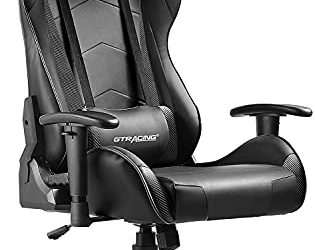
Ergonomics in a gaming chair is not a styling label. It is a short list of adjustments you can verify on a spec sheet: a lumbar support that moves to where your lower back actually curves, armrests that meet your elbows at desk height, a seat whose depth leaves a small gap behind your knees, and a recline and tilt system you can lock at a working angle instead of only flopping backward. Every chair below was chosen because its maker publishes those figures, and every figure in the Specs blocks comes from the maker’s published specifications or the Amazon listing for that exact model. Where a chair cuts a corner — a fixed lumbar arch, 2D armrests instead of 4D — that is stated plainly so you can weigh it yourself.


Disclosure: As an Amazon Associate we earn from qualifying purchases.
If you want the wider field before narrowing down, the roundup of the best gaming chairs for 2026 covers more models and styles; this page focuses only on the chairs whose ergonomic adjustments hold up on paper.
1. Secretlab TITAN Evo (Regular, SoftWeave Plus Fabric) — Built-In Lumbar That Adjusts Two Ways
The TITAN Evo’s L-ADAPT lumbar support is built into the backrest and adjusts for both height and depth, so the support moves to your back instead of relying on a strap-on pillow staying in place. The armrests are full-metal 4D units with replaceable CloudSwap tops, and the multi-tilt mechanism locks the recline anywhere in its published range. Secretlab sells the chair in three sizes; the figures below are the maker’s for the Regular size, which the maker recommends for users from 5’7″ to 6’2″ and under 220 lb.
Specs
- Lumbar support: built-in 4-way L-ADAPT, adjustable for height and depth
- Armrests: full-metal 4D, CloudSwap replaceable tops
- Recline: 85–165 degrees, multi-tilt mechanism with tilt lock
- Seat height: 17.7–20.5 in; seat width: 18.5 in; seat depth: 19.3 in
- Frame: steel frame, ADC12 aluminum alloy wheelbase, Class 4 hydraulic piston
- Cushioning: cold-cure foam, magnetic memory foam head pillow included
- Maker recommended fit (Regular): 5’7″–6’2″, under 220 lb
- ASIN: B0B3RH59X8
Best for: desk-first players who want the lumbar depth and height dialed in independently, and who sit upright for work as much as they recline for play.
2. AndaSeat Kaiser 3 XL — The Deep-Seat Pick for Taller Users
The Kaiser 3 XL pairs a built-in 4-way adaptive lumbar — AndaSeat publishes 3.0 in of up-down travel and 1.18 in of in-out travel — with magnetic 4D armrests and a wide, deep seat. It is the largest chair on this page: AndaSeat recommends the XL for users from 5’11” to 6’9″ and publishes a recommended weight range of 175–395 lb. A magnetic memory foam neck pillow is included.
Specs
- Lumbar support: built-in 4-way adaptive, 3.0 in up-down and 1.18 in in-out travel (maker figures)
- Armrests: magnetic 4D MagSwap
- Recline: 90–165 degrees, multi-function tilt mechanism
- Seat depth: 19.29 in (49 cm); item weight: 70.6 lb
- Frame: steel frame, aluminum 5-star wheelbase
- Upholstery: DuraXtra PVC leather (this listing) or EverSoft linen fabric
- Maker recommended fit (XL): 5’11″–6’9″, 175–395 lb
- ASIN: B0B351YTS8
Best for: taller and broader users who bottom out standard seats, and who want lumbar travel figures published rather than implied.
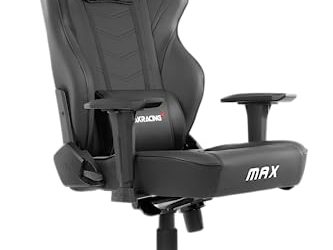
3. noblechairs HERO (Black, PU Faux Leather) — Modest Recline, Serious Structure

The HERO takes a different trade: its backrest reclines only to 125 degrees, the narrowest range here, but the lumbar support is integrated into the backrest and adjustable, the frame is solid steel on an aluminum base, and noblechairs publishes a full dimension sheet — useful if you are fitting the chair to a specific desk and body. A velour cushion set is included.
Specs
- Lumbar support: integrated, adjustable via dial in the backrest
- Armrests: 4D (height, depth, width, angle)
- Recline: 90–125 degrees, plus an 11-degree rocking tilt mechanism
- Seat height: 18.3–21.5 in (46.5–54.5 cm); seat depth: 18.9 in (48 cm); seat width: 20.5 in outer (52 cm)
- Frame: solid steel frame, 5-point aluminum base, Class 4 gas lift
- Cushioning: cold foam upholstery, premium cushion set included
- Maker maximum user weight: 150 kg (330 lb)
- ASIN: B07DCP3JJH
Best for: users who work mostly upright, want a firmer and more structured seat, and do not need a deep recline for console sessions.
4. Corsair TC100 RELAXED (Leatherette, Black) — Wide Seat, Pillow-Based Lumbar

The TC100 RELAXED uses a repositionable lumbar pillow rather than a built-in mechanism, which is simpler and lets you place the support exactly where you feel it, though it can shift as you move. The seat is the widest-feeling design here per Corsair’s published dimensions, with relaxed bolstering, and Corsair publishes a maximum user height of 188 cm (6’2″) and a maximum weight of 120 kg (264 lb).
Specs
- Lumbar support: adjustable lumbar pillow (repositionable), detachable memory foam neck pillow included
- Armrests: 2D adjustable
- Recline: 90–150 degrees (Amazon listing figure)
- Seat width: 21.2 in (54 cm); seat depth: 19.7 in (50 cm); seat height: 45–55 cm, 10 cm Class 4 gas lift range
- Frame: steel seat frame, nylon base
- Upholstery: plush leatherette (this listing) or soft fabric
- Maker fit figures: maximum height 188 cm (6’2″), maximum weight 120 kg (264 lb)
- ASIN: B0BN6RRD5V
Best for: users who prefer a wide, relaxed seat and pillow-style support they can reposition, and who do not need 4D armrests.
5. Razer Iskur V2 X (Black, Fabric) — Fixed Lumbar Arch, Honest Trade-Off

The Iskur V2 X is included as the simpler end of the ergonomic scale, with one clear caveat: its lumbar support is a built-in arch that does not adjust. What does adjust is the seat height, the recline to 152 degrees, and the 2D armrests. Razer’s widened seat base with reduced edges and contoured high-density foam suit users who sit centered and cross-legged less, and the plush fabric finish breathes better than leatherette in warm rooms. If adjustable lumbar is your reason for shopping, choose one of the chairs above instead.
Specs
- Lumbar support: built-in lumbar arch, integrated and non-adjustable
- Armrests: 2D (height adjustment, inward/outward rotation)
- Recline: up to 152 degrees
- Seat: widened seat base with reduced edges, contoured high-density foam cushions
- Upholstery: plush multi-layered fabric
- Frame: metal (listing figure)
- Dimensions: 27.58 x 27.58 x 49.64 in; item weight: 50.3 lb; maximum weight recommendation: 299 lb (listing figures)
- ASIN: B0DP5SY554
Best for: users who want a shaped, supportive backrest without any lumbar dials to manage, and who value fabric upholstery over leatherette.
How to Choose: The Four Adjustments That Matter
Lumbar type. Built-in adjustable systems (TITAN Evo, Kaiser 3, HERO) hold their position and tune depth, which matters if your lower back curve sits high or low. A repositionable pillow (TC100 RELAXED) is flexible but can migrate during a session. A fixed arch (Iskur V2 X) fits only the backs it was shaped for — check the maker’s recommended height range carefully.
Armrests. 4D armrests (height, depth, width, angle) let you bring the pad under your elbow whether you type, use a controller, or sit back. 2D armrests adjust height and rotation only; they work when your desk height already suits you, and leave a gap when it does not.
Seat dimensions. Aim for a seat depth that leaves roughly two to three fingers of space between the seat edge and the back of your knees. Deeper seats (Kaiser 3 XL, TC100) suit longer thighs; shallower seats suit shorter users. Compare the maker’s seat height range against your desk: your feet should rest flat with your elbows near a right angle at the desk surface.
Tilt and recline range. A wide recline range is only ergonomic if the mechanism locks. Chairs with multi-tilt or tilt lock (TITAN Evo) hold a working angle around 100–110 degrees; a narrow range like the HERO’s 125 degrees is fine for desk work and short breaks, less so for leaned-back controller play.
Capacity figures. User height and weight figures in the Specs blocks are the makers’ published recommendations, printed as given. Treat them as fit guidance, not guarantees, and size up a chair rather than down when you sit near a limit.
Setup Configurations by Need
Focused desk work and competitive play (upright). Set seat height so your feet rest flat and your thighs sit roughly level. Bring the armrests to just under your elbows with your shoulders relaxed, set the lumbar depth to fill the small of your back without pushing you forward, and lock the recline near 100–110 degrees. Place the monitor about an arm’s length away with the top of the screen at or slightly below eye level, and keep the desk height such that your forearms stay parallel to the floor.
Leaned-back controller or video sessions. Recline to roughly 120–135 degrees, angle the armrests inward to support your forearms holding a controller, and add a footrest or low foot support so your feet are not dangling — dangling feet pull on the lower back and undo the lumbar setting. Raise or tilt the screen so your neck stays neutral rather than craning down.
Tall users at a standard desk. Choose a deep-seat model (Kaiser 3 XL) and set the seat high enough that your knees sit at or below hip level. If that height leaves your feet light on the floor or lifts your elbows above the desk, raise the desk if it adjusts, or add a firm foot support and armrest height to match — do not solve a height mismatch by perching on the seat edge.
Warm rooms and long work-from-home days. Fabric upholstery (the TITAN Evo listing here, or the Iskur V2 X) sheds heat better than leatherette. Keep the recline locked slightly past upright for calls, the lumbar depth moderate rather than maximum, and stand or walk briefly between sessions — no chair adjustment substitutes for moving.
Verdict
For most desk setups, the Secretlab TITAN Evo is the most complete ergonomic package here: two-way adjustable built-in lumbar, 4D metal armrests, and a tilt mechanism that locks where you work. Taller users should go straight to the AndaSeat Kaiser 3 XL for its deeper seat and published fit range, while the noblechairs HERO suits upright workers who prefer a firmer, narrower-recline chair. The Corsair TC100 RELAXED is the pick for a wide seat and simple pillow support, and the Razer Iskur V2 X is a reasonable fabric option only if a fixed lumbar arch matches your back — its own spec sheet is honest about that limit, and so is this guide.