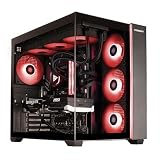
- Top Pick: STORMCRAFT Falcon Prebuilt RTX 5070 Gaming PC,R7 7800X3D,32GB DDR5,1TB SSD
- Best Value: ARCTIC Freezer 34 Esports – Tower CPU Cooler with BioniX P-Series case Fan, 120 mm PWM Fan, for Intel and AMD Socket – Yellow
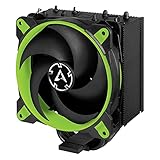
- Premium Choice: ARCTIC Freezer 34 Esports – Tower CPU Cooler with BioniX P-Series case Fan, 120 mm PWM Fan, for Intel and AMD Socket – Green
🛒 Best Price Today on Amazon
Prime members get fast, free shipping on everything above, plus member-only deals. New members get a 30-day free trial — cancel anytime.
- Top Esports Cpus Picks for 2026
- Best Esports CPUs at a Glance
- 1. AMD Ryzen 5 5600X 6-core, 12-thread Unlocked Desktop Processor
- 2. AMD Ryzen 7 5800X 8-core, 16-thread Unlocked Desktop Processor
- 3. AMD Ryzen 7 5700X 8-Core, 16-Thread Unlocked Desktop Processor
- 4. AMD Ryzen 5 5500 6-Core, 12-Thread Unlocked Desktop Processor
- 5. AMD Ryzen 7 5700G 8-Core, 16-Thread Desktop Processor with Radeon Graphics
- 6. Intel Core i5-9600K Desktop Processor 6 Cores up to 4.6 GHz, LGA1151
- How to Choose an Esports CPU
- Frequently Asked Questions
- Related Guides
- Related Articles
Top Esports Cpus Picks for 2026
Here are our current top esports cpus picks, compared on real Amazon owner reviews, price, and features. Live prices update below.
As an Amazon Associate we earn from qualifying purchases at no extra cost to you.



Esports is a different game from cinematic single-player titles, and it asks different things of your CPU. Competitive shooters, MOBAs and battle royales run at low graphical settings and target the highest possible frame rates at 1080p, where the processor — not the GPU — is often the bottleneck. That means the ideal esports CPU prizes high clock speeds and fast cache to push frames as quickly as possible, with enough cores to handle the game plus background apps like Discord, a browser and overlays. This guide rounds up the best esports CPUs in 2026, focused on chips that deliver high, consistent frame rates for competitive play without overspending on cores you will not use.
Our picks were chosen on what genuinely drives competitive frame rates: clock speed, cache, an efficient core count for gaming, and value on a platform you can build around. We have included a deliberate price spread — from a budget six-core around $84 up to capable eight-core chips around $247 — because the best esports CPU is the one that feeds your monitor’s refresh rate without wasting money. The list is AMD-led with one Intel option, and we are honest where a chip leans more toward all-round or productivity use than pure esports. Below is an at-a-glance comparison, then a closer look at each and a buyer’s guide built around the specs that matter for high-FPS competitive gaming.
Best Esports CPUs at a Glance
| CPU | Best For | Standout Spec | Approx Price |
|---|---|---|---|
| AMD Ryzen 5 5600X | Best all-round esports value | 6 cores, high boost clock | around $180 |
| AMD Ryzen 7 5800X | High-FPS with headroom | 8 cores, high clocks | around $210 |
| AMD Ryzen 7 5700X | Cool, efficient 8-core | 8 cores, lower TDP | around $250 |
| AMD Ryzen 5 5500 | Tightest esports budget | 6 cores, value pick | around $84 |
| AMD Ryzen 7 5700G | iGPU backup + CPU power | 8 cores, Radeon graphics | around $210 |
| Intel Core i5-9600K | Intel platform option | 6 cores, up to 4.6 GHz | around $170 |
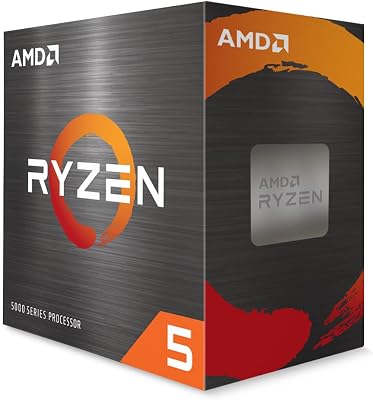
1. AMD Ryzen 5 5600X 6-core, 12-thread Unlocked Desktop Processor

AMD Ryzen 5 5600X 6-core, 12-thread unlocked desktop processor with Wraith Stealth cooler

As an Amazon Associate we earn from qualifying purchases. Product prices and availability are accurate as of the date/time indicated.
The AMD Ryzen 5 5600X is the all-round esports value champion and the best starting point for most competitive players. It is a six-core, twelve-thread chip with high boost clocks and a healthy cache, the combination that matters most for pushing frame rates in fast-paced titles. At around $180, and with a bundled Wraith Stealth cooler, it is a complete, well-priced foundation for an esports build.
For competitive gaming, the 5600X is squarely in its element. Esports titles lean on a few fast cores rather than many slow ones, and this chip’s strong single-thread performance and quick cache feed high refresh-rate monitors exactly the way 1080p competitive play demands. Six cores and twelve threads comfortably run the game alongside Discord, a browser and a stream overlay. For the player who wants high, consistent frame rates without paying for cores they will not use, the 5600X is the obvious, value-leading pick.
Pros: High boost clocks, fast cache, six cores ideal for esports, bundled cooler, great value.
Cons: Six cores is fewer than the 8-core picks for heavy multitasking.
2. AMD Ryzen 7 5800X 8-core, 16-thread Unlocked Desktop Processor


As an Amazon Associate we earn from qualifying purchases. Product prices and availability are accurate as of the date/time indicated.
The AMD Ryzen 7 5800X is the high-FPS pick with headroom to spare. It steps up to eight cores and sixteen threads while running high clock speeds, giving you the fast cores esports rewards plus extra muscle for streaming, recording or heavier multitasking. At around $210 it is the natural upgrade for players who want competitive frame rates and more.
In competitive titles the 5800X’s high clocks and cache push frames just as eagerly as the 5600X, while the two extra cores give it a clear advantage when you are doing more than gaming — broadcasting to Twitch, capturing clips, or running demanding background apps without dropping frames. It is an unlocked chip on the AM4 platform, so there is overclocking headroom for enthusiasts. For the competitive player who also streams or wants future-proof multitasking alongside top-tier 1080p frame rates, the 5800X is the well-rounded high-FPS choice.

Pros: Eight high-clocked cores, excellent for high-FPS gaming plus streaming, unlocked.
Cons: Runs warmer and needs a cooler (none bundled); pricier than the 5600X.
3. AMD Ryzen 7 5700X 8-Core, 16-Thread Unlocked Desktop Processor

As an Amazon Associate we earn from qualifying purchases. Product prices and availability are accurate as of the date/time indicated.
The AMD Ryzen 7 5700X is the cool, efficient eight-core pick. It delivers the same eight-core, sixteen-thread layout as the 5800X at a lower TDP, running cooler and quieter while still offering strong clocks and cache for gaming. At around $250 it is positioned for players who want eight cores with easy thermals.
For esports, the 5700X gives you the high frame rates fast cores and cache provide, with the bonus of running cool enough to pair happily with a modest air cooler — handy for a quiet, tidy competitive rig. The eight cores handle the game plus streaming and background tasks with room to spare, and it is unlocked on AM4 for tuning. It trades a little peak clock for lower heat compared with the 5800X. For the player who wants eight efficient cores, cooler operation and solid high-FPS performance, the 5700X is a smart, level-headed choice.
Pros: Eight efficient cores, lower TDP runs cool and quiet, strong gaming clocks, unlocked.
Cons: Highest price here; slightly lower peak clocks than the 5800X.
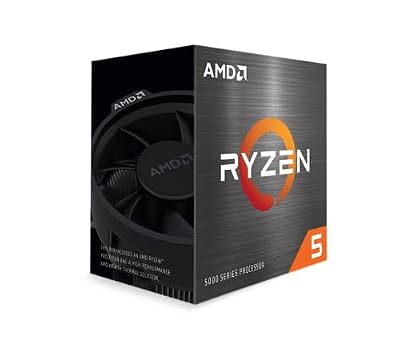
4. AMD Ryzen 5 5500 6-Core, 12-Thread Unlocked Desktop Processor

AMD Ryzen 5 5500 6-Core, 12-Thread Unlocked Desktop Processor with Wraith Stealth Cooler


As an Amazon Associate we earn from qualifying purchases. Product prices and availability are accurate as of the date/time indicated.
The AMD Ryzen 5 5500 is the tightest-budget esports pick, and remarkable value at around $84 with a bundled Wraith Stealth cooler. It is a six-core, twelve-thread chip that brings competitive-class core counts and respectable clocks to a genuinely affordable price, making high-refresh esports gaming accessible on a shoestring.
For competitive players on a strict budget, the 5500 punches above its cost. Esports titles run at low settings and lean on fast cores, and this chip’s six cores and twelve threads are plenty to drive high frame rates in titles like CS, Valorant and League while keeping Discord and a browser open. One honest note: it has a smaller cache and lacks the PCIe 4.0 support of its siblings, so it trades a little outright performance for its low price. For a wallet-friendly entry into competitive gaming with a free cooler in the box, the 5500 is an outstanding value pick.

Pros: Excellent value, six esports-capable cores, bundled cooler, accessible high-FPS gaming.
Cons: Smaller cache and no PCIe 4.0; trades some performance for the low price.
5. AMD Ryzen 7 5700G 8-Core, 16-Thread Desktop Processor with Radeon Graphics

AMD Ryzen™ 7 5700G 8-Core, 16-Thread Desktop Processor with Radeon™ Graphics


As an Amazon Associate we earn from qualifying purchases. Product prices and availability are accurate as of the date/time indicated.
The AMD Ryzen 7 5700G is the eight-core pick with built-in Radeon graphics, and a versatile choice for an esports build. It combines eight cores and sixteen threads with capable clocks and an integrated GPU, so it can run lighter esports titles on its own iGPU and act as a backup if a dedicated card is unavailable. At around $210 it bundles real flexibility.
For competitive gaming, the 5700G’s CPU side delivers the fast, multi-core performance esports rewards, and the integrated Radeon graphics are a genuine bonus: they can drive popular esports titles at reduced settings without a discrete GPU, which is useful for a starter rig or as insurance. Worth noting honestly, the 5700G uses a smaller cache and offers PCIe 3.0 rather than 4.0, a slight trade for the integrated graphics. For a player who wants eight cores plus the safety net of a built-in GPU for esports, the 5700G is a flexible, well-equipped option.
Pros: Eight cores plus integrated Radeon graphics, can run light esports without a GPU, flexible.
Cons: Smaller cache and PCIe 3.0; iGPU suits light titles, not demanding GPU-bound games.
6. Intel Core i5-9600K Desktop Processor 6 Cores up to 4.6 GHz, LGA1151
Rounding out the list is the Intel Core i5-9600K, the Intel-platform option for esports. It is a six-core chip that boosts up to 4.6 GHz, with the high single-thread clock speed that competitive titles favour, on Intel’s LGA1151 socket. At around $170 it is the choice for a builder committed to or already on an Intel platform.
For esports, the 9600K’s high boost clock is its calling card — fast cores are what push frames in competitive shooters and MOBAs, and this chip delivers them. Six cores handle the game plus background apps, and being unlocked, it offers overclocking headroom on a compatible Z-series board. Honestly, it is an older-generation, six-thread part (no Hyper-Threading), so it is best viewed as a fit for an existing LGA1151 build or a specific Intel preference rather than a fresh platform purchase. For competitive players in the Intel ecosystem who want high clocks for high frame rates, it remains a capable pick.
Pros: High 4.6 GHz boost clock for fast frames, unlocked, fits the Intel LGA1151 platform.
Cons: Older generation with six threads (no Hyper-Threading); platform is end-of-life.
How to Choose an Esports CPU
Choosing a CPU for esports flips the usual priorities. Competitive titles run at low graphical settings to maximise frame rates, which shifts the load from your GPU onto your processor — so the CPU often determines how many frames you see at 1080p. The headline specs to chase are high clock speed and fast cache, because esports engines reward how quickly a few cores can work rather than how many cores you have. That is why high-clocked chips like the Ryzen 5 5600X and the Intel i5-9600K are such natural fits.
Core count is the next decision, and for pure esports you need less than you might think. Six fast cores, as on the 5600X, 5500 and 9600K, are plenty to run a competitive title at high frame rates while keeping Discord, a browser and overlays open. Where the eight-core chips — the 5800X, 5700X and 5700G — earn their premium is multitasking beyond the game: streaming to Twitch, recording clips, or running heavy background apps. Buy six fast cores if you only game, and step up to eight if you broadcast or do more at once.
Platform and value tie the decision together. The AMD picks here sit on the mature AM4 platform, which offers a wide range of affordable boards and is a sensible foundation for a value-focused esports rig; the Intel 9600K uses the older LGA1151 socket, best suited to an existing build or a specific Intel preference rather than a new platform. Watch for chips that bundle a cooler — the 5600X and 5500 include a Wraith Stealth — since that saves money, and factor in whether you will overclock, which the unlocked chips here all allow.
Finally, be honest about a couple of trade-offs the spec sheet hides. The budget Ryzen 5 5500 and the 5700G use a smaller cache and PCIe 3.0 rather than 4.0, so they trade a little outright performance for their price and features; the 5700G’s integrated Radeon graphics are a real bonus for light esports or as a GPU backup, but not a substitute for a discrete card in demanding games. Decide your budget, prioritise high clocks and cache, choose six or eight cores based on whether you stream, and pick the esports CPU on this list that feeds your monitor’s refresh rate best.
Frequently Asked Questions
What specs matter most in a CPU for esports?
High clock speed and fast cache matter most. Competitive titles run at low settings to maximise frame rates, which makes the CPU the limiting factor at 1080p, and esports engines reward how quickly a few fast cores can work. A high-clocked chip like the Ryzen 5 5600X or Intel i5-9600K pushes frames more effectively than a slower CPU with more cores.
How many cores do I need for competitive gaming?
For pure esports, six fast cores like the Ryzen 5 5600X or 5500 are plenty to drive high frame rates while running Discord, a browser and overlays. You only need eight cores, like the 5800X, 5700X or 5700G, if you also stream, record or run heavy background tasks alongside the game. Match the core count to whether you do more than play.
Do I need a discrete graphics card for esports?
For the best frame rates in most competitive titles, yes — a dedicated GPU paired with a fast CPU is ideal. The exception here is the Ryzen 7 5700G, whose integrated Radeon graphics can run lighter esports titles at reduced settings without a discrete card, making it a useful backup or starter option. For demanding games at high refresh rates, add a discrete GPU.
Is an older Intel chip like the i5-9600K still good for esports?
It can be, particularly within an existing Intel LGA1151 build. Its high 4.6 GHz boost clock still pushes frames well in competitive titles, and it is unlocked for overclocking. Be aware it is an older, six-thread part on an end-of-life platform, so for a brand-new build the AM4 Ryzen options generally offer a stronger value and upgrade path.
Related Guides
- Best CPUs for Gaming
- Best Budget CPUs
- Best CPU Coolers
- Best AM4 Motherboards
- Best Gaming Monitors
- Best Gaming PCs
Affiliate Disclosure: As an Amazon Associate, we earn from qualifying purchases. If you click a link and make a purchase, we may earn a small commission at no extra cost to you. Prices and availability are accurate as of publication and may change.