- Top Pick: Samsung SSD 9100 PRO 2TB, PCIe 5.0×4 M.2 2280, Up to 14,700MB/s
- Best Value: Samsung SSD 9100 PRO 1TB, PCIe 5.0×4 M.2 2280, Up to 14,700MB/s
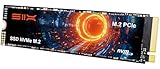
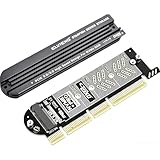
- Premium Choice: SIX NVME M.2 SSD PCIe 4.0-1TB m.2 2280 ssd, Read UP to 7350MB/s 1TB for Gaming PS5 Memory Storage Expansion with Heatsink, Internal Solid State Hard Drive PCIe gen 4×4 Nvme for Laptop Desktop pc
🛒 Best Price Today on Amazon
Prime members get fast, free shipping on everything above, plus member-only deals. New members get a 30-day free trial — cancel anytime.
- Top Pcie Ssds Picks for 2026
- Best PCIe 5.0 SSDs at a Glance
- 1. Samsung SSD 9100 PRO 2TB PCIe 5.0 x4 M.2 2280
- 2. WD_Black SN8100 2TB PCIe 5.0 x4 NVMe SSD
- 3. Samsung SSD 9100 PRO 1TB PCIe 5.0 x4 M.2 2280
- 4. WD_Black SN8100 1TB PCIe 5.0 x4 NVMe SSD
- 5. Crucial T710 PCIe Gen5 NVMe 4TB SSD
- 6. fanxiang 1TB PCIe 5.0 x4 NVMe M.2 SSD, Up to 14,000 MB/s
- How to Choose a PCIe 5.0 SSD
- Related Guides
- Frequently Asked Questions
- Related Guides
- Related Articles
- Related Guides
Top Pcie Ssds Picks for 2026
Here are our current top pcie ssds picks, compared on real Amazon owner reviews, price, and features. Live prices update below.
As an Amazon Associate we earn from qualifying purchases at no extra cost to you.




PCIe 5.0 SSDs are the new high-water mark for consumer storage, doubling the theoretical bandwidth of PCIe 4.0 and pushing sequential read speeds past the 14,000 MB/s mark that defined the previous generation’s ceiling. For builders with a Gen5-capable motherboard and an M.2 slot wired for Gen5 x4, these drives deliver the fastest mainstream NVMe performance you can buy, with class-leading controllers, faster random IO, and headroom for the next wave of DirectStorage and AI workloads. This guide rounds up the best PCIe 5.0 SSDs in 2026 across capacities, brands, and budgets, focused entirely on confirmed Gen5 drives.
Our picks were chosen on the things that actually matter for Gen5 NVMe: confirmed PCIe 5.0 x4 interface, real-world sequential read speeds in the 13,000 to 15,000 MB/s range, controller and DRAM design, capacity, and value. Every drive listed below is verified by its product description to be a genuine Gen5 SSD with the high sequential reads — well above 13,000 MB/s — that distinguish the category. Prices span from around $200 for a 1TB value pick to around $640 for a 4TB powerhouse. Below is an at-a-glance comparison, then a closer look at each drive and a buyer’s guide built around motherboard support, thermal management, and when a Gen5 upgrade is genuinely worth it.
Best PCIe 5.0 SSDs at a Glance
| SSD | Best For | Standout Spec | Approx Price |
|---|---|---|---|
| Samsung 9100 PRO 2TB | Top Gen5 performance + reliability | Up to 14,700 MB/s read, PCIe 5.0 x4 | around $445 |
| WD_Black SN8100 2TB | Fastest reads on the list | Up to 14,900 MB/s read, 2TB | around $440 |
| Samsung 9100 PRO 1TB | Best Samsung Gen5 1TB value | Up to 14,700 MB/s, 1TB capacity | around $250 |
| WD_Black SN8100 1TB | WD Gen5 1TB option | 14,900 MB/s read, 1TB, M.2 2280 | around $260 |
| Crucial T710 4TB | Maximum capacity Gen5 | 4TB, up to 14,900 MB/s, Crucial | around $640 |
| fanxiang Gen5 1TB | Affordable Gen5 entry | Up to 14,000 MB/s, DRAM + SLC NAND | around $200 |
1. Samsung SSD 9100 PRO 2TB PCIe 5.0 x4 M.2 2280

Prime
Samsung SSD 9100 PRO 2TB, PCIe 5.0×4 M.2 2280, Seq. Read Speeds Up to 14,700MB/s, Best for AI Computing, Gaming and Heavy Duty Workstations (MZ VAP2T0B/AM)
In Stock
As an Amazon Associate we earn from qualifying purchases. Product prices and availability are accurate as of the date/time indicated.
The Samsung 9100 PRO 2TB is the flagship pick for anyone who wants the most trusted name in NVMe storage at full Gen5 speed. It runs on a PCIe 5.0 x4 interface in the standard M.2 2280 form factor, delivers sequential read speeds up to 14,700 MB/s, and ships with the controller, DRAM, and firmware tuning that Samsung’s PRO line is known for. At around $445 it sits at the premium end of the Gen5 market but justifies the price with the build-quality reputation that has defined the 970 PRO and 990 PRO before it.
For AI workloads, professional content creation, and heavy multitasking, the 9100 PRO is the obvious pick: 2TB gives genuine working room for projects, the headline 14,700 MB/s sequential read keeps large files moving fast, and Samsung’s Magician software adds health monitoring and tuning. If your Gen5-capable motherboard has a properly heatsinked M.2 slot, this drive will make the most of it without compromise. For builders who simply want the best mainstream Gen5 SSD they can buy from a brand they trust, the 9100 PRO 2TB is the standout.
Pros: Top-tier Samsung controller, 14,700 MB/s reads, 2TB capacity, proven PRO-line pedigree.
Cons: Premium price; runs hot at full load — proper heatsinking required.
2. WD_Black SN8100 2TB PCIe 5.0 x4 NVMe SSD
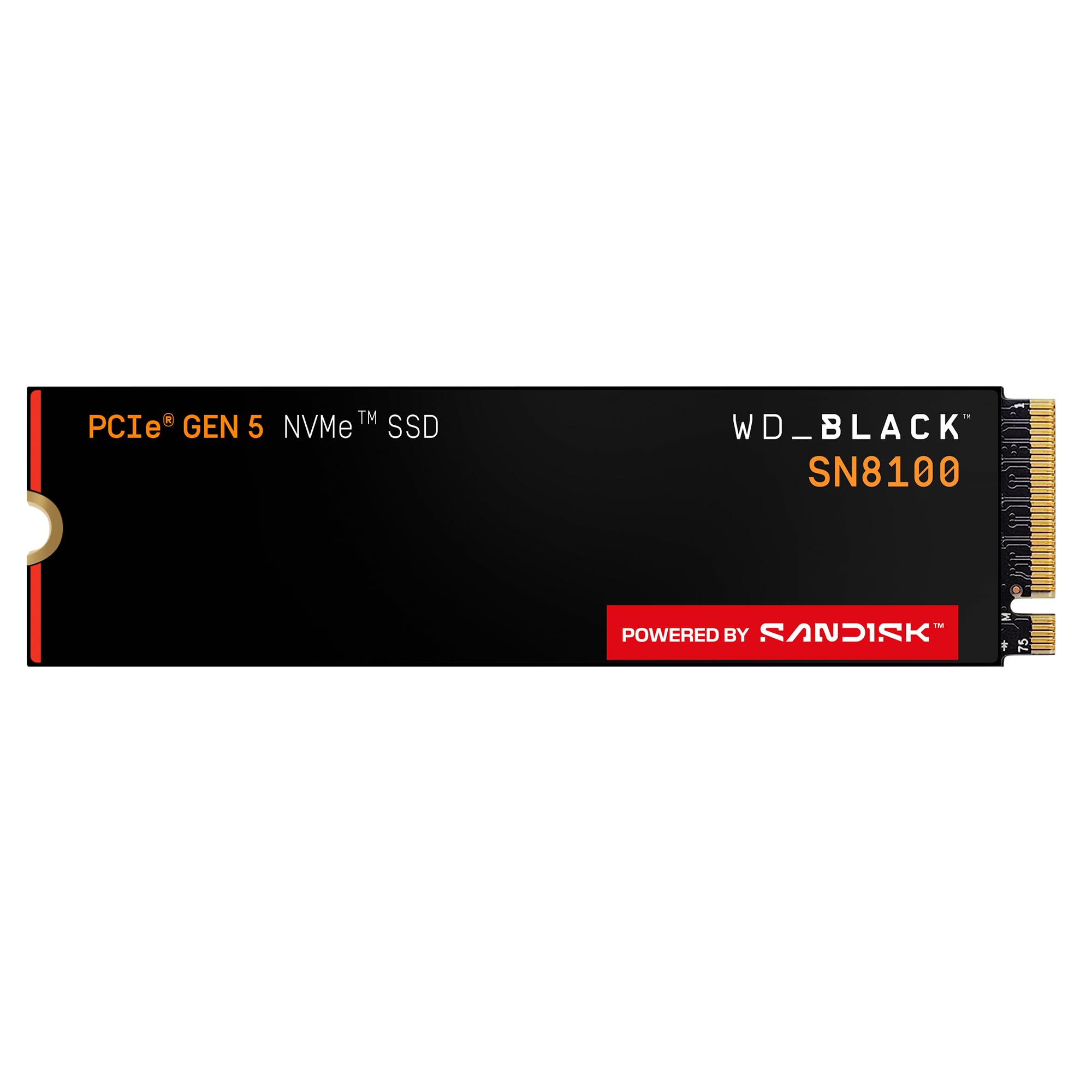
WD_Black SN8100 2TB NVMe SSD – PCIe 5.0×4, M.2 2280, Up to 14,900MB/s Read Speed, up to 11,000MB/s Write Speed, Best for AI Applications, Gaming, and Video Editing – WDS200T1X0M
In Stock
As an Amazon Associate we earn from qualifying purchases. Product prices and availability are accurate as of the date/time indicated.
The WD_Black SN8100 2TB is the speed-record pick, claiming the highest headline sequential read on the list at up to 14,900 MB/s, plus up to 11,000 MB/s on writes. It is a confirmed PCIe 5.0 x4 drive in the M.2 2280 form factor, with a 2TB capacity that hits the sweet spot for modern gaming and creative work. At around $440 it is priced shoulder-to-shoulder with the Samsung 9100 PRO, making the choice between them a question of brand preference and pricing on the day.
This is the drive for the builder who wants the absolute fastest sequential numbers on a Gen5 motherboard. The 14,900 MB/s read and 11,000 MB/s write figures put it at the top of the Gen5 leaderboard, the SN8100 controller supports the random-IO improvements that benefit game asset loading and creative workflows, and WD’s Black branding signals a gaming-tuned firmware. If you are spec-shopping for the fastest mainstream consumer SSD, the SN8100 2TB earns its place at the top of the list.

Pros: Highest 14,900 MB/s reads, 11,000 MB/s writes, 2TB Gen5, gaming-tuned firmware.
Cons: Like all Gen5 drives, needs a substantial heatsink to maintain peak speed.
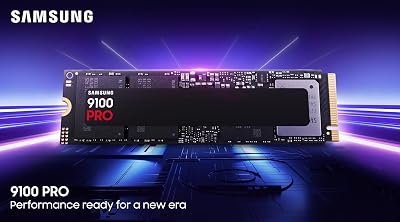
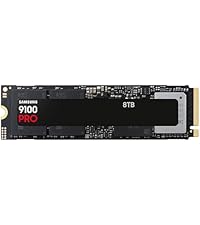
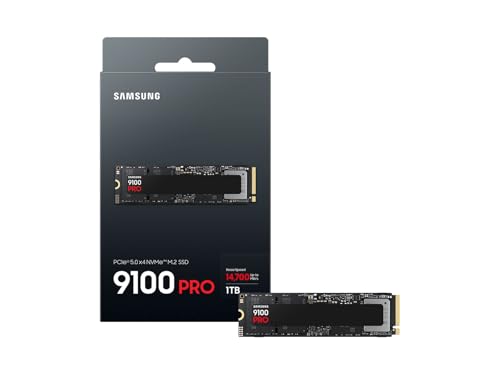
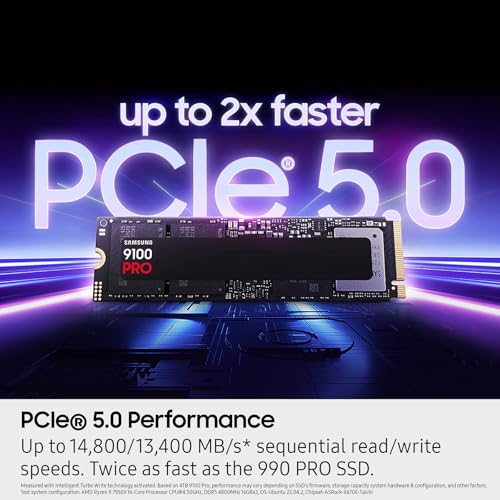
3. Samsung SSD 9100 PRO 1TB PCIe 5.0 x4 M.2 2280

31
Samsung SSD 9100 PRO 1TB, PCIe 5.0×4 M.2 2280, Seq. Read Speeds Up to 14,700MB/s, Best for AI Computing, Gaming, and Heavy Duty Workstations (MZ VAP1T0B/AM)
In Stock












As an Amazon Associate we earn from qualifying purchases. Product prices and availability are accurate as of the date/time indicated.
The Samsung 9100 PRO 1TB is the value entry into Samsung’s Gen5 line. It uses the same PCIe 5.0 x4 interface and the same 14,700 MB/s read ceiling as its 2TB sibling, just in a smaller 1TB capacity for a sharper price of around $250. For Gen5 builders who want Samsung quality without paying for double the storage, this is the natural starting point.
This is the pick for the gamer or creator stepping up to Gen5 for the first time on a primary OS-plus-games drive. 1TB is enough to hold Windows, your core productivity tools, and a handful of large modern games at once, and the full 14,700 MB/s sequential performance is identical to the bigger drive in everyday use. Pair it with secondary 2TB or 4TB Gen4 storage for archive and you get the best of both worlds: blazing Gen5 speed where it matters and cheap-per-gigabyte capacity for everything else.
Pros: Full Gen5 14,700 MB/s in 1TB, Samsung PRO build, sensible Gen5 entry price.
Cons: 1TB fills quickly with modern games; needs strong M.2 cooling.
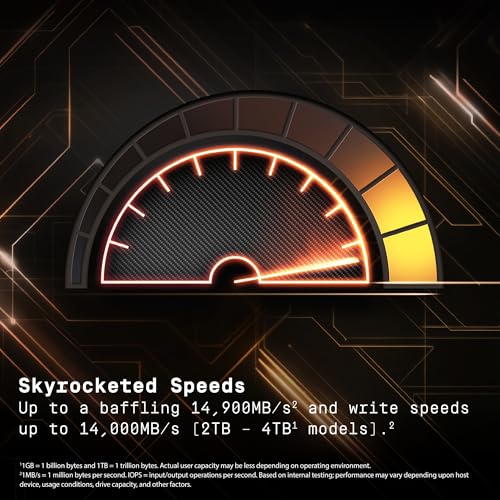
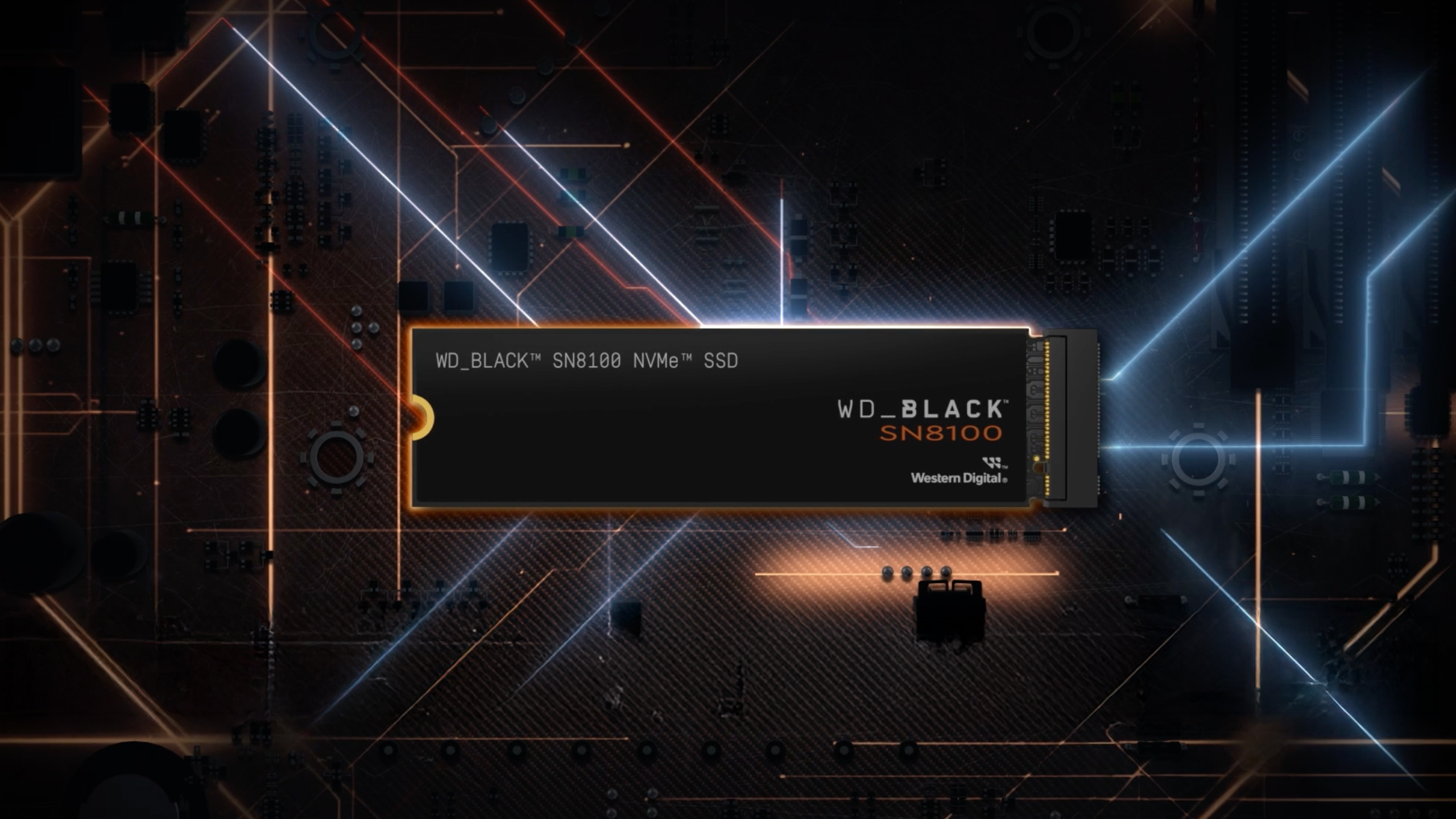
4. WD_Black SN8100 1TB PCIe 5.0 x4 NVMe SSD

26
Prime
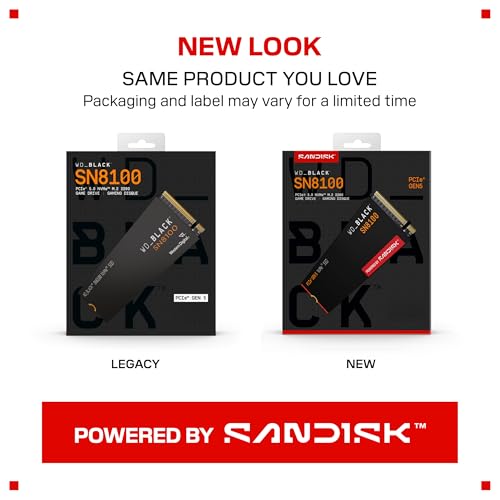
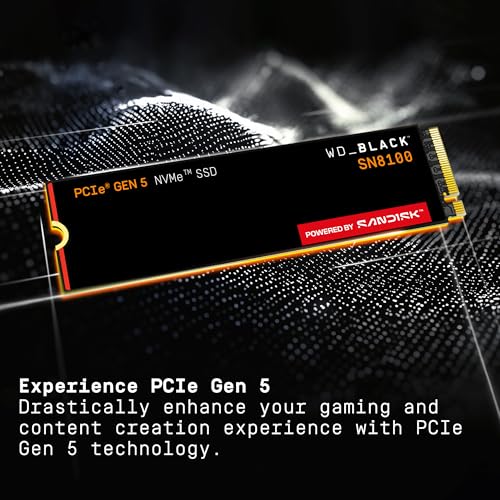
WD_Black SN8100 1TB NVMe SSD – PCIe 5.0×4, M.2 2280, Up to 14,900MB/s Read Speed, up to 11,000MB/s Write Speed, Best for AI Applications, Gaming, and Video Editing – WDS100T1X0M
In Stock



As an Amazon Associate we earn from qualifying purchases. Product prices and availability are accurate as of the date/time indicated.
The WD_Black SN8100 1TB is the WD-branded Gen5 entry option, matching the 2TB version’s headline 14,900 MB/s sequential read in a smaller 1TB capacity. At around $260 it pairs naturally with the Samsung 9100 PRO 1TB as an alternative for builders who prefer WD_Black firmware and software ecosystem over Samsung Magician.
For a Gen5 builder with a 1TB budget who wants the very highest sequential read figure available, the SN8100 1TB delivers exactly that. The 14,900 MB/s ceiling is identical to the larger 2TB SKU, the M.2 2280 form factor drops into any standard Gen5-capable motherboard slot, and the WD_Black Dashboard utility handles firmware updates and drive health monitoring. As a headline Gen5 boot drive on a competitive budget, it is a strong, spec-leading choice.
Pros: 14,900 MB/s reads in 1TB, M.2 2280, WD_Black firmware, top sequential numbers.
Cons: Random performance leadership less clear; thermals demand a heatsink.
5. Crucial T710 PCIe Gen5 NVMe 4TB SSD

23
Crucial T710 PCIe Gen5 NVMe 4TB SSD, Up to 14,900 MB/s, Laptop & Desktop Compatible (PC), for Creatives and Hardcore Gamers, Solid State Drive, Includes 1Mo Adobe CC – CT4000T710SSD8-01
In Stock






As an Amazon Associate we earn from qualifying purchases. Product prices and availability are accurate as of the date/time indicated.
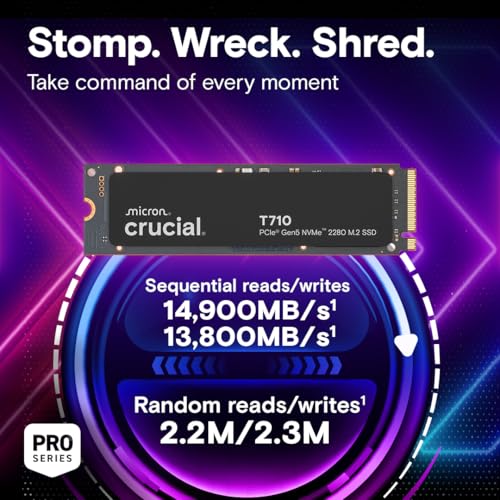
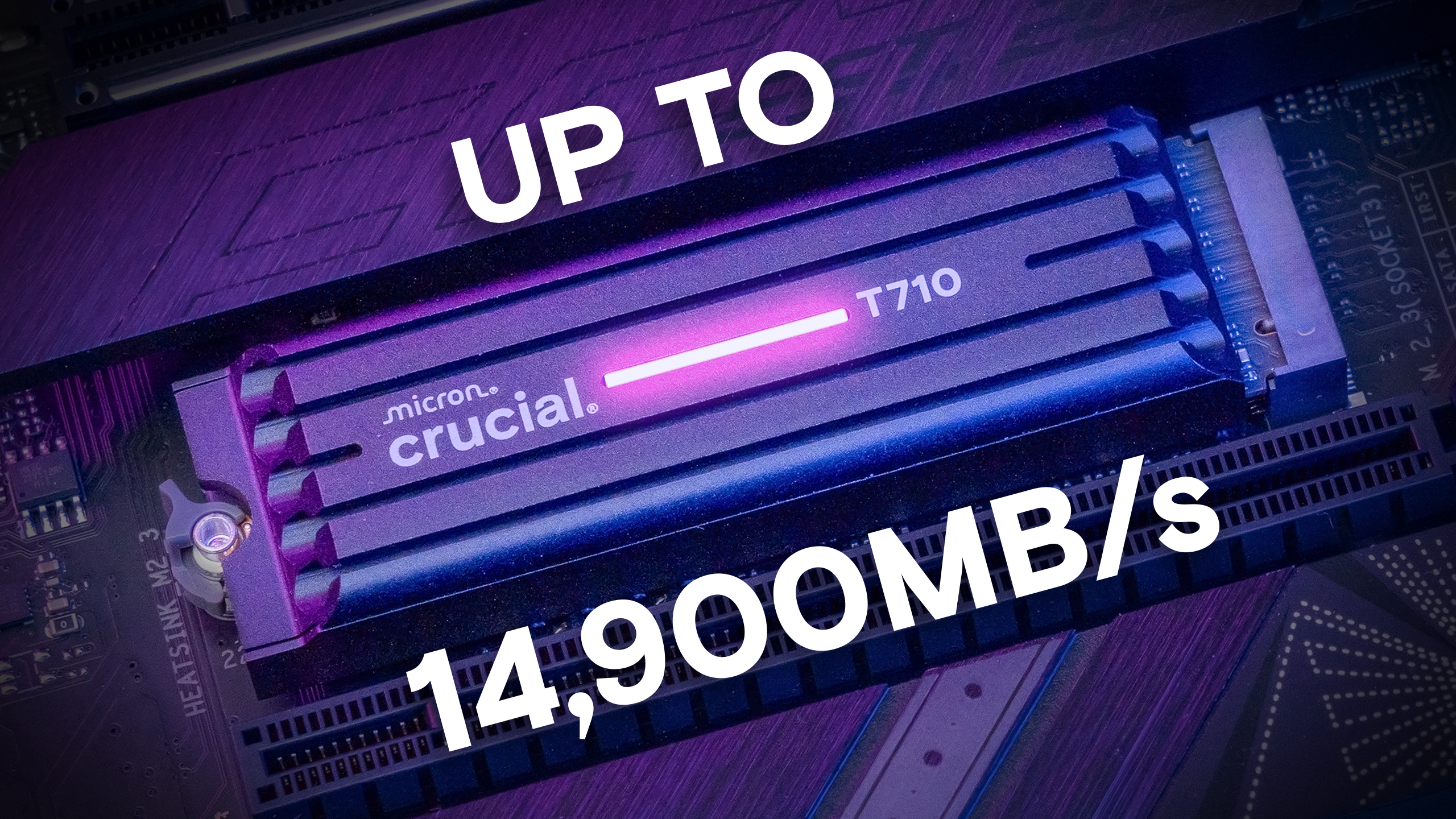
The Crucial T710 4TB is the capacity king of the list, the only 4TB Gen5 drive among our picks and the choice for builders who simply need more space at maximum speed. It is a confirmed PCIe Gen5 NVMe drive with sequential reads up to 14,900 MB/s — matching the SN8100 at the top of the Gen5 charts — in a 4TB capacity ideal for creators and hardcore gamers. At around $640 it is the most expensive drive here, but the dollars-per-gigabyte math is competitive for a 4TB Gen5 SSD.
This is the drive for the builder who has outgrown 2TB and refuses to slow down. The 4TB capacity holds large game libraries, video projects, and AI/ML datasets without the constant juggling that smaller drives demand, and the 14,900 MB/s sequential ceiling means it loses nothing in raw performance to its smaller competitors. Crucial’s reputation for reliable, value-leaning NVMe pricing makes the T710 the sensible choice when you want both capacity and Gen5 performance on the same drive.
Pros: Massive 4TB Gen5 capacity, up to 14,900 MB/s, Crucial reliability and value.
Cons: Highest price on the list; 4TB Gen5 demands serious M.2 cooling.
6. fanxiang 1TB PCIe 5.0 x4 NVMe M.2 SSD, Up to 14,000 MB/s

24
Prime
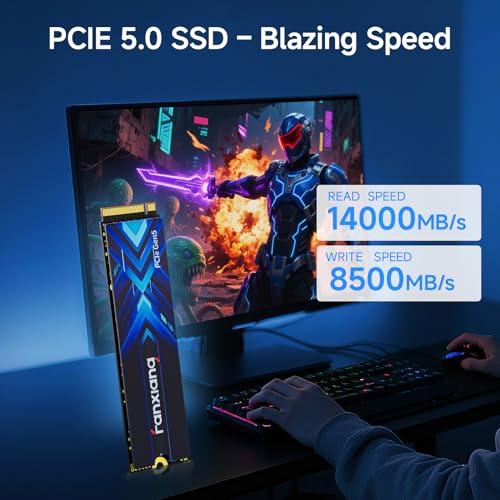
fanxiang 1TB PCIe 5.0 x4 NVMe M.2 SSD,Up to 14000 MB/s,DRAM Cache and SLC NAND,High Performance Solid State Drive for AI Applications, Gaming, PC, Laptop
In Stock



As an Amazon Associate we earn from qualifying purchases. Product prices and availability are accurate as of the date/time indicated.
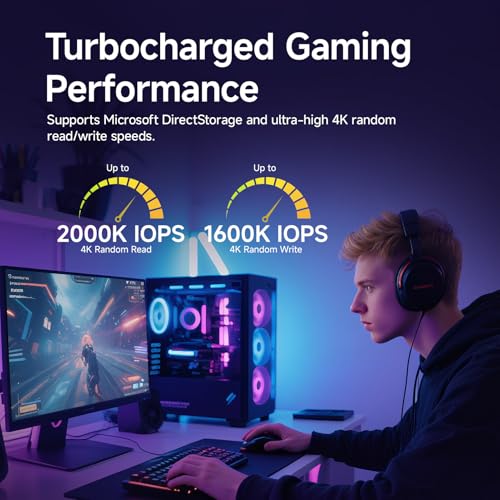
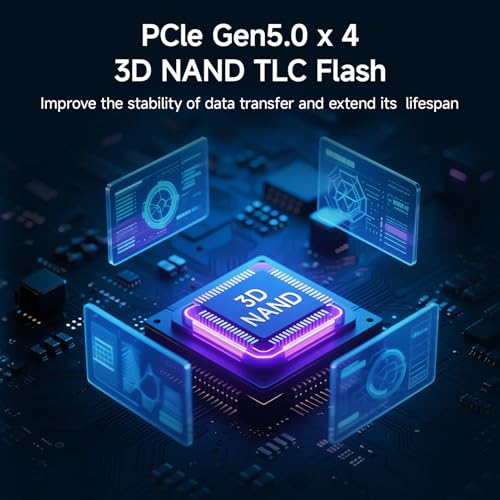
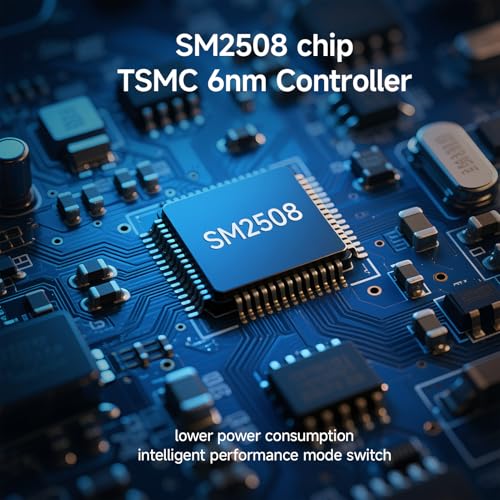
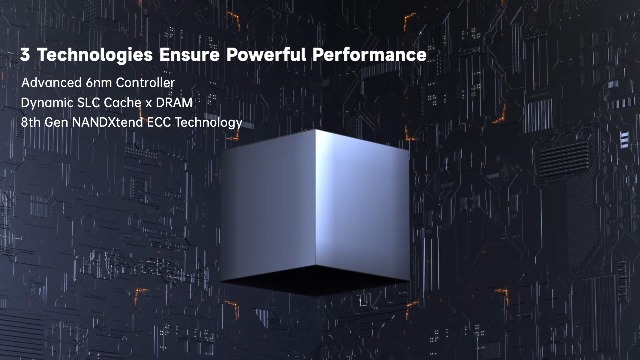
Rounding out the list is the fanxiang 1TB Gen5, the affordable entry point. It is a confirmed PCIe 5.0 x4 NVMe SSD with sequential reads up to 14,000 MB/s — slightly below the Samsung and WD flagships but firmly within Gen5 territory — and includes DRAM cache and SLC NAND for sustained performance. At around $200 it is the cheapest way to get genuine Gen5 speed onto your build.
This is the pick for the value-conscious Gen5 early adopter who wants real PCIe 5.0 bandwidth without the brand premium. The 14,000 MB/s read figure is real Gen5 territory, the DRAM-equipped controller helps maintain consistent performance under sustained load, and the included SLC NAND caching keeps writes brisk during burst workloads. For builders on tighter budgets who still want a Gen5 boot drive rather than another Gen4, fanxiang offers a credible way in.
Pros: Cheapest Gen5 here, full 14,000 MB/s class reads, DRAM and SLC NAND.
Cons: Less-known brand than Samsung or WD; warranty terms worth checking.
How to Choose a PCIe 5.0 SSD
Choosing a PCIe 5.0 SSD starts with confirming your platform can actually deliver Gen5 to the slot. Only newer Intel and AMD desktop platforms — broadly AMD AM5 boards and Intel Z790/Z890 — have at least one M.2 slot wired to the CPU at Gen5 x4. Older motherboards with PCIe 5.0 expansion slots may still not have a Gen5 M.2 slot, so check your specific board’s manual. If your slot is Gen4-only, every drive on this list will still work, just at Gen4 speeds — and you might be better off picking a top-tier Gen4 drive at lower cost instead.
Thermal management is the second consideration, and arguably the most important. Gen5 controllers run substantially hotter than Gen4 because of the higher bandwidth, and an unhealsinked Gen5 drive will thermal-throttle back to Gen4-like speeds within seconds under sustained load. Use the M.2 heatsink that ships with your motherboard or buy a quality aftermarket heatsink with a fan if your case airflow is limited. If you cannot fit proper cooling, pick a Gen4 drive instead — you will get more consistent real-world performance.
Capacity and price-per-gigabyte are where buying intent matters. For a Gen5 boot drive holding Windows and a handful of games, 1TB models like the Samsung 9100 PRO 1TB or fanxiang 1TB are sensibly priced and fast enough. For a primary work-and-play drive that holds a larger game library or professional projects, 2TB drives like the 9100 PRO 2TB or SN8100 2TB give meaningful headroom. For massive game libraries, AI datasets, or 4K/8K video projects, the Crucial T710 4TB is currently the standout capacity option in Gen5.
Finally, decide whether a Gen5 upgrade actually makes sense for your workloads. For everyday gaming, the real-world difference between a top-tier Gen4 drive (around 7,300 MB/s) and a Gen5 drive (around 14,000 to 14,900 MB/s) is modest for game load times — most game engines do not yet saturate Gen4 bandwidth. Where Gen5 shines is large sequential transfers, DirectStorage workflows, AI model loading, and professional file work. If your workload pushes those scenarios, the headline numbers translate; if you mostly game, a great Gen4 drive is still excellent value, and you can always upgrade to Gen5 later.
Frequently Asked Questions
Do I need a PCIe 5.0 SSD for gaming?
Honestly, not yet. Most current games do not saturate even PCIe 4.0 bandwidth, so the real-world load-time difference between a top Gen4 SSD and a Gen5 SSD like the Samsung 9100 PRO or WD_Black SN8100 is small today. PCIe 5.0 SSDs shine for sustained sequential transfers, DirectStorage workloads, and creative or AI use cases. If you are building fresh and your motherboard supports Gen5, it is a sensible future-proof choice; if you are upgrading an existing build, the case is weaker.
What motherboard do I need for a PCIe 5.0 SSD?
A motherboard with a CPU-attached M.2 slot wired for PCIe 5.0 x4. In practice that means recent AMD AM5 platforms or Intel Z790/Z890 boards with explicit Gen5 M.2 support. Always check the specific slot — many modern boards have one Gen5 M.2 slot and the rest Gen4. If you install a Gen5 drive into a Gen4 slot it will work but at Gen4 speeds only.
Do PCIe 5.0 SSDs really run that hot?
Yes, considerably hotter than Gen4 drives. The higher bandwidth and denser controllers mean Gen5 SSDs throttle within seconds under sustained load if you do not cool them. Every drive on this list expects to be paired with an M.2 heatsink — either the one bundled with your motherboard or an aftermarket cooler. Skipping cooling is the fastest way to throw away the headline 14,000+ MB/s performance you paid for.
Which PCIe 5.0 SSD should I pick if I just want the fastest?
On headline sequential reads, the WD_Black SN8100 and Crucial T710 tie at up to 14,900 MB/s. Samsung’s 9100 PRO is a hair behind on the spec sheet at 14,700 MB/s but carries the strongest brand reputation for longevity. If you need 4TB the T710 is the only option in our list; for 2TB the SN8100 and 9100 PRO are spec-equivalent rivals — pick on price and software preference.
Related Guides
- Best NVMe SSDs
- Best 2TB NVMe SSDs
- Best SSDs for Gaming
- Best Gaming Motherboards
- Best Gaming PCs
- Best CPU Coolers
- Best Budget Gaming Setup
Affiliate Disclosure: As an Amazon Associate, we earn from qualifying purchases. If you click a link and make a purchase, we may earn a small commission at no extra cost to you. Prices and availability are accurate as of publication and may change.