- Top Pick: AMD Ryzen 7 9800X3D
- Runner-up: AMD Ryzen 9 9950X
- Also consider: AMD Ryzen 9 7950X
Welcome to the top rung of the ladder. Below this rung, each jump in budget buys a plainly faster processor, and the choice is mostly about balance. Up here the logic changes. The money buys specialties instead: the single strongest gaming chip on sale, sixteen-core hybrids that play in the evening and render all night, and parts that push your board, power supply, and cooler harder than anything beneath them.
Every chip here was picked because it usually sells under the target for this rung, but shelf figures drift weekly, so check the current price on the Amazon product page before you order. None of the five includes a cooler in the box. Budget for cooling and a board with strong power delivery alongside it, or the flagship silicon never shows what it can do.
As an Amazon Associate, we earn from qualifying purchases.
Quick answer
For pure gaming, buy the AMD Ryzen 7 9800X3D: its stacked cache makes it the leading gaming chip in this guide. If your PC also renders, compiles, or encodes for hours at a time, take the 16-core AMD Ryzen 9 9950X instead. Intel fans should look at the Core i9-14900K, or the Core Ultra 9 285K for a fresh build.
How to choose
Decide what the second job is. A machine that only plays games rewards cache above everything else, because modern titles lean on fast access to nearby data. A machine that also renders video, compiles code, or encodes footage rewards raw core count, because those jobs divide cleanly across every core you give them. The five chips below split along that line, and picking the wrong side wastes this rung.
Cache versus cores is the headline trade. The Ryzen 7 9800X3D stacks extra cache on a single eight-core die, so games see one uniform pool. The sixteen-core chips spread work across two dies, superb for rendering and compiling but a small hop for game threads that wander. For competitive play at high refresh, cache wins; for project files, cores win.
Platform matters more up here. Three of the five picks sit on AMD’s AM5 socket, which uses DDR5 memory only and still has newer chips ahead of it. The two Intel picks split by age. The 14900K uses LGA1700, a mature socket with many boards, including some that accept DDR4 you may already own, but no further flagship chips are coming for it. The 285K uses the newer LGA1851 socket with 800-series boards and DDR5 only, so it asks for a fresh platform spend.
Power delivery and cooling matter at this tier. The sixteen-core parts carry 170W thermal design figures and pull hard under full load; the 14900K draws heavily in turbo bursts. A modest board will hold these chips back or run hot doing it. Plan on a well-built motherboard, a power supply with genuine headroom, and a large dual-tower air cooler or a 360mm liquid loop for the sixteen-core models.
AMD Ryzen 7 9800X3D
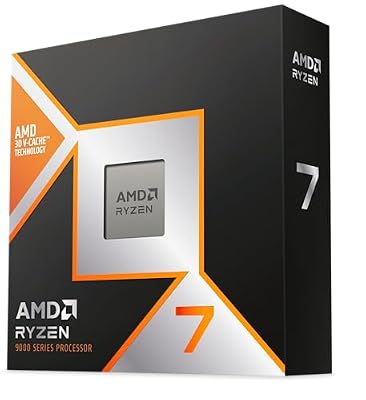
This is the gaming pick, and it is not close. The 9800X3D places its extra 3D V-Cache on a single eight-core die, so every game thread reaches the full 96MB L3 cache pool with no cross-die hop. In CPU-bound titles and high-refresh competitive play, that design lifts frame floors in a way extra cores cannot match, at a modest 120W class draw a good air cooler handles quietly.
The honest limit is threaded work: eight cores render, compile, and encode well, but a sixteen-core chip finishes those jobs far sooner. Buy this processor when gaming is the headline act and everything else is a side task. Its integrated Radeon graphics help during a build or card swap, since the machine still shows a picture with no card installed.
Specs
– Cores / threads: 8 / 16
– Socket: AM5
– Base clock: 4.7 GHz
– Boost clock: Up to 5.2 GHz
– L3 cache: 96MB with AMD 3D V-Cache technology
– Memory support: DDR5 up to 5600 MT/s
– Graphics: Integrated AMD Radeon Graphics
– Part number: 100-100001084WOF
– Cooler in the box: None
AMD Ryzen 9 9950X
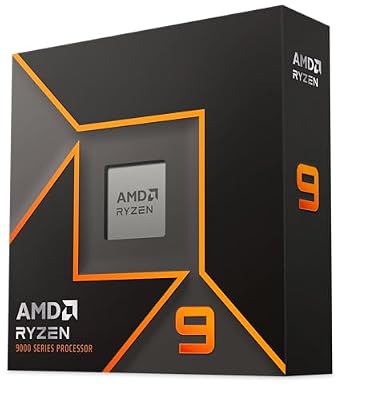
The 9950X is the flagship hybrid for builders who refuse to choose between play and production. Sixteen Zen 5 cores and thirty-two threads give it the strongest multithreaded throughput in this guide, so renders, compiles, and long encodes finish far sooner than on an eight-core chip. Gaming is still excellent, with a boost clock of up to 5.7 GHz.
What it asks in return is support hardware: the 170W thermal design figure means sustained all-core work needs a serious cooler and a motherboard built for flagship loads. Under a render it becomes the warmest part of the build. Choose it when creator work pays the bills or fills the weekends, and gaming is the reward afterward.
Specs
– Cores / threads: 16 / 32
– Socket: AM5
– Base clock: 4.3 GHz
– Boost clock: Up to 5.7 GHz
– L3 cache: 64MB
– Thermal design power: 170W
– Graphics: Integrated AMD Radeon Graphics
– Part number: 100-100001277WOF
– Cooler in the box: None
AMD Ryzen 9 7950X

The 7950X is the value route to sixteen cores on this rung. Its Zen 4 cores boost to the same up-to-5.7 GHz ceiling as its newer sibling, and in long renders it stays close enough that many creators never feel the gap. For a hybrid AM5 machine, it delivers flagship threaded muscle while usually sitting comfortably below the rung target.
It runs warm under sustained load, its gaming results trail the X3D chip in CPU-bound titles, and newer Zen 5 parts handle mixed work with more grace. None of that matters much when threaded throughput per coin spent is the priority. Pair it with strong cooling and a capable board, and it remains a workhorse for play plus production.
Specs
– Cores / threads: 16 / 32
– Socket: AM5
– Base clock: 4.5 GHz
– Boost clock: Up to 5.7 GHz
– L3 cache: 64MB
– Thermal design power: 170W
– Graphics: Integrated AMD Radeon Graphics
– Part number: 100-100000514WOF
– Cooler in the box: None
Intel Core i9-14900K

Intel’s flagship takes a different route: eight Performance-cores for games and latency-sensitive work, plus sixteen Efficient-cores that absorb background tasks and threaded jobs. It plays superbly and chews through mixed workloads, with a max turbo figure of up to 6.0 GHz on its performance cores. Builders holding an LGA1700 board or DDR4 memory can drop it into a mature platform.
The cautions are power and future. This processor pulls hard in turbo bursts, so it wants a strong power supply, a board with serious power delivery, and liquid cooling for long all-core sessions. The socket has no newer flagship chips coming, so this is an end-of-line upgrade rather than a platform investment. For Intel loyalists, it is the complete package at this rung.
Specs
– Cores: 24 (8 Performance-cores + 16 Efficient-cores)
– Threads: 32
– Socket: LGA1700
– Performance-core base clock: 3.2 GHz
– Max turbo clock: Up to 6.0 GHz
– Smart Cache (L3): 36MB
– Graphics: Intel UHD Graphics 770
– Part number: BX8071514900K
– Cooler in the box: None
Intel Core Ultra 9 285K

Intel’s current flagship pushes the hybrid layout to twenty-four cores: eight Performance-cores handle games and latency-sensitive work, while sixteen Efficient-cores take the threaded jobs, for twenty-four threads in total. Creator work is its headline strength — renders, encodes, and compiles move briskly — and it does that work with better manners than the older Intel flagship above, holding a 125W base power figure instead of living in turbo bursts.
Gaming is strong rather than class-leading, and the honest catch is the platform: this chip needs a new 800-series board on the LGA1851 socket and DDR5 memory, so nothing from an older Intel build carries over. Buy it when the build is new from the ground up, your evenings split between play and heavy apps, and you want Intel’s newest socket carrying flagship cores.
Specs
– Cores: 24 (8 Performance-cores + 16 Efficient-cores)
– Threads: 24
– Socket: LGA1851
– Performance-core base clock: 3.7 GHz
– Max turbo clock: Up to 5.7 GHz
– Smart Cache (L3): 36MB
– Total cache: 40MB
– Processor base power: 125W
– Graphics: Integrated Intel Graphics
– Part number: BX80768285K
– Cooler in the box: None
When to Step Up or Down a Rung
There is no rung above this one, so the step question runs the other way: should you be on this rung at all? Stay when your workload is genuinely flagship-grade — competitive play chasing very high refresh, creator work on deadlines, or a machine you plan to keep at the top for years.
Step down when the saving would fund a whole graphics-card tier jump. At higher resolutions the card decides frame rates far more often than the processor does, and the chips in Best CPUs Under $450 for Fast Frames and Heavy Multitasking already feed strong cards well. If you mainly play and stream from one machine on a tighter overall build, Best CPUs Under $350 for High Refresh Gaming and Streaming covers processors that leave more of the budget for memory, storage, and the card itself.
Who should skip
Skip this rung if your graphics card is mid-range and you play at high resolution, because the card, not the processor, sets your frame rate. Skip it if you already own a recent flagship-class chip; the gains feel small next to the outlay. Skip it for compact builds without room for serious cooling, and skip it if your motherboard or power supply cannot feed a flagship load — put that money into the platform first.
FAQ
Is the Ryzen 7 9800X3D or the Ryzen 9 9950X better for gaming?
The 9800X3D. Its stacked cache sits on one die, so game threads reach the whole pool with no extra hop, lifting frame rates and frame floors in CPU-bound titles. The 9950X games well too, but its strength is threaded work; buy it when rendering or encoding matters as much as play.
Do any of these processors include a cooler?
No. Every chip here ships without one. Budget for a large dual-tower air cooler at minimum, and consider a 360mm liquid loop for the sixteen-core models or the Intel flagship for long all-core workloads.
AM5, LGA1700, or LGA1851: which platform makes more sense now?
AM5 if you value an upgrade path, since AMD continues to release chips for the socket. LGA1700 if you already own a good board or DDR4 memory and want a mature platform today, accepting that the 14900K ends that line. LGA1851 if you are building Intel fresh and want the current socket, knowing it means a new board and DDR5 memory.
What should I confirm before I order?
Confirm socket and BIOS support for the exact chip, confirm your power supply has headroom for flagship turbo loads, and check the current price on the Amazon product page, since figures at this tier move often.
Final verdict
Buy the specialty that matches your week. The Ryzen 7 9800X3D is the gaming flagship and the default pick for play-first builds. The Ryzen 9 9950X is the creator flagship, the 7950X its value-minded sixteen-core sibling, and the Core i9-14900K the complete Intel hybrid for LGA1700 loyalists. The Core Ultra 9 285K is the flagship for a brand-new Intel build. Feed whichever you choose cooling and power delivery worthy of the tier, or step down a rung and spend the saving where it shows.