- Top Pick: AMD Ryzen 7 9700X
- Runner-up: AMD Ryzen 7 7700X
- Also consider: AMD Ryzen 7 7700X
This rung is where a gaming PC stops being a compromise and becomes a high-refresh machine with room to breathe. The chips gathered here bring eight full cores or a generous hybrid core count, high sustained boost clocks, and modern DDR5 platforms, so a strong graphics card can stretch its legs at 1440p while background work runs in parallel.
It is also the tier where streaming stops being an afterthought. With eight cores and sixteen threads, or more, there is genuine headroom to run encoding software, voice chat, and the game itself at the same time. Every pick below is a boxed desktop processor that usually sells under this rung’s target.
As an Amazon Associate, we earn from qualifying purchases.
Quick answer
Go with the AMD Ryzen 7 9700X. Its eight Zen 5 cores, high boost clock and efficient 65W design suit 1440p high-refresh gaming and leave threads free for streaming software. On AM5 it also keeps a long upgrade path. The Ryzen 7 7700X and Core i5-14600K are the main alternatives in this tier.
How to choose
Core count is the first filter at this level. Six cores can run a game well, but eight cores give the encoder, chat apps, and background recording somewhere to live without stealing time from the game. If you stream with software encoding, those extra threads matter more than a small clock difference.
Clocks and cache decide how high frame rates climb in CPU-limited titles, and a chip that holds its boost above 5 GHz through a long session feeds a fast graphics card more consistently. Cooling headroom matters too: several picks here ship without a cooler, so leave room for a capable tower cooler and honest case airflow.
Platform choice shapes the whole build. AM5 boards pair with DDR5 memory and AMD has kept the socket going across generations, which keeps future upgrades simple. Intel’s LGA1700 chips here can run DDR5 or DDR4, which helps if you already own memory. The Core Ultra 5 245K moves to the newer LGA1851 socket and DDR5 only. Pick the platform first, then the chip, and check the current price on the Amazon product page once your board and memory are chosen.
AMD Ryzen 7 9700X

The 9700X is the natural top pick for this rung because it pairs the newest AMD architecture here with a modest power draw. Its eight Zen 5 cores boost to 5.5 GHz, which suits high-refresh gaming at 1440p, and the 65W TDP means a mid-size tower cooler can hold boost clocks through long sessions without much noise. For streamers, sixteen threads leave comfortable room for encoding software and chat tools alongside the game.
It sits on the AM5 socket with DDR5-5600 support, so the platform has years of life left and a clear path to a future chip swap. There is no cooler in the box, so budget for one, and the integrated Radeon graphics serve for display output and troubleshooting rather than gaming. For most builders who want the current AMD design and cool, quiet running, this is the most balanced option in the group.
Specs:
– Cores / threads: 8 / 16
– Base clock: 3.8 GHz
– Max boost clock: up to 5.5 GHz
– Cache: 40 MB
– Socket: AM5
– Memory support: DDR5-5600
– TDP: 65W
– Cooler included: No
AMD Ryzen 7 7700X

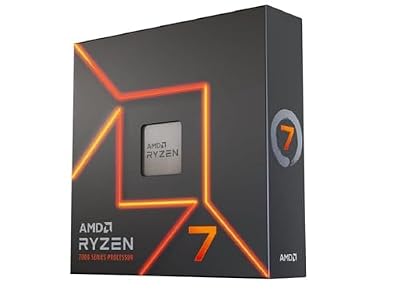
The 7700X takes a different route to similar gaming pace: higher power limits and aggressive boost behaviour. It also offers eight cores and sixteen threads, with a 4.5 GHz base clock and boost up to 5.4 GHz, and its 105W TDP means it asks more of your cooler and case airflow than the 9700X does.
It shares the AM5 socket and DDR5 support with the 9700X, so the same boards and memory kits apply, and it carries integrated Radeon graphics for a backup display output. Like its newer sibling, it ships without a cooler, so plan on a solid tower cooler to keep noise in check. Choose it if it sits comfortably under this rung while the 9700X creeps above it, or if you prefer Zen 4’s mature board lineup.
Specs:
– Cores / threads: 8 / 16
– Base clock: 4.5 GHz
– Max boost clock: up to 5.4 GHz
– Cache: 40 MB
– Socket: AM5
– Memory support: DDR5
– TDP: 105W
– Cooler included: No
Intel Core i5-14600K

The 14600K is the multitasking pick of this rung. Its hybrid layout mixes six performance cores with eight efficiency cores for fourteen cores and twenty threads, so a game can hold the fast cores while encoding, recording, and background apps spread across the rest. Boost clocks reach 5.3 GHz, and the unlocked multiplier leaves room for tuning if your board and cooling allow.
It uses the LGA1700 socket and works with either DDR5 or DDR4 boards, which makes it the easiest upgrade path here for anyone keeping memory from a previous build. The integrated UHD graphics give you a display output for setup and troubleshooting. No cooler is included, and this chip can draw well past its 125W base figure under full load, so pair it with strong cooling. Pick it if streaming and heavy background work share the machine with your games.
Specs:
– Cores / threads: 14 (6 P-cores + 8 E-cores) / 20
– Max boost clock: up to 5.3 GHz
– Cache: 24 MB Intel Smart Cache
– Socket: LGA1700
– Memory support: DDR5-5600 / DDR4-3200
– Processor base power: 125W
– Integrated graphics: Intel UHD Graphics 770
– Cooler included: No
AMD Ryzen 7 7700
The 7700 is the quiet, complete-box option in this group. It matches the 7700X on core and thread count but runs at a gentler 65W TDP, with boost up to 5.3 GHz, and it is the only pick here that includes a cooler in the box: AMD’s Wraith Prism. That suits a compact or noise-conscious build where a big tower cooler will not fit or is not wanted.
Gaming pace sits a step behind the X model in CPU-limited scenarios, yet at 1440p with a capable graphics card the gap shrinks, and the efficiency is welcome during long sessions. It keeps the AM5 socket and DDR5 support, so the upgrade path stays open. Choose the 7700 if you value low noise, low power draw, and a box with everything needed to build right away; it often sits well under this rung, freeing budget for a better graphics card or monitor.
Specs:
– Cores / threads: 8 / 16
– Base clock: 3.8 GHz
– Max boost clock: up to 5.3 GHz
– Cache: 40 MB
– Socket: AM5
– Memory support: DDR5-5200
– TDP: 65W
– Cooler included: Yes, Wraith Prism
Intel Core Ultra 5 245K

The 245K represents Intel’s newer desktop direction. It brings fourteen cores in a six-plus-eight hybrid layout and boosts to 5.2 GHz, and it moves the platform to the LGA1851 socket with DDR5 memory. Its efficiency under mixed workloads is a genuine strength, and the unlocked design leaves tuning room.
For pure gaming it trades blows unevenly with the 14600K above, since this generation emphasised efficiency and everyday throughput over raw frame rates, so high-refresh players should weigh it carefully. It makes the most sense if you want the newest Intel platform or split your time between gaming and general productivity. No cooler is included. It typically sells well beneath this rung, so treat it as the value-leaning Intel option rather than the frame-rate leader, and confirm board compatibility first, since LGA1700 boards do not fit it.
Specs:
– Cores / threads: 14 (6 P-cores + 8 E-cores) / 14
– Base clock: 4.2 GHz (P-core)
– Max boost clock: up to 5.2 GHz
– Socket: LGA1851
– Memory support: DDR5
– Processor base power: 125W
– Cooler included: No
When to Step Up or Down a Rung
Step up to the $450 rung when you want the 3D-cache gaming tier, where a large stacked cache lifts frame rates and smooths out the lows, or when you plan to pair the processor with a flagship graphics card at 4K and high refresh. That jump is covered in Best CPUs Under $450 for Fast Frames and Heavy Multitasking.
Step down to the $250 rung when your graphics card is midrange and will cap frames long before any chip here becomes the limit, or when you play at 1080p and would rather put the savings toward a faster monitor or more storage. The picks in Best CPUs Under $250 for Gaming Builds and Smooth Play still drive an enjoyable high-refresh experience when the graphics card is the honest bottleneck. Stay on this $350 rung if you game at 1440p, stream or record while playing, and want a platform that lasts for years.
Who should skip
Skip this rung if you already own a recent six-core or eight-core processor and your frame rates feel fine, since a sideways move buys little. Skip it if your monitor tops out at 60 Hz, because none of these chips can show their strengths on a slow display. Skip it if a whole new platform, board plus DDR5 memory, would push the total far past your limit; the rung below is the smarter home then. Finally, skip every pick here if you need a laptop processor, since these are standard boxed desktop parts.
FAQ
Is eight cores enough for streaming while gaming?
For most streamers, yes. Eight cores and sixteen threads let the game use the fast cores while encoding software, voice chat, and a browser sit on the remaining threads. If you run many heavy apps at once, the 14600K’s extra efficiency cores give more breathing room.
Do I need DDR5 memory for these processors?
The AMD picks and the Core Ultra 5 245K require DDR5, so an AM5 or LGA1851 build means new memory. The 14600K is the exception: on the right LGA1700 board it can run DDR4, which helps if you already own a good kit.
Do these processors include a cooler?
Only the Ryzen 7 7700 includes one, the Wraith Prism. The other four ship without a cooler, so add a capable tower cooler to the build list, and give the 7700X and 14600K extra cooling headroom.
Will a midrange graphics card hold these CPUs back?
At 1440p, a midrange card will usually be the limit in heavier games, which is fine; the processor simply waits with headroom to spare. In lighter esports titles the card matters less and these chips show their high-refresh strength.
Final verdict
For most builders on this rung, the Ryzen 7 9700X is the pick: current architecture, strong boost clocks, cool and quiet running, and an AM5 platform with years of life. The 7700X is the close alternative when its position under the rung is friendlier, the 14600K wins for streaming and multitasking, the 7700 suits quiet builds that want a cooler in the box, and the 245K is the efficiency-first route onto Intel’s newest socket. Match the chip to your graphics card and monitor, and this tier will carry a high-refresh build for years.