🛒 Best Price Today on Amazon
Prime members get fast, free shipping on everything above, plus member-only deals. New members get a 30-day free trial — cancel anytime.
- Top Cpus Data Analysis Picks for 2026
- Best CPUs for Data Analysis at a Glance
- 1. AMD Ryzen 7 5700X 8-Core, 16-Thread Unlocked Desktop Processor
- 2. AMD Ryzen 7 5800X 8-core, 16-thread unlocked desktop processor
- 3. AMD Ryzen 7 5700G 8-Core, 16-Thread Desktop Processor with Radeon Graphics
- 4. AMD Ryzen 5 5600X 6-Core, 12-Thread Unlocked Desktop Processor
- 5. AMD Ryzen 5 5600 6-Core, 12-Thread Unlocked Desktop Processor
- 6. AMD Ryzen 5 5500 6-Core, 12-Thread Unlocked Desktop Processor
- How to Choose a CPU for Data Analysis
- Related Guides
- Frequently Asked Questions
- Related Guides
- Related Articles
Top Cpus Data Analysis Picks for 2026
Here are our current top cpus data analysis picks, compared on real Amazon owner reviews, price, and features. Live prices update below.
As an Amazon Associate we earn from qualifying purchases at no extra cost to you.







Data analysis is a different beast from gaming or even machine-learning training: here the CPU genuinely is the engine. Crunching large datasets in pandas, fitting models in R, running heavy SQL queries and joining millions of rows are all CPU-bound, memory-hungry tasks that reward two things above all — lots of cores and threads to parallelise the work, and a platform that supports plenty of fast RAM so big datasets fit in memory instead of spilling to disk. Unlike a GPU training rig, there is no graphics card doing the heavy lifting; your processor and your memory subsystem set the pace.
This guide ranks six AMD Ryzen desktop chips specifically for analytics work, leading with the parts that offer the most cores, threads and memory headroom for the money. Prices run from around $84 to around $220, and the ordering reflects analytics intent rather than gaming: eight-core chips and those with the strongest platform support rise to the top, because more parallel throughput and more RAM capacity directly speed up large-dataset work. Where a chip is a weaker fit — too few cores, or a cut-down memory and PCIe configuration — we say so plainly. Below is an at-a-glance comparison, then a detailed look at each processor and a buyer’s guide built around the things that actually move analytics workloads: cores, threads and memory.
Best CPUs for Data Analysis at a Glance
| Processor | Best For | Standout Spec | Approx Price |
|---|---|---|---|
| AMD Ryzen 7 5700X (8C/16T) | Best value analytics workhorse | 8 cores, 16 threads, full PCIe 4.0 | around $220 |
| AMD Ryzen 7 5800X (8C/16T) | High-throughput crunching | 8 cores, 16 threads, higher clocks | around $210 |
| AMD Ryzen 7 5700G (8C/16T) | 8-core value + iGPU dashboards | 8 cores, 16 threads, Radeon graphics | around $208 |
| AMD Ryzen 5 5600X (6C/12T) | Balanced six-core analyst | 6 cores, 12 threads, unlocked | around $180 |
| AMD Ryzen 5 5600 (6C/12T) | Budget six-core value | 6 cores, 12 threads, full PCIe 4.0 | around $146 |
| AMD Ryzen 5 5500 (6C/12T) | Cheapest — limited for big data | 6 cores, but PCIe 3.0, cut-down | around $84 |
1. AMD Ryzen 7 5700X 8-Core, 16-Thread Unlocked Desktop Processor

2
As an Amazon Associate we earn from qualifying purchases. Product prices and availability are accurate as of the date/time indicated.
The Ryzen 7 5700X leads this analytics list because it delivers what data work loves most — eight cores and sixteen threads — at the best value of the group, around $220. Those sixteen threads let pandas operations, parallelised R jobs, groupby aggregations and multi-threaded query engines spread across more workers, directly shortening the wait on large datasets. It sits on the mature AM4 platform with full PCIe 4.0 and broad support for large, fast DDR4 kits, so you can load plenty of RAM to keep big tables in memory.
For an analyst building a capable workstation without overspending, this is the sweet spot: it offers the same eight-core, sixteen-thread throughput as the pricier 5800X with slightly lower clocks and notably better efficiency, which keeps it cool and quiet under sustained crunching. The honest note is that AM4 is end-of-line, so there is little CPU upgrade path beyond it — but the platform is cheap and proven today, and the chip’s thread count plus generous memory support make it the all-round value pick for pandas, R and SQL workloads. Start here if you want the most analytics throughput per dollar.
Pros: Eight cores and sixteen threads for parallel analytics, full PCIe 4.0, supports large fast DDR4 — superb value.
Cons: End-of-line AM4 platform limits future CPU upgrades; clocks slightly lower than the 5800X.
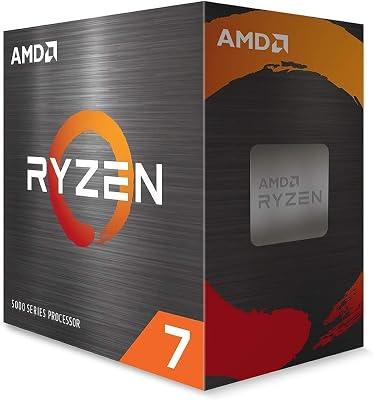
2. AMD Ryzen 7 5800X 8-core, 16-thread unlocked desktop processor
12


As an Amazon Associate we earn from qualifying purchases. Product prices and availability are accurate as of the date/time indicated.
The Ryzen 7 5800X is the high-throughput crunching pick. It shares the eight-core, sixteen-thread layout that suits data analysis but pushes higher clock speeds, which helps single-threaded steps and lightly threaded code paths — the parts of an analytics pipeline that do not parallelise, such as certain pandas operations or sequential data cleaning. At around $210 it pairs that extra speed with the same full PCIe 4.0 and large-DDR4 support on AM4.
Choose the 5800X when your workflow mixes heavily parallel jobs with performance-sensitive single-threaded stages and you want maximum responsiveness. The sixteen threads handle big parallel aggregations while the higher clocks keep interactive analysis snappy, and full memory support lets you load large datasets. The trade-off versus the 5700X is honesty: the 5800X runs hotter and draws more power for that extra clock speed, so it benefits from good cooling, and for many analysts the cheaper, cooler 5700X delivers nearly the same real-world throughput. Pick the 5800X if peak per-core speed alongside eight cores genuinely matters to you.
Pros: Eight cores and sixteen threads with higher clocks for fast single-threaded steps, full PCIe 4.0 and big DDR4 support.
Cons: Runs hotter and draws more power than the 5700X for modest real-world analytics gains; needs decent cooling.
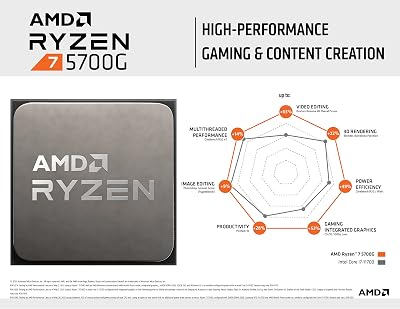
3. AMD Ryzen 7 5700G 8-Core, 16-Thread Desktop Processor with Radeon Graphics

19
AMD Ryzen™ 7 5700G 8-Core, 16-Thread Desktop Processor with Radeon™ Graphics
In Stock





As an Amazon Associate we earn from qualifying purchases. Product prices and availability are accurate as of the date/time indicated.
The Ryzen 7 5700G brings eight cores and sixteen threads plus a useful bonus for analysts: integrated Radeon graphics. At around $208 it lets you build a complete, capable analytics workstation with no discrete GPU at all — ideal for dashboards, BI tools, notebooks and visualisation work that needs display output but not graphics horsepower. The sixteen threads still give solid parallel throughput for pandas, R and SQL on sizeable datasets.
This is the pick for an office or budget build where you want eight-core analytics performance and on-board graphics in one chip, saving the cost and slot of a GPU. The honest caveats are platform ones: as an APU it runs reduced-lane PCIe 3.0, which matters little for pure CPU analytics but limits fast storage and add-in cards, and APUs typically have a smaller L3 cache than the standard 5700X/5800X, which can slightly trim performance on cache-heavy data operations. For GPU-free analytics with eight cores and integrated display, though, it is a smart, self-contained choice.
Pros: Eight cores and sixteen threads plus integrated Radeon graphics for a GPU-free analytics or dashboard workstation.
Cons: APU has reduced PCIe 3.0 lanes and a smaller cache than the 5700X/5800X, slightly trimming heavy data performance.
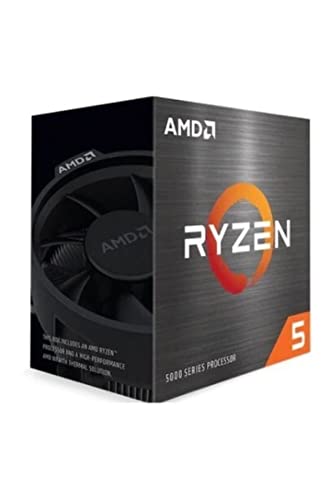
4. AMD Ryzen 5 5600X 6-Core, 12-Thread Unlocked Desktop Processor

10
AMD Ryzen 5 5600X 6-core, 12-thread unlocked desktop processor with Wraith Stealth cooler | 6 Cores and 12 Threads, 3.7ghz Base, Up to 4.6ghz Boost, 32MB L3, 65W Tdp, AM4, Boxed Unit Includes Wraith Stealth Cooler
In Stock


As an Amazon Associate we earn from qualifying purchases. Product prices and availability are accurate as of the date/time indicated.
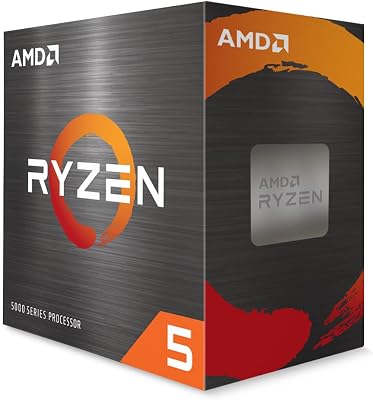
The Ryzen 5 5600X is the balanced six-core analyst’s chip. With six cores and twelve threads at around $180, it offers strong per-core speed and enough parallelism for moderate analytics — medium-sized pandas and R jobs, everyday SQL queries and data cleaning — on the affordable AM4 platform with full PCIe 4.0 and good large-DDR4 support. For datasets that comfortably fit common memory configs, it keeps interactive work responsive.
This is the pick for an analyst whose datasets are sizeable but not enormous, who values snappy per-core performance and wants to keep platform costs sensible. The twelve threads handle typical parallel operations well and the full memory support lets you fit larger tables in RAM. The honest limitation is core count: when datasets grow large or jobs are heavily parallel, the eight-core 5700X and 5800X finish noticeably sooner. As a balanced, well-priced six-core chip for moderate data analysis, though, the 5600X is a dependable middle-ground choice.
Pros: Six cores and twelve threads with strong per-core speed, full PCIe 4.0 and large-DDR4 support, sensible price.
Cons: Six-core ceiling is slower than the eight-core chips on large or heavily parallel datasets.
5. AMD Ryzen 5 5600 6-Core, 12-Thread Unlocked Desktop Processor
2
AMD Ryzen 5 5600 6-Core, 12-Thread Unlocked Desktop Processor with Wraith Stealth Cooler | 6 Cores and 12 Threads, 3.5-4.4ghz, 65W Tdp, Socket AM4, Includes Wraith Stealth Cooler
In Stock
As an Amazon Associate we earn from qualifying purchases. Product prices and availability are accurate as of the date/time indicated.
The Ryzen 5 5600 is the budget six-core value pick for data analysis. At around $146 it delivers the same six cores, twelve threads and full PCIe 4.0 connectivity as the 5600X at marginally lower clocks, with the same broad support for large DDR4 kits. For moderate analytics workloads — notebooks, mid-sized dataframes, routine SQL — that small clock difference rarely shows, making this the smarter spend of the two six-core chips for many analysts.
Pick the 5600 when you want capable six-core, twelve-thread analytics performance and full memory support on a tight budget, and you do not need the absolute peak clocks of the 5600X. It gives you proper PCIe 4.0 for fast NVMe storage to stage datasets and enough threads for everyday parallel work. The honest framing is the same as the 5600X: it is a six-core part, so very large or highly parallel jobs still favour the eight-core options above. For value-focused analysts with moderate datasets, the 5600 hits the price-to-performance target cleanly.
Pros: Same six cores, twelve threads and full PCIe 4.0 as the 5600X for less money, strong large-DDR4 support, great value.
Cons: Six-core limit trails the eight-core chips on big datasets; slightly lower clocks than the 5600X.
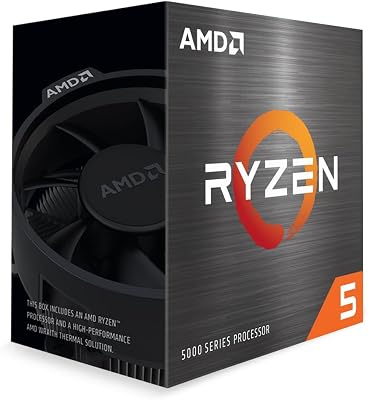
6. AMD Ryzen 5 5500 6-Core, 12-Thread Unlocked Desktop Processor
14
Prime
AMD Ryzen 5 5500 6-Core, 12-Thread Unlocked Desktop Processor with Wraith Stealth Cooler
In Stock





As an Amazon Associate we earn from qualifying purchases. Product prices and availability are accurate as of the date/time indicated.
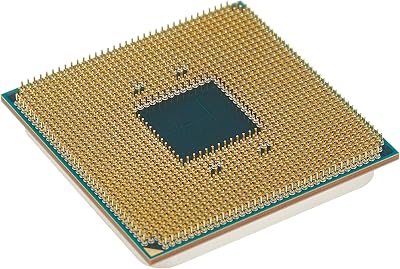
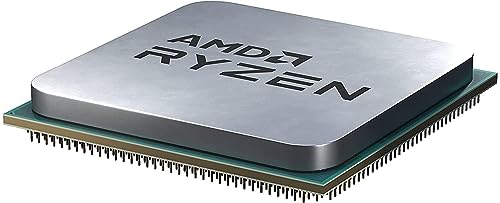
Rounding out the list is the Ryzen 5 5500, the cheapest chip here at around $84 and the one this guide flags as the most limited for serious data analysis. It shows six cores and twelve threads on paper, but it is a cut-down, APU-derived part with reduced-lane PCIe 3.0 and a smaller cache than the other 5000-series chips. For analytics, the reduced cache and slower storage interface can hold back cache-sensitive operations and the fast NVMe staging that big datasets benefit from.
It is not a bad chip for the right buyer: for learning data analysis, working with small to medium dataframes, light SQL, and general office analytics, the 5500 is a capable, remarkably cheap entry point with enough threads to feel responsive. But anyone routinely crunching large datasets should step up to the 5600 or 5600X for full PCIe 4.0 and more cache, or to an eight-core chip for real parallel throughput. We include the 5500 honestly as the rock-bottom option, with the clear note that its cut-down platform makes it the weakest fit here for demanding, memory-heavy analytics.
Pros: Lowest price by far, six cores and twelve threads adequate for learning and small-to-medium datasets.
Cons: Cut-down APU-derived part with PCIe 3.0 and smaller cache; weakest pick here for large, memory-heavy analytics.
How to Choose a CPU for Data Analysis
Unlike a gaming or GPU-training build, a data-analysis workstation puts the CPU and memory at the centre, so spend your budget there. Pandas, R, SQL engines and ETL pipelines are CPU-bound and memory-hungry: they parallelise across threads and need datasets to fit in RAM to stay fast. There is no graphics card to offload the work, which is why this list leads with eight-core chips and prioritises platforms that support plenty of fast memory. Get the cores and the RAM right and everything else follows.
Cores and threads are the headline metric because so much analytics work scales with parallelism. Eight-core, sixteen-thread chips like the 5700X, 5800X and 5700G let groupby aggregations, parallel R jobs, multi-threaded query engines and batch transformations spread across more workers, finishing large jobs sooner than the six-core 5600 series. For moderate datasets six cores are fine, but if your tables are large or your jobs are heavily threaded, the extra cores pay off directly. Match the thread count to how parallel and how big your typical workload really is.
Memory support is the other half of the equation and is easy to under-weight. Big datasets are far faster to analyse when they fit entirely in RAM rather than spilling to disk, so you want a platform that supports a generous, fast memory configuration — and you should budget for the RAM itself, not just the CPU. All the standard AM4 chips here support large dual-channel DDR4 kits well; just note that the cut-down 5500 and the APU-based 5700G have smaller caches than the 5700X/5800X, which can trim performance on cache-heavy operations. Plan your RAM capacity around your largest dataset.
Finally, weigh clocks, platform and value honestly. Higher clocks (the 5800X) help single-threaded and interactive steps but run hotter; the cooler 5700X often delivers nearly the same real-world throughput for less. AM4 is mature and affordable but end-of-line, so factor in limited upgrades. If you want a GPU-free build, the 5700G’s integrated graphics are a genuine convenience for dashboards and BI. Decide your dataset size and parallelism needs, prioritise cores and memory support over peak clock speed, and pick the processor on this list that matches your analytics workload and budget.
Frequently Asked Questions
What matters most in a CPU for data analysis?
Cores, threads and memory support. Data-analysis tools like pandas, R and SQL engines are CPU-bound and memory-hungry: more threads let large jobs run in parallel, and strong RAM support lets big datasets stay in memory instead of spilling to disk. That is why the eight-core chips here (the 5700X, 5800X and 5700G) lead for analytics, while raw single-thread speed matters less than for gaming.
How many cores do I need for analyzing large datasets?
For moderate datasets, six cores and twelve threads (the 5600 or 5600X) are fine. For large datasets or heavily parallel jobs — big groupby aggregations, parallel R, multi-threaded query engines — eight cores and sixteen threads (the 5700X or 5800X) finish noticeably sooner. Buy the thread count that matches how big and how parallel your typical workload is, since analytics scales well with more cores.
Is the Ryzen 7 5700X or 5800X better for analytics?
Both have eight cores and sixteen threads. The 5700X is the value pick — cooler, more efficient, and nearly as fast in real-world analytics for around the same or less money. The 5800X pushes higher clocks that help single-threaded and interactive steps but runs hotter and needs better cooling. Choose the 5700X for best value throughput, or the 5800X if peak per-core speed genuinely matters to your workflow.
Do I need a graphics card for a data-analysis PC?
Usually not. Data analysis runs on the CPU and RAM, so for dashboards, BI tools, notebooks and visualisation you only need display output, not graphics power. The Ryzen 7 5700G includes integrated Radeon graphics, letting you build a complete analytics workstation with no discrete GPU — a tidy, cost-saving option. Add a GPU only if you also do GPU-accelerated work like deep learning or heavy 3D.
Related Guides
- Best CPUs for Machine Learning
- Best RAM for Large Datasets
- Best CPUs for Gaming
- Best NVMe SSDs for Data Staging
- Best Workstation PCs
- Best Motherboards for AM4
Affiliate Disclosure: As an Amazon Associate, we earn from qualifying purchases. If you click a link and make a purchase, we may earn a small commission at no extra cost to you. Prices and availability are accurate as of publication and may change.