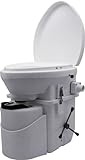
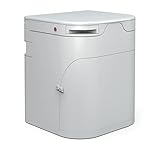
The best composting toilets for off-grid cabins and tiny homes are the Separett Villa 9215 for full-time cabin use with reliable AC or solar power, the Nature’s Head for 12V van and tiny home use without plumbing, and the Sun-Mar Excel for larger cabins that need a high-capacity, batch-style system – the right choice depends on how many people use it daily, whether you have continuous power for venting, and how often you can empty it.
- How to Choose: Capacity, Power, and Venting
- Power vs. Non-Power Models: Which System Fits Your Setup
- Comparison Table: Common Specs for Off-Grid Models
- Worked Calculation: Power Budget for a Continuous Fan
- Venting Requirements That Prevent Odor
- Cleaning and Emptying: What Maintenance Actually Looks Like
- Decision Matrix: Match Your Cabin to the Right Type
- Installation Mistakes to Avoid
- FAQ
As an Amazon Associate we earn from qualifying purchases at no extra cost to you.


How to Choose: Capacity, Power, and Venting
Buying a composting toilet for an off-grid space is not about finding the “best overall” model, it is about matching three constraints that determine whether the toilet will work without odor or constant maintenance.
- Real capacity vs. rated capacity: Manufacturers rate by users, but solids and liquids fill at different rates. A couple using a toilet full-time will fill a liquids bottle in 2-3 days and a solids bin in 3-5 weeks. A weekend cabin with 4 occasional users may go months on solids.
- Venting requirement: All composting toilets need a vent to the outside to remove moisture and odor. Power vent models use a small fan (1.5W to 35W) to create negative pressure. Passive vent models rely on draft and heat and only work well with a straight, vertical vent pipe.
- Power availability: If you have solar and batteries, a continuous 12V or 120V fan is simple and reliable. If you are truly power-free or want zero draw in winter, you need a urine-diverting or batch system designed to work without a fan.
Power vs. Non-Power Models: Which System Fits Your Setup
Electric Urine-Diverting (e.g., Separett Villa 9215, Nature’s Head with 12V fan)
These separate urine from solids at the seat. Urine drains to a bottle, tank, or drain field. Solids fall into a chamber with a compost medium like coconut coir and are mixed with a crank handle. A low-wattage fan runs 24/7 to vent moisture. They do not heat or evaporate liquids – you must handle urine separately, which is an advantage off-grid because you avoid high power draw.
Best for: Tiny homes, vans, and cabins with solar where you want compact size, low power use, and easy emptying without plumbing. Not ideal if you cannot legally or practically drain urine outside and do not want to empty bottles frequently.
Batch and Self-Contained Central (e.g., Sun-Mar Excel, Sun-Mar Centrex series)
These mix urine and solids together in a drum with peat or hemp, and some AC models add a heater and evaporating chamber to reduce liquid volume. They need more space, a larger vent (typically 2 to 4 inch), and for heated versions, significant AC power. Non-electric versions exist but require diligent adding of bulking material and manual cranking.
Best for: Cabins with 3+ full-time occupants or seasonal cabins where many guests visit at once and you want fewer urine bottle changes. Requires room for a larger footprint and a well-installed vent stack through the roof.
Waterless Urine-Diverting Dry Toilets (e.g., Trelino Evo, Trobolo, Cuddy Composting Toilet)
This newer class uses the same separation principle but focuses on simplicity over composting inside the toilet. Solids are collected in a bag with litter material and removed for external composting. Many have no fan or an optional tiny fan. They are lightweight, very low profile, and popular for vans and small trailers.
Best for: Vans, micro cabins, and any build where weight, height, and simplicity matter more than on-board composting. Requires a plan for composting solids externally where allowed.
Comparison Table: Common Specs for Off-Grid Models
| Model Class / Example | Power Draw | Vent Diameter | Solids Capacity (full-time use, 2 people) | Liquids Handling | Approx. Footprint |
|---|---|---|---|---|---|
| Separett Villa 9215 (AC urine-diverting) | 3.4W fan continuous + 0.5W standby; ~45W when auto-mixing | 1.5 inch flexible + 2 inch wall vent | 3-4 weeks per container, external composting required | 1.8 gal container or direct drain to greywater/drain field | 18 x 24 inches, standard toilet height |
| Nature’s Head (12V urine-diverting) | 1.7W 12V fan continuous (0.14A), optional 12V power supply | 1.5 inch hose | 4-6 weeks per solids bin | 2.2 gal bottle | 17.5 x 20 inches, 21.5 inches tall |
| Sun-Mar Excel Self-Contained (electric / non-electric versions) | Non-electric: 0W; Electric: ~270W-365W heater intermittent + 35W fan | 2 inch (non-electric) to 4 inch (electric) | Batch drum: 60-90 uses before drum rotation, seasonal emptying | Evaporating chamber (electric) or overflow drain | 25.5 x 32.5 inches, 28 inches tall |
| Trelino Evo / Trobolo / Cuddy Type (compact diverting) | 0W or optional 0.6W – 1.5W USB fan | None or 1 inch optional | 10-15 uses per 8-10L solids container | 6-10L bottle | 13-15 x 16-18 inches, very low profile |
Market pricing in 2026 is usually $450-$750 for compact diverting toilets, usually $950-$1,150 for a Nature’s Head, usually $1,400-$1,900 for a Separett Villa 9215, and usually $1,600-$2,400 for a Sun-Mar Excel depending on electric or non-electric configuration. Prices vary by retailer and vent kit.
Worked Calculation: Power Budget for a Continuous Fan
A spec sheet that says “low power fan” does not tell you if your solar system can handle it in winter. Calculate daily watt-hours to size your battery.
Example 1: Nature’s Head 12V fan on a tiny home solar system
- Rated draw: 0.14A at 12V = 1.68W
- Continuous run: 1.68W x 24 hours = 40.3 Wh per day
- On a 12V 100Ah lithium battery (1,280 Wh usable): 40.3 Wh is about 3.1% of capacity per day
- On a 200W solar panel averaging 2.5 peak sun hours in winter: 200W x 2.5h x 0.75 system efficiency = 375 Wh per day. The fan uses about 10.7% of daily winter harvest.
Example 2: Separett Villa 9215 on AC via inverter
- Rated fan draw: 3.4W continuous
- Daily energy: 3.4W x 24h = 81.6 Wh per day on AC side. Through an inverter at 88% efficiency: 81.6 / 0.88 = 92.7 Wh from batteries.
- Auto-mix cycle: ~45W for 2 minutes after each use. At 10 uses per day: 45W x (20 min / 60) = 15 Wh extra.
- Total: ~108 Wh per day – still modest for any cabin with a 400W+ solar array, but not zero. Do not put the fan on a timer; odor and moisture control requires 24/7 negative pressure.
If you are building a power-free cabin with no solar, any continuous draw is too much in January. Choose a non-electric batch toilet or a compact diverting toilet and focus on vent draft instead of a fan.
Venting Requirements That Prevent Odor
Most odor complaints come from poor vent installation, not the toilet model.
- Route: Run the vent as straight and vertical as possible through the roof. Every 90-degree elbow reduces draft significantly. For passive systems, a vertical stack 2-3 feet above the roof peak is ideal.
- Diameter: Do not reduce the vent size. Use the diameter specified in the manual (often 1.5 inch for diverting toilets, 2-4 inch for batch systems). Undersized hose creates moisture buildup and uric acid smell.
- Sealing: The vent must pull air from the toilet, not the room. Seal the hose at the toilet adapter and use the supplied screen and roof cap to prevent insect entry without blocking airflow.
- Makeup air: A tightly sealed cabin needs a small air gap under the bathroom door or a passive vent so the fan can pull air through the toilet. In an airtight build, a fan-starved toilet will pull negative pressure and fail to vent.
- Condensation control: In cold climates, insulate the vent hose in unheated attic or wall cavities and slope any horizontal run back toward the toilet so condensate drains. A dip that traps liquid will block airflow and freeze.
Cleaning and Emptying: What Maintenance Actually Looks Like
Urine-Diverting Models (Separett, Nature’s Head, Trelino-style)
- Solids bin: Add 1-2 inches of coconut coir or hemp before use. After each solid use, turn the agitator handle 2-3 rotations. Do not add water. When full (handle gets hard to turn), bag the contents for external composting where regulations allow. Clean the bin with a vinegar-water mix, never harsh chemicals that kill composting microbes.
- Urine system: Empty bottles every 2-4 days for two full-time users. Rinse with 1:10 vinegar to water to prevent mineral scale. If plumbed to a drain, flush the urine hose weekly with warm water and vinegar to prevent struvite blockage – this is the most common clog in these systems.
- Deep clean: Monthly, wipe the urine diverter with a diluted vinegar solution and check the fan filter for dust. Do not use bleach or ammonia cleaners on seals.
Batch / Self-Contained Models (Sun-Mar)
- Drum rotation: Turn the drum handle backward 2-3 turns every few days to aerate. Pull the drum out and empty aged compost every 2-4 months depending on use. You will need a secondary compost pile to finish the process for a full year before garden use in most jurisdictions.
- Bulking material: Add the proprietary peat blend or approved hemp after each solid use. Without enough carbon material, the drum becomes too wet and anaerobic.
- Heater and evaporation area: On electric models, clean any mineral buildup from the evaporation tray at the start of the season. Keep the overflow drain clear so excess liquid does not flood the compost drum.
Decision Matrix: Match Your Cabin to the Right Type
| Your Situation | Recommended Type | Why |
|---|---|---|
| Van / skoolie / tiny home on wheels, 1-2 people, limited solar (200-400W) | Compact diverting (Trelino/Cuddy class) or Nature’s Head | Smallest size, lowest power draw, easy to remove and empty without external plumbing |
| Off-grid tiny home, 2 people full-time, 400W+ solar + roof vent possible | Separett Villa 9215 or Nature’s Head | Continuous fan solves odor in tight spaces, urine diversion keeps moisture out of solids |
| Weekend cabin, 2-6 occasional guests, no consistent power in winter | Sun-Mar Excel Non-Electric or batch-style diverting | Handles surge use without bottles filling mid-weekend, works without power if vent is vertical |
| Full-time family cabin, 3-5 people, AC power from solar or generator | Sun-Mar Excel Electric or Sun-Mar Centrex 2000 (central) | Largest batch capacity and evaporation for high total volume, needs space and power |
| Extremely cold climate (-20C and below), unheated cabin part-time | Non-electric urine-diverting + insulated vent | Heated evaporating models waste too much energy when unoccupied, and fans can freeze condensate in long horizontal runs |
Installation Mistakes to Avoid
- Using a flexible dryer hose with ridges for venting. Use smooth-wall pipe or the supplied hose; ridges trap condensate and odor.
- Venting out a side wall with multiple elbows instead of the roof. If you must go out a wall, add an inline fan and keep the run under 6 feet with a rain cap.
- Not anchoring the toilet in a van. Road vibration will crack an unsecured vent joint and loosen the urine hose.
- Throwing standard toilet paper into compact diverting toilets. Use rapid-dissolve or single-ply and add less than you think – excess paper creates bridging and prevents agitation.
- Composting inside the toilet and calling it finished. All self-contained toilets only start the process. In most US states and Canadian provinces, you must finish compost for 6-12 months in an external, enclosed compost pile and check local health department rules before any garden application.
FAQ
Do composting toilets smell inside the cabin?
When vented correctly with continuous negative pressure, there should be no odor inside. Any sewage smell means the fan is off, the vent is blocked or too long, or urine is leaking into the solids chamber. Check the vent cap for wasp nests and the urine diverter for scale buildup first.
Can I put a composting toilet in a van without cutting a hole for a vent?
You can use a fan-less compact model without a vent, but you will need to empty solids more often and manage moisture carefully with extra cover material. For full-time living, a 1.5 inch hole with a roof or sidewall vent and a small 12V fan makes the system far more forgiving and is the standard installation for Nature’s Head and similar models.
What happens to urine if I cannot drain it outside?
Store it in sealed containers and follow local regulations for disposal. Never connect urine directly to a septic without permission – the high salt and nitrogen can disrupt it. Many off-grid users dilute urine 8:1 with water for approved greywater dispersal where allowed, but rules vary by county.
Do I need special toilet paper?
Use toilet paper labeled septic-safe or rapid-dissolving. Avoid ultra-thick quilted rolls and wet wipes, even those marked flushable, as they do not break down in a compost chamber and will jam the agitator.
Ready to decide? Our #1 pick for 2026 is the Separett Villa 9215 (AC urine-diverting).
Live price & availability on Amazon.