Disclosure: As an Amazon Associate we earn from qualifying purchases.
Abandoned buildings are some of the hardest interiors a camera will ever face. Window light falls off fast, halls and basements sit close to darkness, dust hangs in the air, and floors are rarely flat enough to trust. The cameras below were chosen for the traits that actually matter in those spaces: clean files at high ISO, in-body stabilization for handheld shots where a tripod will not fit, weather and dust sealing, access to genuinely wide lenses, and a size you can carry for hours.
One ground rule before any gear talk: explore only with permission, watch every step on weakened floors and stairs, and treat dust masks and a good light as essential kit rather than accessories.
What matters inside a derelict building
- High-ISO behaviour and dynamic range. Interiors mix black corners with blown-out window light. A sensor that holds detail at ISO 3200–12800 and keeps shadow detail in RAW gives you room to work.
- In-body image stabilization (IBIS). Tripods are the right tool for long exposures, but rubble, water and tight stairwells often rule them out. Strong IBIS buys handheld shutter speeds that would otherwise be impossible.
- Weather and dust sealing. Decaying buildings are dusty, damp places. Sealed bodies and sealed lenses shrug off conditions that would end a shoot with an unsealed kit.
- A wide-angle lens ecosystem. Rooms are small and facades are tall. Every system below offers native lenses at 14–16mm on full frame (or the APS-C equivalent), which is where this genre lives.
- Weight. Sites are often reached on foot. A body that saves a few hundred grams matters by the third location of the day.
A tripod and a portable light are separate purchases, and for this genre they are not optional extras: no camera on this page replaces a tripod for multi-second exposures or a light panel for a windowless room. Budget for them alongside the body.
1. Canon EOS R6 Mark II — the low-light all-rounder

Canon’s R6 Mark II pairs a 24.2MP full-frame sensor with a native ISO range of 100–102,400, which is exactly the profile urbex work rewards: moderate resolution, large pixels, and files that stay usable deep into the ISO range. Canon publishes up to 8 stops of coordinated stabilization with compatible RF lenses, so handheld frames in dim halls stay practical, and the body is dust and water resistant. The RF mount’s wide end is strong, with the RF 14-35mm f/4L IS USM and RF 15-35mm f/2.8L IS USM covering everything from cellars to full facades.
Specs
- Sensor: 24.2MP full-frame CMOS
- Native ISO: 100–102,400
- IBIS: up to 8 stops (coordinated IS, Canon figure with compatible lenses)
- Sealing: dust and water resistant construction
- Weight: approx. 670 g with battery and card
- Mount: Canon RF
2. Nikon Z6 III — sealing and stabilization for rough sites

The Z6 III uses Nikon’s 24.5MP partially stacked full-frame sensor with a native ISO range of 100–64,000, and Nikon publishes in-body stabilization of up to 8 stops. Its Amazon listing highlights dust and drip resistance at the same level as the flagship Z8 and operation down to -10°C, which suits unheated buildings in winter. On the lens side, the NIKKOR Z 14-24mm f/2.8 S and the lighter 14-30mm f/4 S give two very different wide options for the same mount.
Specs
- Sensor: 24.5MP partially stacked full-frame CMOS
- Native ISO: 100–64,000
- IBIS: up to 8 stops (Nikon figure)
- Sealing: dust and drip resistance, body listed as operating to -10°C
- Weight: approx. 670 g body only (listing figure)
- Mount: Nikon Z
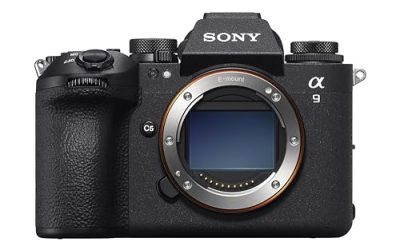
3. Sony a7C II — full frame that disappears in a bag

The a7C II puts Sony’s 33MP full-frame sensor into a rangefinder-style body of about 514 g with battery and card, per Sony — the lightest full-frame option here and the easiest to carry between locations. Sony publishes up to 7 stops of in-body stabilization, the native ISO range runs to 51,200, and the body is dust and moisture resistant. E-mount has the deepest wide-angle catalogue of any system on this page, from Sony’s own FE 12-24mm and 16-35mm zooms to smaller third-party options that keep the whole kit compact.
Specs
- Sensor: 33MP full-frame Exmor R CMOS
- Native ISO: 100–51,200
- IBIS: up to 7 stops (Sony figure)
- Sealing: dust and moisture resistant
- Weight: approx. 514 g with battery and card
- Mount: Sony E
4. Panasonic LUMIX S5 II — Dual Native ISO for dark interiors

Panasonic’s Dual Native ISO design is a direct answer to mixed, murky light: the 24.2MP full-frame sensor keeps noise down across a native range of 100–51,200, and the listing highlights the camera’s Active I.S. stabilization for handheld work. The body is splash and dust resistant. As an L-Mount Alliance camera it shares lenses with Leica and Sigma, and Sigma’s 14-24mm f/2.8 DG DN Art is one of the strongest wide zooms available for interiors on any mount.
Specs
- Sensor: 24.2MP full-frame CMOS with Dual Native ISO
- Native ISO: 100–51,200
- IBIS: 5-axis in-body stabilization with Active I.S.
- Sealing: splash and dust resistant
- Weight: approx. 740 g with battery and card
- Mount: L-Mount
5. Fujifilm X-T5 — the high-resolution walker

The X-T5 is the APS-C entry, and it earns its place on detail and weight: a 40.2MP X-Trans sensor resolves peeling paint and brick texture beautifully, Fujifilm publishes up to 7 stops of in-body stabilization, and the body is weather resistant at about 557 g with battery and card. Its native ISO ceiling of 12,800 is lower than the full-frame bodies here, so it asks for a tripod sooner in the darkest rooms — the honest trade for the smaller kit. The XF 8-16mm f/2.8 R LM WR and XF 10-24mm f/4 R OIS WR cover the wide end in sealed Fujinon glass.
Specs
- Sensor: 40.2MP APS-C X-Trans CMOS 5 HR
- Native ISO: 125–12,800
- IBIS: up to 7 stops (Fujifilm figure)
- Sealing: weather resistant body
- Weight: approx. 557 g with battery and card
- Mount: Fujifilm X
How to choose
Pick the R6 Mark II or Z6 III if low light is your whole game: both combine high ISO ceilings, the strongest stabilization figures here, and serious sealing. Choose the a7C II if you walk far between sites and want full-frame quality in the smallest body, or the S5 II if Dual Native ISO and the L-Mount lens pool appeal. Take the X-T5 if you value resolution and classic dials and are happy to lean on a tripod in the darkest spaces.
Whichever body you choose, pair it with a sealed wide zoom, a tripod you trust on uneven floors, and a compact light for windowless rooms — the camera is only one third of an urbex kit. If you are earlier in your photography journey and still building basic skills, our roundup of the best cameras for photography students is a gentler place to start before spending on a sealed body.