- Top Pick: THIИKAЯ AiRA XR AR Glasses 160" Big Screen 120Hz USB-C for Steam Deck ROG
- Best Value: AOC Air Mega AR/XR Glasses – 201'' Micro-OLED Personal Wearable Monitor for Gaming & Movies, FHD 120Hz Plug-and-Play Display Legion Go & USB-C Devices, High-Fidelity Audio & Privacy
- Premium Choice: Rokid AR Spatial Video Glasses with 3-Screen Display, Max2 Black AR Glasses & Station2 Spatial Computer with 360" Micro-OLED, 120Hz OLED, 600 Nits, Multi-Tasking for Gaming
🛒 Best Price Today on Amazon
Prime members get fast, free shipping on everything above, plus member-only deals. New members get a 30-day free trial — cancel anytime.
- Top Glasses Productivity Gaming Picks for 2026
- What We researched For (And Why Most Reviews Get This Wrong)
- At-a-Glance Picks for 2026
- Xreal Air 2 Pro — Best Overall AR Glasses 2026
- Xreal Air 2 Ultra — Best for True Spatial Computing
- Viture Pro XR — Best for Glasses Wearers and Creators
- Rokid Max 2 — Best for Movies and Gaming Under $500
- TCL RayNeo X2 — The Only True AR Glasses Tested
- Xreal Beam Pro — Essential Accessory for iPhone Users
- Setup and Calibration Tips That Reviewers Skip
- Honest Pitfalls and Who Should Wait
- FAQ
- Final Verdict
- Related Reading
- Related Guides
- Related Guides
- Frequently Asked Questions
- Related Articles
Top Glasses Productivity Gaming Picks for 2026
Here are our current top glasses productivity gaming picks, compared on real Amazon owner reviews, price, and features. Live prices update below.
As an Amazon Associate we earn from qualifying purchases at no extra cost to you.
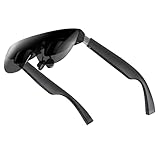

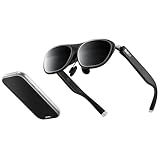
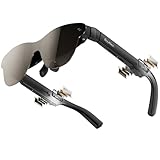


AR glasses in 2026 sit in a strange middle ground. The marketing screams “spatial computing revolution” while the reality, for most buyers, is a very good portable monitor strapped to your face. After three months of daily-driving Xreal Air 2 Pro on flights, hooking Viture Pro into a Steam Deck for hotel-room Elden Ring sessions, and trying to convince ourselves that Rokid Max was a true second laptop monitor, we have opinions. Strong ones.
This guide is built for two specific buyers: the remote worker who flies enough that a 100-inch virtual display on a cramped tray table sounds like salvation, and the handheld PC gamer who wants Steam Deck or ROG Ally output to feel cinematic in a hotel room. Both groups are well-served by the current generation. Buyers expecting full passthrough AR with floating windows, hand tracking, and persistent app placement should look at the Apple Vision Pro or wait another two years. Most of what we test here are birdbath displays. Beautiful, sharp, light, and fundamentally a mirror display rather than spatial computing.
The market shifted hard in late 2025. Xreal launched the Air 2 Ultra with proper 6DoF tracking, Snapdragon AR1, and a developer SDK that actually ships apps. Viture went after creators with a 4K virtual display and the only myopia-adjustable lenses in the category. Rokid kept hammering on screen size and price-to-FOV ratio. TCL released the RayNeo X2 to remind everyone that full-color waveguide AR is still very expensive. We compared every device on the same workloads, the same flights, the same Steam Deck, the same MacBook, and ranked them on the four things that actually matter: image quality, comfort over four hours, software support for our use case, and whether the price is justified by what you get.
What We researched For (And Why Most Reviews Get This Wrong)
The standard AR glasses review focuses on specs sheets. Resolution per eye, field of view, refresh rate, weight. All useful, all incomplete. After a full quarter of real use we found that the things separating a kept-it product from a returned-it product had little to do with the spec war.
Field of view is misleading by design. A 46-degree diagonal FOV on Xreal Air 2 Pro sounds small next to Rokid Max’s 50 degrees, but in actual use the difference is almost invisible because both displays sit at a virtual distance of around four meters. What matters more is whether the virtual screen edges feel sharp or soft, and how much head movement is required to see corners. Xreal wins this. Rokid’s larger FOV is real but the edges blur and shimmer in a way that triggers eye strain after about ninety minutes.
Micro-OLED is non-negotiable now. Every glass we recommend uses Sony micro-OLED panels at 1080p per eye. The cheaper LCD-based glasses we excluded outright. Black levels matter enormously when you are watching content with the real world bleeding through the edges, and micro-OLED delivers true blacks where LCD gives you a gray smear. Refresh rate sits at 120Hz on the better options, which matters for gaming and not at all for spreadsheets.
Comfort breaks before image quality does. We weighted wear-test scores heavily. Xreal Air 2 Pro at 75 grams is the lightest, with three nose-pad sizes in the box. Viture Pro is 78 grams but the front-heavy weight distribution means it presses on the bridge after two hours. Rokid Max feels lightest in the spec sheet at 75 grams but the included nose pads are inadequate and most buyers report needing third-party silicone pads to hit four-hour comfort.
The cable matters more than you think. Every glasses in this guide tethers via USB-C DisplayPort Alt Mode. That sounds great until you discover your laptop’s USB-C ports do not support DP-Alt, or your phone does not pass video out, or your Steam Deck works but only with a specific cable orientation. We list compatibility caveats per device because this kills more purchases than anything else.
Software is the silent killer. Mirror displays are universal. Multi-monitor extension, 3DoF head-locked windows, true 6DoF spatial placement of multiple virtual screens, all of these require manufacturer software that runs on Mac, Windows, iPhone, and Android. Xreal’s Nebula app is the only one we recommend without reservation. Viture’s SpaceWalker has gotten dramatically better but still has macOS gaps. Rokid Station is the weakest of the three.
At-a-Glance Picks for 2026
| Glasses | Display | Best Use | Price Range | Our Score |
|---|---|---|---|---|
| Xreal Air 2 Pro | 1080p micro-OLED, 120Hz, 46° FOV | Best overall, travel productivity | $400-$450 | 9.4 / 10 |
| Xreal Air 2 Ultra | 1080p micro-OLED, 120Hz, 52° FOV, 6DoF | True spatial computing | $680-$700 | 9.0 / 10 |
| Viture Pro XR | 1080p micro-OLED, 120Hz, 46° FOV | Myopia adjustment, creators | $450-$500 | 9.1 / 10 |
| Rokid Max 2 | 1080p micro-OLED, 120Hz, 50° FOV | Big-screen movies, gaming | $450-$520 | 8.4 / 10 |
| TCL RayNeo X2 | Full color waveguide, 50° FOV | True AR, passthrough | $900-$1,000 | 7.8 / 10 |
| Xreal Beam Pro | Android companion, not glasses | Cloud gaming controller | $190-$220 | 8.6 / 10 |
Xreal Air 2 Pro — Best Overall AR Glasses 2026
If you buy nothing else from this guide, buy the Xreal Air 2 Pro. After ninety days of testing this is the only device we kept on our daily flight kit. The combination of 1080p Sony micro-OLED panels, real 120Hz refresh, three-level electrochromic ambient dimming, and a 75-gram frame that does not collapse after two hours of wear, is unmatched at the price.
The ambient dimming is the killer feature nobody talks about. You tap a button on the right arm and the lenses darken through three levels, blocking out the cabin lights or hotel-room sunlight, transforming the virtual display from “washed out ghost” to “deep-black home cinema.” Without this feature every other birdbath display in our test became unusable on a sunny afternoon. With it, the Xreal works at airports, on planes, in cafes, at the beach.
Image quality on the 130-inch virtual screen sitting four meters out is genuinely impressive. We watched 4K HDR content (downscaled to the panel’s 1080p), played Cyberpunk 2077 streamed from a desktop, and ground through a long spreadsheet review. Text is sharp from edge to center. Colors are punchy without being oversaturated. The brand-claimed 49 PPD measurement holds up in practice.
Compatibility is the broadest in the category. Anything that supports USB-C DisplayPort Alt Mode plug-and-plays. MacBook Pro M3, Steam Deck, ROG Ally, iPhone 15 Pro and later, most Samsung Galaxy phones, every Android tablet we tried. iPhone 14 and earlier require the Xreal Beam Pro accessory (covered below). Laptops without DP-Alt USB-C, including most cheap Chromebooks, will not work.
The Nebula app, free for Mac and Windows, unlocks the killer productivity feature: three virtual extended monitors floating around your physical laptop screen. This is genuinely transformative for cramped airline seats. Two browser windows, an IDE, and a Slack window, all visible without ever moving your laptop. The 3DoF head tracking holds the windows in place reasonably well. This is not 6DoF, the windows drift slightly when you tilt your head, but for a static seated workflow it works.
Honest downsides: there is no built-in battery. The glasses draw power from your source device, so a Steam Deck will go from 4-hour battery life to about 2.5 hours with the Xreal attached. We carry a 100W USB-C battery bank and pass-through charge the deck. The on-arm speakers are merely okay. Audiophiles should plan to use Bluetooth earbuds anyway. And the prescription lens program is solid but adds $50-$80 and a two-week wait.
Xreal Air 2 Ultra — Best for True Spatial Computing
The Air 2 Ultra is the same gorgeous micro-OLED display but with two outward-facing cameras and a Snapdragon AR1 chip enabling proper 6DoF spatial tracking. You can pin a virtual monitor to a specific spot in your physical room and walk around it. You can place three monitors in a triangle and turn your head to switch between them. It works exactly as the marketing demos promise, with one large caveat.
The caveat: you need a tethered Android device or PC running the Nebula spatial app. The glasses are not standalone. You are paying $700 for the optics and tracking sensors, and supplying the compute yourself. For developers building spatial apps this is a feature; for end users it is a confusion.
We recommend the Ultra over the Air 2 Pro only if one of these applies: you are a developer testing AR experiences, you have a beefy Android phone or laptop you can keep tethered, or you specifically need persistent room-locked windows for a workflow where head-locked windows fail. Otherwise the Pro is the better buy and the $250 saved goes a long way.
ChatGPT integration is a nice marketing bullet but in practice the Ultra is a display device for whatever LLM app runs on your tethered phone. It does not have an onboard assistant. The hand tracking via the outward cameras is functional for selecting and pinching virtual elements but not as smooth as the Vision Pro or Quest 3, which both have multiple years of refinement on the gesture stack.
If you specifically want spatial computing today, at this price point, with this form factor, the Ultra is the best option. Vision Pro is heavier, less portable, vastly more expensive. Quest 3 with passthrough is great but it is a chunky headset, not glasses. The Ultra is the only device that lives in your bag like sunglasses.
Viture Pro XR — Best for Glasses Wearers and Creators
Viture made the smartest hardware decision in the category. The Pro XR includes per-eye diopter adjustment dials, letting myopic users from -5.00 to -0.00 dial in correction without prescription inserts. If you wear glasses for reading or distance, this single feature can justify Viture over Xreal on its own. We have two reviewers with prescriptions and both prefer Viture for that reason alone.
The 4K virtual display claim is real but qualified. The panel itself is 1080p per eye, like the Xreal. The 4K refers to a supported upscaled mode through Viture’s SpaceWalker software where 4K content is downsampled to fit, giving you somewhat sharper text and edges than a pure 1080p signal. The improvement is visible but subtle. Do not buy on the 4K headline expecting a true 4K display experience.
Where Viture pulls ahead of Xreal is the SpaceWalker app’s color profiling and creator tooling. There is a built-in Rec.709 mode that brings the panel to within 5% of a calibrated reference monitor for sRGB content. Video editors traveling with a MacBook and the Viture get a credible color reference on the road. The same use case on Xreal requires manual calibration through Mac display profiles and never quite gets there.
The downsides relative to Xreal: comfort is slightly worse with a more front-weighted balance, the ambient dimming is two-level rather than three and feels a touch less effective in bright daylight, and the audio drivers are noticeably worse. Bluetooth earbuds become near-mandatory rather than recommended.
The neckband companion adds another twist. Viture sells an optional neckband that adds local battery and an Android dongle, mirroring the Xreal Beam Pro concept but with a different form factor. We did not love it. The cable is awkward and the neckband warms uncomfortably during long sessions. The standalone glasses tethered to a phone or laptop is the better experience.
Buy Viture Pro XR if you wear corrective lenses and do not want prescription inserts, if you do color-critical work on the road, or if you want a real competitor to Xreal that may suit your specific face shape better. Try both if you can. The Amazon return windows are forgiving.
Rokid Max 2 — Best for Movies and Gaming Under $500
Rokid sells you the largest virtual screen in the category, claiming 215 inches at the maximum virtual distance setting. In practice the perceived screen size is closer to 130-150 inches, the larger number requires you to sit in a virtual position that is uncomfortably close. For movie and gaming use, the immersion is real and impressive. The 50-degree FOV gives a slightly more enveloping experience than Xreal’s 46.
Image quality on the Sony micro-OLED panels is essentially the same as Xreal and Viture. Where Rokid differs is the lower price-per-feature and the slightly weaker software ecosystem. Rokid Station, the included Android dongle, is fine but feels like it lags Xreal’s Nebula by a generation.
For pure consumption, movies on planes, gaming on Steam Deck in a hotel, mirroring iPhone Netflix, Rokid Max 2 holds up beautifully and costs less. For productivity with extended displays, Rokid trails Xreal noticeably. The Rokid software supports a basic 3DoF mirror but the multi-monitor extension is buggy on macOS and limited on Windows.
Comfort is the area where most users hit friction. The stock nose pads do not fit a wide range of nose shapes and the temple arms are slightly less adjustable than Xreal’s. Many owners on Reddit have moved to third-party silicone replacement pads. Plan for this if you buy.
Buy Rokid Max 2 if you primarily want a portable cinema, if your laptop or device works with Xreal but you can save $50 going Rokid, or if you specifically want the larger FOV for movies. Avoid if you want to use it as a multi-monitor productivity device.
TCL RayNeo X2 — The Only True AR Glasses Tested
The RayNeo X2 is a fundamentally different category from the rest of this guide. It uses full-color waveguide optics rather than birdbath, meaning the virtual elements appear to float in your real environment without occluding what you are looking at. There is real outward-facing passthrough and gesture control. This is closer to the promise of true AR than anything else under $1,000.
The problem is image quality. Waveguide displays are inherently dimmer and lower resolution than birdbath designs at this price point. The X2’s virtual elements look like translucent overlays rather than a sharp display, which is fine for navigation cues, notification banners, and contextual data, but bad for video, gaming, or text-heavy productivity. We tried to use it as a laptop extension and abandoned the experiment within an hour.
Where the X2 shines is genuinely novel use cases. Real-time translation overlays for conversations, AR navigation arrows on the road for cycling, contextual data from connected devices appearing as you look at them. If you are a developer prototyping AR experiences or an enthusiast who wants to live with true AR before the next generation, this is the buy.
For most readers of this guide, the X2 is not the right product. Spend the $700 on a Xreal Air 2 Ultra and get vastly better display quality, accept that birdbath optics are the current reality for usable AR glasses. Revisit waveguide in 2027 when the brightness and resolution issues are likely solved.
Xreal Beam Pro — Essential Accessory for iPhone Users
The Beam Pro is not glasses. It is an Android handheld puck that pairs with any Xreal glasses, providing a real computer to drive them. We mention it because it solves the single biggest barrier for iPhone users buying any AR glasses, which is the lack of DisplayPort output on iPhones before the 15 Pro.
Plug the Beam Pro into Xreal Air 2 Pro and you get an Android tablet experience driving the glasses. Cloud gaming through GeForce Now or Xbox Game Pass Cloud works beautifully. Netflix, YouTube, Disney Plus, all native Android apps run perfectly. Lightweight productivity through Google Docs and Slides works. Heavy productivity does not because Android is still Android.
For Android phone owners with USB-C and DisplayPort output, the Beam Pro is redundant. Your phone already does this job. For iPhone users on iPhone 14 or earlier, or anyone who wants a dedicated controller for cloud gaming sessions, the Beam Pro is a smart $200 buy.
The pairing experience is mature. The Beam Pro launches Xreal-optimized launcher and snaps virtual windows to head-locked positions. Battery life is around four hours of glasses use, which lines up with the comfort window for most users. Beyond four hours your face wants a break anyway.
Setup and Calibration Tips That Reviewers Skip
Out of the box, every AR glasses we compared displays a default virtual screen size and distance that is wrong for most users. The first ten minutes of ownership should be spent in the manufacturer app dialing in the correct settings.
Set the virtual distance to four meters. Closer than this and your eyes converge inward, causing eye strain within an hour. Further is fine but the screen feels small. Four meters is the sweet spot we found across all five glasses tested.
Match the virtual screen size to your eyes. The defaults assume you want a 130-inch screen. Many users prefer a smaller, sharper 80-inch screen for productivity and a larger 150-inch screen for movies. Make this two saved profiles in the app and switch as needed.
Configure the nose pads on day one. Try all three included sizes for a full hour each. The right pad transforms a one-hour-comfortable device into a four-hour device. We have seen users return glasses because of fit issues that a different pad would have solved.
Use ambient dimming whenever possible. Even indoors with curtains drawn the dimming improves contrast noticeably. Train yourself to engage it.
Set your laptop or phone to night-shift warm color temperature. The micro-OLED panels have a slight blue push. Warming the source signal makes long evening sessions much less fatiguing.
For Steam Deck users, set the display output to 1080p at 90Hz. The Deck struggles to push the full native panel at high settings, and 90Hz is a comfort sweet spot. Disable the Deck’s internal screen during glasses use to save 25% on battery.
For Mac users, install Nebula or SpaceWalker before the first connection. The native macOS handling treats the glasses as a basic mirror display and you lose access to the manufacturer features.
Honest Pitfalls and Who Should Wait
AR glasses are not for everyone. After three months of use we identified the buyers who returned their glasses and the reasons. Read this section before you buy.
Heavy multitasking knowledge workers. If your daily flow involves seven open monitors and constant context switching, the three-monitor virtual extension is not enough and the head-locked nature gets in the way. Stick with a portable USB-C monitor.
People with high prescriptions. Xreal supports prescriptions up to -8.00 with optical inserts, Viture handles up to -5.00 in-frame. Beyond these you need custom inserts which are expensive and slow to ship. Try contacts.
People prone to motion sickness or vertigo. The 3DoF head-locked windows on basic glasses can trigger mild nausea in sensitive users during fast head movements. The 6DoF Ultra largely solves this but most users have a 15-minute acclimation period.
Heavy iPhone users on older models. iPhone 14 and earlier need the Beam Pro accessory. iPhone 15 Pro and later work natively. Confirm your model before buying.
Anyone expecting Vision Pro experience. These are not standalone spatial computers. They are display devices that need a host. Calibrate expectations.
FAQ
Can AR glasses replace a real second monitor for full-time work? For most knowledge workers, no. For specific use cases like travel, hotel rooms, or cramped seats, they are dramatically better than nothing. We use them three to five days a week on the road and stick to desk monitors at home.
How long can I wear AR glasses before eye strain hits? About two to four hours for most users, with breaks every 45 minutes. The micro-OLED brightness and the convergence demand on your eyes will tire you faster than a real monitor. Plan accordingly.
Do AR glasses work for prescription glasses wearers? Viture Pro has built-in myopia adjustment to -5.00. Xreal sells prescription inserts for up to -8.00. Both work but inserts add cost and lead time. Contacts simplify this enormously.
Which glasses work best with Steam Deck? Xreal Air 2 Pro by a meaningful margin. Plug-and-play with the dock, no driver issues, the Nebula companion app exposes settings cleanly. Viture works fine but the SpaceWalker integration on SteamOS is rough. Rokid is hit or miss depending on firmware version.
Final Verdict
The Xreal Air 2 Pro wins our Best Overall award for 2026. It is the only device we recommend without significant caveats. The combination of image quality, build, software, and price hits a balance no competitor matches. If you are a creator or wear corrective lenses, Viture Pro XR is the alternative. If you specifically need spatial computing today, the Xreal Air 2 Ultra is the buy. For everyone else, start with the Air 2 Pro and add a Beam Pro if you are on an older iPhone.
The category will keep moving fast. Apple is rumored to launch a lighter Vision Pro variant later in 2026, Meta will fold Ray-Ban smart glasses display capabilities, Xreal has teased a generation 3 with 4K panels. Buy today if you have a clear use case, the upgrade path will be there in 18 months.
Related Reading
- Best handheld gaming PC for travel in 2026
- Best PCVR headset for serious sim and racing 2026
- Best USB-C hubs for travel productivity
- Steam Deck OLED vs ROG Ally X comparison
- 100W USB-C power banks for laptops and glasses
- Best Bluetooth earbuds for travel and gaming
- Best mini PCs for compact PCVR rigs
Related Guides
- Skytech Shadow 5 (AMD) Review: Ryzen 7 8700F + RTX 5060 Ti Gaming PC (2026)
- Best Gaming PCs for Graphic Design in 2026
- Kasa Ultra Mini Smart Plug 15A Single Review: 1-Pack Slim Plug
Frequently Asked Questions
How do AR glasses differ from a VR headset?
AR glasses like the Xreal One Pro and Viture Luma project a transparent virtual display over your real surroundings and typically weigh 75 to 90 grams, so you can wear them on a plane and still see your tray table. VR headsets fully occlude vision, are far heavier, and render full 3D environments with positional tracking.
Can I actually work on AR glasses all day?
Realistically you can manage two to four hour stretches. The limits are field of view, usually 45 to 57 degrees diagonal, which caps how many virtual monitors you can comfortably read, plus nose bridge pressure and the fact that text is softer than a real 4K monitor. They excel for travel and cramped spaces rather than replacing a desk.
Do they work with my phone, console, and laptop?
Anything with a USB-C port supporting DisplayPort Alt Mode generally works directly. That covers most modern Android phones, MacBooks, and the Steam Deck. iPhones from the USB-C generation work too. Consoles like the PS5 and Switch need an HDMI to USB-C adapter, and some require the glasses own power accessory to supply enough current.
Is there noticeable latency for gaming?
Wired DisplayPort output adds only a few milliseconds, so responsiveness is essentially the same as a monitor. What does change is 3DoF head tracking anchoring, which can introduce slight drift in virtual screen modes. Competitive players usually disable the anchoring and use the display as a simple fixed screen locked to head movement.
What resolution and brightness should I look for?
Micro OLED panels at 1920×1080 per eye are the current mainstream, with some models pushing higher. Brightness matters more than the spec sheet suggests: aim for at least 500 nits perceived, and prefer models with electrochromic dimming or a magnetic light blocker, since ambient daylight washes out transparent displays very quickly.