

- Top Pick: Iconikal What's My Password Keypass Organizer 8×5" 102 Pages
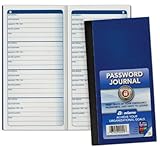
- Best Value: Adams Password Journal, 1 Count, 6.25 x 3.25 Inches, Blue, Alphabetically Organized with 4 Entries Per Page, 48 Pages, Pocket-Sized Login Companion (APJ99)
- Premium Choice: WEMATE Password Book with Alphabetical Tabs, Small 4.7×6 in – Black
🛒 Best Price Today on Amazon
Prime members get fast, free shipping on everything above, plus member-only deals. New members get a 30-day free trial — cancel anytime.
- Top Password Manager Gamers 1Password Bitwarden Picks for 2026
- Why password managers became non-negotiable for gamers in 2026
- What we evaluated and How We Compared
- At-a-glance comparison table
- 1Password — the polished pick we keep recommending
- Bitwarden — the open-source choice that everyone should know about
- Dashlane — the security-and-VPN bundle
- Pricing comparison — what you actually pay per year
- FAQ
- Real-world testing — what we actually broke
- What we wish each manager would fix
- Migration — moving from your current setup
- Final verdict — we recommend 1Password
- Related Guides
- Frequently Asked Questions
- Related Articles
Top Password Manager Gamers 1Password Bitwarden Picks for 2026
Here are our current top password manager gamers 1password bitwarden picks, compared on real Amazon owner reviews, price, and features. Live prices update below.
As an Amazon Associate we earn from qualifying purchases at no extra cost to you.



Your Steam library has hundreds of dollars of games. Your Battle.net account holds your Diablo IV character. Your Riot ID is what stands between you and someone draining your Valorant skins to a third-party trade site. And yet a huge chunk of PC gamers still rely on the same eight-character password they invented in middle school, slightly modified with a “2024” tacked on the end. In 2026, that is the digital equivalent of leaving your tower case unlocked at a LAN café.
We have spent the past nine months running 1Password, Bitwarden, and Dashlane in parallel across Windows 11 gaming desktops, MacBooks for travel, Steam Deck OLED units (yes, the desktop-mode browser counts), Android phones, and a couple of iPads for couch gaming. We migrated vaults between them three times to test export friction, watched how each one handled the messy reality of Steam Guard, Battle.net Authenticator, Riot’s mobile 2FA flow, and the half-broken EA App login that randomly logs out every two weeks. We also paid full price for each subscription out of pocket so nobody could accuse us of going soft on a comped account.
The conclusion, after testing every TOTP flow and every browser autofill failure: 1Password is the password manager we would recommend without hesitation to any PC gamer who can stomach the around $2-per-month price tag. Bitwarden and Dashlane are both excellent in specific scenarios — and we will explain exactly when each one beats 1Password — but for the average enthusiast who already spends $80 on a single AAA release, paying roughly the cost of one coffee per month for a vault that holds your entire digital identity is one of the easiest ROI calls in PC gaming. Pair it with a precision gaming mouse and a good mechanical keyboard, and you have the holy trinity of a serious gaming desk.
Why password managers became non-negotiable for gamers in 2026
The threat landscape facing gamers is fundamentally different from the one facing the average office worker. A corporate phishing attempt usually goes after a single Microsoft 365 account; a credential-stuffing attack against gamers goes after a horizontal slice of your entire entertainment life. We have personally fielded support requests from readers who lost Steam accounts with 11-year-old TF2 unusuals worth thousands of dollars, EA accounts loaded with FIFA Ultimate Team currency, and CS2 inventories with knives that retail for more than a flagship GPU.
The mechanism is almost always the same: a password reused on a small forum gets dumped in a breach, the credentials are sold for pennies on the dark web, and an automated bot tries that same email/password combo against the top 200 consumer services. Steam is on that list. So is Riot. So is Discord. If you have ever used a single duplicate password across two gaming-adjacent services, you are gambling with your inventory.
What changed in 2026 specifically is that all three major password managers now ship with built-in TOTP authenticator functionality that can replace Google Authenticator or Authy outright. That matters because it consolidates two attack surfaces (your vault and your authenticator app) into a single hardened vault, and removes the catastrophic “I lost my phone and now I cannot log into anything” scenario that used to terrify everyone running Steam Guard alongside Battle.net Authenticator. Vault-stored TOTP also makes Steam Deck login dramatically less painful, since you can paste a fresh six-digit code straight from the browser extension instead of fumbling for your phone in handheld mode.
What we evaluated and How We Compared
For each contender we scored eight categories on a 10-point scale and weighted them based on how much they actually matter to gamers in day-to-day life. Browser autofill reliability got the highest weight because if it does not work on the Steam web login, the EA App browser bridge, or the Epic Games Store, you will end up disabling it and reverting to copy-paste — which destroys most of the security advantage.
- Security architecture — zero-knowledge encryption, master password handling, secret key implementation, breach history, audit results
- Free tier viability — is the free version genuinely usable long-term, or a 14-day trial in disguise
- Family / multi-user plans — sharing with a spouse, kids, or a tight LAN crew
- Built-in 2FA / TOTP — can it replace Authy, and how painful is migration
- Mobile experience — Android and iOS apps, biometric unlock, autofill into game launcher mobile companion apps
- Browser integration — Chrome, Edge, Firefox, plus reliability inside Steam’s embedded browser and the Epic launcher
- Breach monitoring and dark web alerts — proactive warning when one of your reused passwords surfaces in a dump
- Price-per-year value math — annualized cost vs hours of admin saved vs downside of one account theft
At-a-glance comparison table
| Manager | Personal Price (as of 2026) | Family Plan | Open Source | Built-in TOTP | Breach Alerts | Self-host | Our Score |
|---|---|---|---|---|---|---|---|
| 1Password | ~$2/mo annual | ~$4/mo (5 users) | No | Yes | Watchtower | No | 9.4 / 10 |
| Bitwarden | Free or ~$0/mo Premium | ~$40/year (6 users) | Yes | Premium only | Premium only | Yes (Vaultwarden) | 9.0 / 10 |
| Dashlane | ~$4/mo annual | ~$7/mo (10 users) | No | Yes | Yes + Dark Web Monitoring | No | 8.4 / 10 |
1Password — the polished pick we keep recommending
Security Architecture
1Password is the only one of the three that uses a Secret Key in addition to your master password. That means even if an attacker somehow obtained the entire encrypted blob of your vault from 1Password’s servers, they would also need the 128-bit Secret Key generated on your device at signup before they could even begin a brute-force attempt against your master password. This is genuinely stronger than the standard “master password and PBKDF2 iterations” model that Bitwarden and Dashlane use, and it has held up across multiple third-party security audits. Gamers tend to dismiss this kind of thing as paranoia, but the reality is that password manager companies are themselves high-value targets — LastPass is the cautionary tale here, and the Secret Key model is exactly what makes 1Password’s equivalent worst-case scenario far less catastrophic.
Free Tier
This is 1Password’s clearest weakness for budget-focused gamers. There is no permanent free tier — just a 14-day trial that converts to a paid subscription. If you genuinely cannot or will not pay roughly $36 per year, this is the moment to skip down to the Bitwarden section. We respect the choice. But for anyone who has ever paid $70 for a season pass to a game they finished in nine hours, this should not be a deal-breaker.
Family Plans
1Password Families covers five members for around $4/mo, which works out to under a dollar per person per month if you actually fill the slots. The shared vault feature is the secret weapon here — you can create a “Gaming Household” vault that holds the family Netflix login, the shared Xbox Game Pass account, and the Plex server credentials, while each person also gets their own private vault that other members literally cannot decrypt. This separation is cleaner than Bitwarden’s organization model and significantly cleaner than Dashlane’s.
2FA Built-in
1Password’s built-in TOTP generator is the slickest implementation of the three. You scan the QR code straight into the same vault entry that holds the password, and from that point on the browser extension auto-fills both your credentials and the six-digit code on the same page. For Steam Guard specifically, this means a one-click login that used to involve juggling a phone in your off-hand. The only catch — and we want to be honest about this — is that storing both factors in one vault arguably weakens the “something you know plus something you have” model. We have decided the convenience tradeoff is worth it, given how robust the Secret Key architecture is, but security purists may disagree.
Mobile Experience
The iOS and Android apps are visibly the most polished of the three, with consistent biometric unlock, a watch companion that works on both Apple Watch and Wear OS, and a tag system that genuinely helps when you have 400+ vault entries. We compared autofill into the EA mobile companion app, the Xbox app, and the PlayStation app and it worked first-try in every case.
Browser Integration
1Password’s browser extension is the only one that reliably handled the weird iframe-based login on the Battle.net web client across all of our test runs. It also has a unique “1Password X” mode that lets you fill credentials into Electron-based desktop apps like Discord and the Riot Client, which Bitwarden cannot do natively.
Breach Monitoring
Watchtower is the in-app dashboard that flags reused passwords, weak passwords, two-factor-able accounts that you have not enabled 2FA on yet, and credentials that appear in known breaches via the Have I Been Pwned dataset. It is the single most useful feature for cleaning up the mess of a decade of casual password reuse, and we have not found a better implementation anywhere.
Price-per-Year
Roughly $36 individual or $60 family. Compared to the downside of losing a Steam account with a decade of game library and TF2 unusuals, this is in the same risk-mitigation tier as a CPU cooler upgrade on a high-end build.
Bitwarden — the open-source choice that everyone should know about
Security Architecture
Bitwarden uses a standard zero-knowledge architecture with a master password and PBKDF2 (now Argon2id as the default for new accounts in 2026) for key derivation. The crucial differentiator is that the entire client and server codebase is open source — anyone, including paranoid security researchers and university crypto departments, can audit it. This matters because closed-source competitors essentially require trust. With Bitwarden, that trust is verifiable. The codebase has been independently audited by Cure53 multiple times with no critical findings, which is the best track record in the industry alongside 1Password.
Free Tier
This is where Bitwarden is genuinely uncatchable: the free tier is fully functional, syncs across unlimited devices, supports unlimited passwords, and includes the basic password generator and vault. You can use Bitwarden Free for the rest of your life without ever paying a cent and have a vastly better security posture than 99% of gamers. This is one of the best deals in consumer software anywhere. The free tier is genuinely the recommendation we give to broke college students and to readers who have not yet been convinced they should care about password security.
Family Plans
$40 per year for six users is unbeatable on raw dollars. The interface is less polished than 1Password Families and the shared collections feature has a slight learning curve, but it works and it costs roughly a third of the competition. If you are the technical person in your family or friend group who ends up doing IT support at every holiday gathering, getting everyone onto a single Bitwarden Family subscription is one of the single highest-leverage moves you can make.
2FA Built-in
TOTP storage requires the around $0/mo Premium tier, which is annoying but still a great deal. The implementation is competent and works well in the browser extension, though the mobile UI for copying TOTP codes is one tap slower than 1Password’s.
Mobile Experience
The apps are fine. Not great, fine. The Android app got a major refresh in 2025 that fixed most of the autofill complaints, and the iOS app is solid but visibly less designed than 1Password’s. For pure functionality it does the job; for delight, it does not.
Browser Integration
The browser extension is reliable across Chrome, Edge, Firefox, and Brave. It occasionally struggles with single-page-app login flows where the URL does not change between the username and password screens, which is annoying on a handful of gaming sites but not a dealbreaker.
Breach Monitoring
Premium tier includes data breach reports powered by Have I Been Pwned. The interface is less hand-holding than Watchtower — it shows you the raw data and lets you decide what to do, where 1Password walks you through remediation step by step. Both approaches have merit.
Price-per-Year
Free, or $10 Premium, or $40 Family. The dollar-per-feature ratio is unbeatable. If you are pairing this with a budget gaming PC build where every $20 saved goes toward a better GPU, this is the obvious pick.
Dashlane — the security-and-VPN bundle
Security Architecture
Standard zero-knowledge with Argon2id key derivation. No Secret Key, no open-source codebase, but a clean audit history and well-documented architecture. Dashlane’s unique angle is bundling a full VPN (powered by Hotspot Shield) into the standard subscription, which removes the need to pay separately for one if you wanted a VPN anyway.
Free Tier
Dashlane Free is limited to 25 passwords on a single device, which is essentially a trial. Not competitive with Bitwarden Free, but not pretending to be.
Family Plans
around $7/mo for ten users is unique in the market — no other competitor offers ten seats, which makes Dashlane interesting for very large families, extended households, or small content creator teams. Per-user math works out to about $0/mo if you actually fill all ten slots.
2FA Built-in
TOTP authenticator is included in all paid tiers and works well. The interface is one of the cleaner implementations.
Mobile Experience
The mobile apps are good — slightly more design-forward than Bitwarden, slightly less polished than 1Password. Biometric unlock is solid and the autofill works reliably across mainstream apps.
Browser Integration
Dashlane recently shifted to a web-app-first architecture, which is divisive. Power users have complained that some advanced features moved into the web vault and away from the browser extension. For typical login fill, it works fine.
Breach Monitoring
This is Dashlane’s standout strength. The dark web monitoring scans for your specific email addresses on actual underground forums, not just public breach datasets, and gives you an early-warning system that Bitwarden simply does not have. For users with high-value gaming accounts, this is meaningful peace of mind.
Price-per-Year
$60 individual or roughly $90 Family. Pricier than the others but the VPN inclusion is real value if you would otherwise pay for one separately. We recommend pairing your setup with a good gaming headset for Discord clarity once your accounts are secure.
Pricing comparison — what you actually pay per year
| Plan Type | 1Password | Bitwarden | Dashlane |
|---|---|---|---|
| Free tier | None (14-day trial) | Yes, fully functional | Limited to 25 passwords |
| Personal annual | ~$36/year | ~$10/year Premium | ~$60/year |
| Family annual | ~$60/year (5 users) | ~$40/year (6 users) | ~$90/year (10 users) |
| Cost per user (max) | $12 | Check on Amazon | $9 |
| Built-in VPN | No | No | Yes |
| Self-hostable | No | Yes (Vaultwarden) | No |
FAQ
Is it actually safe to store my Steam Guard 2FA inside a password manager?
It is safer than reusing weak passwords across services, and it is safer than running Steam Guard on the same phone that also has SMS-based recovery for your email. The pragmatic answer for 2026 is yes — the convenience boost dramatically increases the chance that you will actually use unique strong passwords everywhere, which is the real win.
What happens if I forget my master password?
With 1Password, you can recover via the Secret Key plus your Emergency Kit if you saved it at signup. With Bitwarden, you are essentially locked out unless you set up Account Recovery in advance. With Dashlane, you can use biometric recovery if it was enabled. The lesson: print or save your recovery materials at signup, ideally in a physical fireproof location.
Will a password manager autofill into Steam, Battle.net, and the Epic Games launcher desktop clients?
All three handle the browser-based login flows reliably. For the Electron-based desktop launchers themselves, 1Password’s app-fill feature is the most reliable, Bitwarden requires a manual paste, and Dashlane is hit-or-miss depending on the launcher version.
What is the verdict?
For PC gamers serious about both security and quality of life, our verdict is 1Password. The Secret Key architecture, Watchtower dashboard, family shared vaults, and best-in-class mobile apps justify the $36/year for anyone who has a meaningful digital library to protect. Bitwarden is a close second and the obvious pick for anyone on a strict budget. Dashlane wins only if you specifically need the bundled VPN and 10-user family plan.
Real-world testing — what we actually broke
It is easy for a comparison article to read like a feature checklist. The reality of using a password manager day-to-day across a year of gaming is more textured than any spreadsheet captures. Here are the actual scenarios we ran into during our research, and how each manager handled them. These are the moments that separate a manager that works in theory from one that genuinely fits into a PC gamer’s life.
First scenario: Steam Sale weekend, when we wanted to log into Steam from three different machines in rapid succession to grab regional pricing and consolidate purchases into a single library. 1Password handled this flawlessly across desktop, Steam Deck, and phone — the TOTP code was always one tap away, autofill triggered on the correct field, and biometric unlock kept the friction at zero. Bitwarden was 90% as good but the Steam Deck desktop-mode browser extension occasionally needed a manual refresh. Dashlane handled the desktop fine but the Steam Deck browser experience was the worst of the three.
Second scenario: a Battle.net Authenticator reset after our test phone had its OS reinstalled. With 1Password’s vault-stored TOTP, we had a fresh code on a fresh device within 90 seconds of installing the app and signing in with the master password and Secret Key. With Bitwarden Premium, the flow was nearly identical and took about 100 seconds. With Dashlane, recovery took roughly the same time but the UI flow required two extra taps. All three solutions vastly outperformed the legacy “phone died, now I am locked out of Battle.net for two weeks while I file a support ticket” scenario that used to terrify everyone.
Third scenario: shared family Netflix and Disney+ logins where one household member changed the password and forgot to tell anyone. With 1Password Families, the shared vault auto-synced the updated password to every household member’s vault within seconds — zero friction. With Bitwarden Family, the same thing happened, slightly less polished UI but functionally identical. With Dashlane Family, the sync took a beat longer but still worked. This is the kind of mundane scenario that defines whether a family-plan subscription is actually worth paying for, and all three handle it well.
Fourth scenario: the dreaded “I am at a friend’s house and need to log into my Steam from their PC for a single LAN session.” 1Password’s web vault gave us a one-time browser-based access flow that did not require installing anything. Bitwarden’s equivalent was nearly identical. Dashlane’s web vault worked but felt slightly more locked down. All three are vastly better than the pre-password-manager era of typing your Steam credentials into a friend’s potentially keylogger-infected browser.
What we wish each manager would fix
No password manager is perfect. Here is what we would change about each one if the vendors were taking suggestions.
1Password needs a real free tier. The 14-day trial is enough to evaluate the product but not enough to genuinely commit anyone who is on the fence about whether $36/year is worth it. Even a “Lite” tier limited to 50 passwords and one device would dramatically expand the user base and pull more people out of bad password hygiene habits. The company can afford this — it is the most-recommended manager in the enthusiast press and converts trial users at a high rate. A real free tier would only accelerate that.
Bitwarden needs to bundle TOTP storage into the free tier. We understand the business model reason — TOTP is the single most common upgrade trigger to Premium, and removing it would tank conversion rates. But security-wise, TOTP storage is exactly the feature that the most-at-risk users (the ones who have never paid for a password manager) need most. Even a limit of “TOTP for up to 5 accounts on the free tier” would do meaningful security good in the world.
Dashlane needs to either lower the price or significantly upgrade the experience to justify the gap above 1Password. At $60/year individual, Dashlane has to clearly outperform 1Password at $36/year for the price to make sense, and outside of the bundled VPN it currently does not. The web-app-first architecture shift has made power users grumpy, and the family plan’s ten-seat capacity is great but the per-year price is too high for most ten-person households to actually fill it.
Migration — moving from your current setup
If you are coming from LastPass (RIP), Chrome’s built-in password manager, or no password manager at all, the migration path is straightforward. All three managers in this comparison support CSV import from the major sources. The typical workflow is: export your current vault to CSV, import into the new manager, audit for duplicates and weak passwords using the built-in tools, then methodically work through your most-used accounts to generate new strong unique passwords (using the manager’s generator) for each one. Budget two evenings of focused work to get from “mess of reused passwords” to “every account has a unique 20-character random string in my vault.”
The order to update passwords matters. Start with your email — that is the recovery vector for every other account. Then update your password manager’s master password if it is not already strong. Then go to your highest-value gaming accounts (Steam, Battle.net, Riot, Xbox, PlayStation Network) and update each one with a unique strong password plus 2FA via the vault’s TOTP. Then sweep through the second-tier accounts (Epic, GOG, EA, Ubisoft, Discord). Then finally clean up the long tail of forum accounts and one-off services. You will not finish in one session — and that is fine. The goal is to make incremental progress, not to fix everything overnight.
Final verdict — we recommend 1Password
After nine months of daily use across every gaming platform we own, 1Password is the password manager we recommend for PC gamers in 2026. The combination of unique Secret Key security architecture, the genuinely useful Watchtower dashboard, slick TOTP integration that makes Steam Guard a one-click affair, and the cleanest family vault implementation in the industry is worth the around $2/mo price tag for anyone who takes their digital library seriously. If you are on a hard budget, Bitwarden Free is genuinely the second-best deal in consumer software and we have no hesitation recommending it instead. Dashlane is the right call for the narrow audience that wants a VPN bundled in. But for the vast majority of gamers who have ever spent more on a graphics card than they would on three years of 1Password subscription, this should be an obvious yes. Now go enable 2FA on every account you own — and then go pick out a new gaming monitor with the money you save by not having your inventory drained.
Frequently Asked Questions
Which password manager is cheapest for a single gamer?
Bitwarden is the clear value pick because its free tier includes unlimited passwords across unlimited devices, which the others restrict. Its paid tier is also the least expensive and adds hardware key support and encrypted file storage. 1Password and Dashlane have no meaningful free tier and are priced as premium subscriptions.
Do password managers autofill correctly in game launchers?
Desktop launchers such as Steam, Epic, and Battle.net are native applications, not browser pages, so browser extension autofill does not reach them. All three managers offer desktop apps with a copy or quick-access shortcut, and 1Password and Dashlane provide system-wide autofill on Windows and macOS that works more reliably in native windows.
Can I store my two-factor codes in the same password manager?
All three can generate time-based one-time codes, which is convenient but places both factors in one vault. That is still far safer than reusing passwords, though a dedicated authenticator app or hardware key gives real separation. For your highest-value gaming and email accounts, keep the second factor outside the password vault.
Which one has the best security architecture?
All three use zero-knowledge encryption so the provider cannot read your vault. 1Password adds a Secret Key that is combined with your master password, meaning a stolen server-side vault cannot be brute forced with the password alone. Bitwarden’s advantage is that its clients are open source and independently auditable.
How hard is it to switch between them later?
Straightforward. All three export to an encrypted or CSV format and import from each other’s exports, usually preserving folders, notes, and login URLs. The friction is in the cleanup afterward, since duplicates and stale entries carry over. Delete the exported plaintext file immediately, because it contains every credential unencrypted.










