4K HDR gaming monitors sound like a simple upgrade until you actually try to run one. The resolution is only half the story. Panel type, refresh rate, and HDR implementation matter more to how the screen actually feels in motion, and a lot of monitors marketed as “4K HDR” cut corners on at least one of those three things. Here’s what actually matters and what you can skip paying for.
As an Amazon Associate we earn from qualifying purchases at no extra cost to you.


The GPU reality check
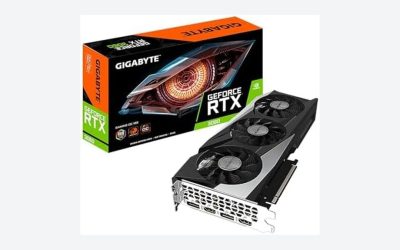
Before anything else: 4K at high refresh rates needs serious GPU horsepower. Running Cyberpunk 2077 or Alan Wake 2 at native 4K with HDR and a 144Hz target is not realistic on anything below an RTX 4080-class card, even with upscaling. If you’re pairing this monitor with an RTX 4060 or similar, you’ll spend most of your time at 60-100fps in demanding titles, which is fine, just know what you’re buying into. Competitive shooters like Valorant or CS2 are a different story since they’ll hit high frame rates at 4K on much less hardware.
This matters for monitor shopping because a 240Hz 4K panel is wasted on a GPU that can’t push past 100fps in the games you actually play. Don’t buy refresh rate you can’t use.
Panel types: IPS vs VA vs OLED
IPS panels dominate the 4K gaming space right now. Good color accuracy, wide viewing angles, response times in the 1ms (GtG) range on gaming-focused models. The weakness is contrast, typically 1000:1, which hurts HDR performance badly. Without local dimming zones, an IPS panel showing HDR content just looks like brighter SDR with blown-out highlights.
VA panels get you better native contrast, often 3000:1 to 4000:1, which makes a real difference in dark scenes. The trade-off is slower pixel response and visible black smearing in fast-moving dark content, which shows up a lot in horror games and shadowy corners of open-world titles.
OLED is the one that actually delivers on the HDR promise, with per-pixel brightness control and true blacks. Response times are near-instant. The catches: burn-in risk with static UI elements (HUDs, health bars) if you leave them on screen for hundreds of hours, and lower peak brightness in sustained full-screen bright scenes due to ABL (automatic brightness limiting). If you play a lot of strategy games or anything with a persistent static HUD, factor that in.
| Panel type | Contrast | Response time | HDR quality | Best for |
|---|---|---|---|---|
| IPS | ~1000:1 | Fast | Weak unless FALD | Competitive gaming, color work |
| VA | ~3000-4000:1 | Moderate, smearing risk | Decent | Mixed gaming/movies on a budget |
| OLED | Essentially infinite | Near-instant | Excellent | Single-player, cinematic games |
HDR certifications actually mean something here
“HDR400” on the box is close to meaningless for real HDR impact. VESA’s DisplayHDR 400 only requires 400 nits peak brightness with no local dimming requirement, so a lot of these are just SDR panels with an HDR flag turned on in the firmware. You want DisplayHDR 600 or 1000 at minimum for a real difference, and those numbers matter more on IPS and VA panels that lack per-pixel dimming. OLED panels sidestep the local dimming requirement because every pixel dims itself, so a VESA “True Black” HDR rating on OLED is a genuinely different (and better) spec than the standard HDR scale.
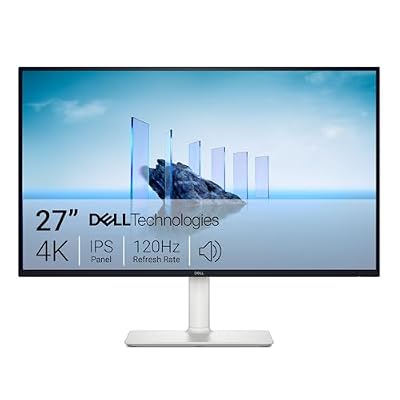
If you want to browse what’s currently available with real HDR performance, this search for 4K 144Hz HDR gaming monitors is a reasonable starting point, but check the specific HDR certification and dimming zone count before buying, not just the HDR badge.
Refresh rate trade-offs at 4K
120Hz to 144Hz is the sweet spot for 4K gaming right now. It’s achievable on current high-end GPUs in most games with some upscaling help, and the panels at this tier are mature and reasonably priced. 160Hz and 240Hz 4K panels exist but they demand either a top-tier GPU or heavy reliance on frame generation technology, and the panels themselves carry a real price premium that a lot of buyers won’t get full use out of.
If your budget is tight, a 4K 60Hz monitor with strong HDR performance is a perfectly reasonable choice for single-player and story-driven games where response time matters less than visual quality. Save the high refresh rate panel for when you’re also upgrading to a GPU that can actually drive it.
Connectivity, often overlooked
4K at 144Hz with HDR and 10-bit color needs real bandwidth. HDMI 2.1 or DisplayPort 1.4 with DSC (Display Stream Compression) are the practical minimums. Older HDMI 2.0 ports cap out around 4K 60Hz, so if your current GPU or console only has HDMI 2.0, a 144Hz panel won’t do anything for you until you upgrade the source too. Check both ends of the cable chain before assuming you’ll get full performance.
What to actually buy
For most people building a 4K gaming setup, a 120-144Hz IPS panel with DisplayHDR 600 and real local dimming is the balanced choice: good color, fast enough response, HDR that’s actually visible. If your library leans heavily single-player and cinematic and you can live with HUD burn-in precautions, an OLED panel is worth the premium for how much better HDR looks in practice. Browsing a 4K OLED gaming monitor selection will show you where that price gap currently sits. Skip anything advertising only HDR400 if HDR quality is a priority to you; that spec exists mostly for marketing, not performance.