HDMI 2.1 matters more than most spec sheets suggest, and it matters less than marketing suggests. The short version: if you’re running a PS5, Xbox Series X, or an RTX 40-series/RX 7000-series GPU and you want 4K at 120Hz with variable refresh rate, you need HDMI 2.1. Everything else is detail. Here’s how to actually pick one.
As an Amazon Associate we earn from qualifying purchases at no extra cost to you.


What HDMI 2.1 actually buys you
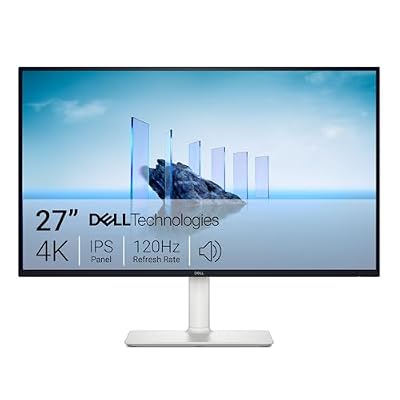
HDMI 2.1 raises bandwidth to 48Gbps (versus 18Gbps on HDMI 2.0), which is what lets a panel push 4K at 120Hz with 10-bit color and no chroma subsampling. Without it, you’re stuck at 4K60 or forced into 4K120 with chroma subsampling, which softens text and fine detail. It also carries VRR (variable refresh rate), ALLM (auto low latency mode), and eARC. For console gaming, VRR and ALLM are the two features that actually change how a game feels day to day, not just on paper.
Not every monitor advertising “HDMI 2.1” implements the full 48Gbps spec. Some cheaper panels have HDMI 2.1 ports that are bandwidth-limited to around 40Gbps or less, which is enough for 4K120 10-bit but not much headroom beyond. That’s rarely a dealbreaker, but it’s worth knowing the port label alone doesn’t guarantee full spec compliance.
Panel type is the real decision
Once HDMI 2.1 is confirmed, panel type is what separates good from mediocre. At 4K, you’ve got three realistic options:
| Panel | Strengths | Weaknesses | Best for |
|---|---|---|---|
| IPS | Good color accuracy, wide viewing angles, fast enough for 120-144Hz | Weaker contrast (~1000:1), noticeable black levels in dark rooms, IPS glow | Mixed gaming/creative work |
| VA | Strong native contrast (3000:1+), deep blacks | Slower pixel response, can smear in dark, fast-moving scenes | Movies, slower-paced or story-driven games |
| OLED (WOLED/QD-OLED) | Near-instant response, true blacks, excellent HDR | Expensive, risk of burn-in with static content, lower peak brightness in SDR | Competitive and story-driven gaming alike |
At 4K specifically, OLED has become the panel to beat for anyone who can afford it, because the response time advantage actually shows up at this resolution and refresh combination. But it’s not the automatic right answer. If you run the same HUD or taskbar on screen for hours daily, or you’re budget-constrained, a good IPS panel is the honest, sensible choice. Burn-in on OLED is a real risk with static content, not a scare story, though pixel-shifting and auto-dimming mitigate it for most gaming use.
What refresh rate actually gets you at 4K
4K120 looks great on paper, but hitting 120fps at 4K natively requires serious GPU horsepower, think RTX 4080-class or better for most modern titles at max settings. If your GPU is a 4060 or equivalent, you’ll often be running 60-90fps at 4K anyway, which means VRR matters more than the panel’s max refresh number. A 4K monitor with HDMI 2.1 and VRR running at 70fps feels smoother than a 4K60 fixed-refresh panel running at 60fps, even though the raw number is lower. Don’t buy a 144Hz 4K panel assuming you’ll use all of it; check what your GPU can realistically push first.
What to actually buy
For most people upgrading a console or a mid-to-high-end PC setup, the sweet spot right now is a 4K panel with full-bandwidth HDMI 2.1, 120Hz, VRR, and either a strong IPS or VA panel. If HDR matters to you (and for 4K gaming it should), look for actual HDR certification like HDR600 or above, not just “HDR10 compatible,” which can mean almost nothing in practice. You can browse current options under 4K HDMI 2.1 144Hz gaming monitors to compare what’s shipping now.
If you want the response-time and contrast benefits and have the budget, 4K OLED gaming monitors with HDMI 2.1 are worth comparing directly against IPS options before deciding, since the price gap has narrowed but isn’t gone.
If you’re mainly plugging in a console and don’t care about PC desktop use, a simpler IPS 4K120 panel is genuinely fine, and you shouldn’t feel pressured into OLED just because reviewers favor it. The console itself caps most games well below 120fps at 4K anyway, so VRR and ALLM do more real-world work than raw panel speed.
Quick checklist before you buy
| Check | Why it matters |
|---|---|
| Confirms full 48Gbps HDMI 2.1 (not bandwidth-limited) | Needed for 4K120 at 10-bit without subsampling |
| VRR support (and which standard: HDMI VRR, FreeSync, G-Sync) | Determines console/GPU compatibility |
| Actual HDR certification tier | “HDR10 compatible” without a VESA tier often means weak HDR |
| Panel type matches your usage (static UI vs. fast action) | Avoids burn-in risk or motion smear in the wrong use case |
None of this requires chasing the newest or most expensive panel. The port spec and panel type matter far more than brand name, and matching them to what your GPU or console can actually deliver is what makes the difference between a monitor that feels right and one that just has good numbers on a box.