4K at 144Hz is the point where gaming monitors stop being a compromise. You get the pixel density for sharp text and detailed games, plus enough refresh rate headroom that fast-paced shooters and racing games actually feel smooth. The catch is that this combination demands a lot from your GPU, your cables, and your wallet, so it’s worth knowing exactly what you’re buying before you spend $600 or more.
What it actually takes to run 4K 144Hz
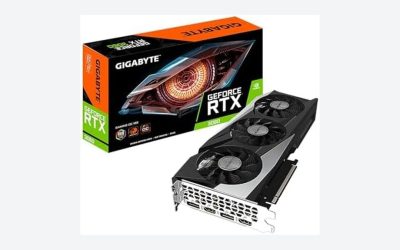
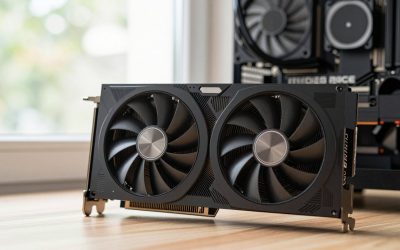
A 4K 144Hz panel is only half the equation. To hit anything close to 144fps at native 4K, you need a GPU in the RTX 4080/4090 or RX 7900 XTX class for demanding titles, or a 4070 Ti-tier card if you’re leaning on DLSS or FSR upscaling. If your GPU tops out at 70-90fps in your usual games, the extra refresh rate above that ceiling is wasted, and you’d get more visible benefit from a 4K 60Hz or even a 1440p 165Hz panel instead.
You also need the right cable. HDMI 2.1 or DisplayPort 1.4 with DSC (Display Stream Compression) are the only standards with enough bandwidth for 4K at 144Hz with 10-bit color. Older HDMI 2.0 ports cap out around 4K 60Hz, so check your GPU’s actual outputs, not just the monitor’s spec sheet, before assuming you’ll get full refresh rate.
Panel type matters more than the headline number
At this resolution and refresh rate, three panel types dominate: IPS, VA, and OLED (QD-OLED or WOLED).
IPS panels give the most consistent color and the widest viewing angles, which matters on a 27-32 inch screen you’re sitting close to. The trade-off is contrast — blacks look more like dark gray in a dim room. VA panels fix contrast but often introduce black smearing in fast-moving dark scenes, which is a real problem in a monitor marketed for fast gaming. OLED solves both contrast and motion clarity, with response times low enough that 144Hz feels closer to the quality of a 240Hz LCD, but you’re paying a premium and accepting some risk of burn-in with static UI elements like health bars or killfeeds if you run the same game for hundreds of hours.
If you want a general-purpose panel for mixed gaming and work, start by browsing 4K 144Hz IPS monitors. If motion clarity and contrast matter more than you fear burn-in, look at 4K 144Hz OLED gaming monitors instead.
Panel type comparison
| Panel Type | Contrast | Motion Clarity | Color Consistency | Burn-in Risk | Typical Price Range |
|---|---|---|---|---|---|
| IPS | Moderate | Good | Excellent | None | $500-$900 |
| VA | High | Fair (smearing in dark scenes) | Good | None | $450-$750 |
| QD-OLED / WOLED | Excellent | Excellent | Excellent | Low but nonzero | $900-$1,500 |
Specs worth checking beyond refresh rate
HDR performance varies wildly even among monitors that print “HDR” on the box. Look for actual peak brightness figures (600 nits minimum for OLED, 1000+ nits for IPS/VA to make HDR highlights pop) rather than just a VESA DisplayHDR badge, since DisplayHDR 400 is achievable by panels that don’t look meaningfully different from SDR.
Variable refresh rate support matters as much as the max refresh number. Confirm the monitor supports both G-Sync and FreeSync (most do these days, labeled as “G-Sync Compatible”), and check the VRR range — a monitor that only syncs from 48-144Hz will show tearing or stutter if your framerate drops below 48fps, which happens often in GPU-limited scenarios at 4K.
Response time matters more at 144Hz than it did at 60Hz, since ghosting is more visible when frames are changing faster. IPS panels have improved a lot here, with many now hitting 1ms GtG, but check independent review numbers rather than marketing claims, which almost always use the best-case overdrive setting that can introduce overshoot artifacts in practice.
When 4K 144Hz isn’t the right call
If your GPU is a 3060 Ti, 6700 XT, or anything slower, 4K 144Hz is the wrong purchase. You’ll never see those frame rates in demanding games, and you’ll spend extra money on a panel driving your GPU harder than it should for worse average performance than a 1440p screen would give you. In that case, a 1440p 165Hz monitor is the better buy — same genre of smoothness, far more achievable framerates, and generally $200-$300 cheaper.
Competitive players in titles like Valorant or CS2 are also better served elsewhere. Those games run at absurd framerates even on modest hardware, and a 1440p or 1080p 240Hz+ panel will track motion better than 4K 144Hz will, since the frame rate ceiling matters more than resolution in that genre.
4K 144Hz earns its price in single-player and semi-competitive games — open-world titles, racing sims, third-person action games — where you want both detail and smoothness, and you have the GPU to actually drive it. If that’s your use case, start comparing 4K 144Hz gaming monitors with the panel type and VRR range in mind rather than chasing the biggest number on the box.
What actually matters when you decide
Match the monitor to the GPU you have or plan to buy within the next year, not the GPU you wish you had. Confirm your cable and port support full bandwidth before purchase, since a $20 cable mistake can silently cap you at 60Hz. And pick panel type based on what you watch for, not habit — if you play dark, cinematic games, OLED’s contrast will matter more to you than its marketing suggests; if you multitask with spreadsheets and browsers next to your games, IPS will save you eye strain that VA and OLED can introduce through glare or ABL (automatic brightness limiting) dimming.