NVIDIA VSR, short for Video Super Resolution, is one of those driver-level features that quietly does a lot of work and gets almost no attention. It’s an AI upscaling filter that runs on RTX GPUs and improves the quality of low-resolution video playback in supported browsers. If you’ve ever watched a 480p YouTube clip on a 1440p or 4K monitor and winced at the blur, VSR is built for exactly that problem.
This isn’t a gaming feature, and it won’t show up in benchmarks. But if you’re trying to decide whether it matters for your next GPU purchase, or whether your current card already supports it, here’s what’s actually going on under the hood.
What VSR actually does
VSR uses a deep learning model to sharpen and clean up compressed, low-resolution video in real time, upscaling it to better match your display’s native resolution. It’s conceptually similar to DLSS, but instead of working inside a game engine, it operates on video streams in your browser. The result is less blocky artifacting, cleaner edges, and video that looks like it was encoded at a higher bitrate than it actually was.
It works system-wide at the driver level once enabled, not per-site, so any supported browser benefits without extra configuration from the content provider.
Hardware and software requirements
VSR is restricted to RTX cards, and the quality tier you get depends on which generation you own. RTX 40-series and RTX 30-series cards get the full feature set, including the higher quality setting. Older RTX 20-series cards can run VSR but are limited to lower quality levels because they have less dedicated tensor core throughput to spare.
GTX cards are left out entirely. There’s no software workaround, since VSR depends on tensor cores that simply aren’t present on Pascal or Turing GTX silicon.
On the software side, you need a recent NVIDIA driver and either Chrome, Edge, or another Chromium-based browser with hardware-accelerated video decoding enabled. Firefox support has been inconsistent across versions, so if VSR matters to you, stick with a Chromium browser for reliability.
| GPU family | VSR support | Max quality level | Performance cost |
|---|---|---|---|
| RTX 40-series | Full | High | Low, lots of headroom |
| RTX 30-series | Full | High | Noticeable on lower-end cards (RTX 3050/3060) during 4K video |
| RTX 20-series | Limited | Medium | Moderate, can affect multitasking |
| GTX 16-series and older | Not supported | N/A | N/A |
Is it actually worth turning on
Honestly, it depends on what you watch and how picky you are. If most of your video consumption is already high bitrate 1080p or 4K streaming from Netflix or YouTube Premium, you won’t see much difference, there’s not much for VSR to fix. Where it earns its keep is lower-quality sources: old YouTube uploads, Twitch streams at 480p or 720p, video calls, or anything pulled from a site with aggressive compression.
The tradeoff is GPU load. VSR isn’t free, it uses real compute cycles, and on lower-end RTX cards (think RTX 3050 or RTX 2060) you can see fan noise pick up or a few extra watts drawn just from idle video playback. If you’re running a laptop on battery, this is worth knowing, since VSR will quietly shorten your battery life during video playback. On desktop it’s a non-issue unless you’re already thermal constrained.
If you’re buying a GPU today specifically because of VSR, that’s probably the wrong primary reason. It’s a nice bonus feature, not a selling point that should move you from one tier of card to another. Buy based on the games and resolution you actually care about, and treat VSR as something you’ll enable once and mostly forget about.
What this means if you’re shopping for a GPU
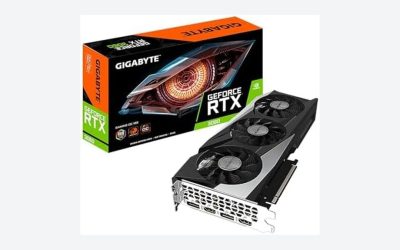
If you’re already set on NVIDIA and want VSR as a bonus, almost any current RTX card gets you there. Budget shoppers looking at something like an RTX 4060 graphics card get full VSR support alongside solid 1080p/1440p gaming performance, which makes it an easy pick if video quality is a secondary concern alongside gaming.
If you’re upgrading from a GTX card purely because you’re annoyed by blurry video calls or old YouTube clips, that’s a legitimate but narrow reason to spend money, and it’s worth being honest with yourself about whether it’s worth a few hundred dollars. A cheaper fix in some cases is just watching content at a higher source resolution when it’s available, or using your browser’s built in upscaling if your laptop has one.
For people who already have a mid-range or higher RTX card, there’s no reason to upgrade for VSR specifically. The feature is already there, sitting in your NVIDIA Control Panel under video settings, and most people don’t even know to turn it on.
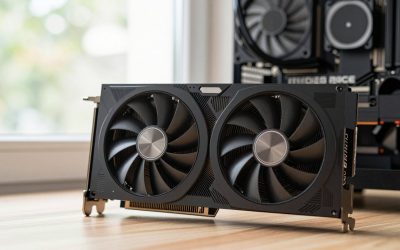
If you’re shopping used or budget-tier and are tempted by older stock, keep in mind that a RTX 3060 graphics card gets you full VSR support plus better gaming value per dollar than most 20-series cards still floating around on the secondary market. Unless you find a 20-series card at a steep discount, the 30-series is the better buy on basically every axis, VSR included.
FAQ
Does VSR work on AMD or Intel GPUs?
No. VSR is an NVIDIA-exclusive feature tied to RTX tensor cores. AMD has a similar feature called AMD Fluid Motion Frames paired with their own video upscaling tools, but it’s a separate implementation with different quality characteristics.
Will VSR make my games look better?
No. VSR only applies to video playback in supported browsers, not games. For games, you want DLSS, which is a related but completely separate NVIDIA technology.
Why don’t I see the VSR option in my NVIDIA Control Panel?
Usually this means your driver is out of date, your GPU doesn’t support it (GTX cards and older), or you’re using a browser without proper hardware acceleration enabled. Update your driver first, then check your browser’s hardware acceleration settings.
Does enabling VSR increase power draw noticeably?
On desktop RTX 30 and 40-series cards, the increase is small and generally not worth worrying about. On laptops or lower-end cards like the RTX 2060, you may notice a measurable hit to battery life or slightly higher fan activity during video playback.