

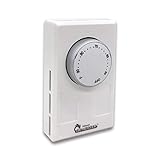
- Top Pick: Dr. Infrared Heater DR-001 Wall Thermostat 4 wires single or Double poles 120-277V 3360-7756W, White.
- Best Value: PRO1 T501ML4 T500 Platform: Mechanical Line Voltage 4 Wire Thermostat, Non-programmable, Heat Only.
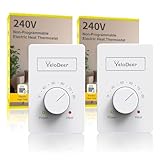
- Premium Choice: YeloDeer 240V Only 4-Wire Manual Electric Baseboard Heater Thermostat | Line Voltage Controller, Single Pole Dial Wall Mount, Home Temperature Regulation
A four-wire thermostat sounds like one product category, but it is really two. In a line voltage system, such as an electric baseboard heater on a 240-volt circuit, the four wires carry mains power in and out of the thermostat. In a low voltage 24-volt heating and cooling system, four wires usually mean power, heat, cooling, and fan, with no spare conductor left over for a smart device. Pick the wrong family and the unit either will not fit your circuit or will not stay powered. The decision therefore starts at the wall plate, not on a shopping page, and this guide sorts the options by which of those two situations you are actually in.
It is written for homeowners replacing an old dial in a bedroom, basement, or workshop, and for landlords who want a like-for-like swap without paying for a rewire. A few of the picks below are smart models that ask for a common wire, so they are flagged clearly for anyone whose wall holds exactly four conductors. Every comparison draws only on what each listing title states, which means the spec sheet and your existing wiring diagram remain the final authority before you shut off a breaker and unscrew anything.
Quick Picks
As an Amazon Associate we earn from qualifying purchases at no extra cost to you.




| Product | Best for | Key spec from the title |
|---|---|---|
| Dr. Infrared DR-001 | Higher-wattage electric heaters | 120-277V, 3360-7756W, single or double pole |
| PRO1 T501ML4 | Simple heat-only line voltage swap | Mechanical, non-programmable, heat only |
| YeloDeer 240V | One baseboard heater | 240V only, manual dial, single pole |
| YeloDeer 240V 2-pack | Two rooms with the same heater type | 2 PCS, 240V only, 4-wire |
| vine Smart Thermostat | Scheduled control with voice assistants | 7-day, 8-period schedule, C-wire required |
| Smart Thermostat with Alexa and Ring | Households already built around Alexa | Works with Alexa and Ring, C-wire required |
How to Choose
Line voltage or low voltage first
Check the label on the old thermostat and the nameplate on the heater. Anything marked 120V, 208V, 240V, or 277V is line voltage and needs a control rated for that supply. A 24-volt furnace or air handler needs a low voltage control instead. Putting a 24-volt smart unit on a 240-volt baseboard circuit is not a small mismatch, so settle this question before you put anything in a cart. If the old unit has no markings at all, photograph the terminals and wire colors before disconnecting.
Voltage window and wattage ceiling
For line voltage models, read both the voltage window and the maximum load. A listing that states 120-277V with a span of 3360-7756W covers a wide range of heaters, while a unit marked 240V only will not suit a 120-volt circuit. Add up the wattage of every heater on the circuit and leave headroom rather than running right at the limit, because a thermostat that is undersized for its load tends to wear its contacts quickly.
Single pole or double pole
A single pole thermostat switches one of the two hot lines, while a double pole switch breaks both and gives a true off position that makes later servicing safer. Four-wire line voltage setups often pair with double pole control, although listings differ. Look for the pole type in the title and match what your old unit did, particularly in rooms where the heater is shut down for long stretches.
Manual dial or programmable
Mechanical dials need no batteries, no Wi-Fi, and no app, which suits a guest room or garage. Programmable and smart units add schedules, and the two smart models here require a C-wire, the common conductor that keeps the display and radio powered. Budget dials cut features, not function, so skip extras you will never set. Ignore marketing phrases about energy savings; the schedule you actually set is what changes how long the system runs.
The 6 Best Options
Dr. Infrared DR-001
This wall thermostat is the broadest line voltage choice in the group, with a title listing four wires, single or double poles, 120-277V, and a 3360-7756W span. That makes it a candidate for larger electric heaters where a basic 240V-only dial may fall short on load, and for buildings that mix supply voltages across rooms.
- Strength: a wide voltage window covers circuits from 120V through 277V.
- Strength: the listed wattage range suits bigger heaters.
- Trade-off: the title says nothing about programming, so expect a basic control.
Skip it if your heater draws very little power or you want weekly scheduling. Anyone comparing it with a 240V-only dial should also note that the wider rating is only useful if your circuit actually needs it; a bedroom with one small baseboard unit gains nothing from the extra headroom.
PRO1 T501ML4
The PRO1 is described as a mechanical, line voltage, four-wire thermostat that is non-programmable and heat only, and it belongs to the T500 platform. That reads like a straightforward replacement for an older dial in a room that only ever needs warmth, such as a workshop, mudroom, or finished attic.
- Strength: a mechanical design with no schedule or menu to manage.
- Strength: heat-only operation matches resistance heaters.
- Trade-off: no cooling or programming features of any kind.
Skip it if you need to control a cooling system or want day-by-day setbacks. It is also the wrong pick for a forced-air furnace, since the title places it squarely in the line voltage family and not the 24-volt one.
YeloDeer 240V Four-Wire Manual Thermostat
This single pole dial mounts on the wall and is aimed at electric baseboard heaters. The title states 240V only and manual regulation, which keeps the decision simple for a lone bedroom or den where one baseboard unit is the only source of heat and you just want a familiar dial.
- Strength: a clear focus on baseboard heater control.
- Strength: dial operation needs no setup or batteries.
- Trade-off: 240V only, so it will not work on a 120V circuit.
Skip it if your supply voltage is unknown or you want automatic scheduling. Because it is a single pole design, anyone who prefers a control that breaks both hot lines should look at the Dr. Infrared listing, which names double pole support.
YeloDeer 240V Two-Pack
This is the same family as the single unit, sold as 2 PCS. The title repeats the 240V-only, four-wire, single pole dial description, so it fits a home with two matching baseboard rooms where identical controls make life easier, for example a pair of upstairs bedrooms.
- Strength: two matching thermostats arrive in one order.
- Strength: the dials work the same in both rooms.
- Trade-off: it shares the 240V-only limit and manual control of the single.
Skip it if you only need one, or if your rooms run on different voltages. Mixed-voltage homes are common in older buildings, so read each room’s heater label before treating a bulk order as a safe shortcut.
vine Smart Thermostat
This one is aimed at a 24-volt home rather than a baseboard heater. The title lists Wi-Fi, Alexa and Google Assistant compatibility, a 7-day by 8-period programmable schedule, and an efficiency certified badge, with a C-wire required. It is for people who want detailed daily programming and voice control in a single device.
- Strength: detailed 7-day, 8-period programming.
- Strength: compatible with both Alexa and Google Assistant.
- Trade-off: a C-wire is required, which a plain four-wire run may lack.
Skip it if you have line voltage heat or no spare conductor to use. Households that never touch a schedule will also be paying for programming depth they do not need, and a simple manual control would serve them just as well.
Smart Thermostat with Alexa and Ring
The retailer-brand smart thermostat is listed as working with Alexa and Ring, and it also requires a C-wire. It suits a household that already runs voice routines or a Ring camera and doorbell setup and would like the thermostat to sit in the same ecosystem rather than adding another app.
- Strength: named integration with Alexa and Ring.
- Strength: aimed at low voltage systems, not baseboard heaters.
- Trade-off: a C-wire is required, and no Google Assistant support is stated.
Skip it if your home uses Google Assistant or has no common wire available. Anyone shopping for a line voltage baseboard replacement should move on to the dial-style models earlier in this list, because the listing points to a low voltage system.
Which One Fits Your Situation
Replacing a dial on a 240V baseboard heater
The YeloDeer 240V is the most direct match for a single heater on a 240-volt circuit. If two rooms share the same setup, the two-pack covers both in one order and keeps the controls identical.
Running a larger or mixed-voltage electric heater
The Dr. Infrared DR-001 is the one whose title lists a 120-277V window and a high wattage ceiling. Confirm the connected load against the heater nameplate, then pick single or double pole to match the old control.
Wanting a plain heat-only swap
The PRO1 T501ML4 keeps everything mechanical and non-programmable, which suits a garage, workshop, or seldom-used spare room where nobody wants to set a schedule.
Upgrading a forced-air system to smart control
Choose the vine for detailed 7-day scheduling or the Alexa and Ring model for tighter ties to an existing smart home. Either way, confirm that a C-wire exists at the wall first, or plan on an adapter.
Common Mistakes
- Buying a smart thermostat for a baseboard heater without confirming whether the system is line voltage.
- Ignoring the C-wire requirement and discovering mid-install that only four conductors reach the wall.
- Choosing a 240V-only model for a 120V circuit because the wire count looked the same.
- Skipping the wattage check and overloading the control with a large heater.
- Working with the circuit live instead of switching off the breaker and confirming the wires are dead.
Related guides
- Battery Operated Smoke And Carbon Monoxide Detectors
- Combination Smoke And Carbon Monoxide Detectors
- Aio Liquid Coolers For High Performance Gaming
Frequently Asked Questions
Does four wires always mean a low voltage thermostat?
No. Line voltage baseboard controls can also use four wires, two for supply and two for the load. Read the voltage markings on the old unit before buying anything, because the two families are not interchangeable.
What does C-wire required actually mean?
It means the thermostat needs a continuous 24-volt common conductor to power itself. If all four wires in your wall are already in use, you may need a spare strand in the cable or a common wire adapter kit.
Can one thermostat run several heaters?
Only up to its rated load. Add the wattage of every heater on the circuit and compare it with the maximum figure on the listing, keeping a margin below that ceiling.
Is a mechanical dial good enough in 2026?
For a single room that you heat on demand, yes. Programmable models matter mainly where a predictable weekly routine exists and you want the system to follow it without anyone touching the wall. A rarely used room is better served by a dial you can turn up only when someone arrives, and that approach avoids Wi-Fi setup, firmware updates, and the wiring questions that come with smart units.







