Why 27-inch 4K is the sweet spot (and where it isn’t)
27 inches at 3840×2160 gets you 163 pixels per inch, which is the same density as a 24-inch 1080p screen. Text and UI elements are crisp without needing Windows scaling tricks, and you sit close enough to actually see the extra detail. Go to 32 inches at 4K and the pixel density drops to 137 ppi, which still looks good but starts to lose the “retina” effect unless you sit back further. Stay at 24 inches and 4K becomes almost pointless for gaming since you can’t tell the difference from 1440p at normal viewing distance.
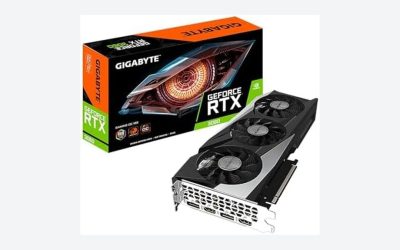
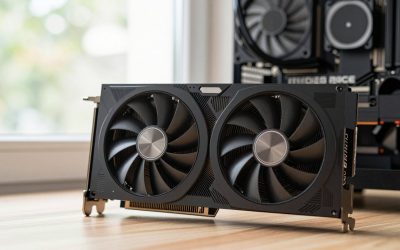
The tradeoff that matters most: 4K is brutal on GPUs. A card that pushes 160fps at 1440p might drop to 70-90fps at 4K in the same game. If you’re not running at least a mid-range RTX 4070 class card or better, a 27-inch 4K panel will spend most of its life bottlenecked, and you won’t see the refresh rate benefits you paid for.
As an Amazon Associate we earn from qualifying purchases at no extra cost to you.


Panel types: IPS, VA, and why OLED changes the math
Most 27-inch 4K gaming monitors released in the last few years use IPS (or an IPS variant like Nano IPS or Fast IPS). IPS gives you accurate color and wide viewing angles, which matters if you also use the monitor for photo work or just don’t want colors washing out when you lean back. The weakness is contrast — IPS panels typically sit around 1000:1, so blacks look more like dark gray in a dim room, and IPS glow (a hazy brightening in corners) is noticeable in dark scenes.
VA panels show up less often at this size and resolution but offer much better native contrast, often 3000:1 to 6000:1, at the cost of slower pixel response and more noticeable black smearing in fast-moving dark scenes.
OLED is the real disruptor. A 27-inch 4K OLED gives you near-instant pixel response, true per-pixel blacks, and no backlight bleed at all. The catches are real: burn-in risk with static UI elements over years of use, lower peak sustained brightness in bright rooms, and a price premium that’s often double a comparable IPS panel. If you game in a dark or moderately lit room and can live with the long-term risk, OLED is the biggest single upgrade you can make to how a game actually looks. If you work in a bright room with lots of static content on screen for hours, IPS is still the safer pick.
Refresh rate at 4K: what’s actually achievable
4K refresh rates break into roughly three tiers: 60Hz (older or budget panels, now mostly obsolete for gaming), 120-144Hz (the current mainstream sweet spot), and 160-240Hz (premium, usually OLED or high-end IPS, and demanding on both your GPU and your cable).
The catch most people miss: hitting 144Hz at 4K requires DisplayPort 1.4 with DSC (Display Stream Compression) or DisplayPort 2.1, and HDMI 2.1 for consoles. Cheap or long cables, especially passive ones over 2 meters, can fail to hold the signal at these bandwidths and will drop you back to 60Hz or cause flickering. Buy the cable that ships with the monitor or a certified one rated for the bandwidth you need — this is a more common failure mode than people expect.
Also worth knowing: even at 144Hz, you need a GPU that can actually produce 144fps at 4K, which outside of competitive esports titles with everything turned down, usually means a high-end card. For single-player AAA games, 100-120fps at 4K with a 4070 Ti or 4080-class card is realistic; 240fps at native 4K is not happening without a top-tier card and heavily reduced settings.
Quick comparison by use case
| Priority | Panel type | Refresh rate target | Realistic budget tier |
|---|---|---|---|
| Best image quality, dark room gaming | OLED | 120-165Hz | Premium |
| All-around use, bright room, mixed work/gaming | IPS | 120-144Hz | Mid-range |
| Budget-conscious, casual gaming | IPS (60-100Hz) | 60-100Hz | Entry-level |
| Fast-paced competitive titles at 4K | IPS or OLED | 160Hz+ | High-end |
What to actually buy
If you’re building around a mid-range GPU (RTX 4070 or equivalent) and mostly play single-player or story-driven games, a 120-144Hz IPS panel is the honest answer. You won’t max out the refresh rate most of the time anyway, and you get accurate colors and no burn-in anxiety. Browsing a 27-inch 4K 144Hz IPS gaming monitor will turn up most of the current mainstream options in this category.
If you’ve got a high-end GPU and watch a lot of dark, cinematic content alongside gaming, the jump to 27-inch 4K OLED gaming monitors is worth the premium, as long as you’re comfortable with occasional pixel-refresh maintenance cycles and avoiding hours of static taskbars or HUDs at max brightness.
If your GPU is a generation or two old, or you’re gaming on a budget, don’t force 4K. A 1440p monitor at the same refresh rate will look nearly as sharp at normal distance, run far better on your current hardware, and cost less. Spending extra on 4K resolution you can’t actually drive at a decent frame rate is the most common overspend in this category — the panel isn’t the bottleneck, the GPU is.
For console gamers on PS5 or Series X, stick to models explicitly rated for HDMI 2.1 and VRR, since console output tops out around 120Hz at 4K regardless of panel capability. A 27-inch 4K HDMI 2.1 gaming monitor search will filter out panels that only support the higher refresh rates over DisplayPort, which won’t help a console setup.