

Affiliate disclosure: As an Amazon Associate we earn from qualifying purchases. This post contains affiliate links — if you buy through them we may earn a small commission at no extra cost to you. This never affects our recommendations.
- Best Overall: Samsung 990 Pro 1TB — The Gold Standard NVMe
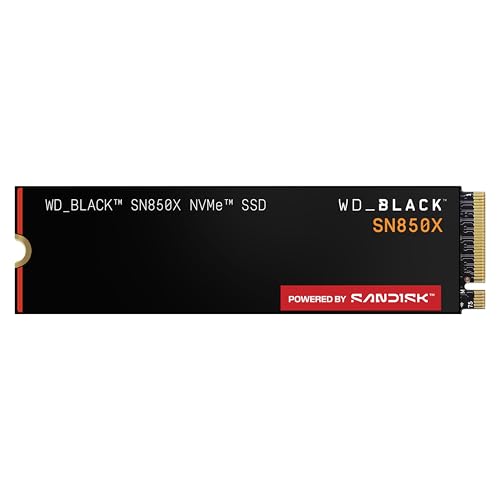
- Best Value: WD Black SN850X 1TB — Performance Without the Premium
- Best Budget: Crucial P3 Plus 1TB — Gen 4 Speeds at Gen 3 Prices
- Best Gen 5: Seagate FireCuda 530 Gen 5 — Future-Proof Speed
- NVMe SSD Gaming Performance Guide
- Frequently Asked Questions
- Related Articles
- Related Articles
The best 1TB NVMe SSD is the ideal gaming storage solution — fast enough to eliminate load screens, compact enough to mount directly on the motherboard, and now available at prices that make HDDs obsolete for gaming use. In 2025, PCIe Gen 4 NVMe SSDs have become the performance standard, with sequential read speeds of 7,000+ MB/s delivering near-instant game loads in titles that support DirectStorage. Gen 5 options push beyond 12,000 MB/s for those with compatible platforms.


In a hurry? See the top-rated 1TB NVMe SSD for Gaming deals available right now:
🛒 Check 1Tb Nvme Ssd For Gaming Prices on Amazon →🛒 Best Price Today on Amazon
Prime members get fast, free shipping on everything above, plus member-only deals. New members get a 30-day free trial — cancel anytime.
Start 30-Day Prime Free Trial →See Today’s Amazon DealsBest Overall: Samsung 990 Pro 1TB — The Gold Standard NVMe
Samsung’s 990 Pro is the best 1TB NVMe SSD for gaming, combining class-leading sequential performance (7,450 MB/s read), exceptional random I/O performance (1,600K IOPS), and Samsung’s legendary reliability track record. The thermal management system maintains peak performance under sustained workloads without thermal throttling. Samsung’s Magician software provides detailed health monitoring, firmware updates, and performance benchmarking. Five-year warranty with 600TBW endurance rating ensures longevity. The definitive 1TB NVMe choice for gaming PCs.

Best Value: WD Black SN850X 1TB — Performance Without the Premium
Western Digital’s Black SN850X delivers 7,300 MB/s sequential read speeds competitive with the Samsung 990 Pro at a consistently lower price. The Game Mode 2.0 feature pre-caches frequently accessed game data, reducing load time variance in supported titles. Its PlayStation 5 compatibility certification makes it the best 1TB NVMe for PS5 storage expansion. Five-year warranty and 600TBW endurance match Samsung’s premium specs at a more accessible price point.
Best Budget: Crucial P3 Plus 1TB — Gen 4 Speeds at Gen 3 Prices
Crucial’s P3 Plus delivers PCIe Gen 4 sequential read speeds (4,800 MB/s) at dramatically lower cost than premium Gen 4 options. For gaming purposes, the difference between 4,800 MB/s and 7,400 MB/s is imperceptible — game load times depend more on random I/O than sequential speeds. The P3 Plus’s budget positioning makes it the ideal NVMe for secondary game storage drives or budget gaming builds. Three-year warranty is shorter than premium options but adequate for budget use cases.

Best Gen 5: Seagate FireCuda 530 Gen 5 — Future-Proof Speed
For PCIe Gen 5-capable systems (Intel 13th-gen+, AMD Ryzen 7000+), the Seagate FireCuda 530 Gen 5 delivers 12,000+ MB/s sequential reads — nearly double Gen 4 speeds. DirectStorage gaming benefits from Gen 5 bandwidth when GPU decompression replaces CPU decompression for texture streaming. The included heatsink is essential — Gen 5 drives generate significant heat requiring active or passive thermal management. Best 1TB NVMe for future-proofing and DirectStorage-optimized gaming.
NVMe SSD Gaming Performance Guide
Does NVMe Speed Matter for Gaming?
For load times: yes, significantly. NVMe vs HDD reduces game load times by 60–80%. Gen 4 vs Gen 3 NVMe reduces load times by 10–20% in most games. Gen 5 vs Gen 4 shows 5–15% improvement currently, with larger gains expected as DirectStorage adoption increases. For frame rates and in-game performance: no measurable difference between any NVMe grades.

1TB vs 2TB: Which Capacity to Buy?
Modern AAA games average 50–100GB installed. A 1TB drive comfortably holds 10–20 games simultaneously. With game libraries exceeding 20 active titles, 2TB prevents constant uninstall/reinstall cycling. Budget builders often start with 1TB for OS + current games, adding 2TB secondary storage later.
Frequently Asked Questions
Is NVMe better than SATA SSD for gaming?
Yes for load times — NVMe drives load games 30–50% faster than SATA SSDs. For in-game frame rates, there’s no measurable difference. SATA SSDs remain excellent for secondary game storage where absolute load speed is less critical.
Do NVMe SSDs need heatsinks?
Gen 3 NVMe: motherboard heatsink covers are sufficient. Gen 4 NVMe under heavy load: aftermarket heatsink recommended if motherboard doesn’t include one. Gen 5 NVMe: heatsink is mandatory — sustained operation without cooling causes thermal throttling. Most premium Gen 4/5 SSDs include integrated heatsinks.
How long do NVMe SSDs last?
NVMe SSDs are rated by TBW (terabytes written) — 600TBW is common for 1TB drives. At typical gaming usage (20–50GB writes daily), a 600TBW drive lasts 30–80 years before reaching rated endurance. Real-world failures typically occur after 5–10 years from component aging rather than write endurance exhaustion.
Related Articles
Looking for more on this topic? Browse the hand-picked guides below — each one applies the same scoring rubric used in this review.


