

- Top Pick: Western Digital 1TB P40 Game Drive SSD – Up to 2,000MB/s, RGB Lighting, Portable External Solid State Drive , Compatible with Playstation, Xbox, PC, & Mac – WDBAWY0010BBK-WESN
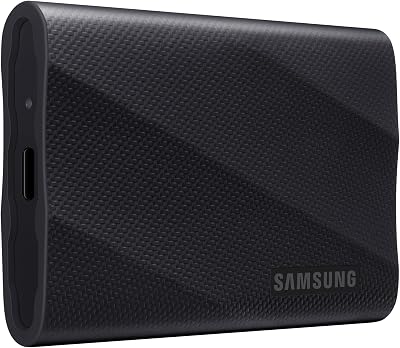
- Best Value: Samsung T9 Portable SSD 1TB, USB 3.2 Gen 2×2 External SSD, Up to 2,000 MB/s
- Premium Choice: Samsung T7 Portable SSD 1TB Titan Gray, USB 3.2 Gen 2, Up to 1,050MB/s
Affiliate disclosure: As an Amazon Associate we earn from qualifying purchases. This post contains affiliate links — if you buy through them we may earn a small commission at no extra cost to you. This never affects our recommendations.
External SSDs for gaming solve two problems: expanding storage on consoles with limited internal capacity and reducing load times for large game libraries on PC. The best external SSDs in 2026 deliver sequential reads between 500 MB/s and 2,000 MB/s — fast enough to play directly from the drive on PC and to expand Xbox Series X|S storage effectively. Here are the five best options available right now.
In a hurry? See the top-rated External SSDs for Gaming deals available right now:
🛒 Check External Ssds For Gaming Prices on Amazon →🛒 Best Price Today on Amazon
Prime members get fast, free shipping on everything above, plus member-only deals. New members get a 30-day free trial — cancel anytime.
Start 30-Day Prime Free Trial →See Today’s Amazon DealsTop Picks at a Glance
| External SSD | Max Read Speed | Interface | Capacities | Best For |
|---|---|---|---|---|
| Samsung T7 Shield | 1,050 MB/s | USB 3.2 Gen 2 | 1TB, 2TB | Best overall |
| WD My Passport SSD | 1,100 MB/s | USB 3.2 Gen 2 | 500GB–4TB | Best capacity options |
| Crucial X9 Pro | 1,050 MB/s | USB 3.2 Gen 2 | 1TB, 2TB, 4TB | Best value per GB |
| SanDisk Extreme Pro | 2,000 MB/s | USB 3.2 Gen 2×2 | 1TB, 2TB, 4TB | Fastest transfer speeds |
| Seagate Game Drive | 1,030 MB/s | USB 3.2 Gen 2 | 1TB, 2TB | Best for Xbox Series X|S |
As an Amazon Associate we earn from qualifying purchases at no extra cost to you. Product prices and availability are accurate as of the date shown and are subject to change.







Samsung T7 Shield (B09QPBF43Y) — Best Overall
- IP65 dust and water resistance — ruggedized rubberized shell withstands drops up to 3 meters, ideal for gamers who travel with their storage
- 1,050 MB/s read / 1,000 MB/s write — consistent high-speed performance via USB 3.2 Gen 2 that saturates the interface
- AES 256-bit hardware encryption — password-protect sensitive data stored alongside game libraries
- Works with PC, Mac, PS5, and Xbox Series X|S — broad compatibility makes it useful across every gaming platform
- Compact, pocket-friendly dimensions — 57g and fits in a jacket pocket alongside a phone
WD My Passport SSD (B08PC5CZJF) — Best Capacity Range
- Available up to 4TB — the widest capacity range in this roundup; 4TB stores 60–80 modern AAA games without transfers
- 1,100 MB/s sequential read — marginally faster than the Samsung T7 Shield at the same interface tier
- NVMe internal drive — uses NVMe rather than SATA internally for better sustained performance under heavy read loads
- WD Backup and Security software included — optional backup scheduling and 256-bit AES encryption via the companion app
- Slim anodized aluminum design — premium look that holds up well in a backpack without the bulkier rubber shell of the T7 Shield
Crucial X9 Pro (B0B23W9KPR) — Best Value per GB
- Lowest cost per gigabyte in this roundup — frequently available at $0.06–0.08/GB on the 2TB model, beating Samsung and WD on price
- 1,050 MB/s read speed — matches the Samsung T7 Shield in sequential performance at a lower price
- IP55 water and dust resistance — partial ruggedization for accidental spills and dusty LAN party environments
- Compact form factor with USB-C cable included — plug-and-play on any modern laptop or desktop with USB-C or USB-A via the included adapter
- Acronis True Image software included — full system backup software bundled at no additional cost
SanDisk Extreme Pro (B08GV9M64L) — Fastest Transfer Speeds
- 2,000 MB/s read / 2,000 MB/s write via USB 3.2 Gen 2×2 — the fastest external SSD in this roundup, nearly 2× the throughput of standard Gen 2 drives
- IP55 rated ruggedized design — drop-resistant and splash-proof for field use and travel
- Requires USB 3.2 Gen 2×2 host port to reach max speed — on standard USB 3.2 Gen 2 ports, speed falls to ~1,000 MB/s like competing drives
- Western Digital NVMe SSD internally — proven NVMe NAND for reliable sustained writes during large game installs
- Available up to 4TB — matches the WD My Passport’s top capacity option
Seagate Game Drive for Xbox (B07H4MBLYT) — Best for Xbox Series X|S
- Xbox-certified and plug-and-play compatible — recognized immediately by Xbox Series X|S without reformatting; designed and tested specifically for Xbox storage expansion
- 1,030 MB/s read speed — fast enough to run most Xbox Game Pass titles directly from the drive
- Compact Xbox-branded design — available in Xbox-themed colors that match console aesthetics
- Works with Xbox One as well — backward compatible for existing Xbox One games and saves
- Two-year limited warranty — standard Seagate coverage for portable storage
Buying Guide
USB 3.2 Gen 2 vs. Gen 2×2 vs. Thunderbolt
USB 3.2 Gen 2 has a theoretical bandwidth of 10 Gbps, supporting real-world sequential reads of around 900–1,100 MB/s — adequate for gaming on PC and Xbox. USB 3.2 Gen 2×2 doubles this to 20 Gbps, enabling the SanDisk Extreme Pro’s 2,000 MB/s speeds, but requires a host port that supports Gen 2×2, which is less common than standard Gen 2 ports. Thunderbolt 3/4 drives can reach 2,500–3,000 MB/s and are best for video production workloads rather than gaming specifically. For most gaming use cases, USB 3.2 Gen 2 delivers plenty of speed.
Can External SSDs Run Games Natively?
On PC, any external SSD can install and run games directly — the only question is load time relative to your internal NVMe drive. A 1,050 MB/s external SSD is significantly faster than a SATA SSD and will result in load times comparable to an older-generation NVMe drive. On Xbox Series X|S, Microsoft certifies external USB SSDs for expanded storage of backward-compatible Xbox One games; next-gen Xbox Series X|S titles must be stored on the proprietary Seagate Storage Expansion Card for full performance. On PS5, external SSDs connect via USB and work for PS4 game storage only — PS5 native titles must use the internal M.2 NVMe expansion slot.

Capacity Planning for Gaming Libraries
Modern AAA games average 50–100 GB each. A 1TB external SSD holds approximately 10–15 large titles. A 2TB drive holds 20–30. If you play primarily large open-world or Battle Royale titles — Warzone, Baldur’s Gate 3, Cyberpunk 2077 — budget for at least 2TB. The Crucial X9 Pro and WD My Passport SSD offer the best value at the 2TB tier. If you want to store an entire game library without juggling installs, step up to the 4TB options from SanDisk Extreme Pro, WD My Passport, or Crucial X9 Pro.
Durability and Portability
If you travel with your drive to LAN parties, friends’ houses, or between dorm and home, ruggedization matters. The Samsung T7 Shield with IP65 certification and 3-meter drop resistance is the most durable in this lineup. The SanDisk Extreme Pro and Crucial X9 Pro offer IP55 partial ruggedization at lower price points. The WD My Passport SSD and Seagate Game Drive are slim and elegant but have no official IP rating — treat them with more care during transport.
FAQ
- Can I use an external SSD on PS5?
- Yes, but only for PS4 game storage via the USB port. To expand PS5 native game storage, you need an M.2 NVMe SSD installed in the PS5’s internal expansion bay — external USB SSDs are not supported for PS5 title storage.
- How fast does an external SSD need to be for gaming?
- For PC gaming, 500 MB/s or faster is adequate for smooth level loading. Any drive in this roundup at 1,000+ MB/s will load games faster than older SATA SSD standards. For Xbox Series X|S backward-compatible games, Microsoft recommends USB 3.0 or faster — all drives here qualify.
- Is an external SSD faster than an internal HDD for gaming?
- Significantly, yes. A hard drive delivers 100–150 MB/s sequential reads. Even the slowest external SSD in this roundup runs at 1,000 MB/s — 6–10× faster, resulting in dramatically shorter load times and eliminated stuttering in open-world games that stream assets from storage.
- What is the best external SSD capacity for gaming?
- 2TB is the sweet spot for most gamers in 2026 — large enough to hold an active rotating library of 20–30 games and affordable enough not to break the budget. Power users with very large libraries should consider 4TB options from WD My Passport, Crucial X9 Pro, or SanDisk Extreme Pro.
- Do external SSDs need external power?
- No — all external SSDs in this roundup are bus-powered via the USB-C cable. They draw power directly from the connected PC, console, or laptop’s USB port without needing a separate power adapter, making them fully plug-and-play portable.
Final Verdict
The Samsung T7 Shield is the best external SSD for most gamers in 2026 — IP65 ruggedization, 1,050 MB/s speeds, and universal compatibility across PC, PS5, and Xbox make it the safest all-around choice. Budget-conscious gamers should look at the Crucial X9 Pro for the best cost-per-GB with comparable performance. If you want the absolute fastest transfer speeds and have a USB 3.2 Gen 2×2 port available, the SanDisk Extreme Pro hits 2,000 MB/s and leads the lineup. Xbox gamers who want a plug-and-play experience without reformatting headaches should grab the Seagate Game Drive for Xbox, purpose-built for Series X|S from day one.
Related Gaming Guides

- Best Portable SSDs for Gaming 2026 — Fast & Rugged Options Ranked
- Best NVMe SSDs for Gaming in 2026 — Fast Load Times, Real-World Tested
- Best 1TB NVMe SSD for Gaming 2026: Fast Storage Reviewed
- Best Hard Drive for Gaming 2026: SSD vs HDD for Game Storage
- SanDisk Extreme Pro Portable SSD V2 Review 2026: Rugged USB-C External
Related Articles
Looking for more on this topic? Browse the hand-picked guides below — each one applies the same scoring rubric used in this review.
Frequently Asked Questions
Should I buy a prebuilt portable SSD or build one from an enclosure?
A DIY enclosure plus a bare NVMe drive is usually 20 to 30 percent cheaper per terabyte, lets you pick a drive with DRAM cache, and often provides better aluminium cooling. Prebuilt units are more compact, come with a single warranty and often carry drop or water ratings. Both use the same underlying controllers.
How much speed do I actually need?
Game loading is rarely limited by sequential throughput beyond about 1000MB per second, so USB 3.2 Gen 2 covers most needs. Random read performance and controller quality affect real load times more than headline speeds. USB4 and Thunderbolt drives are worth it mainly for video editing or moving very large libraries quickly.
Will games run well directly from an external drive?
On PC, yes, most games run indistinguishably from an internal SATA SSD when connected over USB 3.2 Gen 2. Titles using DirectStorage benefit less than on an internal NVMe drive. On consoles, restrictions apply: PS5 games and Xbox Series optimised titles must sit on internal or licensed expansion storage to run.
Does DRAM cache matter for gaming drives?
DRAM-less drives using host memory buffer perform fine for reads, which is what gaming mostly needs, but they slow markedly during large sustained writes such as installing a 150GB game. If you frequently install and move titles, choose a drive with onboard DRAM. For read-heavy library storage, DRAM-less saves money without much penalty.
How do I stop the drive throttling or disconnecting?
Use the supplied cable, since many failures trace back to charge-only or low-quality USB-C cables that lack the required data pairs. Avoid unpowered hubs; plug directly into a rear motherboard port. If speeds collapse after a large transfer, the controller is heat throttling, so use a metal enclosure or add a thermal pad.
Ready to decide? Our #1 pick for 2026 is the Samsung T7 Shield.
Live price & availability on Amazon.


