

- Top Pick: ASUS TUF Gaming B850-PLUS WiFi AMD AM5 B850 ATX Motherboard, 14+2+1 80A Stages, AI Ready, DDR5, PCIe 5.0, 3X M.2, Wi-Fi 7, 2.5Gb LAN, DisplayPort, HDMI™, USB 10Gbps & 20Gbps Type-C®, BIOS Flashback™
- Best Value: TUF Gaming B850M-PLUS WIFI7 AMD B850 mATX Motherboard, 14+2+1 80A DrMOS Power Stages, DDR5, PCIe 5.0, 3X M.2 Slots, WiFi 7, 2.5Gb Ethernet, DisplayPort, HDMI, Rear USB-C 20Gbps and Front USB-C 10Gbps
- Premium Choice: ASUS TUF Gaming B850-PLUS WiFi AMD B850 AM5 DDR5 8000 DP HDMI 3X M2 USB3.2 Gen 2×2 WiFi 7 + BT Aura RGB 2.5Gbit LAN ATX 14+2+1 Power Stages, 1xGen5 M.2, Ready for Advanced AI PC
The ASUS TUF Gaming B850-PLUS WiFi is the new mainstream face of AMD’s AM5 platform. Built on the current B850 chipset and priced at around $184, it succeeds the well-liked B650 generation with broader DDR5 support, more M.2 slots and the latest WiFi 7 networking. This ASUS TUF Gaming B850-PLUS WiFi review covers the socket and chipset, power delivery, expansion, connectivity and value.
- ASUS TUF Gaming B850-PLUS WiFi at a Glance
- Socket and Chipset Overview
- Power Delivery and Overclocking Headroom
- Memory, Storage and Expansion
- Connectivity and Networking
- Who Is the ASUS TUF Gaming B850-PLUS WiFi For?
- Pros and Cons
- Is the ASUS TUF Gaming B850-PLUS WiFi Worth It?
- Frequently Asked Questions
- More Motherboard Reviews
- Related Articles
- Related Articles
- Related Guides

ASUS TUF Gaming B850-PLUS WiFi AMD AM5 B850 ATX Motherboard, 14+2+1 80A Stages, AI Ready, DDR5, PCIe 5.0, 3X M.2, Wi-Fi 7, 2.5Gb LAN, DisplayPort, HDMI™, USB 10Gbps & 20Gbps Type-C®, BIOS Flashback™


As an Amazon Associate we earn from qualifying purchases. Product prices and availability are accurate as of the date/time indicated.
🛒 Best Price Today on Amazon
Prime members get fast, free shipping on everything above, plus member-only deals. New members get a 30-day free trial — cancel anytime.
As an Amazon Associate we earn from qualifying purchases.


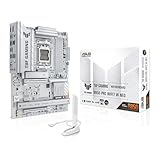

ASUS TUF Gaming B850-PLUS WiFi at a Glance
| Component | Specification |
|---|---|
| Socket | AMD AM5 — Ryzen 7000/8000/9000 series |
| Chipset | AMD B850 (mainstream AM5) |
| Form factor | ATX |
| Memory | DDR5 up to 8000 MHz, max 192GB |
| PCIe / M.2 | PCIe 5.0 x16; one PCIe 5.0 M.2 + two PCIe 4.0 M.2 |
| Networking | WiFi 7, 2.5 Gb Ethernet |
| Rear I/O highlights | USB 20 Gbps Type-C rear |
| Power stages (VRM) | 14+2+1 80A DrMOS, 8-layer PCB |
| Price | Around $184 |
Socket and Chipset Overview
The TUF Gaming B850-PLUS WiFi uses AMD’s AM5 socket, the same long-life platform behind the B650 generation, and AMD has committed to supporting AM5 with new CPUs through 2027 and beyond. That means a board bought today will accept Ryzen 7000, Ryzen 8000 and Ryzen 9000 series processors, and it should remain compatible with future AM5 chips after that.
The new B850 chipset sits in the same mainstream segment as the older B650 but with a small set of generational improvements — better default DDR5 support, broader PCIe routing options and improved validation for the latest Ryzen 9000 chips. It is not as exotic as the X870E enthusiast tier, but it covers everything a mainstream gaming or productivity build needs. For broader chipset comparisons, see our best AM5 motherboards guide.
Power Delivery and Overclocking Headroom
Power delivery is a real strength of the TUF Gaming B850-PLUS WiFi. ASUS uses a 14+2+1 stage design with 80A DrMOS components on an 8-layer PCB — a meaningful step up from the older B650-PLUS, and well-suited to the more demanding Ryzen 9 9000-series chips. The TUF Gaming line is engineered with military-grade components and additional protections, including TUF LANGuard on the network port.
The board is AI-ready in ASUS’s marketing terminology, but in practice for most builders the VRM matters because it keeps a Ryzen 7 or Ryzen 9 chip sitting at peak boost clocks for longer, even in heavy multi-core workloads. With Precision Boost Overdrive and Curve Optimizer support via the BIOS, the B850-PLUS gives mainstream tuners genuine headroom without forcing them into the enthusiast tier.
Memory, Storage and Expansion
Memory support is broader on B850 than on the original B650. The TUF Gaming B850-PLUS WiFi supports DDR5 up to 8000 MHz and up to 192GB total capacity, well beyond what most gamers will use but useful for content creators running large workloads. For gaming, DDR5-6000 with tight timings remains the AM5 sweet spot and is comfortably handled here. See our best DDR5 memory kits guide for kit recommendations.
Storage is markedly improved over the older generation: one PCIe 5.0 x4 M.2 slot for the fastest current NVMe SSDs plus two further PCIe 4.0 M.2 slots, giving three drive bays in total. That is enough headroom for a fast OS drive, a large game library and a creative project drive without compromise. The PCIe 5.0 x16 graphics slot is exactly what a modern RTX 50-series or Radeon RX 9000-series GPU expects.
Connectivity and Networking
Networking jumps a full generation on the B850-PLUS. WiFi 7 is built in, which is the latest wireless standard and a meaningful improvement over WiFi 6 in supported environments — higher throughput, lower latency and better behaviour on congested networks. Wired networking is 2.5 Gb Ethernet, which is the practical mainstream standard today and a clear step up from legacy 1 Gb on older boards.
Rear I/O includes USB 20 Gbps Type-C, which is the same Gen2x2 speed standard found on more expensive boards, plus a generous mix of USB-A ports for peripherals. ASUS also supports their Aura Sync RGB headers for those who want to extend lighting into the chassis. The on-board audio is standard ASUS realtek-class hardware and is fully sufficient for typical gaming speakers and headsets.
Who Is the ASUS TUF Gaming B850-PLUS WiFi For?
The TUF Gaming B850-PLUS WiFi is the right board for the mainstream AM5 builder in 2026 who wants a current-generation chipset, future-proof networking and strong VRM headroom without paying for an enthusiast X870E tier. Pair it with a Ryzen 7 9700X or a Ryzen 9 9900X / 9950X and you have a build that punches well above its weight in both gaming and productivity, with WiFi 7 keeping it relevant for years.
It is less suited to two groups: builders chasing extreme overclocking and bench performance, who should look at X870E for the extra PCIe 5.0 lanes and stronger VRMs; and the strictest budget builds, where the older B650-PLUS at around $110 remains a legitimately better-value choice if WiFi 7 and the extra M.2 slot are not required.
Pros and Cons
Pros: Latest B850 chipset with full AM5 forward compatibility; 14+2+1 80A DrMOS VRM and 8-layer PCB; WiFi 7 built in; three M.2 slots including one PCIe 5.0; DDR5 up to 8000 MHz and 192GB capacity; AI Ready feature set; TUF build quality.
Cons: Around $184 is a real step up from B650-PLUS pricing; not aimed at hardcore manual overclockers; only a single PCIe 5.0 M.2 slot, whereas higher-tier boards offer more.
Is the ASUS TUF Gaming B850-PLUS WiFi Worth It?
At around $184 the ASUS TUF Gaming B850-PLUS WiFi is one of the strongest mainstream AM5 motherboards on the market. The B850 chipset, three M.2 slots, WiFi 7 networking and a stout 14+2+1 80A DrMOS VRM on an 8-layer PCB make it a forward-looking choice for a new build today. For the mainstream Ryzen 7000/8000/9000 builder it earns a clear recommendation. Buyers should also compare it with our best AM5 motherboards guide and the best Ryzen CPUs roundup for matching CPUs.
Frequently Asked Questions
Is B850 better than B650?
Generally, yes. B850 is the newer mainstream AM5 chipset and improves on B650 with broader DDR5 support, better PCIe routing options and stronger validation for current Ryzen 9000 chips, though both share the AM5 socket and platform.
Does the B850-PLUS WiFi support Ryzen 9000?
Yes. It supports Ryzen 7000, Ryzen 8000 and Ryzen 9000 series processors on the AM5 socket with the appropriate BIOS — including the new Ryzen 9 9950X.
Is WiFi 7 worth it on this board?
If you have or plan to get a WiFi 7 router, yes — it offers higher throughput and lower latency than WiFi 6. Even on a WiFi 6 network, the WiFi 7 chip is backwards-compatible and benefits from generational improvements.
How many M.2 slots does the B850-PLUS WiFi have?
Three M.2 slots: one PCIe 5.0 x4 for the very fastest NVMe SSDs and two further PCIe 4.0 x4 slots for large game libraries and additional storage.
More Motherboard Reviews
- MSI MAG B850 Tomahawk MAX WiFi Review: Popular AM5 Mid-Range
- ASUS ROG Strix X870E-E Gaming WiFi Review: Enthusiast AM5 Flagship-Class
- ASUS TUF Gaming B760-PLUS WiFi Review: Mainstream Intel LGA1700 Value
- ASUS TUF Gaming Z790-Plus WiFi Review: Enthusiast Intel Z790
- MSI PRO Z790-A MAX WiFi Review: Z790 Productivity & Gaming
- MSI PRO H610M-G DDR4 Review: Ultra-Budget LGA1700 Entry
- ASUS TUF Gaming B650-PLUS WiFi Review: Entry AM5 Value
Affiliate Disclosure: As an Amazon Associate, we earn from qualifying purchases. If you click a link and make a purchase, we may earn a small commission at no extra cost to you. Prices and availability are accurate as of publication and may change.
Related Articles
Looking for more on this topic? Browse the hand-picked guides below — each one applies the same scoring rubric used in this review.


