Prebuilt gaming PCs have a mixed reputation, but in 2026 they are better value and quality than ever. Whether a prebuilt is worth it depends on your budget, skills and priorities.
- The Case for Prebuilts
- The Case for Building Your Own
- What to Watch Out For
- Warranty and Support
- When a Prebuilt Makes Sense
- When to Build Instead
- Spotting a Good Prebuilt Deal
- Bloatware and First Steps
- Final Thoughts and Quick Recap
- Keeping Your PC in Good Shape
- A Quick Checklist
- Frequently Asked Questions
- Related Guides
This guide weighs the pros and cons of prebuilt gaming PCs versus building your own, so you can decide which route suits you.
As an Amazon Associate we earn from qualifying purchases at no extra cost to you.


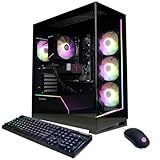
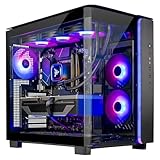
The Case for Prebuilts
Prebuilt PCs are convenient: they arrive assembled, tested and under a single warranty, with no risk of a building mistake. Reputable brands offer competitive pricing, especially when GPU prices are high, since large builders buy components in bulk.
For newcomers or anyone who wants to plug in and play, a prebuilt removes the intimidation of building.
The Case for Building Your Own
Building your own PC usually gives more performance per dollar, full control over every component, and no unwanted parts or bloatware. You also learn your system inside out, making upgrades and repairs easier later.
If you enjoy the process and want the best value, a custom build is hard to beat.
What to Watch Out For
With prebuilts, check for weak points builders sometimes cut costs on: a low-quality power supply, slow single-channel RAM, a cramped case with poor airflow, or a proprietary motherboard that limits upgrades.
A strong GPU paired with a cheap PSU or single RAM stick is a common red flag worth avoiding.
Warranty and Support
A key prebuilt advantage is unified warranty and support: one company covers the whole system. Building yourself means each part has its own warranty, and diagnosing faults is on you.
For peace of mind, especially for a first PC, single-source support has real value.
When a Prebuilt Makes Sense
A prebuilt is the right call if you lack the time, confidence or tools to build, want a warranty on the whole system, or find a well-specced model at a fair price. During GPU shortages, prebuilts can even be cheaper than buying parts separately.
Look for balanced specs: a good GPU, dual-channel RAM, a quality PSU and adequate cooling.
When to Build Instead
Build your own if you want maximum value, specific components, easy future upgrades and no bloatware, and you are comfortable following a guide. Building is more approachable than many expect and rewards you with a machine tailored to your needs.
If in doubt, a well-chosen prebuilt from a reputable brand is a safe, capable option.
Spotting a Good Prebuilt Deal
A strong prebuilt pairs a capable GPU with a balanced CPU, dual-channel RAM, an NVMe SSD, a quality power supply and a case with real airflow. Be wary of listings that headline a big GPU while hiding a weak PSU, single RAM stick or proprietary parts.
Reading the full spec sheet, not just the GPU and CPU names, is the key to avoiding a poorly balanced machine.
Bloatware and First Steps
Some prebuilts ship with trial software and manufacturer utilities you may not want. After unboxing, remove bloatware, update Windows and drivers, and enable XMP/EXPO in BIOS so the RAM runs at full speed, which some builders leave disabled.
These quick steps ensure the machine performs as intended out of the box.
Final Thoughts and Quick Recap
Are Prebuilt Gaming PCs Worth It in 2026? comes down to a few simple habits: use trusted, official sources, change one thing at a time, and confirm the result before moving on. That keeps your PC stable and saves hours of guesswork, whether you are a first-time builder or a seasoned enthusiast.
The guidance above on are prebuilt gaming pcs worth it in 2026? is quick, safe and reversible, so there is little risk in following it. A little care now pays off across every game and task you run, and it keeps the rest of your build healthy too.
Bookmark this guide and revisit it whenever you upgrade a part or hit a new issue, and use the related guides below to keep the whole system in top shape. Consistent small maintenance always beats occasional big fixes.
Keeping Your PC in Good Shape
Whatever brought you to this guide on are prebuilt gaming pcs worth it in 2026?, the same principle applies across your whole system: small, regular attention prevents big problems later. Keep drivers and firmware current on a sensible schedule, watch your temperatures, leave some free space on your drives, and enable your memory profile so the hardware you paid for runs at full speed.
None of this needs deep technical knowledge or costly tools; the free utilities and official software mentioned here are enough to keep a gaming PC fast and reliable for years. Building these habits now means fewer nasty surprises when you are in the middle of a game you love.
A Quick Checklist
Before you finish with are prebuilt gaming pcs worth it in 2026?, run through the essentials one more time: use official software and sources, apply changes one at a time, verify each result, and keep a note of what you changed. This simple discipline turns a fiddly task into a repeatable, low-stress routine.
If something does not work as expected, undo the last change rather than piling on more, and re-check from a known-good state. Most problems around are prebuilt gaming pcs worth it in 2026? come from changing too much at once rather than from the change itself.
Frequently Asked Questions
Are prebuilt gaming PCs worth it?
Yes for convenience, warranty and, during GPU shortages, competitive pricing. Building your own still offers more value and control.
Are prebuilts more expensive than building?
Often slightly, but not always; bulk component buying can make prebuilts competitive, especially when GPUs are pricey.
What should I check in a prebuilt?
The power supply quality, dual-channel RAM, case airflow, and whether the motherboard is standard for future upgrades.
Is it hard to build your own PC?
Less than many think; with a guide it is very doable and gives the best value and control, but a prebuilt is fine if you prefer convenience.
Related Guides
- Prebuilt vs Custom Gaming PC: Which Should You Buy?
- What to Look for in a Gaming PC
- Best Gaming PC Under $500
- Gaming Laptop vs Desktop: Which Should You Buy?