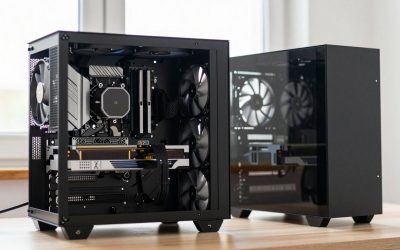
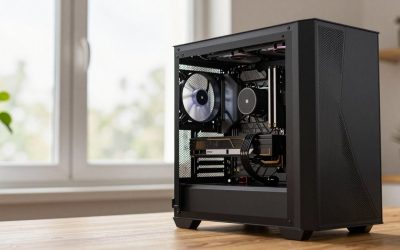
- Top Pick: ASUS ROG G700 (2025) Gaming Desktop PC, Intel® Core™ Ultra 7 265F Processor, NVIDIA® GeForce RTX™ 5070, 1TB M.2 NVMe™ PCIe® 4 SSD, 16GB DDR5 RAM, Windows 11 Home, G700TF-DS774
- Best Value: ASUS ROG G700 (2026) Gaming Desktop PC, Intel® Core™ Ultra 7 265KF Processor, NVIDIA® GeForce RTX™ 5070, 1TB M.2 NVMe™ PCIe® 4 SSD, 16GB DDR5 RAM, Windows 11 Home, G700TF-DB774
- Premium Choice: ASUS ROG GM700 (2026) Gaming Desktop PC, AMD Ryzen™ 7 8700F Processor, NVIDIA® GeForce RTX™ 5070, 1TB M.2 NVMe™ PCIe® 4 SSD, 32GB DDR5 RAM, Windows 11 Home, GM700TZ-PS776
Poppy Playtime is not a demanding PC game. Released on October 12, 2021, it is a short, linear horror and puzzle adventure built in Unreal Engine: you explore the abandoned Playtime Co. toy factory, use the GrabPack to hack electrical circuits or nab objects from a distance, and try to stay alive while vengeful toys hunt you through corridors, vents and puzzle rooms. There are no open worlds, no crowds of NPCs and no ray-traced lighting to pay for. Mob Entertainment’s own specification is a single tier — an Intel Core i5, 8GB of RAM, a GeForce GTX 1060 or Radeon RX 580 and 20GB of storage — and it applies to the minimum and the recommended column alike. If your PC was built for gaming at any point in the last several years, you already meet it; if it was built more recently, you will clear it by a wide margin at 1080p.
As an Amazon Associate we earn from qualifying purchases at no extra cost to you.


Poppy Playtime Official PC System Requirements
| Component | Minimum (official) | Recommended (official) |
|---|---|---|
| OS | Windows 10 | Windows 10 |
| Processor | Intel Core i5 | Intel Core i5 |
| Memory | 8 GB RAM | 8 GB RAM |
| Graphics | Nvidia GeForce GTX 1060 / Radeon RX 580 | Nvidia GeForce GTX 1060 / Radeon RX 580 |
| Storage | 20 GB available space | 20 GB available space |
Source: the official Poppy Playtime Steam store listing (app 1721470), checked October 2026. Publishers can update these specs after patches.
The most useful thing about this list is that the minimum and the recommended columns are identical. Mob Entertainment does not ask for a stronger processor, more memory or a faster graphics card for the “recommended” experience — it asks for the same Intel Core i5, the same 8GB of RAM, the same GeForce GTX 1060 or Radeon RX 580 class of graphics card, and the same 20GB of storage either way. In practice that means there is no second tier to chase: a PC that meets the minimum is, by the developer’s own definition, a PC that also meets the recommended target.
That fits the game. Poppy Playtime began life as a 2021 Unreal Engine title and grew chapter by chapter rather than being rebuilt around a newer renderer, so it does not call for ray tracing hardware, mesh shaders, DirectStorage or any other recent feature that would push older cards out of the running. The GTX 1060 and RX 580 named in the official spec are both several generations old at this point, and both were mid-range parts when they launched.
Two details in the official list are worth highlighting. First, 8GB of system memory is the figure the developer lists for both columns — this is a genuine 8GB game, not an 8GB minimum with a 16GB recommendation hiding behind it. Second, the storage figure is 20GB of available space, which covers the game as it is currently packaged rather than a single chapter. Both numbers are modest by the standards of modern action games, and both are worth planning around simply so you are not juggling drive space mid-install.
Windows 10 is the only operating system listed. That is a floor rather than a ceiling: the game also runs on Windows 11, and on modern Linux distributions through Proton, though those are not officially listed configurations. What the official spec does not mention is an SSD. It is not required — the game will install and launch from a mechanical hard drive — but it remains the single upgrade that most improves how the game feels to play, for the reasons covered further down.
What GPU Do You Need by Resolution?
Poppy Playtime scales cleanly across resolutions because it leans on baked lighting, relatively simple shadow work and light post-processing rather than heavy dynamic effects. The practical result is that the card you already own is usually enough, and a modern entry-level GPU has headroom to spare.
1080p (Full HD)
At 1080p the official spec is the honest answer: a GeForce GTX 1060 or Radeon RX 580 runs the game comfortably. So do the cards that followed at the same tier — the GTX 1650 Super, GTX 1660 Super, Radeon RX 5500 XT, RX 6600 and GeForce RTX 3050 — and anything above them. If you are buying new, current entry-level options such as the GeForce RTX 5060 or Radeon RX 9060 XT are far beyond what this game asks for; they make sense for 1080p high-refresh play and for the other titles on your drive, not because Poppy Playtime needs them.
Because the game is light, 1080p is also the resolution where a high-refresh monitor earns its keep. A card in the RTX 5060 or RX 9060 XT class, or a previous-generation RTX 3060 or RX 6600, will hold frame rates above what a standard 60Hz panel can display at high settings, which makes the factory’s slow, deliberate pacing feel noticeably smoother. Cards sitting at the official GTX 1060 / RX 580 level are better matched to a standard 60Hz screen.
1440p (QHD)
1440p is comfortably within reach for mid-range hardware. A GeForce RTX 5060 Ti or RTX 5070, or a Radeon RX 9060 XT or RX 9070, will run the game at 1440p on high settings with plenty of headroom left over. Older mid-range cards hold up as well: the RTX 2060 Super, RTX 3060 Ti, RX 5700 XT and RX 6700 XT all sit above the official 1080p-class recommendation and can drive a 1440p panel here, which is not something you can say about most games of this era.
You do not need upscaling at this resolution. If your setup offers DLSS, FSR or XeSS, treat them as optional rather than necessary — on a card of this class it is usually better to leave them off and keep the image as clean as the game’s dark, high-contrast interiors allow.
4K (Ultra HD)
4K is more resolution than this game needs, but it is entirely achievable. A GeForce RTX 5070 or RTX 5070 Ti, or a Radeon RX 9070 or RX 9070 XT, will run Poppy Playtime at 4K on high settings without difficulty, and even a previous-generation RTX 3080 or RX 6800 XT class card has enough muscle for a 4K display here. This is one of the few modern horror games where you can pick 4K for the crisp edges of the factory signage and the GrabPack’s cables rather than for raw performance reasons.
The catch is not the GPU, it is the rest of the 4K experience. 4K monitors are usually paired with high refresh rates, and since the CPU and memory side of this game stays trivial, any modern gaming PC with a card of that class will be limited by its display rather than by Poppy Playtime. If you already game at 4K for other titles, this one simply comes along for the ride.
CPU, RAM and Storage Notes for Poppy Playtime
CPU: Not a Bottleneck
Poppy Playtime is not CPU-heavy. It is a linear horror game without large open environments, physics simulations, crowds of AI characters or heavy background streaming. The official requirement is a plain “Intel Core i5” with no generation attached, which tells you the developer is not asking for anything specific in terms of core count or clock speed.
In practice, any modern quad-core is more than enough: an Intel Core i3-12100F or Core i5-12400, or an AMD Ryzen 5 3600 or Ryzen 5 5600, will never be the limiting factor. Older chips such as the Core i5-8400 or Ryzen 5 2600 are equally fine. There is no reason to buy a high-core-count CPU or a current X3D gaming chip for this game. The only scenario in which processor speed starts to matter is if you are chasing very high frame rates on a high-refresh 1080p monitor, and even then the GPU is still the part doing the work.
RAM: 8GB Is the Official Figure, and It Is Genuinely Enough
Mob Entertainment lists 8GB of RAM in both the minimum and the recommended column, and that is an accurate description of the game’s needs rather than a placeholder. Poppy Playtime is not a large-memory title. Where the figure needs care is the operating system and background software sitting next to it: Windows 10 or 11 plus a browser and a chat client can consume several gigabytes on their own, so on a machine with exactly 8GB you will want to close what you are not using before you play.
More memory is a convenience, not a requirement. If you already have 16GB, or you are building a PC that will also run heavier games, there is no downside to it — but do not treat 16GB as a target Poppy Playtime is asking you to hit. It is not. Memory speed matters just as little; 3200MHz DDR4 and any current DDR5 kit are both fine.
Storage: 20GB and a Case for an SSD
The official storage requirement is 20GB of available space, which is small by modern standards and leaves room on any drive you are likely to own. The game is delivered as a set of chapters, so that space fills up progressively as you download them.
An SSD is not in the official spec, and the game does run from a hard drive. It is, however, the upgrade that changes the experience most. Poppy Playtime loads factory floors and streams textures and audio as you move between areas, and on a mechanical drive the initial chapter loads are noticeably longer and the transition into a new zone can hitch briefly while assets are pulled in. On a SATA SSD or an NVMe drive those waits largely disappear. You do not need a PCIe 4.0 or 5.0 drive for this — any solid-state drive is a big step up from spinning storage.
Example PC Builds for Poppy Playtime
These are general hardware pairings to guide your expectations for a new system. None of them are required by the game; they are aimed at what else you might want to play alongside it.
Budget 1080p Build
Aimed at 1080p on high settings with headroom to spare. This is comfortably more than the official spec and covers the entire Poppy Playtime series.
- CPU: Intel Core i3-12100F / Core i5-12400F or AMD Ryzen 5 5600
- GPU: GeForce RTX 5060 or Radeon RX 9060 XT (an RTX 3050 or RX 6600 is still fine)
- RAM: 16GB (2x8GB) DDR4 3200MHz or 16GB DDR5
- Storage: 512GB – 1TB NVMe SSD
A build like this will run Poppy Playtime without the graphics card breaking a sweat, and it will also handle most current releases at 1080p. If you are upgrading specifically for indie and horror games, this is the sensible place to stop — a cheaper card would still meet the official spec, and a more expensive one would buy you very little in this title.
Mid-Range 1440p Build
Aimed at 1440p on high settings, or 1080p on a high-refresh monitor, with headroom for heavier games.
- CPU: Intel Core i5-14400F / Core i5-13400F or AMD Ryzen 5 7600
- GPU: GeForce RTX 5060 Ti / RTX 5070 or Radeon RX 9060 XT / RX 9070
- RAM: 16GB – 32GB (2x16GB) DDR5 5600MHz
- Storage: 1TB NVMe SSD
This is well beyond what Poppy Playtime needs. It makes sense if you also play demanding Unreal Engine 5 horror titles, large multiplayer games, or you want to drive a 1440p high-refresh monitor. For this game alone, a build like this simply means the graphics card will sit mostly idle.
There is no case for an enthusiast build bought specifically for Poppy Playtime. Anything in the RTX 5080 or RX 9070 XT class is aimed at 4K in much heavier titles; here, that budget is better spent on a better monitor, a quieter case or a larger SSD.
Laptop and Handheld Performance: Steam Deck, ROG Ally and More
Poppy Playtime is well suited to laptops and handhelds because its requirements are so low.
On gaming laptops, an entry-level model with an RTX 4050 Laptop, RTX 5050 Laptop or Radeon RX 7600M graphics chip will run the game at 1080p on high settings without trouble, and anything above that class has room to spare. Thin-and-light laptops without a dedicated GPU are a different story: integrated graphics such as the AMD Radeon 780M in Ryzen 7 7840U and 8840U systems, or current Intel Arc integrated graphics, can run the game at 1080p on reduced settings, but frame rates will be modest and the fans will be audible. A dedicated GPU is the safer choice if this is a game you plan to play often.
Handhelds handle it comfortably. The Steam Deck’s 1280×800 panel is a good match for the game’s modest requirements, and the ROG Ally, ROG Ally X and Lenovo Legion Go have more GPU headroom still, so you can push resolution or settings higher on those devices. Poppy Playtime is a good fit for handheld play in general: chapters are short and self-contained, the install is only 20GB, and the controls are simple enough that smaller sticks and buttons are not a handicap. Battery life benefits from capping the frame rate, since the game does not need to run flat out to feel smooth.
Best Settings to Raise FPS in Poppy Playtime
If you are on older hardware or a handheld and want more headroom, the biggest gains usually come from the same handful of options. Poppy Playtime’s graphics menu is deliberately limited, so there is not much to work through.
1. Shadows
Shadow quality is usually the heaviest single setting in a game like this, because the factory scenes are lit by moving light sources — the GrabPack’s own light and the overhead fluorescents — and those shadows have to be recalculated as you move. Dropping shadow quality by a step is the quickest way to free up GPU time, and it costs very little visually: the corridors stay dark and oppressive even with softer shadow edges.
2. View Distance / Post Processing
View distance controls how far detailed geometry and lighting are drawn down the long factory halls. If your options menu exposes it, lowering it by a step helps most when you are looking across large rooms rather than standing in a corridor. Post-processing covers effects such as bloom, ambient occlusion and lens effects; trimming it removes a little of the haze that sits over the brighter rooms, and it is one of the better options to try on integrated graphics and handhelds, where every bit of GPU time counts.
3. Anti-Aliasing and V-Sync
Leave anti-aliasing enabled if it is available. It keeps the factory’s fine details — signage, pipes, the cables of the GrabPack — from shimmering as the camera moves, and its cost on a modern GPU is small. If you see screen tearing, prefer a frame rate cap in your GPU driver over in-game V-Sync, which can add input lag. On a laptop or handheld, capping the frame rate to the display’s refresh rate also cuts fan noise and extends battery life without making the horror pacing feel any less deliberate.
Texture quality is the one setting not worth touching. Poppy Playtime’s textures are not heavy, and unless you are working with a very small amount of video memory, leaving them at their default costs almost nothing in performance and preserves the look of the game.
Final Verdict
Poppy Playtime remains one of the most accessible horror games on PC. Its official requirements are a single tier — an Intel Core i5, 8GB of RAM, a GeForce GTX 1060 or Radeon RX 580 and 20GB of storage — and a machine built for gaming in the last several years will already exceed them at 1080p. If you are upgrading, put the money where it affects everything else you play, install the game on an SSD so the chapter loads are quick, and do not worry about matching a “recommended” tier the developer never asked for. The scares are supposed to come from Huggy Wuggy, not from your frame rate.