The Book of Unwritten Tales, KING Art’s point-and-click fantasy adventure from 2012, is one of the rare older adventures whose Linux answer starts with yes. Steam flags the game for Windows, Mac and Linux alike, and the delivery layer behind the flag is real: the depot table carries a full set of sized Linux depots. What the store never did is publish a Linux requirements list.
That gap shapes the rest of the record. The community file is thin and split between a native build some players describe as rough and a Proton route they praise instead, Valve’s Deck sheet rates the game on a Proton configuration rather than the native one, and the second storefront sells a Windows-only copy.
As an Amazon Associate, we earn from qualifying purchases.
Quick answer
Yes — The Book of Unwritten Tales is genuinely native on Linux. Steam flags all three platforms and the depot table holds a set of sized Linux depots, although the store never published a Linux requirements list. ProtonDB classifies it Native across seven reports, and Valve rates it Playable on Steam Deck.
A native build whose paperwork was never written
The store record for app 215160, released on 31 July 2012 with KING Art as developer and THQ Nordic as publisher, reads windows, mac and linux all true. Against that, the linux_requirements field is an empty list outright: no tab, no headings, no minimum tier. The Windows field is populated and the Mac field is populated at the minimum tier, so the empty Linux field is not a store-wide habit — this game’s Linux spec sheet simply was never published, and no official processor or memory floor for the Linux build exists on the store page.
The depots settle what the missing tab leaves open. SteamDB’s table for the public branch holds a Linux content depot of 3.39 GiB alongside the Windows content depot at 3.21 GiB and the macOS content depot at 3.38 GiB, plus separate Linux language depots for English, German, French and Spanish in the same size class. SteamDB’s operating-system list names Windows, macOS and Linux, and a Linux client icon sits in the asset list. A sized Linux depot inside the public branch is delivered software, not paperwork: the native build exists and ships to buyers today.
The shape here is the inverse of the leftover-paperwork cases this series usually documents: elsewhere a populated tab or a stray flag survives with no build behind it, while here the build is present at every delivery layer and the descriptive paperwork is what is missing. The verdict follows the delivery layer: genuinely native, with the caveat that no official Linux requirements text exists to quote.
The one add-on app, read on its own
The game’s record carries a DLC array of exactly one app: the Digital Extras package, released a day before the game itself. Read individually, it flags all three platforms true, its own Linux requirements field is the same empty list as the game’s, and its 316.93 MiB depot carries no operating-system label.
That makes the family count two of two readable records flagging Linux — a line that would mislead if it stood alone. Only the game’s flag is backed by depots; the extras package is bonus content whose flag proves nothing in either direction, so the native case rests on the game’s own depot table, not on the family count. The sequel and the Critter Chronicles prequel are separate apps, not read for this page.
What the community file actually says
ProtonDB’s summary feed could not be read for this app during this session: the summary address returned a page-not-found response on repeated attempts, so no headline tier, tier split or confidence figure is claimed in this article. What the game’s ProtonDB page shows is readable, claimed at exactly that size: the page classifies the game as Native under its Natively Supports heading, and Steam agrees — the clean-agreement case, not the stray-tag contradiction. The file behind the classification holds seven reports.
Seven reports is a thin file, and its texture is split. Several reporters who tried the native build describe it running at very low frame rates or failing to start, while those who forced a Proton version describe smooth play, including on Steam Deck hardware. Read at report weight: the native build is the default install, its small community file is mixed, and the Proton fallback is documented in the same file by the players who needed it.
Anti-cheat and account checks: three empty chairs
The game is a single-player adventure with no multiplayer categories. On anti-cheat, three sources were kept separate and all three are negative. Steam names no anti-cheat product on the record. SteamDB’s detected technologies are the OGRE engine, the Lua scripting kit and the Ogg and Vorbis audio libraries — engine, scripting and audio plumbing only. The Are We Anti-Cheat Yet dataset, searched in full by name and by app number, carries no entry for this game.
Two absences deserve naming rather than smoothing over. The record carries no drm_notice field and no ext_user_account_notice field: it states no third-party DRM and requires no outside account, but an absent field is a gap in the paperwork, not a promise.
The Deck sheet rates a Proton configuration
Valve’s own compatibility endpoint, read directly for this article, rates the game Playable on Steam Deck, category two. The passing items are the ones a point-and-click needs: the default controller configuration is fully functional, interface text is legible, and default graphics perform well. The two notes: the game sometimes shows mouse, keyboard or non-Steam-Deck controller icons, and text entry requires manually invoking the on-screen keyboard. SteamOS separately reads Compatible.
The dated paperwork behind the badge comes from SteamDB’s republication of Valve’s compatibility data, with a wrinkle worth stating plainly. The test sheet is dated 2 November 2022 and names build 502453, the build the public branch still serves — the branch has stood on it since January 2015 — so in build terms the paperwork is current. But the sheet’s recommended runtime is the stable Proton runtime, so the Playable rating as tested describes the Windows build under Proton, not the native build in the same depot table.
The GOG copy is Windows only
A GOG edition of this game exists — the live product page is this title, with the Aventásia storyline and the July 2012 release — but GOG’s own product record reads its system compatibility as Windows only, with both the Mac and Linux flags false. The edition is real; it simply carries neither extra build Steam sells. A Linux buyer has exactly one storefront for this game: Steam.
Gear that fits the record
The record points at two ways of playing: the rated handheld, its trackpads standing in for the mouse, and a desk setup for long pointing sessions.
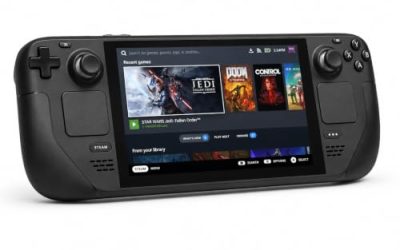
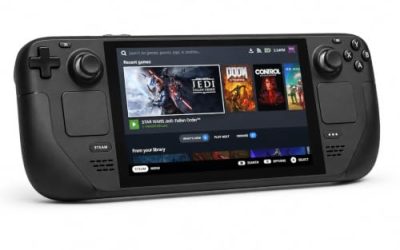
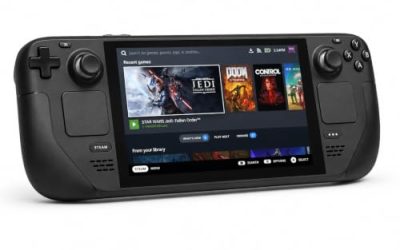
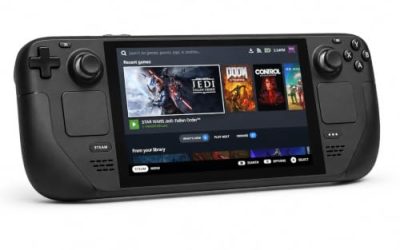
Valve Steam Deck OLED 512GB

The handheld behind the Playable rating. Valve’s sheet confirms the default configuration is fully functional and the text legible; remember the tested configuration was Proton, so the badge grades that route.
Specs
- Display: 7.4-inch HDR OLED, 1280 by 800, up to 90 Hz
- Processor: AMD Zen 2 and RDNA 2 custom APU
- Memory: 16 GB LPDDR5
- Storage: 512 GB NVMe, plus a microSD slot
- Wireless: Wi-Fi 6E and Bluetooth
- Channel note: Valve sells the Deck mainly through its own store, so Amazon listings are third-party sellers
8BitDo Ultimate 2 Bluetooth Controller

The docked and desktop pad pick, covering the couch case with modern sticks, triggers and back buttons for menu shortcuts.
Specs
- Connectivity: Bluetooth wireless and USB-C wired
- Joysticks: TMR electromagnetic, anti-drift design
- Triggers: Hall effect, with mode switching
- Extras: two remappable back buttons, motion control
- In the box: charging dock included
Xbox Wireless Controller, Carbon Black

The safest guest pad in PC gaming: Steam Input support is universal and it pairs over Bluetooth or its own wireless standard. Valve’s sheet notes the game sometimes shows non-Deck controller icons, so expect the odd mismatched prompt with any external pad.
- Connectivity: Xbox Wireless and Bluetooth
- Port: USB-C for wired play
- Controls: hybrid D-pad, dedicated Share button
- Power: AA batteries or optional rechargeable pack
Logitech G502 HERO

This genre is mouse work throughout: hotspots, inventory combinations and dialogue trees. A precise wired mouse covers the confirm, cancel and hotspot-highlight inputs a long session repeats.
Specs
- HERO optical sensor, up to 25,600 DPI
- 11 programmable buttons
- Adjustable weight system
- Wired USB connection
- On-board memory profiles
Samsung T9 Portable SSD 2TB

For moving a Linux game library between machines or backing up installers offline, a fast USB-C drive is the simple answer. The headline figure needs a Gen 2×2 host port; on a lesser port the drive runs at that ceiling.
Specs
- Capacity: 2 TB portable SSD
- Interface: USB 3.2 Gen 2×2, USB-C connector
- Maker-rated speeds: up to 2,000 MB per second read, 1,950 MB per second write
- Features: Dynamic Thermal Guard, maker-rated drop resistance
How to choose
Choose the store first: Steam is the only storefront selling the Linux build, since the GOG edition is Windows only. On Steam, install the native build first — it is the default. If your machine matches the setups whose native attempts ran badly in the community file, the documented fallback is to force a Proton version in the compatibility settings, a route those players describe as smooth. On Steam Deck, expect the Playable experience Valve describes: working controls, legible text, occasional mouse and keyboard icons, and a manually invoked keyboard for text entry.
Who should skip
Skip the GOG copy if Linux is the point — it is a Windows build. Skip this one entirely if a seven-report community file feels too thin to trust; the native build is real, but its report file is small and split. And if you dislike adventures built on dialogue trees and inventory combinations rather than action, the genre itself is the mismatch, not the port.
FAQ
Is The Book of Unwritten Tales native on Linux?
Yes. Steam flags the game for Windows, Mac and Linux, and SteamDB’s depot table holds a sized Linux content depot plus Linux language depots in the public branch. The one missing layer is descriptive: no Linux requirements list was ever published, so no official Linux spec sheet exists to quote.
Why do some players force Proton for a native game?
Because the small community file is split. Of the seven reports on the game’s ProtonDB page, several native attempts are described as running at very low frame rates or failing to start, while the forced-Proton reports describe smooth play. The native build is the default; Proton is the fallback, not a requirement.
Is The Book of Unwritten Tales Steam Deck Verified?
No — Valve rates it Playable, one step below Verified. The sheet passes the controller configuration, text legibility and default performance, with notes about non-Deck icons and manual keyboard invocation. The tested configuration named the stable Proton runtime, so the rating describes the Windows build under Proton, not the native build.
Can I buy the game on GOG for Linux?
No. A GOG edition exists, but GOG’s product record lists it as Windows only — neither the Linux nor the Mac build. Steam is the only storefront selling the native Linux version.
Final verdict
The Book of Unwritten Tales is genuinely native on Linux: the flag is true, the depots are sized and public, and ProtonDB’s Native classification agrees with Steam. The honest caveats concern paperwork and depth, not existence — no published Linux requirements, a seven-report file split between a rough native experience and a smooth Proton fallback, and a Deck badge earned on a Proton configuration. Buy it on Steam, start native, and keep the Proton switch in mind.
Product and ASIN Reference
| Product | ASIN |
|---|---|
| Valve Steam Deck OLED 512GB | B0CQ3RWQQZ |
| 8BitDo Ultimate 2 Bluetooth Controller | B0F194QFT2 |
| Xbox Wireless Controller, Carbon Black | B08DF248LD |
| Logitech G502 HERO | B07GBZ4Q68 |
| Samsung T9 Portable SSD 2TB | B0CHFS9K14 |