
Surround Sound Gaming Headset Guide 7.1
Surround sound in games promises a clear sense of where footsteps, reloads and distant gunfire are coming from. A 7.1 label on a gaming headset suggests that the headset can place sound around you in seven directions with a subwoofer for low frequencies. The reality is more nuanced. Some headsets use true multi-driver designs, others rely on processing that simulates surround from two drivers, and the software that drives the effect matters as much as the hardware. This guide explains what 7.1 means on a headset, how virtual and physical surround differ and how to choose a model that fits your games.
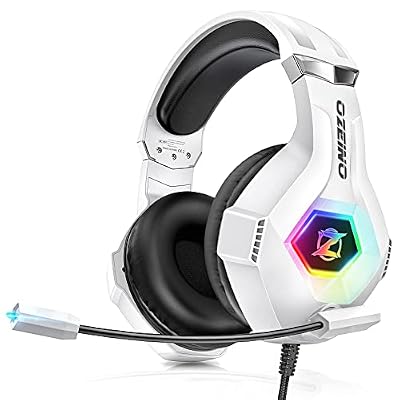
The hero listing above is our primary pick for the query “surround sound gaming headset”. It sits in the surround-focused headset class discussed below, but the listing is a closest-match substitute rather than a verified model for every reader. Check the card for the exact model, the surround format and the software requirements before you buy. The alternatives beside it cover other surround and stereo designs, so you can use the same checklist throughout.
What 7.1 Means on a Gaming Headset
The 7.1 label describes a channel layout: seven full-range channels for front left, front right, centre, side and rear positions, plus one low-frequency channel for the subwoofer. A headset cannot physically place seven speakers around your head, so it uses a combination of drivers and signal processing to suggest those positions. Some headsets include multiple drivers per ear to support a more direct effect. Others use digital processing to simulate the layout from a stereo or multi-channel signal.
The label alone does not tell you how convincing the effect will be. The quality of the drivers, the processing algorithm and the software controls all shape the result. Read the spec on the card carefully and do not assume that a 7.1 label guarantees a precise sense of direction.
Virtual Surround vs Physical Multi-Driver Designs
Virtual Surround Through Software
Virtual surround uses processing to create a sense of direction from a stereo signal or a multi-channel input. Many gaming headsets rely on this approach, often with an application that lets you choose a profile or adjust the effect. Virtual surround can be effective for footsteps and positional cues, but the result depends on the algorithm and on your ears. Some players find it convincing, while others prefer a plain stereo mix.
Physical Multi-Driver Designs
Some headsets place more than one driver in each ear cup and route different frequencies or channels to different drivers. This can give a more natural sense of height and distance than simple processing, although the effect still depends on the design and on the game’s audio mix. Check whether the headset specifies its driver layout on the card, since a multi-driver design is a physical feature and not just a software setting.
Stereo Mode and Why It Still Matters
A plain stereo mode can sound more natural for music and some single-player games. Many gaming headsets allow you to switch surround processing off, and it is worth testing both modes in the games you play most. A good headset should sound clean in stereo as well as in surround.
Surround Headset Comparison Table
| Feature | Virtual 7.1 | Multi-driver physical | Stereo only | Best for |
|---|---|---|---|---|
| Method | Processing from stereo or multi-channel input | Multiple drivers per ear | Two-channel stereo | Choose by how you play |
| Software needs | Often required | Varies by model | Usually none | Plug-and-play buyers (stereo) |
| Positional cues | Depends on algorithm | Often more natural | Basic left-right | Competitive shooters (multi-driver) |
| Music quality | Can vary | Varies by tuning | Often more neutral | Mixed use (stereo or test both) |
| Typical price tier | Budget to mid; check current price | Mid to premium; check current price | Budget to mid; check current price | Value comparison |
The table compares design approaches, not individual headsets. Prices vary by model, so check the card for the live figure. For a broader view of wired and wireless choices, read our overview of wireless gaming headsets in 2026, and for affordable models see affordable gaming headsets.
Choosing Surround for Your Games
Competitive Shooters
Competitive shooters reward accurate direction cues. Players in these games often prefer a headset with clear positional audio and a software option they can tune. Test footstep clarity in a range of maps, because some surround processing emphasises certain sounds at the expense of others.
Single-Player and Open-World Games
For immersive single-player titles, surround can add atmosphere, but a natural stereo mix may sound better for music, dialogue and ambient sound. Choose a headset that lets you switch modes easily, so you can match the setting to the game.
Mixed Use and Music
If you also listen to music or watch films, check how the headset handles stereo content. Some surround-focused headsets make music sound unusually wide or hollow. Tuning and the software EQ matter here.
Setup Tips for Surround
Use the Right Audio Output
Make sure your operating system and the game are set to the correct output device. Some games need a surround option enabled in their own audio settings, while others use the system output alone. Test the setup with a short audio test or a level you know well.
Tune the Software Carefully
Use the headset software to adjust the surround profile, EQ and voice balance. Small changes can make footsteps clearer without making the mix harsh. Save a profile for each game if the software allows it.
Check Comfort and Fit
Surround headsets are not always lighter than stereo models. Check the headband, earcup size and clamp force before a long session. Comfort affects how carefully you can listen, which matters more than the label.
Buying Checklist
Check the Surround Format
Confirm whether the headset uses virtual or multi-driver surround and whether the software is required. The card should state the format and the software details.
Check Connection and Platform
Confirm whether the headset connects by USB, wireless dongle or 3.5mm jack. Some surround features only work on certain platforms, so check compatibility with your PC or console.
Check the Microphone
Surround headsets often include a mic. Check the mic type on the card, since a good surround effect does not help if teammates cannot hear you clearly. Our notes on PS5 gaming headsets cover console-specific compatibility.
Common Mistakes With Surround Headsets
The first mistake is assuming that a 7.1 label guarantees a clear sense of direction in every game. The effect depends on the game’s audio mix and your ears. The second mistake is leaving surround processing on for music. Test stereo for your favourite tracks. The third mistake is buying a headset that needs software you cannot run on your system. Check the software requirements before you commit. For a comparison of headset styles, see headsets for gaming.
Related Guides Before You Decide
Before you commit, these related guides cover the next questions on this topic: 2026 headset guide Xbox headsets VR headsets budget headsets.
Frequently Asked Questions
Is 7.1 surround better than stereo for gaming?
It can be, for positional cues in some games. Stereo can sound more natural in others. Test both modes in the titles you play most.
Do I need a 7.1 headset for competitive play?
Not necessarily. Many competitive players use stereo or simple virtual surround. Choose a headset that gives clear footsteps and comfortable fit for long sessions.
Does virtual surround need software?
Usually yes. Many virtual surround effects are controlled through a companion application, so check the software requirements before you buy.
Will a surround headset work on a console?
Some do, but compatibility varies by model and by console. Check the card for supported platforms and any adapter requirements.


