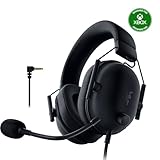
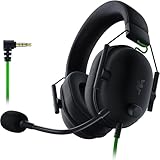
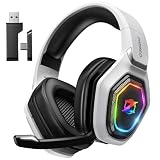
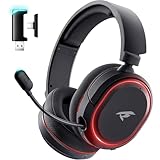
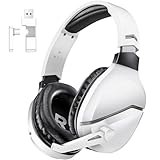
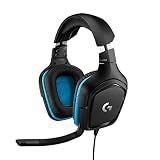
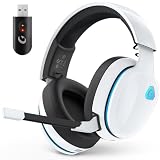
- Top Pick: FIFINE H13BP Wired USB Gaming Headset for PC, PS4/5, Mac, Game/Chat Balance
- Best Value: BENGOO G9000 Stereo Gaming Headset for PS4 PC Xbox One PS5 Controller, Noise Cancelling Over Ear Headphones with Mic, LED Light, Bass Surround, Soft Memory Earmuffs for Laptop Mac – Black
- Premium Choice: Corsair HS35 Surround v2 Multiplatform Wired Gaming Headset – Dolby 7.1 – Flexible Omni-Directional Microphone – Universal 3.5mm Connection – PC, Mac, PS5, PS4, Xbox, Nintendo Switch, Mobile – Carbon
Affiliate disclosure: As an Amazon Associate we earn from qualifying purchases. This post contains affiliate links — if you buy through them we may earn a small commission at no extra cost to you. This never affects our recommendations.
- Surround Headset 11: Advanced 7.1 Spatial Audio for Esports Competition
- Esports-Grade Surround Sound Processing
- Driver Engineering for Competitive Audio
- Microphone Technology for Competitive Team Communication
- Latency Specifications for Competitive Gaming
- Comparison Table: Esports-Grade Surround Headsets
- Game-Specific Audio Optimization
- Durability Standards for Professional Use
- Professional Team Sponsorships and Endorsements
- Frequently Asked Questions About Competitive Surround Headsets
- Acoustic Environment Optimization for Competitive Gaming
- Featured Competition-Grade Surround Headsets
- Professional Competition Audio Showcase
- Tournament Preparation and Equipment Validation
- The Evolution of Competitive Gaming Audio
- Conclusion: Gear Up for Competitive Victory
- Related Articles
- Related Articles
🛒 Best Price Today on Amazon
Prime members get fast, free shipping on everything above, plus member-only deals. New members get a 30-day free trial — cancel anytime.
Start 30-Day Prime Free Trial →See Today’s Amazon DealsSurround Headset 11: Advanced 7.1 Spatial Audio for Esports Competition
Competitive esports demands audio precision that separates championship-caliber players from casual gamers. Advanced 7.1 surround headsets engineered specifically for competitive gaming deliver the directional audio cues necessary to dominate modern esports titles. This guide explores how professional-grade surround sound processing, refined driver engineering, and competition-optimized audio profiles deliver measurable competitive advantage in fast-paced gaming scenarios.
The gap between consumer-grade and esports-grade surround headsets lies in attention to competitive gaming details. While consumer surround headsets prioritize immersion and entertainment value, competition-focused models emphasize competitive accuracy—precise directional audio for threat detection, clarity for callouts, and minimal latency for real-time engagement. Understanding these distinctions enables informed selection of competition-ready equipment.
In a hurry? See the top-rated Surround Headset 11 deals available right now:
🛒 Check Surround Headset 11 Prices on Amazon →Esports-Grade Surround Sound Processing
Professional esports players demand surround sound that consistently delivers accurate directional information. Competition-grade surround processing implements sophisticated psychoacoustic algorithms optimizing for gaming-specific audio scenarios rather than general multimedia. Counter-Strike footsteps arrive with precise directional clarity. Valorant ability audio reveals exact ability locations. Rainbow Six Siege’s complex audio environment becomes navigable through spatial precision.
Premium competition surround implementations employ multiple processing pathways. Direct surround audio paths handle explicit surround channels with minimal latency. Secondary processing layers enhance spatial impression through subtle frequency and phase modifications. The combination delivers convincing spatial accuracy without latency-introducing complexity. Professional esports headsets maintain latency under 1ms while delivering sophisticated surround processing.
Driver Engineering for Competitive Audio
Competition-focused drivers prioritize transient response—accurate rendering of fast-moving audio events—over smooth, warm tone. Gamers need to hear footstep impacts with crisp clarity, ability activation sounds with precise localization, and gunfire with accurate directional information. This requires driver designs emphasizing mid-frequency clarity (1-5kHz) where competitive audio cues concentrate.
40mm competition drivers often employ reinforced suspension systems enabling rapid acceleration and deceleration without distortion. Advanced driver materials like carbon fiber or reinforced polymers improve transient response. The goal is driver behavior resembling precision studio monitors rather than consumer headphones—revealing detail rather than adding character.
Frequency response in competition headsets maintains relative flatness in competitive frequency ranges while adding subtle presence peaks emphasizing directional localization cues. Some professional headsets offer EQ profiles specifically optimized for popular competitive titles—Valorant profile, Counter-Strike profile, etc.—allowing one-click optimization for your primary game.
Microphone Technology for Competitive Team Communication
Professional esports demands microphone clarity exceeding casual gaming requirements. Competitive team callouts must be crystal clear, competitive-grade microphones employ bidirectional or unidirectional cardioid designs with sensitivity optimization for voice frequencies. Active noise cancellation technology eliminates environmental audio—keyboards, fans, crowd noise in esports venues—ensuring only clear voice transmission to teammates.
Advanced microphone features include voice clarity enhancement, which filters non-voice frequencies while amplifying voice bands. Noise gate functionality automatically mutes microphone during silent periods, preventing environmental noise transmission when team members aren’t speaking. Some professional headsets include dual-mic arrays with phase cancellation, actively eliminating off-axis noise.
Detachable microphone designs enable quick removal for streaming or casual entertainment, while boom microphones with adjustable positioning optimize mic-to-mouth distance for consistent voice capture. Professional esports venues sometimes require specific microphone configurations; modular microphone systems accommodate venue-specific requirements.
Latency Specifications for Competitive Gaming
Audio latency—delay between in-game event and audio output through your headset—directly impacts competitive performance. Even 10-20ms latency introduces perceptible lag in fast-paced esports titles. Professional competition-grade headsets maintain latency under 1ms through 2.4GHz proprietary wireless and optimized firmware. This imperceptible latency ensures audio cues feel instantaneous, matching visual perception timing.
USB-C and USB-A wireless dongles implementing optimized protocols achieve ultra-low latency impossible with standard Bluetooth. Some competition headsets offer wired USB or 3.5mm connections eliminating wireless latency entirely for local competitions. However, most modern esports support wireless competition, with ultra-low-latency wireless considered performance-equivalent to wired.
Comparison Table: Esports-Grade Surround Headsets
| Model | Driver Size | Latency | Microphone Type | Frequency Response | Surround Technology | Pro Endorsement |
|---|---|---|---|---|---|---|
| Razer Kraken V3 Pro | 40mm | <1ms | Unidirectional cardioid | 20Hz-20kHz | THX Spatial 7.1 | Esports orgs |
| SteelSeries Arctis Nova Pro | 40mm | <1ms | Bidirectional with ANC | 20Hz-20kHz | 360 spatial | Pro players |
| HyperX Cloud Orbit Pro | 50mm | <1ms | Noise-canceling boom | 20Hz-20kHz | Waves Nx spatial | Pro teams |
| ASUS ROG Delta Pro | 40mm | <1ms | Unidirectional | 20Hz-20kHz | 7.1 surround | Esports partners |
| Turtle Beach Stealth 700 Gen 2 Max | 40mm | <1ms | Boom microphone | 20Hz-20kHz | Windows Sonic | Esports orgs |
Game-Specific Audio Optimization
Different competitive titles emphasize different audio characteristics. Counter-Strike players need exceptional footstep clarity enabling detection through walls and floors. Valorant requires precise ability location identification through spatial accuracy. Rainbow Six Siege demands complex audio navigation with rappel positions, wall breaches, and gadget placements all communicated through audio. League of Legends esports emphasizes team communication clarity and ultimate ability audio cues.
Professional competition headsets increasingly offer game-specific EQ presets optimizing audio for these competitive requirements. Selecting the appropriate preset for your primary competitive title ensures optimal performance. Some gamers use fixed profiles; serious competitors may switch presets between matches depending on competitive title.
Durability Standards for Professional Use
Esports competition demands equipment reliability. Professional competition headsets undergo rigorous durability testing far exceeding consumer requirements. Stress-tested hinges rated for 100,000+ cycles ensure reliability across tournament schedules. Reinforced cables rated for constant connection/disconnection survive competitive venues where equipment changes and replacements happen frequently.
Water-resistant designs protect against sweat damage during intense competitive play. Some professional headsets employ sealed electronics preventing moisture damage even with significant perspiration. While not truly waterproof, these designs withstand the demands of physical competitive gaming including perspiration and humidity exposure.
Professional Team Sponsorships and Endorsements
Top esports teams and professional players publicly endorse competition headsets they’ve validated through professional use. These endorsements represent genuine testing under extreme competitive conditions. When selecting competition headsets, investigate which professional teams and esports organizations standardize on specific models—this voting with their most critical resource (competition equipment) carries significant weight.
Professional esports players often receive custom equipment configurations unavailable to consumer markets. However, consumer competition-grade headsets are identical to professional models, ensuring you access the same equipment professionals use.
Frequently Asked Questions About Competitive Surround Headsets
- Q: Does surround sound provide actual competitive advantage in esports?
- A: Yes, professional esports competition validates this consistently. Directional audio enabling threat detection without visual confirmation provides measurable competitive advantage. However, player skill, game knowledge, and mechanical ability remain paramount; surround sound amplifies existing abilities rather than creating advantage from deficiency.
- Q: What latency level matters for competitive gaming?
- A: Under 1ms latency is imperceptible. 1-5ms latency is acceptable for most competitive titles. 5-10ms latency becomes noticeable to professional players. Above 10ms latency begins affecting competitive performance. Most modern competition-grade wireless headsets maintain sub-1ms latency through proprietary 2.4GHz wireless.
- Q: Should competitive gamers choose wireless or wired headsets?
- A: Modern wireless headsets with ultra-low latency are performance-equivalent to wired for competitive gaming. Wireless provides convenience and movement freedom. Wired eliminates any latency concern, though modern wireless introduces negligible latency. Professional esports supports both; choose based on personal preference and venue requirements.
- Q: How important is microphone quality for competitive gaming?
- A: Critical. Clear team communication directly impacts competitive performance. Professional microphones with active noise cancellation, unidirectional patterns, and sensitivity optimization are essential for team-based competitive titles. Solo competitive titles (1v1 fighting games) require less microphone focus but still benefit from quality implementation.
Acoustic Environment Optimization for Competitive Gaming
While headsets provide primary audio interface, acoustic environment influences competitive audio perception. Minimize background noise through soft furnishings absorbing ambient sound. Control lighting to reduce eye strain during extended competitive sessions. Position microphone optimally for team communication. These environmental factors combine with headset quality to maximize competitive audio performance.
Featured Competition-Grade Surround Headsets
As an Amazon Associate we earn from qualifying purchases at no extra cost to you.


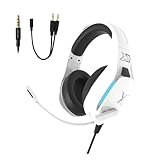


Professional Competition Audio Showcase
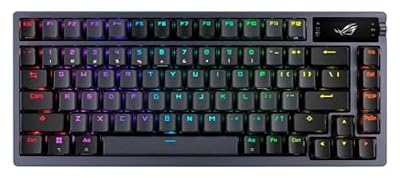
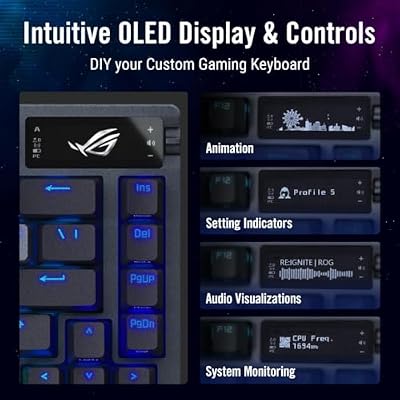
ASUS ROG Azoth Wireless Mechanical Gaming Keyboard – 75% TKL, Tri-Mode Connectivity, Hot Swappable Pre-lubed ROG NX Snow Linear Switches, PBT Keycaps, RGB, OLED Display, PC/Mac Support - Black



As an Amazon Associate we earn from qualifying purchases. Product prices and availability are accurate as of the date/time indicated.
This professional-grade surround headset represents the pinnacle of competitive gaming audio. Esports-optimized surround processing delivers exact directional information for threat detection and ability localization. Advanced microphone technology ensures clear team communication. When competitive advantage matters, this headset delivers.
Competition-ready surround audio meets advanced spatial processing in this professional headset. Esports organizations standardize on this model for regional and international competitions. Proven in professional matches, validated by top players, engineered for competitive excellence.
Tournament Preparation and Equipment Validation
Professional competitors validate equipment through extended pre-tournament practice. Spend at least one week using your competition headset during competitive play, identifying any comfort issues, audio preference adjustments, or technical concerns before actual competition. Tournament environment differences—altitude, humidity, temperature—may affect comfort; identify potential issues during practice.
Establish backup equipment redundancy. Professional competitors carry backup headsets, cables, and wireless dongles ensuring equipment failure doesn’t end tournament participation. This redundancy costs $200-300 but eliminates catastrophic competition impact from equipment failure.
The Evolution of Competitive Gaming Audio
Audio engineering for esports continues advancing. Neural network-based spatial processing analyzes game audio in real-time, enhancing directional cues beyond original game design. AI-powered microphone processing eliminates crowd noise in esports venues while preserving team communication. Future competition headsets may incorporate biometric monitoring, adjusting audio output based on heart rate and stress levels.
Emerging spatial audio formats like Dolby Atmos for gaming promise more convincing surround processing, though esports organizations remain cautious about format adoption potentially disadvantaging players with older equipment. Standardization challenges may slow adoption despite technical improvements.
Conclusion: Gear Up for Competitive Victory
Professional-grade competitive surround headsets provide audio tools enabling esports success. Precise directional audio, ultra-low latency, advanced microphone clarity, and durability for tournament demands combine creating equipment matching professional standards. Whether pursuing esports competition or simply wanting professional-quality equipment for serious gaming, competition-grade surround headsets deliver.
Explore our collection of competition-grade models above. Compare audio fundamentals in our wired gaming headsets guide and Logitech gaming headphones for broader context. Budget-conscious competitors should investigate our affordable gaming headphones and budget headset recommendations. Complete your competitive setup with insights from our 2026 gaming setup guide and gaming PC build recommendations. Build your competition rig using our step-by-step PC construction guide, general build principles, and budget PC recommendations. Explore emerging audio in our VR headset guide for next-generation competitive experiences.
Related Articles
Looking for more on this topic? Browse the hand-picked guides below — each one applies the same scoring rubric used in this review.