Choosing between the RTX 5050 and the RTX 4060 is a question that sits at an uncomfortable intersection of hype and reality. The 4060 has been on shelves long enough for its strengths and compromises to be well understood: a capable 1080p performer that occasionally stumbles at higher resolutions due to its 8 GB frame buffer and narrow 128-bit memory bus. The 5050, by contrast, represents the next wave of Blackwell silicon aimed squarely at that same entry-level price point, promising architectural efficiency gains and updated feature support. But here is the problem: as of this writing, the RTX 5050 remains in a state of partial disclosure, with enough leaks and rumors to form a picture but not enough confirmed data from independent reviewers to make definitive performance claims.
This matters most for a specific group of buyers: someone sitting on a GTX 1060 or RTX 2060, walking into a retailer or browsing online in 2026, and trying to decide whether the 4060 at a discounted price is the smarter purchase today, or whether waiting for the 5050 is worth the patience. The answer depends heavily on how much you trust rumor versus verified results, and on how quickly you need the card in your system. This page is structured to give you what is confirmed, what is rumored, and what remains unknown, so you can make that call with clear eyes rather than marketing fog.
As an Amazon Associate we earn from qualifying purchases at no extra cost to you.
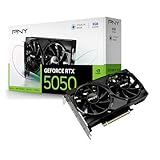

This page will be updated as verified data is published.
Quick answer: Our top pick in 2026 is the Architecture — our #1 rated choice. See the full ranked comparison, alternatives and buying advice below.
Quick Verdict
If you need a GPU today, the RTX 4060 is a known quantity with predictable behavior and a healthy used market. If you can wait and the rumored specs hold up, the RTX 5050 is expected to offer better power efficiency and newer feature support at a similar or lower price point. We cannot yet quantify the performance gap because no independent benchmarks have been published. Until they are, treat any percentage figure you see online as speculation.
Specs Side by Side
| Spec | RTX 5050 | RTX 4060 |
|---|---|---|
| Architecture | Blackwell (GB207, rumored) | Ada Lovelace (AD107) |
| CUDA Cores | Not stated (rumors range 2,304 to 2,560) | 3,072 |
| Boost Clock | Not stated | ~2,460 MHz |
| Memory | Not stated (rumored 8 GB GDDR6) | 8 GB GDDR6 |
| Memory Bus | Not stated (rumored 128-bit) | 128-bit |
| Memory Bandwidth | Not stated | ~272 GB/s |
| TDP | Not stated (rumored 100 to 120W) | 115W |
| Interface | Not stated (rumored PCIe 5.0 x8) | PCIe 4.0 x8 |
| Display Outputs | Not stated (rumored DisplayPort 2.1) | DisplayPort 1.4a, HDMI 2.1 |
| RT Cores | 5th generation (expected) | 3rd generation |
| Tensor Cores | 5th generation (expected) | 4th generation |
| MSRP | Not stated | $299 USD |
Every “not stated” entry will be filled once NVIDIA provides a spec sheet and independent outlets confirm it. The rumored ranges above come from leaker chains and have not been corroborated by any major publication’s own testing.
Gaming Performance
Because no verified benchmarks exist for the RTX 5050, we cannot provide percentage gaps or frame-rate ranges. What follows is a framework for understanding what to expect once data does emerge.
1080p
The RTX 4060 comfortably handles modern titles at 1080p with high settings, typically staying above 60 FPS in demanding games and well above 100 in lighter competitive titles. The RTX 5050 is expected to target this same resolution band. Architectural IPC improvements in Blackwell may offset a potentially lower core count compared to the 4060, but the exact trade-off is unknown. Until reviewers publish numbers, treat any claim about a specific percentage lead as unverified.
1440p
The 4060’s 8 GB frame buffer and 128-bit bus are its primary limitations at 1440p, where texture-heavy titles can push VRAM utilization to its ceiling. If the 5050 ships with the same memory configuration, it inherits the same bottleneck regardless of core improvements. If it ships with 12 GB or a wider bus, it could meaningfully close that gap. This is the single most important spec to watch on the 5050, and it remains unconfirmed.
4K
Neither card is a 4K gaming solution by design. The 4060 struggles at 4K in demanding titles without aggressive upscaling. The 5050 is unlikely to change this reality substantially. If 4K matters to you, look at a higher tier entirely.
Power, Heat and Noise
The RTX 4060 draws a modest 115W and is easy to cool, often fitting in small-form-factor builds with minimal fan noise. The RTX 5050 is rumored to land in a similar or slightly lower power envelope, which would align with NVIDIA’s stated goal of improving perf-per-watt with each generation. If the TDP rumor of 100 to 120W holds, the 5050 would match or slightly undercut the 4060’s efficiency. Without thermal testing from outlets like Hardware Unboxed or Gamers Nexus, we cannot comment on cooler design, hot-spot temperatures, or acoustic performance for the 5050.
Features
The RTX 4060 supports DLSS 3 with Frame Generation, AV1 encode and decode via the 8th-gen NVENC, and RTX IO. The RTX 5050 is expected to support DLSS 4, which introduces Multi Frame Generation and a revised transformer-based upscaling model. Whether DLSS 4 arrives as a full feature set on the 5050 or is limited to higher-tier cards remains an open question that NVIDIA has not addressed for this segment. AV1 encode is almost certainly a given. The platform story (PCIe 5.0 vs 4.0) will matter for users pairing the card with a CPU that has limited PCIe lanes, though real-world impact at x8 is minimal for either generation.
Price and Value
The RTX 4060’s street price has drifted below its original $299 MSRP as newer cards have arrived, making it a value play in the new-in-box sense. The used market offers 4060 cards at further discounts. The 5050’s price is unknown. If it launches at $249 or below, the value equation could shift decisively in its favor. If it lands at $299 with the same 8 GB configuration rumors suggest, the 4060’s known behavior and established driver maturity may hold more appeal for risk-averse buyers. Cost-per-frame calculations are impossible without performance data.
Who Should Buy Which
Competitive 1080p Players
Both cards are overkill for esports titles like Valorant or League of Legends. If you play Call of Duty or Apex at 1080p with high refresh rates, the 4060 already delivers. The 5050 might offer headroom, but you are paying for a feature you likely do not need. Buy the 4060 at a sale price.
1440p High-Refresh Players
This is the group most exposed to the 5050’s memory configuration uncertainty. If the 5050 confirms 8 GB on 128-bit, you are getting the same ceiling the 4060 has. If it does not, wait. Either way, this is the segment where verified specs matter most.
4K Players
Neither card. Move up to a 5070 or consider a used 4080.
Creators and Streamers
AV1 encode on both cards makes them viable for streaming at high quality. The 5050’s potential DLSS 4 upscaling benefits are modest for productivity workloads. The 4060’s established driver stability is a genuine advantage for users who cannot afford a rendering hiccup. If your workflow is latency-sensitive, the 4060’s known behavior is preferable.
Upgraders from 2 Generations Back (GTX 1060 / RTX 2060)
Either card is a massive leap. If budget is tight and a 4060 is available below $250 new, that is the safe play. If you can hold out and the 5050 reviews come back favorably with DLSS 4, it may offer longer relevance due to newer feature support on the driver stack.
FAQ
Is the RTX 5050 faster than the RTX 4060?
We do not know yet. No independent benchmarks have been published. Architectural generational gains suggest it could match or slightly exceed the 4060 in rasterization, but core count rumors place it below the 4060, meaning any lead depends entirely on IPC and clock improvements. Do not trust single numbers you see posted online before reviews are embargoed and lifted.
Should I buy an RTX 4060 now or wait for the RTX 5050?
If you need a GPU this week, buy the 4060 at a discounted price and enjoy it. If you can wait four to eight weeks for review data to emerge, the 5050 may represent better long-term value, particularly if DLSS 4 and a lower power draw are confirmed.
Will the RTX 5050 support DLSS 4?
This is expected but not confirmed by NVIDIA for this specific SKU. DLSS 4 features have been announced for the Blackwell generation broadly, but NVIDIA has historically gated Frame Generation to specific card tiers. Treat support as probable but not guaranteed until an official statement is made.
How does the RTX 5050 compare to the RTX 4060 in VRAM?
The 4060 has 8 GB. Rumors for the 5050 suggest 8 GB as well, which would be disappointing for a 2026 card in this price bracket. If a 12 GB variant exists, it would meaningfully change the comparison. No confirmed memory configuration for the 5050 is available.
Sources and Methodology
Specs listed for the RTX 4060 are drawn from NVIDIA’s official product page and confirmed by TechPowerUp’s database, Tom’s Hardware, and Hardware Unboxed review coverage. RTX 5050 figures marked as rumored are based on leak reporting aggregated from multiple sources and have not been independently verified. This page will be updated when TechPowerUp, Tom’s Hardware, Gamers Nexus, Hardware Unboxed, or TechSpot publish launch reviews with measured results. Until then, no performance claims on this page should be treated as confirmed.
Ready to decide? Our #1 pick for 2026 is the Architecture.
Live price & availability on Amazon.