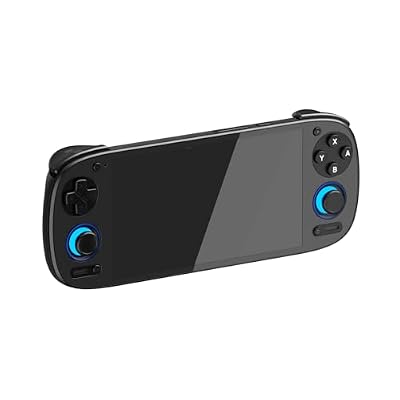
- Top Pick: 8BitDo Ultimate 2 Bluetooth Controller
- Runner-up: GameSir G7 SE Wired Controller
- Also consider: Keychron V5 Wired Mechanical Keyboard
Few genres reward a Linux player as reliably as this one. The roguelike family grew up on Unix terminals, its modern action cousins are built by small teams who tend to ship native Linux builds, and the games are small, undemanding and endlessly replayable. Whether you want a turn-based dungeon crawl that treats every keystroke as a decision or a fast action run that resets the moment you fall, Linux runs both branches of the family well.
This guide draws the line between the two branches, names the standouts that run natively and the ones that lean on Proton, and explains the two things that shape the experience on Linux: how permadeath and save files behave, and whether the game was designed for a controller or a keyboard with a number pad.
As an Amazon Associate, we earn from qualifying purchases.
Quick answer
Roguelikes and roguelites are among the safest genres to play on Linux. The traditional turn-based branch (Caves of Qud, Dungeon Crawl Stone Soup, Tales of Maj’Eyal) is largely native and free or cheap to run, while the action branch (Hades, Dead Cells) ships native builds and Balatro runs through Proton. Pick by input: keyboard-first for classic crawls, controller-first for action runs.
Two branches, one shelf
The split starts with the Berlin Interpretation, a definition drafted by genre fans in 2008 to describe what made the original Rogue and its descendants distinctive: turn-based movement on a grid, permadeath, procedurally generated levels, resource management and systems that interact in unscripted ways. A game that keeps most of that list is a roguelike in the strict sense. Dungeon Crawl Stone Soup, Caves of Qud and Tales of Maj’Eyal all live on this side of the line, and all three treat the keyboard as the primary instrument, with commands for examining, inscribing, quaffing and a dozen other verbs no gamepad has buttons for.
A roguelite keeps the procedural generation and the run-based structure but relaxes the rest. Death is permanent inside a run, yet something carries over between runs: unlocked weapons in Hades, collected cells and blueprints in Dead Cells, a growing card pool in deckbuilding hybrids. Combat is real-time, movement is analogue, and the controller is the intended input. Neither branch is the purer hobby. They answer different moods: the roguelike asks for patience and punishes haste, the roguelite asks for reflexes and forgives failure with progress.
The native catalogue
Linux players are spoiled here because the genre’s economics favour small teams and portable engines. Supergiant’s Hades and Hades II both ship native Linux builds, and their isometric action is built around short runs, permanent unlocks and a story that advances because you died. Dead Cells, from Motion Twin, is also native, and its fluid melee and branching routes make it the reference point for the action branch. On the traditional side, Caves of Qud offers a vast handcrafted-meets-procedural world with a native build, while Dungeon Crawl Stone Soup remains free, open source and volunteer-maintained, with its tiles version running natively. Tales of Maj’Eyal rounds out the shelf with a native build and a gentler on-ramp, including an exploration mode that softens permadeath for newcomers.
The honest caveat belongs to Balatro, the poker deckbuilder that consumed a year of lunch breaks. Its Steam build is a Windows executable, so on Linux it runs through Proton, where it is routinely reported as working without tweaks. That is the pattern for the genre generally: where a native build is missing, the games are light enough that Proton rarely struggles, and kernel-level anti-cheat, the usual Linux blocker, is essentially absent from a genre built on single-player runs.
Permadeath, saves and your home folder
Permadeath sounds simple until a run matters to you. In a traditional roguelike, the save file is deleted on death by design, and the culture around games like NetHack treats copying that file beforehand, known as savescumming, as cheating yourself rather than the game. Linux makes the mechanics visible: native builds keep saves and configuration in your home directory, usually under the local share folders, while Proton titles keep theirs inside the game’s compatibility prefix. Knowing which is which matters when you back up a library or move machines, because a Proton save travels with its prefix, not with the game files.
Steam Cloud covers most of the catalogue and syncs runs between a desktop and a handheld without thought. The exceptions are the free traditional games installed outside Steam, where the save is a plain file you can copy yourself. Roguelites add one wrinkle: their between-run progress is the real treasure, so a lost profile costs far more than a lost run. Backing up the profile folder of a game you have invested a season in is worth the minute it takes.
Controller-first or keyboard-first
Input is the genre’s real system requirement. Action roguelites are designed around twin sticks and a pad of face buttons, and both Hades and Dead Cells assume quick directional movement that a keyboard handles clumsily. A good controller with a precise D-pad matters more than extra features here, because menu navigation and eight-way movement in 2D games ride on that pad. Traditional roguelikes invert the equation. Stone Soup and Caves of Qud are played from the keyboard, with the number pad or the classic vi-keys moving you in eight directions, and a compact keyboard that keeps its number pad is a genuine quality-of-life upgrade over a cramped laptop board. Neither style needs power: almost the whole catalogue runs on integrated graphics, which suits handheld PCs and older laptops.
How to choose
Start with the branch, not the title. If you enjoy slow, systemic games where a run can last an evening and every death teaches a rule, begin with a traditional roguelike: Stone Soup costs nothing and teaches the grammar of the genre, while Caves of Qud suits players who want a world and a story around the systems. If you want momentum, spectacle and runs measured in minutes, start with Hades or Dead Cells and let the unlocks pull you forward. Then check the build before buying: a native Linux version is the smoothest path, a Proton-only title is a small and usually safe gamble in this genre, and anything with a competitive multiplayer component deserves a compatibility check first. Finally, match the hardware to the input the game expects, controller for the action branch, a proper keyboard for the traditional one, and a handheld if your runs happen on a train.
Who should skip this
Skip the traditional branch if permadeath without consolation frustrates you; no setting will hand your character back, and the genre considers that the point. Skip roguelites if you dislike repetition with variation, because replaying early areas is the structure, not a flaw. Players who want an authored, cinematic campaign with a fixed ending should also look elsewhere: these games generate their stories from systems and your own failures, and some players find that unsatisfying. And if you only enjoy games with a controller, the keyboard-first classics will fight you at every step.
The gear that fits the genre
8BitDo Ultimate 2 Bluetooth Controller

The action branch’s default recommendation. Its segmented D-pad handles eight-way movement in 2D roguelites cleanly, the sticks use TMR sensors that resist drift across thousands of runs, and it connects over Bluetooth, its bundled 2.4 GHz receiver or a cable, all of which Linux handles through the standard controller stack.
Specs:
- Connectivity: Bluetooth, 2.4 GHz wireless, wired USB-C
- Sticks: TMR joysticks with wear-resistant rings
- Triggers: switchable Hall Effect and tactile modes
- Extras: two back buttons, two extra bumpers, charging dock included
- Model: 80ND
GameSir G7 SE Wired Controller

A wired pad for players who want zero battery management on a desk setup. It presents itself as an Xbox controller, so the kernel’s built-in Xbox driver picks it up without extra software, and its Hall Effect sticks suit the constant directional work of action roguelites. App-based button remapping lives in the maker’s Windows software, so treat it as a plug-in-and-play pad on Linux.
Specs:
- Connectivity: wired USB-C, detachable cable
- Sticks: Hall Effect anti-drift analogue sticks
- Extras: two back buttons, 3.5 mm audio jack
- Licence: officially licensed Xbox controller
- Compatibility: Xbox consoles and PC, works on Linux via the kernel Xbox driver
Keychron V5 Wired Mechanical Keyboard

The traditional branch’s upgrade. This compact board keeps the number pad that Stone Soup and Caves of Qud use for eight-direction movement, in a footprint narrower than a full-size keyboard. QMK and VIA support means key remapping is stored on the board itself and configured from a browser, which suits Linux users better than a Windows-only utility.
Specs:
- Layout: 96 percent, 100 keys including number pad
- Firmware: QMK and VIA programmable
- Switches: hot-swappable, Keychron K Pro Brown fitted
- Keycaps: double-shot PBT
- Connectivity: wired USB-C
Samsung T9 Portable SSD 2TB

Roguelike libraries are tiny, but a fast external drive still earns its place when a whole Steam library moves between a desktop and a handheld. The T9 is the maker’s flagship portable SSD, rated by Samsung for sequential reads up to 2,000 MB/s on a USB 3.2 Gen 2×2 port, and it drops to the ceiling of slower ports without complaint.
Specs:
- Capacity: 2TB (also 1TB and 4TB versions)
- Interface: USB 3.2 Gen 2×2, USB-C
- Maker-stated speed: up to 2,000 MB/s sequential read
- Model: MU-PG2T0B/AM
- Extras: drop resistance rated to 3 metres by the maker
Valve Steam Deck OLED 512GB

The genre’s favourite machine. The Deck’s native SteamOS is Linux, its controls pair a strong D-pad with trackpads that make even keyboard-first roguelikes playable on the couch, and its suspend feature fits run-based games perfectly: close the lid mid-run, resume exactly where you left it. Valve sells the Deck mainly through its own store, so Amazon listings come from third-party sellers.
Specs:
- Display: 7.4 inch HDR OLED, 90 Hz
- Storage: 512GB NVMe SSD, microSD expansion
- System: SteamOS (Linux)
- Battery: 50 Wh, maker-stated
- Connectivity: Wi-Fi 6E, Bluetooth
FAQ
Do roguelikes need a powerful PC on Linux?
No. Almost the whole catalogue, from Stone Soup to Hades, runs comfortably on integrated graphics and modest processors. The genre’s demands are input and patience, not hardware, which is why it suits older laptops and handheld PCs so well.
Is Balatro native on Linux?
No. Balatro’s Steam build is a Windows executable that runs through Proton. It is widely reported to work without tweaks, which is typical for this genre: the games are light and none of the major titles depend on kernel-level anti-cheat.
Where are my save files on Linux?
Native games usually keep saves in your home directory under the local share folders. Proton games keep them inside the game’s own compatibility prefix, so the save travels with the prefix. Steam Cloud syncs most commercial titles automatically.
Which is better for a beginner, a roguelike or a roguelite?
Most beginners land better with a roguelite such as Hades, where progress persists between runs. Players who enjoy turn-based strategy and do not mind losing everything should try Dungeon Crawl Stone Soup, which is free and teaches the traditional genre honestly.
Final verdict
Linux is arguably the genre’s home platform: its classics were born on Unix, its action branch ships native builds, and its one Proton dependency, Balatro, runs without drama. Choose your branch by temperament, match the input to the game, and the catalogue will keep you in runs for years. The controller and the keyboard above cover the two branches between them, and a Steam Deck covers both at once.