What “Nvidia Orion” actually refers to
If you’ve been searching for “Nvidia Orion” expecting a new GPU architecture or a successor to Blackwell, you’ve likely crossed paths with a naming collision. Nvidia has used “Orin” (not Orion) for its Jetson line of embedded AI/robotics modules, and various automotive and robotics projects reference “Orin” chips for self-driving compute. There is no consumer gaming GPU, GeForce card, or desktop architecture officially named Orion. Some retailers, YouTube thumbnails, and rumor sites have used “Orion” loosely to refer to leaked next-gen GPU rumors, which is where the confusion usually starts.
This matters if you’re actually shopping. If you came here to buy a graphics card, you don’t need to wait for a mythical “Orion” card. You need to decide among current Nvidia GPUs, which span from budget 1080p cards to flagship 4K parts. The rest of this article treats your search as what it almost always really is: trying to figure out which current-generation Nvidia GPU to buy.
The real Nvidia lineup, decoded
Nvidia’s current desktop stack (RTX 40-series as of this writing, with RTX 50-series rolling out) is organized by tier, and the tier tells you almost everything about what resolution and settings you can expect:
| Tier | Typical use case | Realistic resolution | Who it’s for |
|---|---|---|---|
| RTX 4060 / 4060 Ti | 1080p, light 1440p | 1080p high settings, 1440p medium | Budget builders, esports players |
| RTX 4070 / 4070 Super | 1440p mainstream | 1440p high/ultra, light 4K | Most people building a new gaming PC today |
| RTX 4080 Super | 1440p/4K high-refresh | 4K high settings | Enthusiasts with 1440p 144Hz or 4K monitors |
| RTX 4090 | 4K max settings, creative work | 4K ultra with ray tracing | Buyers who want zero compromise, or do GPU-heavy rendering/AI work |
None of these are called Orion. If a listing uses that name attached to an Nvidia GPU, treat it as a red flag, it’s either a mislabeled product, a third-party rebrand, or an outright scam listing.
What to actually buy
For most people building or upgrading a gaming PC in 2024-2025, the mid-range is the sensible stopping point. The jump from a 4060 Ti to a 4070 Super buys you meaningfully smoother 1440p performance and more VRAM headroom for newer games, and that’s where the price-to-performance curve still makes sense. Past the 4080 Super, you’re paying a steep premium for diminishing returns unless you’re specifically chasing 4K ultra settings or doing production work that benefits from CUDA cores and extra VRAM, like video editing or local AI model work.
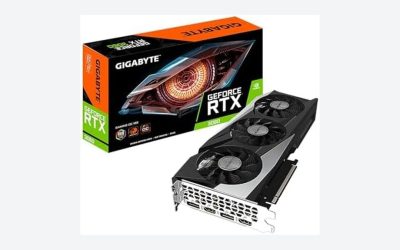
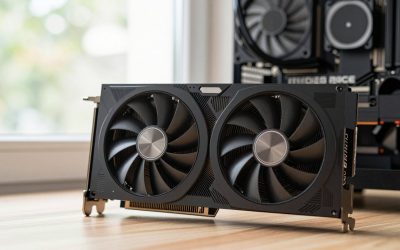
If you’re shopping now, it’s worth browsing RTX 4070 Super graphics cards as the default mid-range pick, since it balances price, power draw, and 1440p performance better than most alternatives right now. If your budget is tighter and you’re mainly playing esports titles or older games at 1080p, don’t feel pressured into overspending, an RTX 4060 graphics card will do that job well and draw less power, which also means a cheaper PSU and less heat in a small case.
On the high end, only go for an RTX 4090 graphics card if you have a 4K monitor or a high-refresh 1440p panel you’re actually trying to saturate, and a CPU and PSU that won’t bottleneck it. Pairing a 4090 with a mid-tier CPU or a 650W PSU is a common mistake that leaves performance on the table or causes instability under load.
Common mistakes and failure modes
A few patterns show up repeatedly when people buy the wrong card or get burned:
Buying based on VRAM number alone. An 8GB card and a 12GB card in the same tier can perform almost identically in most games today, VRAM capacity matters more for 4K textures and future-proofing than for raw frame rates right now.
Undersizing the power supply. High-end cards have real transient power spikes. A card rated for 320W can briefly draw well above that, and a cheap or marginal PSU can shut down or, in rare cases, cause damage. Check Nvidia’s recommended PSU wattage for your specific card, not just the GPU’s typical draw.
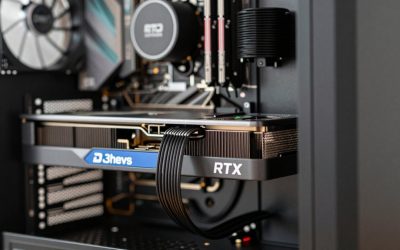
Trusting third-party marketplace listings with unfamiliar model names. “Orion,” “Titan X Pro Max,” and similar invented-sounding names on marketplace sites are frequently rebranded older silicon, counterfeit cards, or outright nonexistent products with doctored photos. Buy from recognized board partners (Asus, MSI, Gigabyte, Zotac, PNY) through retailers with real return policies.
FAQ
Is there an Nvidia GPU actually called Orion?
No. There’s no official Nvidia gaming GPU, architecture, or product line named Orion. You may be thinking of “Orin,” which is Nvidia’s embedded/automotive AI chip line, unrelated to desktop gaming cards.
What’s the closest thing to a “next-gen” Nvidia GPU right now?
Nvidia’s RTX 50-series (Blackwell architecture) is the current next-generation desktop lineup as it rolls out. If a listing claims to be a newer, unreleased architecture under an unfamiliar name, verify it against Nvidia’s official product pages before buying.
Should I wait for a new GPU generation instead of buying now?
If your current card still handles the games you play at acceptable settings, waiting costs you nothing. If you’re buying new or your card is bottlenecking you today, buy for your current needs. GPU generations overlap for a long time, and “the next one” is always a few months away.
How do I avoid buying a fake or mislabeled GPU?
Stick to known board partners, check the seller’s return policy, and compare the listed specs (CUDA cores, VRAM, boost clock) against Nvidia’s official spec sheet for that model. If the name doesn’t appear on Nvidia’s own site, don’t buy it.