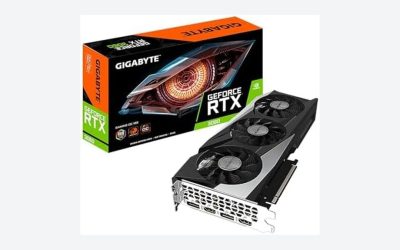
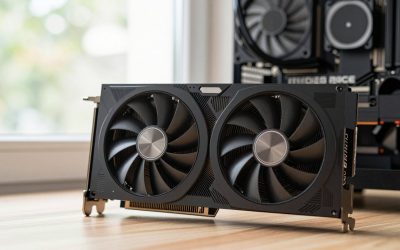
The RTX 4080 launched at $1,199 in late 2022, got repositioned as the “4080 Super” at $999 a year later, and now sits in a weird spot: officially discontinued by Nvidia, still floating around retail, and increasingly outclassed on price by RTX 5070 Ti and 5080 cards. If you’re looking at a 4080 right now, the question isn’t “is this a good card” (it is) but “is this still the right money to spend” (often, not quite).
What a 4080 actually costs now
The original RTX 4080 (non-Super) is essentially gone from shelves at MSRP. What you’ll find is old stock at inflated prices, used listings, or the RTX 4080 Super, which replaced it. The Super is the one worth paying attention to: same 16GB of GDDR6X, higher clocks, same $999 launch price. Street prices on new Super cards have drifted depending on memory pricing cycles, so always check current listings rather than trusting a number printed in a review from last year.
Used non-Super 4080s show up in the $600-750 range on the secondary market, which sounds tempting until you remember you’re buying a two-plus-year-old card with an unknown history and no warranty, competing against a Super that often isn’t that much more expensive new.
4080 Super vs. the alternatives
| Card | Typical price | VRAM | Best for |
|---|---|---|---|
| RTX 4080 (original, used) | $600-750 | 16GB | Budget hunters okay with no warranty |
| RTX 4080 Super | $950-1,050 | 16GB | 4K gaming, content creation, buyers who want new/warrantied |
| RTX 5070 Ti | $750-850 | 16GB | Similar or better performance for less, if you can find one in stock |
| RTX 5080 | $1,000-1,150 | 16GB | Buyers who want current-gen features and better long-term driver support |
This table is the whole argument in miniature. A used 4080 saves you real money but carries real risk. A new 4080 Super is a known quantity but now competes directly with 50-series cards that match or beat it while adding DLSS 4 support. Unless you find a 4080 Super meaningfully discounted, the 5070 Ti or 5080 usually make more sense for the same or less money.
Who should actually buy a 4080 right now
Three groups make sense here. First, someone who finds a Super at a genuine discount, say $150+ off, because a retailer is clearing inventory ahead of a refresh. Second, someone upgrading from a 20- or 30-series card who isn’t chasing the newest features and just wants a big, reliable jump in 4K and high-refresh 1440K performance. Third, workstation-adjacent users who want 16GB of VRAM for creative apps and don’t care which generation badge is on the box.
If none of those describe you, the 4080 is a card to compare against, not necessarily buy. Browse current RTX 4080 Super listings and put them side by side with 5070 Ti and 5080 pricing before deciding. Prices move fast enough on both sides that a decision made from memory is often a decision made with outdated numbers.
Where buyers go wrong
The most common mistake is paying 4080 Super money for a used original 4080 because the listing says “like new.” Used GPU condition is genuinely hard to verify. Mining history, poor case airflow, and thermal paste that was never reapplied all shorten a card’s life in ways you can’t see in photos. If you buy used, buy from a seller with return policies, not just feedback scores.
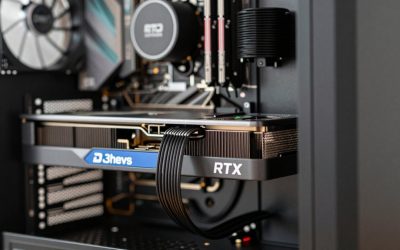
The second mistake is pairing a $1,000 GPU with a weak power supply. The 4080 Super wants a solid 850W unit with proper 12VHPWR support if you’re using the native connector, not a basic unit with an adapter dangling off it. If your current PSU is five-plus years old or sketchy on wattage, budget for a 850W 80+ Gold power supply alongside the card itself. Skipping this is how people end up with random shutdowns under load and blame the GPU.
Third: buying a 4080-class card to drive a 1080p monitor. At that resolution you’re leaving performance on the table and would get similar real-world results from a cheaper card. The 4080 Super earns its price at 1440p high-refresh and 4K; below that, it’s overkill.
What to actually do
If you need a GPU this week and a 4080 Super is discounted below $950, buy it, it’s a legitimately strong 4K card with no caveats beyond generation number. If prices are at or near $999, spend an extra half hour comparing 5070 Ti and 5080 listings first, because Nvidia’s current lineup has mostly closed the gap or beaten it outright. And if you’re set on 4080-tier performance but want to stretch your budget further, a well-reviewed RTX 4070 Super gets you most of the way there for considerably less, with the trade-off being a step down in 4K headroom.
FAQ
Is the RTX 4080 still worth buying in 2025?
Only the Super variant, and only if it’s priced competitively against the RTX 5070 Ti and 5080. The original non-Super 4080 is discontinued and mostly found used.
What’s the real difference between the 4080 and 4080 Super?
Higher boost clocks and a lower launch price ($999 vs $1,199), same 16GB VRAM and core architecture. The Super is simply the better buy of the two.
Will the price drop further?
It can, especially around new GPU launches or retailer clearance events, but there’s no guaranteed timeline. Watch listings rather than waiting indefinitely.
Do I need a new power supply for a 4080 Super?
If your PSU is under 750W, older than five years, or not 80+ Gold rated, plan on upgrading. The card’s power draw and transient spikes are hard on marginal units.