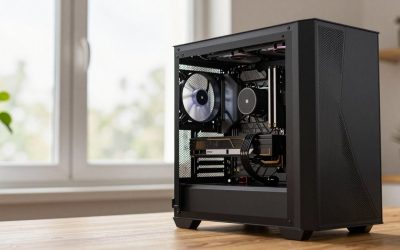
Thinking about playing Grim Dawn on PC and wondering what hardware you actually need? Grim Dawn is a dark action RPG released in 2016 on an older engine, and it is genuinely light on hardware — the official minimum spec asks for a graphics card with 512 MB of video memory from the mid-2000s. That means almost any PC built in the last decade can run it, and the real questions are how much headroom you want at higher resolutions and how much of your budget is really about the other games you play. This guide breaks down the official requirements for Grim Dawn, the best GPU for each resolution, and complete build recommendations.
- How Demanding Is Grim Dawn?
- Grim Dawn Official PC System Requirements
- Best GPU for Grim Dawn by Resolution
- CPU, RAM and Storage for Grim Dawn
- Recommended PC Builds for Grim Dawn
- Is It Worth Upgrading Your PC for Grim Dawn?
- Can You Play Grim Dawn on a Laptop or Handheld?
- How to Boost FPS in Grim Dawn
- Frequently Asked Questions
How Demanding Is Grim Dawn?
Not very. Grim Dawn is a dark action RPG that has been running comfortably on low-end and older hardware since launch, and the published requirements back that up: an x86-compatible 2.3 GHz processor (roughly an Intel 2nd-generation Core i-series or equivalent), 2 GB of RAM, and a 512 MB card such as a GeForce 6800 or Radeon X800 series. The recommended spec is still modest by modern standards — a 3.2 GHz Intel 4th-generation Core i-series or better, 6 GB of RAM, and a 1.5 GB GeForce 500-series or Radeon HD 6000-series card. In practical terms, budget and even integrated graphics handle 1080p at sensible settings, while 1440p and 4K sit comfortably within reach of mid-range cards rather than high-end ones. Always check the game’s official store page for the exact published requirements.
Grim Dawn Official PC System Requirements
| Component | Minimum (official) | Recommended (official) |
|---|---|---|
| OS | Windows XP / Windows Vista / Windows 7 / Windows 8 / Windows 10 | Windows 7 / Windows 10 |
| Processor | x86 compatible 2.3GHz or faster processor (Intel 2nd generation core i-series or equivalent) | x86 compatible 3.2GHz or faster processor (Intel 4th generation core i-series or better) |
| Memory | 2 GB RAM | 6 GB RAM |
| Graphics | 512MB NVIDIA GeForce 6800 series or ATI Radeon X800 series or better | 1.5GB NVIDIA GeForce 500 series or ATI Radeon 6000 series or better |
| DirectX | Version 9.0c | Version 11 |
| Storage | 5 GB available space | 5 GB available space |
Source: the official Grim Dawn Steam store listing (app 219990), checked October 2026. Publishers can update these specs after patches.
Two details worth noting from the official specs: the minimum lists 2 GB of RAM, but 4 GB is required to host multiplayer games, and the recommended spec raises memory to 6 GB. Storage is a small 5 GB either way.
Best GPU for Grim Dawn by Resolution
1080p
1080p is well below what Grim Dawn needs. The AMD Radeon RX 7600 (or a comparable card) is far more than this game requires at that resolution — it will run Grim Dawn with every visual option turned up and still leave plenty of headroom. Older and cheaper cards such as the GTX 1050 Ti, GTX 1650 or RX 570 already clear the official recommended spec, and the integrated graphics in a recent Ryzen or Intel desktop chip can handle 1080p at reduced settings.
1440p
Step up to the AMD Radeon RX 7600 and 1440p is comfortable rather than challenging, since this is still an older engine and the card sits well above the official 1.5 GB recommended GPU. Cards from a generation or two back, such as the RX 6600, RTX 2060 or GTX 1660 Super, also handle 1440p here, and a current-generation RTX 5060 or RX 9060 XT will drive high-refresh 1440p with room to spare.
4K
For 4K, the NVIDIA GeForce RTX 4060 is already more than enough — Grim Dawn is not a demanding 4K title and you do not need a flagship. A modern RTX 5060 or RX 9060 XT, or anything above them such as an RTX 5070 or RX 9070, will run 4K in this game without strain, and even older cards like the GTX 1080 or RTX 2060 can manage it at sensible settings.
CPU, RAM and Storage for Grim Dawn
Grim Dawn is not a CPU-heavy game: it asks for a 2.3 GHz x86 processor at minimum and a 3.2 GHz Intel 4th-generation Core i-series or better at recommended, and any current desktop chip clears both without effort. If you are building new, the AMD Ryzen 5 7600 is far more processor than this game needs, the AMD Ryzen 7 7800X3D is well beyond it, and Intel buyers can pick up an Intel Core i5-14600K for the same reason. Treat these as parts that will serve you well in newer action RPGs too, not as requirements for Grim Dawn.
On memory, the official numbers are 2 GB minimum and 6 GB recommended, with 4 GB needed to host multiplayer games, so 8 GB is comfortable and 16 GB is generous headroom for the rest of your system. A 32 GB kit such as the Corsair Vengeance DDR5 32GB is far more than Grim Dawn will ever use. Storage is similarly light — the game needs just 5 GB of space and will run from a mechanical drive, though an SSD like the Samsung 990 Pro 2TB NVMe SSD will cut load times, even though it offers dramatically more capacity and speed than this title calls for.
Recommended PC Builds for Grim Dawn
1080p budget build: AMD Radeon RX 7600 + AMD Ryzen 5 7600 + 16 GB DDR5 — massively overspecified for Grim Dawn at 1080p, which is exactly the point: it runs this game maxed out and still has plenty left over for modern titles.
1440p sweet-spot build: AMD Radeon RX 7600 + AMD Ryzen 7 7800X3D + 32 GB DDR5 + 2TB NVMe SSD — more than Grim Dawn needs at 1440p, and the setup most players should aim for if they play other games as well.
4K build: NVIDIA GeForce RTX 4060 + AMD Ryzen 7 7800X3D + 32 GB DDR5 + fast NVMe SSD — comfortable 4K in Grim Dawn with no need for a flagship card.
Is It Worth Upgrading Your PC for Grim Dawn?
Probably not on Grim Dawn’s account alone. The game runs happily on hardware from well over a decade ago — a 512 MB GeForce 6800-class card and 2 GB of RAM meet the minimum — so if it is the only title you play, your current PC may already be fine and an upgrade is hard to justify. If you also play newer action RPGs and other demanding releases, then a graphics card is the upgrade that will do the most for you, since the GPU matters far more than anything else in gaming performance. A modern CPU is worth having for general responsiveness, but Grim Dawn itself does not need one, and extra memory beyond 8 GB will not change much here. Moving the game to an SSD mainly shortens load times for a title that occupies just 5 GB. Rather than replacing everything at once, target the weakest link in your build for the best value.
Can You Play Grim Dawn on a Laptop or Handheld?
Easily. Grim Dawn’s requirements are low enough that almost any gaming laptop from the last several years will run it at 1080p, including older mobile GPUs such as the GTX 1050 or GTX 1650, and recent integrated graphics in thin-and-light laptops can handle it at reduced settings. Expect the usual trade-offs of shorter battery life and more fan noise than a desktop, not a shortage of performance. Handhelds like the Steam Deck and ROG Ally run this lighter game comfortably, which makes it a great portable pick. If portability matters, prioritise a device with a capable GPU and pair it with a fast microSD or SSD for storage.
How to Boost FPS in Grim Dawn
If frame rates are low in a game this light, the cause is usually an old or weak GPU rather than demanding effects. Lowering the render resolution is the single biggest lever, and turning down the most expensive visual options — shadows, lighting and post-processing — comes next. Because Grim Dawn is an older DirectX 9/11-era title, upscaling generally has to come from your GPU driver’s own scaling options rather than from an in-game feature, so check your graphics control panel if you want to pair a lower render resolution with a sharper output. Keep your GPU drivers up to date, close background apps, and install the game on an SSD if you want shorter load times. A stable frame rate with a few settings turned down almost always feels better than chasing maxed-out visuals with stutter.
Frequently Asked Questions
Can my PC run Grim Dawn?
Almost certainly. The official minimum is a 2.3 GHz x86 processor, 2 GB of RAM and a 512 MB card such as a GeForce 6800 or Radeon X800 series, and the recommended spec only rises to a 3.2 GHz Intel 4th-generation Core i-series or better, 6 GB of RAM and a 1.5 GB GeForce 500-series or Radeon HD 6000-series card. Anything from the last decade clears that comfortably. For high settings at 1080p or 1440p, a GTX 1050 Ti or GTX 1650-class card and any modern quad-core CPU are plenty.
Is Grim Dawn demanding on PC?
No. Grim Dawn is a light, older action RPG that runs on low-end and integrated hardware, and even 1440p and 4K are within reach of mid-range cards.
What GPU do I need for Grim Dawn at 1440p 60fps?
Very little by modern standards. An AMD Radeon RX 7600-class card is far beyond what 1440p in Grim Dawn requires, and older mid-range cards such as the RX 6600 or GTX 1660 Super already deliver smooth frame rates at that resolution.
How much RAM does Grim Dawn need?
The official minimum is 2 GB and the recommended is 6 GB, with 4 GB required to host multiplayer games. 8 GB is plenty in practice, and 16 GB gives you headroom for everything else your PC does; there is no need to go beyond that for this game.
Do I need an SSD for Grim Dawn?
No. The game needs only 5 GB of storage and runs from a mechanical drive, though an SSD will shorten load times. An NVMe drive like the Samsung 990 Pro is far more than this title requires.