

- Top Pick: Cotohim Under Desk Cable Management Tray – Under Desk Cord Management – Clamp/Screw Mount – Fabric Wire Management – Cable Raceways Tray Cord Hiders for Office/Home (Black, 35.8"×5.6")
- Best Value: NoetixCo Cable Management Under Desk, 25.3'' No Drill Desk Cable Management Tray with Clamp, Metal Cord Organizer for Standing Desk, Computer Wire Management for Home Office & Gaming Setup, Black
- Premium Choice: ZhiYo 3"H x 3"W Cable Raceway, 6ft Under Desk Wire Management Channel Black
Affiliate disclosure: As an Amazon Associate we earn from qualifying purchases. This post contains affiliate links — if you buy through them we may earn a small commission at no extra cost to you. This never affects our recommendations.
- Gaming Cable Management 3: Professional Raceway Systems for Gaming Desks
- Understanding Cable Raceways for Gaming
- Raceway System Components and Configuration
- Gaming Raceway System Specifications
- Professional Raceway Installation for Gaming Setups
- Gaming-Specific Raceway Considerations
- Raceway System FAQs
- Recommendation and Conclusion
- More Gaming Gear Guides
- Related Articles
- Frequently Asked Questions
- Related Articles
🛒 Best Price Today on Amazon
Prime members get fast, free shipping on everything above, plus member-only deals. New members get a 30-day free trial — cancel anytime.
Start 30-Day Prime Free Trial →See Today’s Amazon DealsGaming Cable Management 3: Professional Raceway Systems for Gaming Desks
Professional cable raceways transform cluttered gaming setups into organized, polished workspaces. Unlike basic cable ties or adhesive clips, quality raceway systems provide comprehensive cable organization that accommodates dozens of cables while remaining completely hidden from view. This guide explores raceway systems specifically designed for gaming desk environments where multiple peripherals, monitors, and streaming equipment create complex cable management challenges.
Discover how professional raceways improve airflow around gaming components, simplify troubleshooting when equipment fails, and create the polished aesthetic that defines premium gaming setups. We’ll examine installation techniques, product options, and best practices for implementing raceway systems that grow with your gaming setup over years of upgrades and expansions.
In a hurry? See the top-rated Gaming Cable Management 3 deals available right now:
🛒 Check Gaming Cable Management 3 Prices on Amazon →Understanding Cable Raceways for Gaming
What Are Cable Raceways?
Cable raceways are enclosed or semi-enclosed channels that conceal cables from view while protecting them from damage. Available in various materials—PVC, aluminum, and composite polymers—raceways accommodate different aesthetic preferences and performance requirements. Gaming-focused raceways prioritize durability, easy cable insertion/removal, and clean installation that complements modern gaming desk designs.
Professional raceways differ fundamentally from basic cord covers. While cord covers simply hide cables on visible surfaces, raceways create dedicated pathways that organize cables by function, prevent tangling, and enable effortless cable management during future upgrades. For gaming setups expecting multiple component revisions, raceways provide infrastructure that grows with your configuration.
Gaming Setup Cable Complexity
Modern gaming setups generate surprisingly complex cable requirements. A basic gaming rig includes power cables, monitor displays (potentially multiple displays), keyboard, mouse, and headset. Add streaming equipment—capture cards, microphones, audio interfaces, lighting controllers—and cable count exceeds fifty individual connections. Cable raceways tame this complexity through organized routing and modular design that scales with setup growth.
Unlike basic office setups, gaming configurations change frequently. Raceways provide the infrastructure to absorb these changes without complete reorganization. Need to add an additional monitor? Simply run its cable through existing raceways. Upgrading your GPU or adding streaming equipment? Raceway spare capacity accommodates new cables without restructuring.
As an Amazon Associate we earn from qualifying purchases at no extra cost to you.




Raceway System Components and Configuration
Vertical Raceways vs. Under-Desk Raceways
Vertical raceways run along desk legs or monitor stands, directing cables from desktop peripherals down toward power sources and GPU outputs. This approach works exceptionally well for multi-monitor gaming setups where each monitor requires separate cable routing. Vertical raceways keep monitor cables distinct, simplifying troubleshooting if individual displays malfunction.
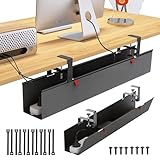
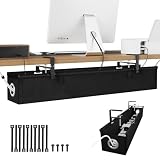
Under-desk raceways run horizontally along the desk’s underside, bundling cables parallel to the desk surface. This configuration suits gaming setups where cables converge at a central location—typically where your gaming PC case sits. Under-desk raceways remain completely hidden from view, creating a minimalist aesthetic that appeals to gamers prioritizing visual cleanliness.
Modular Raceway Systems
Professional raceways feature modular designs allowing customization and expansion. Standard segments connect via connectors, enabling creation of complex cable pathways that navigate around desk obstacles, route around monitor stands, and accommodate future expansions. Modular design eliminates waste compared to fixed-length raceways that often exceed actual requirements.
Quality modular raceways include internal compartments that separate cables by function. Power cables occupy dedicated sections, data cables another, and peripheral cables a third. This organization enables identifying and accessing specific cables without disturbing the entire installation—critical when troubleshooting equipment failures or performing equipment maintenance.
Gaming Raceway System Specifications
| Raceway Type | Material | Cable Capacity | Width | Installation Method |
|---|---|---|---|---|
| Vertical Desk Raceway | PVC/Aluminum | 15-25 cables | 2-3 inches | Adhesive/Screws |
| Under-Desk Raceway | PVC | 20-30+ cables | 3-4 inches | Adhesive |
| Monitor Stand Raceway | Aluminum | 5-10 cables | 1-2 inches | Mounting brackets |
| Compartmentalized Raceway | PVC | 25-40 cables | 4-5 inches | Adhesive/Screws |
Professional Raceway Installation for Gaming Setups
Planning Your Raceway Layout
Before purchasing raceways, map your gaming setup’s cable requirements. Identify where cables originate (GPU ports, power supplies, hub outputs) and where they terminate (monitors, peripherals, wall outlets). Diagram the optimal paths that minimize sharp bends, avoid heat sources, and route cables where they remain hidden from normal viewing angles.
Consider future upgrades when planning layout. If you plan to add a second or third monitor within a year, route raceway paths where future monitor cables can integrate without requiring layout restructuring. Modular raceways make this feasible—purchasing extra capacity costs minimally more than exact-fit solutions but provides significant future flexibility.
Installation Techniques
Quality raceways use either adhesive backing or mounting brackets. Adhesive-backed raceways work for permanent installations on stable surfaces like desk undersides and wall areas. Ensure surfaces are clean and dry before installation—dust or residue prevents adhesive from bonding properly. Press firmly along the entire length to ensure complete contact.
Screw-mounted raceways provide maximum security for heavy cable loads or installations where cables change frequently. Pilot holes prevent splitting in PVC raceways. Space mounting points at maximum 12-inch intervals to prevent sag or movement. For gaming desks where cable repositioning occurs regularly, screw mounting provides superior reliability compared to adhesive.
Cable Routing Best Practices
Route cables in logical groupings—power cables together, display cables together, peripheral cables together. This organization simplifies identifying specific cables when troubleshooting. Label cables at both ends using masking tape and permanent markers, even before covering them in raceways. Labels become invaluable when accessing cables months or years later.
Avoid excessive cable tension inside raceways. Cables should sit loosely enough that they move slightly without pulling. Tight cable packing inside raceways increases risk of pinching delicate conductors or causing connector stress. Quality raceways feature smooth interior surfaces that protect cable jackets—ensure this feature when selecting products.
Gaming-Specific Raceway Considerations
RGB Cable Management
Gaming setups often include RGB lighting controllers with their own cable requirements. These controller cables need routing alongside power and data cables, requiring larger raceways or compartmentalized designs. Plan for RGB cable integration from the start—retrofitting RGB cables into undersized raceways creates the tangled mess you were trying to eliminate.
Consider color-coordinated cable sleeves for RGB-controlled cables running through raceways. This visual organization appeals to gamers with extensive RGB setups and makes identifying RGB cable endpoints straightforward when adjusting lighting effects or adding new RGB devices.
Heat Management and Airflow
Proper raceway installation improves component cooling by directing cables away from heat-generating components. Route power cables away from your GPU and CPU cooler, where heat can accelerate cable degradation. Ensure raceways don’t obstruct airflow around your gaming tower—position under-desk raceways to allow air circulation underneath the desk and around case intake/exhaust areas.
Aluminum raceways dissipate heat better than PVC, beneficial in gaming setups where components generate significant ambient heat. For installations near high-heat sources like overclocked GPUs or powerful CPU coolers, aluminum raceways provide superior thermal performance compared to plastic alternatives.
Raceway System FAQs
Can I install raceways on my existing gaming desk without drilling?
Yes, adhesive-backed raceways work excellently on existing desk surfaces without requiring drilling. Ensure desk surfaces are clean and dry before installation. Adhesive bonds well to wood, laminate, and metal desks. For renters or temporary installations, adhesive raceways provide non-destructive organization. For permanent installations or installations handling heavy cable loads, screw-mounted raceways provide superior security and durability.
How many cables can a raceway accommodate?
Cable capacity depends on raceway dimensions and cable gauges. Standard desk raceways accommodate 15-25 typical gaming cables (monitor, keyboard, mouse, headset, power, etc.). Professional compartmentalized raceways handle 25-40+ cables through internal divisions. Choose raceways with 20-30% spare capacity to accommodate future upgrades without complete system replacement.
Do raceways affect gaming performance or latency?
Quality raceways have no impact on gaming performance. Cables function identically inside or outside raceways—the raceway simply provides a protective, organized path. Ensure cables inside raceways aren’t pinched or excessively bent, maintaining the same signal integrity as non-raceways installations. Proper installation eliminates any performance considerations.
What’s the best material for gaming raceway systems?
PVC raceways offer excellent value for most gaming applications, with smooth interiors that protect cables and modular designs enabling customization. Aluminum raceways provide superior aesthetics, better thermal dissipation near heat sources, and premium durability. Choose based on your gaming setup’s aesthetics and budget—both materials serve gaming applications admirably when installed correctly.
Recommendation and Conclusion
Professional cable raceways represent the ultimate cable management solution for serious gaming setups. Whether you’re building a new gaming desk or organizing an existing setup, quality raceway systems provide the infrastructure for professional-grade organization that accommodates years of upgrades and expansions. Choose modular systems with spare capacity, ensuring your installation grows with your gaming ambitions rather than requiring complete replacement during future upgrades.
Combined with quality adhesive or mounting hardware, a comprehensive raceway system transforms your gaming setup’s appearance while improving component cooling and cable accessibility. Select raceways matching your cable volume requirements plus 20-30% spare capacity for future growth. For additional gaming setup optimization, explore our guides to gaming desk options and ergonomic peripherals that pair perfectly with professionally organized cable systems. Learn more about complete gaming PC builds designed with cable management in mind from the ground up.
More Gaming Gear Guides
- Best Displayport Cables Gaming
- Best Hdmi Cables Gaming
- Cable Management Gaming Desk
- Displayport Vs Hdmi Gaming
- Best Gaming Monitor Cables
Related Articles
Looking for more on this topic? Browse the hand-picked guides below — each one applies the same scoring rubric used in this review.
Frequently Asked Questions
What is a cable raceway and when should I use one?
A raceway is a rigid channel with a snap-on lid that mounts to a wall, skirting board or the underside of a desk, hiding cables in a straight enclosed run. Use it when the path is permanent, such as a wall-mounted monitor feed or a run from the desk to a power outlet across a room.
Does mounting a raceway damage walls?
Most raceways ship with adhesive backing that removes cleanly from painted drywall if you warm it gently and peel slowly. Screw mounting is stronger and better for heavy runs but leaves holes. On rented walls, use adhesive rated for painted surfaces and keep the total cable weight low.
How much cable capacity should I plan for?
Buy a channel roughly 50 percent larger than your current bundle. You will add devices, and forcing extra cables into a full raceway makes the lid pop and creates sharp bend radii that damage HDMI and DisplayPort connectors. Oversizing costs a few dollars and saves a redo.
Can I run power and network cable in the same raceway?
For short desk runs, generally yes with modern shielded cables. For long parallel runs, mains cable can induce noise into unshielded Ethernet and analogue audio. Where possible, use a divided raceway or keep low-voltage lines in a separate channel, and never enclose damaged or overheating power cables.
How do I make the run look professional?
Plan the whole path before sticking anything down, cut channels with a fine-tooth saw for clean square ends, use proper corner and T-piece fittings instead of bending, and paint the raceway to match the wall. Label both ends of each cable inside the channel so future changes do not require dismantling everything.


