There’s no single “best” website for computer parts, and anyone who tells you otherwise is trying to sell you something. What you actually need depends on whether you’re chasing the lowest price on a GPU, want next-day shipping on a part you broke mid-build, or need a return policy that won’t fight you when a motherboard arrives dead. Below is what I’ve learned from building and troubleshooting PCs for years, broken down by what actually matters when you’re buying.
As an Amazon Associate we earn from qualifying purchases at no extra cost to you.


Why there’s no one right answer
Specialty PC retailers like Newegg and Micro Center carry deeper inventory and better filtering for things like CPU socket type or radiator size, which matters when you’re matching parts. Generalists like Amazon win on return policy and shipping speed, and they’re often competitive on price for things like fans, cables, and storage where there’s less markup volatility. The mistake people make is assuming one site is best for everything. It isn’t. A $700 GPU and a $9 SATA cable have completely different risk profiles, and where you buy them should reflect that.
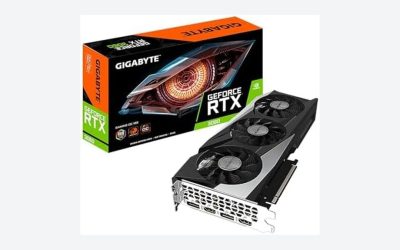
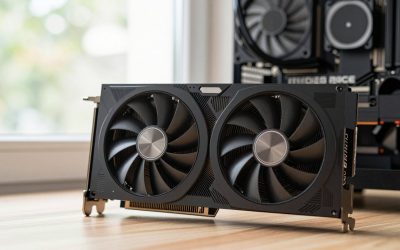
For big-ticket items like a graphics card find alternatives, the retailer’s return window and restocking fee policy matter more than saving $15. GPUs are the single most common part to arrive DOA or develop coil whine bad enough to warrant a swap, and you want a no-argument 30-day return, not a 15-day window with a 10% restocking fee buried in the fine print.
How the major options stack up
| Retailer | Best for | Return policy | Price competitiveness |
|---|---|---|---|
| Amazon | Fast shipping, easy returns, accessories | Usually 30 days, no restocking fee | Good on commodity parts, mixed on GPUs/CPUs during shortages |
| Newegg | Deep selection, bundles, PC-specific filtering | Varies by seller, often 30 days with conditions | Strong on CPUs/motherboards, frequent combo deals |
| Micro Center (in-store) | CPU bundle deals, immediate exchanges | Walk-in returns, no shipping risk | Often the cheapest for CPU+motherboard combos |
| Manufacturer direct (AMD, ASUS, etc.) | Warranty clarity, firmware support | Full manufacturer warranty, slower shipping | Rarely the cheapest |
If you live near a Micro Center, that’s genuinely the best place to buy a CPU. The in-store combo discounts on CPU plus motherboard (and sometimes RAM) routinely beat online pricing by $30-80, and you avoid shipping damage risk entirely, which matters more than people think for anything in a long cardboard box like a motherboard or a large CPU cooler.
The part nobody warns you about: shipping damage
Liquid coolers and large air coolers are the parts most likely to arrive with bent fins or a cracked pump housing, because they’re heavy and awkwardly shaped for standard box padding. If you’re ordering a cooler online rather than picking it up, check the unboxing photos in reviews before buying, and always inspect the radiator fins and tubing for kinks before you mount anything. A bent fin or two won’t kill performance, but a cracked pump will fail within weeks, usually announced by a grinding noise or a sudden 15-20°C jump in idle temps.
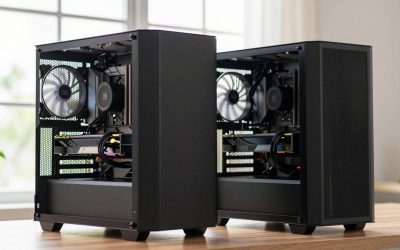
Cases have a similar problem. Thin-gauge steel panels can arrive dented even when the box looks fine, because the packing foam compresses over a long shipping chain. If you’re ordering a case, a retailer with easy no-cost returns is worth more than a $10 price difference, because you’re statistically more likely to need that return than you think.
Where the cheap option is genuinely fine
Case fans, SATA and NVMe cables, thermal paste, and fan controllers are commodity parts. There’s no meaningful performance difference between a $7 fan and a $15 one from a different brand once you’re past baseline bearing quality, and failure rates on cheap fans are low enough that paying double for a name brand is mostly buying peace of mind, not reliability. Same goes for cable extensions and RGB controllers. Don’t overthink these; buy whatever’s cheapest from a seller with decent ratings and move on.
Power supplies are the opposite case. Do not cheap out here. A failing PSU can take your motherboard, GPU, and drives with it, and the $20 you save buying an unlisted or no-name unit isn’t worth the risk of a $600 GPU getting fried by a voltage spike. Stick to units with 80 Plus certification and a reputable brand regardless of which site you buy from.
Tracking prices instead of guessing
GPU and CPU prices swing 10-20% over a few months depending on new product launches and stock levels. Before buying anything over $150, run it through a price tracker like CamelCamelCamel for Amazon listings, or check PCPartPicker’s price history, which aggregates several retailers at once. If a part you want is sitting at a historic high, it’s often worth waiting two to three weeks, especially right before a known product refresh cycle, since outgoing-generation parts get discounted fast.
What to actually do
Buy commodity parts, fans, cables, thermal paste, wherever’s cheapest. Buy your CPU and motherboard as a bundle at Micro Center if you have one nearby, otherwise Newegg’s combo deals are the next best thing. Buy your GPU and PSU from whichever retailer has the best return policy on that specific order, even if it costs a few dollars more, because these are the two parts most likely to need a no-hassle swap. And before any purchase over $150, spend two minutes checking price history so you’re not buying into a temporary spike.