A studio monitor is built to do the opposite of most consumer speakers: instead of flattering your audio with boosted bass and sparkly highs, it aims for a flat, neutral response so you hear your recordings exactly as they are. That honesty is what lets you mix and master with confidence, knowing your work will translate to other systems. True studio monitors are also active — each cabinet has its own built-in amplification — and designed for near-field listening at a desk. This guide rounds up the best studio monitors in 2026, and is upfront about which picks are genuine reference monitors versus regular powered speakers that are great to listen to but not built for accurate mixing.
- Best Studio Monitors at a Glance
- 1. M-AUDIO BX4 Pair 4.5″ Wired Studio Monitors and PC Speakers
- 2. Edifier R1280T Powered Bookshelf Speakers, 2.0 Active Near-Field
- 3. Sanyun SW206 80W Active Dual-Mode Bookshelf Speakers, 4″ Studio Monitor
- 4. Sanyun SW208 3″ Active Bluetooth 5.0 Bookshelf Speakers, 60W Carbon Fiber
- 5. Logitech Z623 400 Watt Home Speaker System, 2.1 with Subwoofer
- 6. Logitech G560 PC Gaming Speaker System with 7.1 DTS:X and RGB
- How to Choose a Studio Monitor
- Frequently Asked Questions
- Related Guides
- Related Articles
Our picks were chosen on response neutrality, woofer size and the low-end it supports, suitability for near-field desktop use, and value. Prices run from around $70 up to around $250. To keep this honest, we sort the list by how true-to-purpose each pick is: dedicated monitors and dual-mode bookshelf speakers with a flat setting come first, and we clearly flag the entries that are really standard powered or gaming speakers rather than studio monitors. Below is an at-a-glance comparison, then a closer look at each and a buyer’s guide built around flat response, woofer size and room fit.
As an Amazon Associate we earn from qualifying purchases at no extra cost to you.


🛒 Best Price Today on Amazon
Prime members get fast, free shipping on everything above, plus member-only deals. New members get a 30-day free trial — cancel anytime.
Best Studio Monitors at a Glance
| Speaker | Best For | Standout Spec | Approx Price |
|---|---|---|---|
| M-AUDIO BX4 Pair 4.5″ Studio Monitors | True entry studio monitors | 4.5″ active reference pair | around $159 |
| Edifier R1280T Powered Bookshelf | Near-field monitor on a budget | Active 2.0 near-field bookshelf | around $120 |
| Sanyun SW206 80W Dual-Mode Bookshelf | Switchable monitor / HiFi | Dual-mode studio + HiFi, 4″ | around $140 |
| Sanyun SW208 3″ Active Bluetooth Bookshelf | Compact powered desktop | 3″ active, Bluetooth 5.0 | around $70 |
| Logitech Z623 400W 2.1 (not a monitor) | Loud bass-forward listening | THX 2.1 with subwoofer | around $171 |
| Logitech G560 7.1 Gaming Speakers (not a monitor) | Gaming, not mixing | 2.1 RGB gaming system | around $250 |
1. M-AUDIO BX4 Pair 4.5″ Wired Studio Monitors and PC Speakers

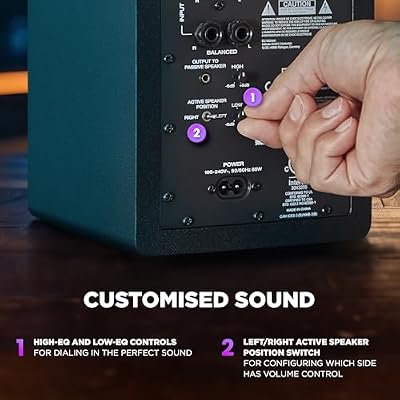
M-AUDIO BX4 4.5" Wired Studio Monitors Pair | Compact Wired Desktop Speakers for Recording, Mixing and Multimedia, Music Production Software Suite Included




As an Amazon Associate we earn from qualifying purchases. Product prices and availability are accurate as of the date/time indicated.
The M-AUDIO BX4 is our top pick because it is a genuine, purpose-built studio monitor. Sold as a pair, each cabinet houses a 4.5-inch woofer and a tweeter with its own internal amplification, voiced for the flat, neutral response that monitoring demands while doubling capably as PC speakers. At around $159 it is one of the most accessible ways into real reference monitoring.
This is the pick for the home producer, podcaster or beginner mixer who needs to hear their audio honestly rather than flattered. The active design means no separate amplifier, the 4.5-inch woofers suit near-field desktop use, and the monitor voicing reveals detail and balance issues that consumer speakers hide. It is an entry-level monitor, so the very deepest bass is limited by the woofer size, but for accurate, affordable reference sound at a desk, the BX4 is the true studio monitor on this list to start with.
Pros: Genuine active studio monitors, flat reference voicing, near-field 4.5″ woofers, great entry value.
Cons: Entry-level low-end is limited; smaller woofers than larger monitors.
2. Edifier R1280T Powered Bookshelf Speakers, 2.0 Active Near-Field

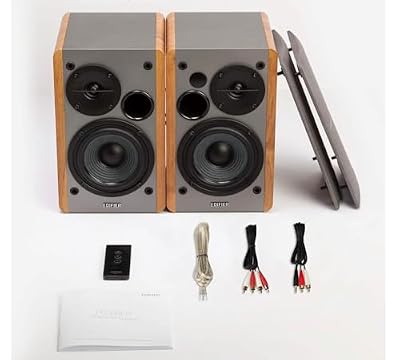
Edifier R1280T Powered Bookshelf Speakers -2.0 Near Field Studio Monitor | 2.0 Active Near Field Studio Monitor Speaker - Wooden Enclosure - 42 Watts RMS Power




As an Amazon Associate we earn from qualifying purchases. Product prices and availability are accurate as of the date/time indicated.
The Edifier R1280T is the budget near-field pick, and the most monitor-like of the consumer options here. These active 2.0 bookshelf speakers are marketed as near-field studio monitors, with built-in amplification, dual RCA inputs, and physical bass and treble controls, and they are widely praised for a clean, fairly balanced sound. At around $120 they bridge the gap between hi-fi bookshelf speakers and dedicated monitors.
This is the set to choose for light home-studio use, content creation or a desktop where you want fairly honest sound without the cost of pro monitors. The active design keeps the setup simple, the balanced tuning is more neutral than most consumer speakers, and the tone controls let you flatten the response further. They are not a fully calibrated reference monitor — the tuning is consumer-friendly — but as an affordable, near-field, monitor-style option, the R1280T is an excellent value pick.
Pros: Active near-field bookshelf, fairly balanced sound, bass/treble controls, superb value.
Cons: Consumer voicing is not fully flat reference; no subwoofer for deep bass.
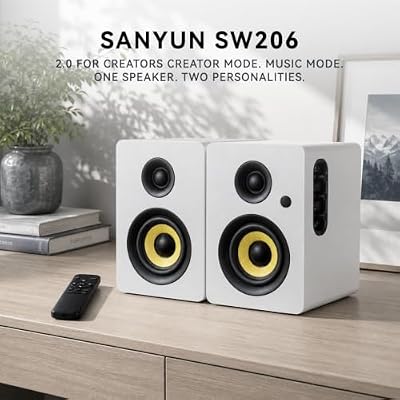
3. Sanyun SW206 80W Active Dual-Mode Bookshelf Speakers, 4″ Studio Monitor

Sanyun SW206 80W 2.0 Active Bookshelf Speakers, Dual-Mode Creator & Music | 4" Carbon Fiber + 25mm Silk Dome, 24bit DAC, 6.35mm TRS Balanced + (Optical/Coaxial/AUX/USB/BT) Inputs, MDF, (Pair, White)


As an Amazon Associate we earn from qualifying purchases. Product prices and availability are accurate as of the date/time indicated.
The Sanyun SW206 is the clever dual-mode pick. These 80W active bookshelf speakers feature a 4-inch woofer and a switchable sound mode that toggles between a flatter ‘studio monitor’ voicing and a more coloured HiFi tuning, so you can mix with a neutral response and then enjoy enhanced playback. At around $140 they are a flexible option for a desk that does double duty.
This is the set for the user who wants both honest monitoring and pleasurable listening from one pair. In studio mode the response flattens for more accurate reference work, while HiFi mode adds warmth and sparkle for casual listening and gaming, and the active 4-inch design suits near-field desktop placement. The studio mode is more of a flatter setting than a fully calibrated reference, but for a versatile, switchable monitor-and-HiFi pair at a fair price, the SW206 is a smart, adaptable choice.
Pros: Switchable studio/HiFi modes, active 4″ near-field design, flatter monitor setting, flexible.
Cons: Studio mode is a flatter tuning rather than fully calibrated reference.
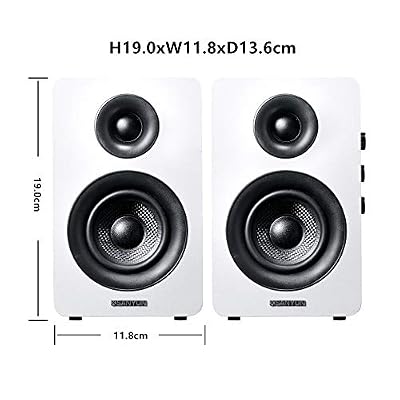
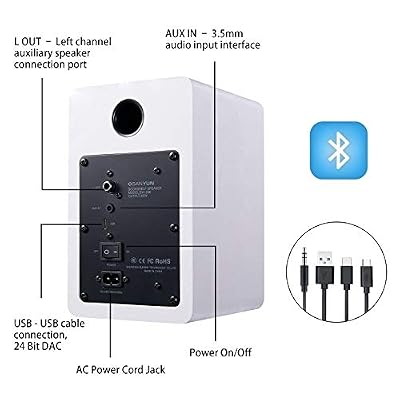
4. Sanyun SW208 3″ Active Bluetooth 5.0 Bookshelf Speakers, 60W Carbon Fiber

Sanyun SW208 3" Active Bluetooth 5.0 Bookshelf Speakers, Built-in 24bit DAC | 60W Carbon Fiber Speaker, USB and 3.5mm AUX Input, Dynamic 3D Surround Sound, 2.0 Computer PC Monitor Gaming (Pair, White)



As an Amazon Associate we earn from qualifying purchases. Product prices and availability are accurate as of the date/time indicated.
The Sanyun SW208 is the compact powered pick. These 60W active bookshelf speakers use a 3-inch carbon-fibre driver and add Bluetooth 5.0 alongside wired inputs, making for a small, flexible desktop pair. At around $70 they are the most affordable bookshelf option here and a tidy choice for a space-limited setup.
Here is the honest framing: while sold within the same family as Sanyun’s monitors, the SW208’s small 3-inch drivers and consumer Bluetooth focus make it more of a compact powered desktop speaker than a true reference monitor. It is the pick for casual listening, light content work and a tidy desk where Bluetooth convenience matters. The active design and carbon-fibre driver give clean sound for the size, but for accurate mixing you would want larger, flatter-voiced monitors. As an affordable, compact powered pair, though, it delivers.
Pros: Affordable, active and compact, Bluetooth 5.0, clean sound for a small desktop pair.
Cons: Small 3″ drivers and consumer tuning; more powered speaker than true monitor.
5. Logitech Z623 400 Watt Home Speaker System, 2.1 with Subwoofer

Logitech Z623 400 Watt Home 2.1 Speaker System - Black | 400 watt, 2.1-channel, powerful bass, home audio system


As an Amazon Associate we earn from qualifying purchases. Product prices and availability are accurate as of the date/time indicated.
The Logitech Z623 is included for transparency, and it needs an honest label: it is a powerful THX-certified 2.1 home and gaming speaker system, not a studio monitor. It pairs two satellites with a large subwoofer for a big, bass-forward 400-watt-peak sound, with multiple inputs for consoles, PCs and phones. At around $171 it is a popular choice — for listening, not for mixing.
Why mention it here at all? Because shoppers often cross-shop it against monitors, so it is worth being clear. The Z623 is built to entertain: the subwoofer delivers thumping low-end and the tuning is deliberately exciting, which is the opposite of the flat, neutral response monitoring requires. It is a superb 2.1 system for games, films and music, but if your goal is accurate mixing and mastering, choose a true monitor like the M-AUDIO BX4 instead. For loud, fun, bass-heavy listening, however, the Z623 excels.
Pros: Powerful THX 2.1 sound, big subwoofer bass, multiple inputs, great for gaming and films.
Cons: Not a studio monitor; bass-forward, coloured tuning is unsuitable for accurate mixing.
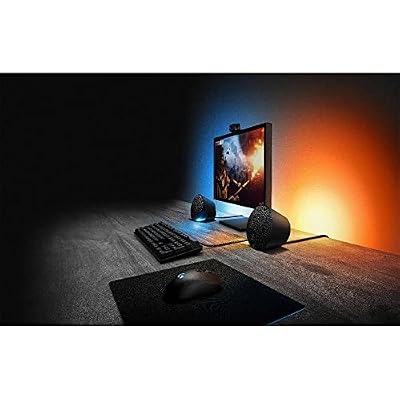
6. Logitech G560 PC Gaming Speaker System with 7.1 DTS:X and RGB

Logitech G560 PC Gaming Speaker System with 7.1 DTS X - Black | 7.1 DTS:X Ultra Surround Sound, Bluetooth, USB, Subwoofer + 2 Satellite Speakers, LIGHTSYNC RGB



As an Amazon Associate we earn from qualifying purchases. Product prices and availability are accurate as of the date/time indicated.
Rounding out the list, also for transparency, is the Logitech G560 — and to be clear, this is a gaming speaker system, not a studio monitor. It is a 2.1 RGB gaming setup with a subwoofer and DTS:X 7.1 virtual surround processing, designed to make games immersive and your battlestation glow. At around $250 it is the most expensive item here, priced for gaming features rather than monitoring accuracy.
It appears on this list only to set expectations, because its name and price can lead people to compare it with monitors. The G560 is engineered for excitement and immersion: punchy subwoofer bass, virtual surround for positional audio, and game-reactive RGB lighting — none of which serves the flat, neutral response that mixing demands. For gaming, music and films it is genuinely impressive, but if you need to hear your audio honestly for production work, a real monitor such as the M-AUDIO BX4 is the right tool. Buy the G560 to play, not to mix.
Pros: Immersive gaming sound, subwoofer bass, DTS:X virtual surround, reactive RGB lighting.
Cons: Not a studio monitor; gaming-tuned with surround processing, wrong for flat-response mixing.
How to Choose a Studio Monitor
The defining feature of a studio monitor is a flat, neutral frequency response. Unlike consumer speakers that boost bass and treble to sound exciting, a monitor aims to reproduce audio accurately so you hear exactly what is in your recording. That honesty is the whole point — it lets your mixes translate to other systems. On this list the M-AUDIO BX4 is the true reference monitor, the Edifier R1280T and Sanyun SW206 lean monitor-ish (the SW206 even has a flatter studio mode), while the Logitech Z623 and G560 are deliberately coloured consumer systems, not monitors.
Active design matters, and almost all real monitors are active. Each cabinet has its own built-in amplifier matched to its drivers, so you do not need a separate amp and the manufacturer can tune the response precisely. Every powered pick here — the BX4, Edifier and Sanyun models — is active, which keeps a desktop studio simple. If you see passive speakers that need an external amplifier, factor that extra cost and tuning work in; for most home setups, an active monitor is the more practical and predictable choice.
Woofer size and your room together set the low-end and the right listening distance. Smaller woofers — the 3-inch Sanyun SW208, the 4 to 4.5-inch BX4 and SW206 — suit near-field listening at a desk and small rooms, but roll off the deepest bass; larger woofers reach lower but need more space and distance to perform. Match the woofer size to your room: for a typical desk, a 4 to 5-inch near-field monitor like the BX4 hits the sweet spot, and you can add a subwoofer later if you genuinely need extended low-end.
Finally, be honest about what you actually need, because that decides the whole purchase. If you mix, master or produce, prioritise a flat response and choose a real monitor such as the M-AUDIO BX4, or a monitor-style pair like the Edifier R1280T or Sanyun SW206 in studio mode. If you mainly want loud, fun, bass-heavy sound for games and films, a coloured system like the Logitech Z623 or G560 will please you more — just do not expect accurate monitoring from it. Decide between accuracy and excitement first, then set your budget and room, and pick the speaker on this list that genuinely matches the job.
Frequently Asked Questions
What makes a studio monitor different from regular speakers?
A studio monitor is voiced for a flat, neutral response so you hear your audio accurately, while consumer speakers boost bass and treble to sound exciting. Monitors are also typically active, with built-in amplification tuned to their drivers, and designed for near-field desktop listening. On this list the M-AUDIO BX4 is a true monitor; the Logitech Z623 and G560 are coloured consumer systems that are great for listening but not for accurate mixing.
Are the Logitech Z623 and G560 studio monitors?
No. We include them only for transparency because shoppers sometimes cross-shop them. The Z623 is a powerful THX 2.1 home and gaming system, and the G560 is a 2.1 RGB gaming setup with virtual surround. Both are deliberately bass-forward and coloured, which is the opposite of the flat response mixing needs. They are excellent for games, films and music, but for production work choose a real monitor like the M-AUDIO BX4.
Can I use powered bookshelf speakers as studio monitors?
For light or hobbyist work, yes. Active bookshelf speakers like the Edifier R1280T or Sanyun SW206 are more neutral than typical consumer speakers, and the SW206 even has a flatter studio mode, so they make capable budget monitor-style options. They are not fully calibrated reference monitors, though, so for serious mixing a dedicated monitor such as the M-AUDIO BX4 is the better tool. Match the speaker to how critical your listening needs to be.
What size studio monitor do I need for a desk?
For near-field desktop use, a monitor with a 4 to 5-inch woofer — like the M-AUDIO BX4 or the Sanyun SW206 — is usually the sweet spot, giving enough low-end without overwhelming a small room. Larger woofers reach deeper bass but need more distance and space to perform properly. Start with a near-field monitor sized to your desk, and add a subwoofer later only if you genuinely need extended low-frequency reproduction.
Related Guides
- Best Bookshelf Speakers
- Best PC Speakers
- Best High Performance Speakers
- Best Gaming Headsets
- Best USB Microphones for Recording
- Best Budget Gaming Setup
Affiliate Disclosure: As an Amazon Associate, we earn from qualifying purchases. If you click a link and make a purchase, we may earn a small commission at no extra cost to you. Prices and availability are accurate as of publication and may change.