Programming punishes a drive in a very particular way. A single compile can touch thousands of tiny source files, a `git` operation reads and writes countless small objects, and spinning up a virtual machine or a container hits the disk with a flurry of scattered accesses. The work is rarely about moving one giant file quickly; it is about handling enormous numbers of small reads and writes without hesitation, so builds finish sooner and tooling stays responsive. Just as important, a developer’s drive has to be dependable — losing a repository or a working tree to a flaky disk is a category of pain all its own. This guide rounds up the best SSDs for programming in 2026 around fast small-file IO and reliability.
- Best SSDs for Programming at a Glance
- 1. Kingston 960GB A400 SATA3 2.5″ Internal SSD
- 2. Kingston 480GB A400 SATA 3 2.5″ Internal SSD
- 3. Crucial BX500 1TB 3D NAND SATA 2.5-Inch Internal SSD
- 4. SANDISK 2TB Extreme Portable SSD, USB-C, USB 3.2
- 5. SANDISK 2TB SSD Plus 2.5″ SATA Internal SSD, up to 545MB/s
- 6. Samsung SSD 860 EVO 250GB 2.5 Inch SATA III Internal SSD
- How to Choose an SSD for Programming
- Frequently Asked Questions
- Related Guides
- Related Articles
Our picks lead with affordable, dependable drives that suit a developer workstation and scale up to a roomier option, with prices spanning from around $115 to around $399 (one model’s price varies by listing). The list is a mix of internal 2.5-inch SATA SSDs, one external USB-C portable for backups and repos on the move, and we flag clearly which is which. Capacity here is less about hoarding media and more about fitting your toolchains, language runtimes, VM images and project trees with room to spare. Below is an at-a-glance comparison of all six, then a closer look at each through a developer’s lens and a buyer’s guide built around small-file performance, endurance and the SATA-versus-NVMe choice.
As an Amazon Associate we earn from qualifying purchases.





🛒 Best Price Today on Amazon
Prime members get fast, free shipping on everything above, plus member-only deals. New members get a 30-day free trial — cancel anytime.
Best SSDs for Programming at a Glance
| SSD | Best For | Standout Spec | Approx Price |
|---|---|---|---|
| Kingston A400 960GB SATA | Roomy dependable dev drive | 960GB 2.5-inch SATA internal | around $180 |
| Kingston A400 480GB SATA | Compact build-and-repo drive | 480GB 2.5-inch SATA internal | around $115 |
| Crucial BX500 1TB SATA | Balanced project capacity | 1TB 3D NAND, up to 540MB/s | around $200 |
| SanDisk 2TB Extreme Portable | Repos and backups on the go | 2TB USB-C, up to 1050MB/s | around $294 |
| SanDisk SSD Plus 2TB SATA | Large local project store | 2TB 2.5-inch SATA, up to 545MB/s | around $399 |
| Samsung 860 EVO 250GB SATA | Fast small dedicated dev disk | 250GB SATA III, MZ-76E250B | varies |
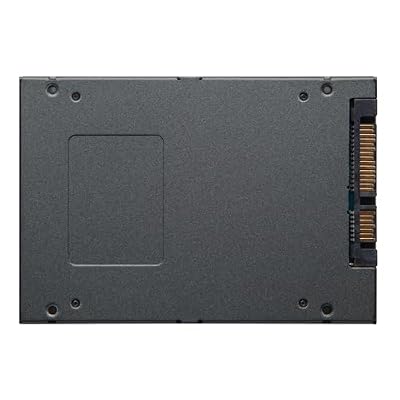
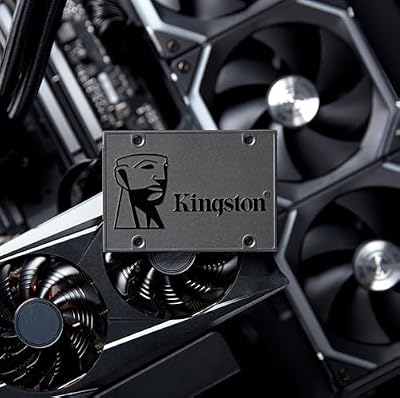
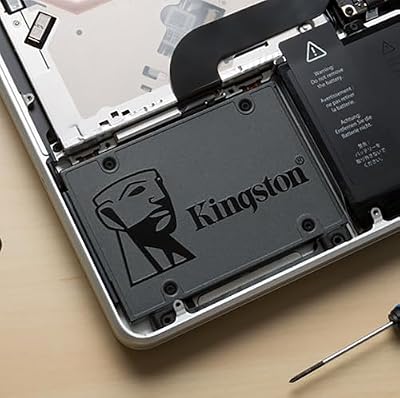
1. Kingston 960GB A400 SATA3 2.5″ Internal SSD

Kingston 960GB A400 SATA3 2.5" Internal SSD SA400S37/960G - HDD Replacement for Increase Performance



As an Amazon Associate we earn from qualifying purchases. Product prices and availability are accurate as of the date/time indicated.
Leading the list for developers is the Kingston A400 960GB, the roomy dependable dev drive. It is a 2.5-inch SATA SSD with a near-1TB capacity that drops into almost any machine, pairing enough room for your toolchains, runtimes and project trees with the simple, proven reliability the A400 line is known for. At around $180 it is a sensible foundation for a programming workstation.
For programming this is the practical sweet spot. The 960GB capacity comfortably holds multiple language SDKs, IDEs, package caches and a healthy set of cloned repositories without forcing you to prune, and an SSD’s fast handling of small files means builds, dependency installs and `git` operations move briskly rather than dragging as they would on a hard drive. Kingston’s A400 has a long track record as a no-drama upgrade, which matters when the drive holds your work. As a dependable, roomy SATA drive for everyday development, it earns the top spot.
Pros: Roomy 960GB, dependable A400 track record, fast small-file handling versus an HDD, easy install.
Cons: SATA speeds rather than NVMe; entry-tier controller under the heaviest IO.
2. Kingston 480GB A400 SATA 3 2.5″ Internal SSD
Kingston 480GB A400 SATA 3 2.5" Internal SSD SA400S37/480G - HDD Replacement for Increase Performance


As an Amazon Associate we earn from qualifying purchases. Product prices and availability are accurate as of the date/time indicated.
The Kingston A400 480GB is the compact build-and-repo pick. It is the same dependable 2.5-inch SATA family as the 960GB model, in a smaller, cheaper 480GB capacity at around $115. For a developer who keeps a focused set of active projects rather than an enormous archive, it offers the same responsiveness in a tidier, lower-cost package.
This drive suits the developer whose working set is lean: a primary toolchain, a handful of active repositories and the IDE, all on a fast, reliable disk. The 480GB capacity is enough for that focused workflow, and because it is an SSD, the small-file reads and writes of compiling and version control stay quick. It is also a strong choice as a dedicated code-and-build drive paired with bulk storage elsewhere. If you do not need a terabyte and want a trustworthy, affordable dev disk, the 480GB A400 fits neatly.
Pros: Affordable, dependable, quick small-file IO versus an HDD, great as a focused dev or build disk.
Cons: Smaller 480GB capacity; SATA performance ceiling for very heavy workloads.
3. Crucial BX500 1TB 3D NAND SATA 2.5-Inch Internal SSD

Crucial BX500 1TB 3D NAND SATA 2.5-Inch Internal SSD, up to 540MB/s - CT1000BX500SSD1, Solid State Drive


As an Amazon Associate we earn from qualifying purchases. Product prices and availability are accurate as of the date/time indicated.
The Crucial BX500 1TB is the balanced project-capacity pick. It offers a full 1TB of 3D NAND storage reading at up to 540MB/s over SATA, sitting between the compact A400 and the large 2TB drives. At around $200 it is a dependable internal drive for a developer who wants more room than 480GB without stepping up to a 2TB price.
For programming, 1TB is a comfortable amount of space to hold several toolchains, a couple of VM images, generous package caches and a wide spread of repositories at once, so you are not constantly archiving old projects. Crucial’s 3D NAND and the BX500’s solid reputation give the reliability a working developer needs, and SATA SSD speed keeps builds and `git` work responsive. It is a sensible middle ground: enough capacity for serious project work, dependable, and reasonably priced. For a balanced everyday development drive, the BX500 1TB is an easy recommendation.
Pros: Balanced 1TB capacity, reliable 3D NAND, up to 540MB/s, dependable for project work.
Cons: SATA throughput limit; not the fastest under heavy parallel builds.
4. SANDISK 2TB Extreme Portable SSD, USB-C, USB 3.2

SANDISK 4TB Extreme Portable SSD, Up to 2000MB/s Transfer Speeds-New Model | External Solid State Drive, IP65 Water & Dust Resistant, Up to 3M Drop Protection, 256-bit AES Encryption, USB-C 3.2 Gen 2







As an Amazon Associate we earn from qualifying purchases. Product prices and availability are accurate as of the date/time indicated.
The SanDisk 2TB Extreme Portable is the repos-and-backups-on-the-go pick. It is a rugged USB-C portable SSD with 2TB of capacity and speeds up to 1050MB/s, giving developers a fast external drive that moves between machines. At around $294 it is the way to carry projects, archives and backups without relying on internal capacity alone.
Understood honestly, this is an external drive rather than a workstation’s main disk — and that is precisely its value for programming. It is excellent for fast local backups of your repositories and working trees, for moving large project folders between a desktop and a laptop, and for keeping VM images or datasets you do not need internally. Over USB-C it is quick enough to work from for many tasks, and the rugged build survives life in a bag. Keep your active build drive internal and use this portable as the fast, roomy backup and transfer companion it does best.
Pros: 2TB portable capacity, fast USB-C up to 1050MB/s, rugged, ideal for backups and moving repos.
Cons: External USB drive, not internal; better as backup/transfer than a primary build disk.
5. SANDISK 2TB SSD Plus 2.5″ SATA Internal SSD, up to 545MB/s

Sandisk 2TB Extreme Portable SSD, Up to 1050MB/s, USB-C, USB 3.2 Gen 2, IP65 Water and Dust Resistance, Updated Firmware, External Solid State Drive, SDSSDE61-2T00-G25



As an Amazon Associate we earn from qualifying purchases. Product prices and availability are accurate as of the date/time indicated.
The SanDisk SSD Plus 2TB is the large local project-store pick. It is a 2.5-inch SATA SSD with a generous 2TB capacity reading at up to 545MB/s, built to drop inside a desktop or laptop and give a developer abundant internal room. At around $399 it is the priciest SATA drive here, justified by the capacity.
For programming, the strength is keeping a very large amount of work local and fast. With 2TB internal you can hold many toolchains, multiple VM and container images, huge dependency and build caches, and a deep collection of repositories without ever clearing space — which suits developers who work across many projects or maintain large monorepos. Performance is steady SATA rather than NVMe, so this is about capacity and consistency more than peak throughput. If you want one big, reliable internal drive that never makes you ration project storage, the SSD Plus 2TB delivers.
Pros: Large 2TB internal capacity, steady SATA up to 545MB/s, room for many repos, VMs and caches.
Cons: Premium price for SATA; interface caps speed under the heaviest builds.
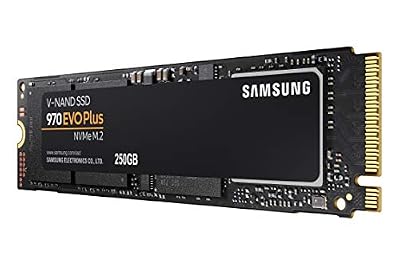
6. Samsung SSD 860 EVO 250GB 2.5 Inch SATA III Internal SSD

SAMSUNG 970 EVO Plus SSD 250GB NVMe M.2 Internal Solid State Drive with V-NAND Technology, Storage and Memory Expansion for Gaming, Graphics w/ Heat Control, Max Speed, MZ-V7S250B/AM



As an Amazon Associate we earn from qualifying purchases. Product prices and availability are accurate as of the date/time indicated.
Rounding out the list is the Samsung 860 EVO 250GB, the fast small dedicated dev disk. The 860 EVO is one of the most respected SATA SSD lines ever made, known for strong sustained performance and excellent reliability, here in a compact 250GB capacity. Its price varies by listing, but its value to a developer is about quality and focus rather than size.
This is the drive to choose as a dedicated, dependable disk for a specific job — a fast OS-and-tooling drive, a clean build volume, or a scratch disk for compiler output and temporary files — where the 860 EVO’s well-earned reputation for endurance and consistency really pays off. The 250GB capacity is small, so it is not where you store a sprawling archive; it is where you put the things that must be quick and stable. For a developer who values a proven, reliable SATA drive for a focused role, the 860 EVO is a quality choice that has stood the test of time.
Pros: Highly respected 860 EVO line, strong reliability and sustained SATA performance, great focused disk.
Cons: Small 250GB capacity; price varies and SATA caps peak throughput.
How to Choose an SSD for Programming
For programming, the performance trait that matters most is fast small-file read/write — not the headline sequential number. Compiling touches thousands of tiny files, version control reads and writes many small objects, and package managers churn through countless dependencies. A drive that handles those small, scattered accesses quickly makes builds finish sooner and tooling feel instant. Every SSD here is dramatically better than a hard drive at this; for the most build-heavy work, NVMe widens the gap further, though the SATA drives on this list serve typical development very well.
Reliability is non-negotiable when the drive holds your code. A failed disk can cost you uncommitted work, local branches, and hours of reconstruction, so favour drives with a proven track record — which is why the well-established Kingston A400, Crucial BX500 and especially the long-respected Samsung 860 EVO feature here. Reliability is not an excuse to skip backups, though: pair any working drive with a real backup strategy, which is exactly where an external portable like the SanDisk Extreme earns its place.
Size capacity to your toolchains and project trees, not to media. Programming fills space with SDKs, runtimes, IDEs, package and build caches, VM and container images, and many cloned repositories. A focused working set fits comfortably on 480GB like the Kingston A400; a broader spread of projects suits 1TB like the Crucial BX500; and developers juggling large monorepos, many VMs or heavy caches will appreciate 2TB like the SanDisk SSD Plus. Caches and build artifacts grow fast, so leave headroom rather than running the drive near full.
Finally, weigh SATA versus NVMe and internal versus external honestly. SATA SSDs are dependable, affordable and fit the 2.5-inch bay any machine has — plenty for most coding. NVMe drives deliver higher bandwidth and better random performance for the most demanding parallel builds and VM work, but need a free M.2 slot. And remember the SanDisk Extreme Portable is an external USB-C drive: superb for backups and moving repositories between machines, but keep your active build volume internal. Match small-file speed, reliability, capacity and form factor to how you actually develop, and pick the drive on this list that fits your workflow.
Frequently Asked Questions
Does a faster SSD actually speed up compile times?
It can help, because builds depend heavily on reading and writing many small files quickly. An SSD’s strong small-file IO lets a compiler chew through thousands of source files and write output far faster than a mechanical drive, and the drives here all deliver that. For very large parallel builds an NVMe drive widens the advantage, but CPU and RAM also matter — a fast, reliable SSD removes the disk as the bottleneck.
How important is reliability for a programming drive?
Very. The drive holds your repositories, local branches and uncommitted work, so a failure can cost real time and code. Favour drives with a proven track record — the Kingston A400, Crucial BX500 and the long-respected Samsung 860 EVO are dependable choices. Reliability does not replace backups, though: always keep a backup, which is one reason an external drive like the SanDisk Extreme Portable is so useful for developers.
How much storage do I need for a development machine?
Enough for your toolchains, runtimes, caches, VM images and active repositories, with headroom to spare. A focused working set fits on 480GB like the Kingston A400; a broad spread of projects suits 1TB like the Crucial BX500; and large monorepos, many VMs or heavy build caches favour 2TB like the SanDisk SSD Plus. Build artifacts and caches grow quickly, so do not run the drive close to full.
Is an external SSD good for storing code repositories?
It is excellent for backups and for moving repositories between machines, which is where the SanDisk Extreme Portable shines over USB-C. For your active build and edit workflow, though, keep the working copies on an internal SSD for the most consistent small-file performance, and use the portable as a fast, roomy backup and transfer drive rather than your primary working volume.
Related Guides
- Best NVMe SSDs
- Best External SSDs
- Best RAM for Your Build
- Best CPUs for Multitasking
- Best Prebuilt PCs
- Best Monitors for Coding and Creation
Affiliate Disclosure: As an Amazon Associate, we earn from qualifying purchases. If you click a link and make a purchase, we may earn a small commission at no extra cost to you. Prices and availability are accurate as of publication and may change.