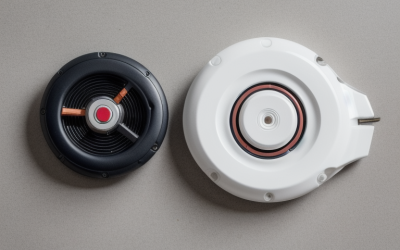
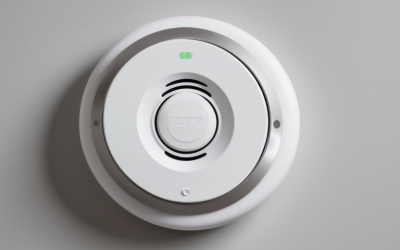
- Top Pick: First Alert Battery Smoke Alarm | SMI100, 1-Pack
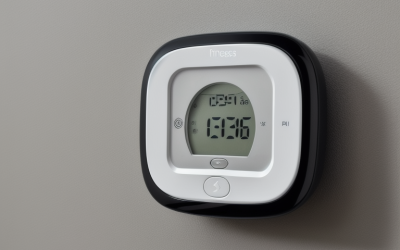
- Best Value: Kidde Heat Detector, Hardwired with Battery Backup & 2 LEDs, Interconnect Capability, Ideal for Garages
- Premium Choice: X-Sense Smoke Detector, 10-Year Battery, UL 217 Certified, SD2J0AX, 1-Pack | Photoelectric Smoke Alarm, Fewer Cooking Nuisance Alarms, One-Button Hush & Self-Test, Easy No-Wire Installation
A garage is the hardest room in the house for a smoke detector. Temperatures swing from freezing to sweltering, dust and sawdust drift through the air, and a cold engine can put out exhaust that trips a sensitive alarm in seconds. Many residential smoke alarm instructions say outright not to mount the unit inside a garage for those reasons. So the honest answer to “best smoke detectors for garages” is a mix: one purpose-built heat detector for the garage itself, and good smoke or smoke-and-CO alarms protecting the spaces next to it.
This guide is for owners of attached or detached garages, workshop users, and anyone who has been woken by a false alarm when a car warmed up. Only one product in the list is described as ideal for garages, so the rest are judged for the adjacent hallway, mudroom, or bedroom wall that shares a door with the garage. Whatever you buy for 2026, read the manufacturer’s listed placement limits and your local code before you drill into the ceiling.
Quick Picks
As an Amazon Associate we earn from qualifying purchases at no extra cost to you.


| Product | Best for | Key spec from the title |
|---|---|---|
| First Alert SMI100 | Hallway outside the garage door | Battery smoke alarm, sold in 1, 2, or 3 packs |
| Kidde Heat Detector | Inside the garage itself | Hardwired with battery backup, interconnect, ideal for garages |
| X-Sense SD2J0AX | Mudrooms and entry halls | 10-year battery, UL 217, photoelectric |
| Kidde Compact 10SDR | Small rooms near the garage | 4-inch body, AA battery, 85 dB |
| SITERWELL GS509A 9V | Budget single-room cover | 9V battery, photoelectric, silence button |
| Kidde Smart Smoke and CO | Phone alerts while you are in the yard | Ring app enabled, wireless interconnect |
| SITERLINK GS509A-2NCDR | Current-standard replacement | UL217-10th, dual-beam photoelectric |
| Heiman Smoke and CO Combo | Rooms above or beside a garage | 10-year sealed battery, UL 2034 5th CO |
How to Choose
Heat detector versus smoke alarm
A heat detector responds to a rise in temperature rather than to particles in the air, which is why it ignores dust and exhaust. For the garage itself, that is the logical sensor. Smoke alarms belong in the connected living spaces, where they react to the early smoke that a heat unit would miss. Think of the two as a pair: heat detection at the source, smoke detection where people sleep and move around.
Operating conditions and placement
Check the stated temperature and humidity limits in the manual, because a living-room alarm may not be designed for an unheated space. As a rule of thumb, keep any smoke alarm out of the garage proper and place it in the hall or room beyond the connecting door. Titles rarely list these limits, so open the documentation first. If a unit gives no operating range at all, treat that as a reason to keep it indoors and away from the garage door and its drafts.
Power and interconnection
Hardwired units with battery backup keep working through outages and can link to other alarms, so a heat trigger in the garage sounds in the bedrooms. Wireless interconnect, such as the system on the smart combo, achieves the same without cutting into drywall. Sealed 10-year batteries remove the chore of climbing a ladder over a car.
Certifications and carbon monoxide
Look for UL 217 on smoke alarms and UL 2034 on carbon monoxide models. Attached garages are a common route for CO to enter a home, so a combination alarm in the nearest hallway makes sense. Budget alarms may skip app features and voice alerts, but never accept a unit that lacks a stated certification.
The 8 Best Options
First Alert SMI100
The SMI100 is a simple battery smoke alarm sold as a single, two-pack, or three-pack. That flexibility suits a hallway beside the garage plus a couple of bedrooms, all with the same basic unit. Because it is battery powered, it can go on the house side of the connecting door without any wiring through the garage wall, which keeps the job simple for a weekend.
- Strength: multiple pack sizes make a matching set easy.
- Strength: battery power avoids any wiring near the garage wall.
- Trade-off: the title gives no sensor type, certification, or garage suitability.
Skip it if you want to mount something inside the garage or need documented certification in the listing.
Kidde Heat Detector
This is the only listing that names garages. It is hardwired with battery backup, has two LEDs, and offers interconnect capability, which means it can sound alongside other linked alarms. Heat sensing suits a space where dust and fumes are normal. For a workshop where sanding, welding fumes, or a running engine are routine, a unit that waits for heat rather than particles avoids the constant false alarms that lead people to pull batteries out.
- Strength: explicitly described as ideal for garages.
- Strength: interconnect capability links it to the rest of the home.
- Trade-off: hardwired installation needs existing wiring or an electrician.
Skip it if you want early smoke warning rather than heat response, or if you cannot run wiring to the garage.
X-Sense SD2J0AX
X-Sense is a UL 217 certified photoelectric alarm with a 10-year battery and no-wire installation. The title adds fewer cooking nuisance alarms and a one-button hush with self-check, which also suits a mudroom where steam or dust might otherwise trigger the unit. A sealed ten-year battery also means nobody has to climb a ladder in a hall crowded with coats and boots every few months.
- Strength: no wiring means a clean install on the house side of the door.
- Strength: photoelectric sensing aimed at fewer nuisance alarms.
- Trade-off: the title does not say it is intended for garage use.
Skip it if you plan to mount it inside an unheated garage.
Kidde Compact 10SDR
The Compact is a 4-inch AA-powered alarm with LED status lights and a loud 85 dB signal, aimed at homes and small spaces. It fits a small utility room or stair landing that shares a wall with the garage. The status lights give a quick visual check of whether the unit is powered, which is handy in a room you visit rarely.
- Strength: compact body fits tight spots.
- Strength: AA batteries are easy to replace.
- Trade-off: the title does not state the sensor type.
Skip it if you want a sealed 10-year battery or a garage-specific detector.
SITERWELL GS509A 9V
This single-pack alarm is a photoelectric 9V unit with a silence button and low-battery warning. It is a no-frills pick for a hallway or bonus room near the garage, where a basic alarm does the job. It is the most budget-minded option on the list, and a reasonable fit for a spare room or home office that adjoins the garage.
- Strength: photoelectric sensor with a silence button.
- Strength: an easy-install design with a clear low-battery warning.
- Trade-off: 9V batteries need periodic replacement.
Skip it if you want a long-life sealed battery or any connected features.
Kidde Smart Smoke and CO
This model pairs smoke and carbon monoxide detection with the Ring app, wireless interconnect, and voice alerts. It runs on AA batteries and is described for homes and apartments, so it suits the entry hall by an attached garage if you want alerts on your phone. Voice alerts can also tell household members what the alarm is detecting, which helps in a house with children who might not recognize different beep patterns.
- Strength: smoke and CO detection in one app-connected unit.
- Strength: wireless interconnect avoids opening walls.
- Trade-off: it relies on the app ecosystem for its smart features.
Skip it if you prefer a basic alarm with no accounts or connectivity.
SITERLINK GS509A-2NCDR
SITERLINK is a single alarm with UL217-10th wording, a dual-beam photoelectric sensor, a silence button, and an LED light. It suits someone replacing an older unit in the hall. Since many older alarms predate the current standard, swapping in a model that names UL217-10th is a sensible upgrade even when the old one still chirps along.
- Strength: references the current UL 217 edition.
- Strength: dual-beam sensing for broader smoke detection.
- Trade-off: the battery is replaceable rather than sealed.
Skip it if you plan to mount it in a dusty garage or want CO detection.
Heiman Smoke and CO Combo
Heiman combines smoke and CO detection, lists UL 217 10th and UL 2034 5th certification, an 85 dB alarm, and a 10-year sealed battery, and is described as a photoelectric alarm. It fits a bedroom or hall above or beside a garage. The title also names hotels and rentals, so it suits landlords as well as owners who want fewer batteries to track across several rooms.
- Strength: both smoke and CO standards are named.
- Strength: sealed 10-year battery means little maintenance.
- Trade-off: the title gives no garage suitability statement.
Skip it if you want a heat-sensing device for the garage itself.
Which One Fits Your Situation
You want protection inside the garage
The Kidde Heat Detector is the one listing aimed at that job, and it links to your other alarms if you have wiring to support it.
Your garage is attached to the house
Pair the heat detector with a Heiman Smoke and CO Combo or Kidde Smart Smoke and CO in the nearest hallway, so you cover both heat and exhaust gases.
You want the simplest setup
The X-Sense SD2J0AX has no wiring and a long battery life, which makes it the easiest house-side alarm. Add a Kidde Compact 10SDR for a small adjoining room if you want a second, lighter unit.
You are replacing one old alarm
The SITERLINK GS509A-2NCDR or First Alert SMI100 does a straightforward swap without changing your wiring.
Common Mistakes
- Mounting an ordinary smoke alarm inside the garage, where dust and temperature swings cause false alarms.
- Skipping carbon monoxide protection in rooms next to an attached garage.
- Ignoring the temperature limits printed in the manual.
- Buying a hardwired model without checking that wiring exists.
- Forgetting to link alarms so a garage trigger is heard in the bedrooms.
Frequently Asked Questions
Can I put a regular smoke detector in my garage?
Often no. Many manufacturers advise against it because of temperature swings, dust, and exhaust, so check the instructions. A heat detector is the usual alternative.
Do I need carbon monoxide detection near the garage?
It is a good idea when the garage is attached, since exhaust can enter living spaces. Place the CO or combo alarm in the hall or sleeping area, as the instructions describe. A garage-side hallway is the usual choice, since gases that seep through a door reach that space first.
Can a heat detector replace a smoke alarm?
No. A heat detector reacts to temperature only, so it should supplement smoke alarms in the home, not replace them.
Are wireless interconnected alarms reliable?
They are a convenient way to link alarms without wiring. Follow the maker’s setup steps and confirm that every unit sounds when one is triggered. Repeat that check whenever you add or move an alarm, so the network keeps working as the house changes.