Prototype studios live or die on repeatable detail. A housing, a connector, or a presentation model all need crisp edges, smooth surfaces, and dimensions that hold from one print to the next. That is why resin printing has become a staple of the prototyping bench, and why the best SLA 3D printers with enclosed build chambers for prototype studios pair high-resolution light engines with a closed body.


Desktop SLA today mostly means masked SLA, where an LCD panel masks a UV light source to cure a whole layer at once. The machines below all work that way, each inside a full enclosure that keeps drafts, dust, and stray light away from the print and helps contain resin odor.
This guide compares three enclosed resin printers for studio work: a high-resolution Elegoo flagship, a fast Anycubic workhorse, and a proven Phrozen machine with a roomy build area.
What to Look For
Enclosure design. Look for a full cover over the vat and build plate, not an open frame. A flip-up lid opens with one hand, while a lift-off cover is simpler; either way, it should seat firmly so drafts and ambient light stay out.
Light engine resolution. Resolution comes from the size of each pixel on the screen, measured in microns. Smaller XY figures mean finer detail on small features such as text, clips, and threads. A 16K screen is not automatically better than a 14K screen on a larger build area, so compare the micron figure rather than the K number alone.
Build volume. Measure the largest part you expect to print, then add room for supports and a raft. A volume near 220 x 120 x 220 mm handles most housings and brackets.
Leveling and monitoring. Automatic leveling removes the most common setup error. A camera and sensors for resin shortage and foreign objects reduce failed prints, which is where a studio loses the most time and resin.
Resin temperature control. Resin prints best inside a stable temperature window. A heated vat or dynamic temperature control keeps viscosity steady in a cool studio, which improves layer adhesion.
Ventilation and filtration. An enclosure helps, but it is not a substitute for airflow. Plan for a ventilated room, wear nitrile gloves, and keep uncured resin away from skin.
The 3 Best Picks
1. ELEGOO Saturn 4 Ultra 16K
ASIN: B0DT8PV51T
Amazon: https://www.amazon.com/dp/B0DT8PV51T
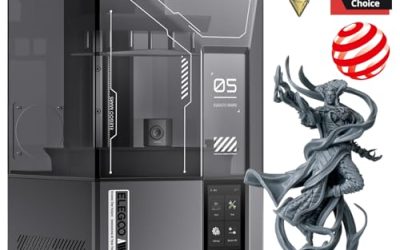
The Saturn 4 Ultra 16K is Elegoo’s high-resolution flagship for studios that print fine-detail prototypes. It uses a 10-inch 16K mono LCD with a 15120 x 6230 resolution and an XY resolution of 14 x 19 microns, the finest pixel pitch of the three machines here. The build volume measures 211.68 x 118.37 x 220 mm, enough for housings, multi-part assemblies, and batches of small components.
Elegoo fits a tilt-release mechanism rated at print speeds up to 150 mm/h, along with smart automatic leveling, an AI camera, and Wi-Fi transfer with cluster printing. The resin tank is heated, which keeps viscosity steady in a cool room, and the flip-up lid gives quick access to the build plate.
This printer suits a prototype studio that values surface finish above all else, especially for presentation models, small mechanical parts, and masters that will be molded or cast. Considerations include its 16.1 kg weight, which makes it a bench fixture, and its smaller build volume next to the other two picks, so very tall parts may need to be split.
2. ANYCUBIC Photon Mono M7 Pro
ASIN: B0CY5MF5BV
Amazon: https://www.amazon.com/dp/B0CY5MF5BV
The Photon Mono M7 Pro is Anycubic’s speed-focused enclosed resin printer. Its 10.1-inch 14K mono LCD runs at 13312 x 5120 with an XY resolution of 16.8 x 24.8 microns, and Anycubic lists a build volume of 223 x 126 x 230 mm. The COB LighTurbo 3.0 light source uses a Fresnel lens and front-facing reflectors to keep the beam angle tight.
Anycubic rates the machine at up to 170 mm/h with high-speed resin at 0.1 mm layers, and up to 130 mm/h with standard resin. Dynamic temperature control heats the resin vat, and the printer handles resin refill and withdrawal automatically. Leveling is automatic, and Wi-Fi transfer is included alongside USB.
This printer suits a studio that runs frequent iterations and wants short turnaround between design changes, such as a product team printing several versions of a housing in a day. Considerations include its 12.8 kg weight and the fact that the fastest speeds depend on high-speed resin, so standard resin jobs run slower than the headline figure.
3. Phrozen Sonic Mighty 8K
ASIN: B0B3X9XG1Z
Amazon: https://www.amazon.com/dp/B0B3X9XG1Z
The Sonic Mighty 8K is Phrozen’s mid-size enclosed resin printer and a long-running choice for detailed work. It uses a 10-inch monochrome LCD with 8K resolution and an XY resolution of 28 microns, with a build volume of 218 x 123 x 235 mm. The enclosed body and amber-tinted cover shield the vat from ambient light.
Phrozen positions the Mighty 8K as a tabletop machine for models and miniatures, and the same strengths apply to prototype work: a large plate for batch printing and a broad range of compatible third-party resins. It arrives fully assembled, which keeps setup short.
This printer suits a studio that wants the largest build area of the three for the least complexity, especially for tall parts and batch runs of small components. Considerations include its coarser 28-micron XY resolution next to the 14K and 16K screens above, so very fine text will look softer, and it lacks the heated vat and automatic resin handling of the newer models.
Comparison Table
| Printer | Light engine | XY resolution | Build volume | Print speed | Leveling |
|---|---|---|---|---|---|
| ELEGOO Saturn 4 Ultra 16K | 10-inch 16K mono LCD | 14 x 19 microns | 211.68 x 118.37 x 220 mm | Up to 150 mm/h | Automatic |
| ANYCUBIC Photon Mono M7 Pro | 10.1-inch 14K mono LCD | 16.8 x 24.8 microns | 223 x 126 x 230 mm | Up to 170 mm/h with high-speed resin | Automatic |
| Phrozen Sonic Mighty 8K | 10-inch 8K mono LCD | 28 microns | 218 x 123 x 235 mm | Not stated by the maker | Manual |
Frequently Asked Questions
What is the difference between SLA and masked SLA?
Laser SLA cures resin with a moving laser beam, while masked SLA cures a whole layer at once through an LCD panel that masks a UV light source. Desktop enclosed printers almost all use masked SLA, because it is faster and the hardware is simpler. Both produce the smooth, high-detail parts that prototype studios need.
Why does an enclosed build chamber matter for a prototype studio?
An enclosure blocks drafts and dust, shields the vat from ambient light, and helps contain odor. Stable conditions mean fewer warped or failed prints, which matters when a studio prints the same part several times for fit checks.
Can these printers use third-party resin?
Yes. All three machines cure standard 405 nm UV resin, and makers list compatibility with third-party resins. Check the resin maker’s exposure guidance for the printer, because exposure times vary between light engines.
What else does a prototype studio need alongside the printer?
Plan for a wash and cure station, nitrile gloves, isopropyl alcohol, a ventilated room, and spare FEP film. Post-processing is part of the workflow, and clean, fully cured parts are what make a prototype useful for fit checks.
Conclusion
For a prototype studio, the ELEGOO Saturn 4 Ultra 16K is the pick for the finest detail, the ANYCUBIC Photon Mono M7 Pro is the pick for fast iteration with helpful resin handling, and the Phrozen Sonic Mighty 8K is the pick for a tall build volume with a simple, proven design. The right choice comes down to whether the studio values detail, speed, or build height most. Pair any of them with good ventilation, careful resin handling, and a wash and cure step.
Disclosure: As an Amazon Associate, we earn from qualifying purchases.