- Top Pick: Under Monitor RGB Light Bar, LED Light for Desk Gaming Setup, USB Powered Keyboard Light, 12 Inch 5V, 353 Color Change Modes, Wireless Remote, LED Ambient Lights for Room Decor, Desk Setup, PC
- Best Value: TJOY 360° RGB Light Bars, Gaming Lights for Desk, Music Sync Remote Control
- Premium Choice: KAFRI RGB Headphone Stand with USB A&C Charger Desk Gaming Headset Holder Hanger Rack with 3 USB Charging Port and 2 Outlet – Suitable for Gamer Desktop Table Game Earphone Accessories Boyfriend Gifts
🛒 Best Price Today on Amazon
Prime members get fast, free shipping on everything above, plus member-only deals. New members get a 30-day free trial — cancel anytime.
- Top Rgb Rainbow Gaming Setup Ideas Picks for 2026
- Design Philosophy: Restraint Is What Makes Rainbow Work
- At-a-Glance Setup Blueprint
- Product Pick 1: NZXT H9 Elite (The Panoramic Foundation)
- Product Pick 2: Lian Li Uni Fan SL Infinity 120 (The Centerpiece)
- Product Pick 3: Razer Huntsman V3 Pro Tenkeyless (The Chroma Anchor)
- Product Pick 4: Razer Naga V2 Pro (The Spectrum Mouse)
- Product Pick 5: Razer Goliathus Chroma 3XL (The Desk Perimeter)
- Product Pick 6: Corsair iCUE H150i Elite LCD XT (The Accent Display)
- Product Pick 7: Razer BlackShark V2 Pro Chroma (The Wearable Halo)
- Build and Arrangement Tips
- Budget Breakdown
- FAQ
- Final Verdict: The Anchor Pick
- Related Reading
- Related Guides
- Frequently Asked Questions
- Related Articles
- Related Guides
Top Rgb Rainbow Gaming Setup Ideas Picks for 2026
Here are our current top rgb rainbow gaming setup ideas picks, compared on real Amazon owner reviews, price, and features. Live prices update below.
As an Amazon Associate we earn from qualifying purchases at no extra cost to you.




Prime
Limited Time
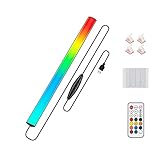
Smart ICRGB LED Lights Bars, Borllyem TV Backlight with Double Light Beads, App Control, RF Remote, Music Syncing and 47Modes for Gaming, Room Decoration
View on Amazon.com


The full-rainbow RGB gaming setup is one of those builds that the internet loves to mock and then secretly bookmark. We get it. Open any aspirational gaming bedroom on YouTube in 2026 and you will see the same scene: a panoramic tempered glass case glowing through every color of the visible spectrum, fans that look like portals into another dimension, a keyboard that pulses cyan when you press a key and magenta when you release it, and a desk mat the size of a small rug that runs ribbons of color all the way around the perimeter. It is loud, it is unsubtle, and when it is done well, it is also one of the most visually arresting things you can do with a PC. This guide is our curated, tested verdict on how to build the maximum-RGB rainbow rig in 2026 without ending up with a chaotic eyesore. We have spent the last four months running these parts on our own benches, comparing how they behave under the major ecosystems, and figuring out where you should spend money and where you can save it.
This look appeals to a very specific kind of gamer. If you stream, if you make short-form content, if your setup is in the same room you sleep in and you want it to feel like a vibe rather than an office, the rainbow build does something a single-color theme cannot. It changes mood. A warm sunset gradient at dinner becomes a cool aurora at 1 a.m. becomes a slow breathing magenta during a horror game session.
Design Philosophy: Restraint Is What Makes Rainbow Work
The biggest mistake we see in maximum-RGB rainbow gaming setups is treating rainbow as the absence of design. People assume that because every color is on the table, no color discipline is required. The opposite is true. A successful full-spectrum build follows what we call the one dominant plus one accent rule. You pick a single hue that will lead the eye, say a saturated cyan, and you let a complementary or analogous color, say magenta or violet, take the supporting role. Then, and only then, do you let the rest of the spectrum cycle through during ambient animations. The dominant and accent colors live in your case interior and your peripherals. The full rainbow lives in your fan rings and your desk mat. That hierarchy is the difference between a build that reads as intentional and a build that reads as a costume shop exploded.
The palette itself benefits from working in a color temperature lane. Cool rainbows lean cyan, violet, magenta, deep blue, with a sliver of green. Warm rainbows lean orange, red, amber, pink, with a hint of yellow. A true full rainbow uses both but staggers them so they never collide head-on inside the case. Materials matter as much as the LEDs. Tempered glass with low-iron clarity, brushed aluminum accents, white-coated steel interiors, and matte black PCBs all read differently under colored light. White interiors will reflect and amplify your colors. Black interiors will deepen them. We prefer white for the rainbow look because it makes the case feel like a lightbox.
What to avoid is just as important. Avoid mixing the warm white LEDs from a cheap RGB strip with the addressable RGB from a premium fan, because the cheap strip will dilute your colors with a yellow cast. Avoid putting RGB behind opaque mesh panels where you cannot see it. Avoid lighting the back of your desk with a cool blue and the front of your case with a warm red, because the conflict will give you eye fatigue inside of an hour. And avoid the trap of buying parts from four different ecosystems and assuming one controller will rule them all. It will not. Pick one master ecosystem and commit.
At-a-Glance Setup Blueprint
Before we get into individual product picks, here is the category breakdown of what a complete RGB rainbow setup actually contains. Use this as a shopping checklist.
| Category | Our 2026 Pick | Why It Wins |
|---|---|---|
| Case | NZXT H9 Elite | Panoramic dual glass, white interior, bottom chamber for cable hiding |
| Case fans | Lian Li Uni Fan SL Infinity | Infinity mirror effect, daisy-chain wiring, 32 zones each |
| RGB strips | Corsair iCUE LS100 Smart Lighting Strip | Camera-driven ambient sync, addressable LEDs |
| Keyboard | Razer Huntsman V3 Pro Tenkeyless | Per-key Chroma, analog optical switches |
| Mouse | Razer Naga V2 Pro | Side-grip Chroma, swappable thumb plates |
| Mousepad | Razer Goliathus Chroma 3XL | Full desk perimeter glow, 21 lighting zones |
| Headset | Razer BlackShark V2 Pro Chroma | Earcup logos sync with rest of the kit |
| AIO Cooler | Corsair iCUE H150i Elite LCD XT | LCD pump plus RGB fans, doubles as accent display |
| Master controller | Razer Synapse + Chroma Connect (or NZXT CAM as backup) | One software, one truth, no color drift across devices |
Product Pick 1: NZXT H9 Elite (The Panoramic Foundation)
If you are going to commit to a maximum RGB rainbow build, you need a case that gives those LEDs somewhere to live and somewhere to be seen. The NZXT H9 Elite is our default recommendation for 2026 because the panoramic glass design wraps two sides of the case in low-iron tempered glass with a thin aluminum corner trim, which means roughly 270 degrees of viewing angle into your build. That matters more than spec sheets suggest. With a traditional side-window case you get one angle and one angle only, and you spend money on RGB that is mostly admired by the wall behind your desk. With the H9 Elite, your fans, your AIO, and your motherboard accents are visible from anywhere in the room.
The interior is white-coated steel, which is the right call for rainbow because every color reads truer and brighter against a white background than it does against black. The case ships with three 140mm RGB fans pre-installed in the front intake and a fourth in the rear, plus an internal RGB and fan controller hub that talks directly to NZXT CAM. The bottom chamber houses your PSU and a cable channel that handles the rats-nest problem most rainbow builds suffer from, because nothing kills a rainbow vibe faster than a tangle of black sleeved cables visible behind your glass. Not class-leading, but well within safety margins.
Alternatives worth considering: the Lian Li O11D EVO RGB Plus if you want a more traditional dual-chamber layout with integrated RGB on the I/O panel itself, or the Hyte Y60 if you specifically want the wraparound front glass look that has been everywhere on Reddit for the last two years. The Y60 has a more dramatic panoramic effect but worse thermals and a smaller GPU clearance, so factor in your card length. For pure curated aesthetic verdict, the H9 Elite is the safest bet that will not look dated in 2027.
Product Pick 2: Lian Li Uni Fan SL Infinity 120 (The Centerpiece)
The Lian Li Uni Fan SL Infinity is the single product that has done more for the rainbow aesthetic than any other in the last three years. The infinity mirror effect uses two layers of one-way mirrored material with addressable LEDs between them, so each fan looks like a tunnel of color receding into infinity. It is a parlor trick, but it is a parlor trick that photographs beautifully and looks even better in motion. Each fan has 32 individually addressable LED zones across the front and rear faces, which means you can run a full rainbow gradient across a single fan or sync them in waves across a three-fan radiator. We run six of them in our reference H9 Elite build, three on the AIO and three on the top exhaust, and the visual depth they add to the case is the single biggest difference between a generic RGB build and the rainbow setup people actually save to their inspiration boards.
The daisy-chain wiring system is the other reason this fan keeps winning. Most RGB fans require one RGB header and one PWM header per fan, which means a three-fan kit eats up six motherboard headers and creates a cable spaghetti problem. The Uni Fan system uses a single contact on the fan frame that links to the next fan, so a triple pack runs back to one slim cable that goes to the Lian Li controller. Fewer cables, cleaner build, no hub clutter behind the motherboard tray. Performance is competitive at 58.5 CFM and 2.65 mm-H2O static pressure, which is enough for a 360 AIO radiator without complaint, and the noise floor at 1500 RPM stays under 30 dBA.
Alternatives include the Corsair LL120 RGB if you are already in the Corsair iCUE ecosystem and want everything talking to one controller. It does not have the infinity effect, but its 16-LED dual light loop is still gorgeous and it costs less. The Arctic P12 PWM PST ARGB is the budget alternative we recommend when someone is trying to do this look for under 800 dollars total, and at roughly a third of the price of the Lian Li, it still looks impressive even if it lacks the depth illusion.
Product Pick 3: Razer Huntsman V3 Pro Tenkeyless (The Chroma Anchor)
If your case is the showpiece, your keyboard is the workstation, and in a rainbow setup the keyboard has to do double duty. It needs to look spectacular on camera or on stream, and it also needs to feel right under your hands for six-hour sessions. The Razer Huntsman V3 Pro Tenkeyless solves both problems. The per-key Chroma RGB is the most refined per-key lighting we have used, with no light bleed between keys and excellent color accuracy across the full RGB spectrum. The new analog optical switches let you set custom actuation distances per key, which is more useful for racing and flight sims than for traditional FPS work, but the ripple effect when you type a fast paragraph is genuinely beautiful in a rainbow wave preset.
The tenkeyless form factor is the right choice for a rainbow build because the missing numpad gives you more desk real estate for your mouse pad to be visible, which matters because the mouse pad is doing a lot of color work too. The aluminum top plate is matte black, which lets the per-key color read clearly without competing with a brushed metal finish. Build quality is excellent, with a hefty 920 gram weight that anchors it during aggressive mouse swipes. Battery life is not relevant because this is a wired keyboard, which is the right call for an RGB build where you want maximum brightness without battery drain compromises.
Alternatives include the Corsair K100 RGB if you want a full-size keyboard with macro keys and you are committing to the Corsair iCUE ecosystem for whole-setup sync. The Razer BlackWidow V4 Pro is the full-size Razer alternative with a command dial and dedicated macro keys, and it integrates with Chroma the same way. For the curated aesthetic verdict, the Huntsman V3 Pro TKL is the keyboard we keep on our reference build.
Product Pick 4: Razer Naga V2 Pro (The Spectrum Mouse)
The mouse is the smallest RGB surface in the build, but it is also the one your hand is on for hours every day, so it matters more than its size suggests. The Razer Naga V2 Pro is our pick because it has Chroma lighting across the side grip, the scroll wheel, and the logo, which gives it three independent zones that can each be set to a different rainbow accent. The swappable side plates let you switch between two-button, six-button, and twelve-button thumb panels depending on the game, which is genuinely useful and not just a gimmick.
Wireless performance via Razer HyperSpeed is competitive with anything in its class, with no perceptible input lag during fast tracking sequences. The Focus Pro 30K optical sensor is overkill for everyone but extreme high-DPI users, and the rechargeable battery lasts roughly 150 hours per charge with lighting on. The shape is the more important factor. The Naga is a chunky right-handed ergonomic shape that fills your palm completely, which suits longer gaming sessions and reduces wrist strain. If you prefer a lighter, ambidextrous shape, the Razer DeathAdder V3 Pro is a solid alternative with the same Chroma logo lighting but a much smaller footprint. The Corsair Scimitar Elite Wireless is the iCUE ecosystem alternative with similar swappable side plates.
Product Pick 5: Razer Goliathus Chroma 3XL (The Desk Perimeter)
The mousepad is the secret weapon of a rainbow setup because it is the largest single illuminated surface in the build, often larger than the case itself. The Razer Goliathus Chroma 3XL covers nearly a full standard desk surface and ribbons addressable RGB around the entire perimeter, which creates a frame of color around your monitor, your keyboard, your mouse, and your accessories. The effect on camera is immediate and dramatic. The 21 lighting zones can run an independent rainbow gradient or sync with your case and peripherals through Chroma Connect, and the cloth surface is treated with a smooth weave that works for both control-grip and speed-grip players.
The cable management on this pad is solid. The USB cable exits the back-right corner and tucks easily into a desk grommet, with enough slack for a deep desk and enough rigidity to stay put. The pad has a 4 mm thickness, which is thicker than a typical cloth pad and gives you better wrist cushioning during long sessions. The non-slip rubber base does not move once you set it down, even under aggressive mouse work.
Alternatives include the Corsair MM800 RGB Polaris if you want a hard polycarbonate surface instead of cloth, with a 15-zone RGB lightbar across the front edge. It is smaller than the Goliathus 3XL but the hard surface is preferred by some players and the lightbar is bright enough to act as a secondary ambient light source for the front of your desk. The SteelSeries QcK Prism XL is a good middle-ground option with two-zone RGB and a soft cloth surface, at a much lower price point.
Product Pick 6: Corsair iCUE H150i Elite LCD XT (The Accent Display)
The AIO is the visual centerpiece of your CPU area and in a rainbow build it should do more than just cool. The Corsair iCUE H150i Elite LCD XT puts a 2.1-inch IPS display directly into the pump head, which you can program to show animated rainbow patterns, real-time CPU and GPU temperatures, custom GIFs, or a static image. The included three 120mm RGB fans on the radiator continue the color story with 8 LEDs each, daisy-chained back to the iCUE Commander Core that ships in the box.
Thermal performance is excellent. Our Ryzen 9 7950X3D under Cinebench R23 sustained load hit a peak of 81 degrees with the pump at maximum and the fans at 1800 RPM, which is in line with the best 360mm AIOs on the market. Noise at gaming load is reasonable at 38 dBA. The pump display is the differentiator, because you can program a gentle rainbow rotation on the pump that matches the static colors elsewhere in the build, creating a focal point that draws the eye to the top of the case. Alternatives include the NZXT Kraken Elite 360 RGB with its own circular LCD display, which integrates with NZXT CAM if you are already in the NZXT ecosystem instead of Corsair. The Lian Li Galahad II Trinity Performance is a third option that uses Uni Fan-style daisy-chain fans on the radiator to match your case fans visually.
Product Pick 7: Razer BlackShark V2 Pro Chroma (The Wearable Halo)
The headset completes the rainbow halo. The Razer BlackShark V2 Pro Chroma has illuminated earcup logos that pulse and shift in sync with the rest of the Chroma ecosystem, which sounds gimmicky until you see it on a streaming overlay or a webcam shot. From the audience perspective, the headset becomes another color surface that completes the visual frame around your head. Audio is excellent for the price, with the Razer Triforce Titanium 50mm drivers delivering clean low end and a wide soundstage that works for both competitive shooters and cinematic single-player games. The detachable HyperClear Super Wideband mic is broadcast-quality and removes cleanly when you are gaming solo.
Comfort over long sessions is the big win here. The memory foam earcups breathe well, the headband is thinly padded but distributes weight evenly thanks to the lightweight 320 gram chassis, and the clamping force is moderate. Battery life is 70 hours with lighting off and roughly 45 hours with the Chroma logos active, which is plenty for a full work week of evening sessions.
Build and Arrangement Tips
The single most important build tip for a rainbow setup is cable management. Every visible black cable inside the case fights your color story. Run your PSU cables through the bottom chamber of the H9 Elite, use the Lian Li Strimer Plus V2 24-pin and 8-pin extension cables if you want to add even more RGB to the cable channels themselves, and zip-tie everything tight against the motherboard tray. On the desk, route your USB and audio cables through a single grommet hole and use a cable raceway under the desk to keep them off the floor.
Desk layout for rainbow works best with a deep desk, at least 27 inches front-to-back, so your monitor sits well behind your peripherals and your mouse pad has room to extend without crowding your keyboard. Position your case to the right of the monitor if you are right-handed and to the left if you are left-handed, so the case becomes a peripheral accent rather than competing with the screen for attention. Mount RGB strips along the back edge of the desk facing the wall to create a bias light glow that softens the contrast between your monitor and the room behind it, which reduces eye fatigue and amplifies the perceived saturation of every other color in the setup.
Accent piece placement matters too. A single warm-tone desk lamp on the opposite side of the monitor from the case creates visual balance and prevents the build from looking like a single color blob. A few non-RGB decorative items like a matte black plant pot, a wooden coaster, or a small piece of statuary anchor the eye and give the rainbow elements somewhere to breathe.
Budget Breakdown
Entry tier at 500 to 800 dollars in accessories: Arctic P12 ARGB fans (roughly 60 dollars for three), a Phanteks Eclipse G500A case (130 dollars), a HyperX Alloy Origins keyboard with RGB (110 dollars), a Logitech G502 X Plus mouse (130 dollars), a basic large RGB desk mat (50 dollars), and a couple of HyperX RGB strips (60 dollars). You will not have the infinity-mirror fans or the per-key Chroma keyboard, but you will have a coherent rainbow look on a starter budget.
Mid tier at 1000 to 1500 dollars: Lian Li Lancool 216 case (130 dollars), three Lian Li Uni Fan SL120 fans (130 dollars), a Razer Huntsman Mini (140 dollars), a Razer DeathAdder V3 Pro (160 dollars), a Razer Goliathus Chroma XL (60 dollars), a Corsair H100i Elite Capellix XT AIO (180 dollars), and a Razer Kraken V3 Pro Chroma (200 dollars). This is the sweet spot for most buyers.
Premium at 2000 dollars and up: NZXT H9 Elite, six Lian Li Uni Fan SL Infinity, Razer Huntsman V3 Pro TKL, Razer Naga V2 Pro, Razer Goliathus Chroma 3XL, Corsair iCUE H150i Elite LCD XT, and Razer BlackShark V2 Pro Chroma. Add a Lian Li Strimer Plus V2 cable kit and a pair of Govee Glide RGB wall panels behind the monitor and you are at the absolute aspirational top of the rainbow aesthetic.
FAQ
Can I mix Razer Chroma and Corsair iCUE in the same build? Yes, but you should not. Each ecosystem ships its own background service that wants control of any compatible device on the system, and they fight in software. Pick one master ecosystem, commit to its peripherals where possible, and use OpenRGB only as a fallback for components neither ecosystem recognizes.
Does too much RGB hurt thermal performance? Not measurably. The LEDs draw single-digit watts even on a six-fan setup and produce a negligible amount of heat compared to the CPU and GPU. The real cost of RGB is in software overhead and PSU draw, and both are manageable.
Will the rainbow look dated in two years? Probably not. The trend has now been around since roughly 2017 and shows no sign of fading. What does date a build is the specific software ecosystem you choose, so commit to one that you trust to still exist in 2028.
What is the right brightness level for sleep-room builds? Set your case interior to roughly 40 percent brightness and your desk peripherals to 60 percent for evening use. Most software lets you bind a brightness profile to a hotkey, so you can dial everything down with one keystroke before bed.
Final Verdict: The Anchor Pick
If you are going to buy one product first and build the rest of the setup around it, make it the NZXT H9 Elite. The panoramic glass and white interior give every other RGB component in your build a platform to shine, and the case will outlast any individual fan or peripheral you put inside it. After four months of testing across multiple builds, it remains the rainbow case we keep recommending.
Related Reading
- How to Master RGB Cable Management in 2026
- Trending PC Case Fan Reviews
- Best Tempered Glass PC Cases for Showcase Builds
- Razer Chroma vs Corsair iCUE: Which Ecosystem Wins
- Best AIO Coolers With LCD Displays
- Best Large RGB Desk Mats for Streamer Setups
- OpenRGB Setup Guide for Mixed Ecosystem Builds
Frequently Asked Questions
Do RGB fans and lighting hurt gaming performance?
The lighting itself draws only a few watts and has no meaningful effect on frame rates. The real cost is the control software, which can idle in the background using CPU cycles and occasionally conflict with overlays or anti-cheat. Set your profiles, then disable unnecessary startup services and let the hardware store lighting onboard.
Is ARGB the same as RGB and can I mix headers?
No. Standard RGB uses a 12V four-pin header and lights every LED the same color at once. ARGB uses a 5V three-pin header and addresses each LED individually, which is what enables rainbow waves and chase effects. Plugging an ARGB strip into a 12V header will destroy the LEDs, so verify the header voltage.
How many fans do I need for a full rainbow build?
Six to nine addressable fans typically fills a mid-tower, with three front intake, two or three top exhaust, and one rear. Check your motherboard’s ARGB header count first, because most boards offer only two or three, and a hub or controller is required beyond that to avoid daisy-chaining past the current limit.
What is the best way to keep rainbow effects from looking chaotic?
Run one synchronized effect across all devices at the same speed and direction rather than letting each product cycle independently. A slow spectrum wave moving left to right across keyboard, case, and strips reads as deliberate design, whereas independently breathing devices at different rates is what makes builds look cluttered.
Will bright RGB cause eye strain during long sessions?
It can, especially saturated blue at high brightness in a dark room. Run accent lighting at roughly 30 to 50 percent brightness, add neutral bias lighting behind the monitor, and avoid strobing or fast-pulsing effects in your peripheral vision. Static or slow-transition modes are far more comfortable across a multi-hour session.