

- Top Pick: BOBOVR S3 Pro Battery Strap Accessories,Head Air Cooling System and 10000mah Hot-swappable Battery Pack,Compatible with Meta Quest 3/Quest 3S
- Best Value: AMZDM Controller Grip for Meta Quest 3S Oculus Quest 3 VR Accessories Grips Cover for VR Touch Controllers Straps Silicone Covers Protector with Non-Slip Thumbstick Covers 1Pair Black
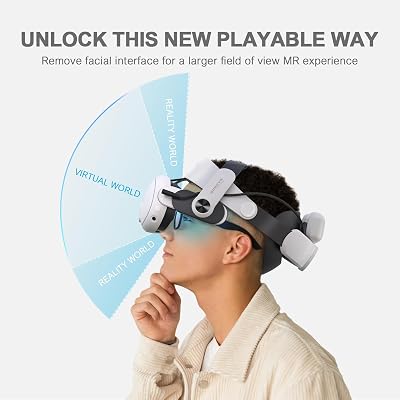
- Premium Choice: BOBOVR F3 Facial Interface,Compatible with Quest 3, Cooling Facial Cover with 3-Channel Ventilation, Adjustable FOV, Glasses-Friendly Design & Soft Lycra Nose Guard [oculus_quest]
🛒 Best Price Today on Amazon
Prime members get fast, free shipping on everything above, plus member-only deals. New members get a 30-day free trial — cancel anytime.
- Top Meta Quest Accessories Picks for 2026
- What to look for in Quest 3 accessories in 2026
- At-a-glance: our 2026 Quest 3 accessory picks
- 1. BOBOVR M3 Pro — Best Quest 3 head strap overall
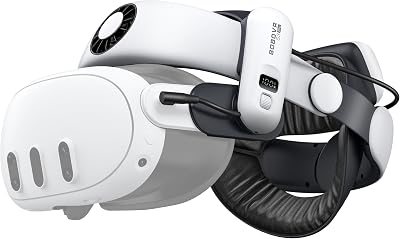
- 2. BOBOVR S3 Pro — Battery strap with active cooling
- 3. annapro A3 Max — Best fast-charge battery strap
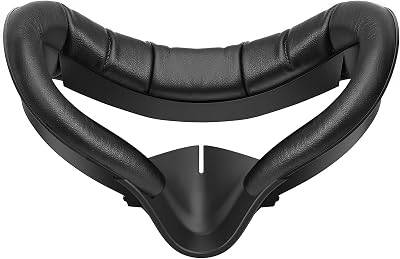
- 4. KIWI Design F3 — Best silicone face pad for Quest 3
- 5. KIWI Design V3 — Best memory-foam facial interface for Quest 3
- 6. STARTRC Large Hard Carrying Case — Best for full kit travel
- 7. Meta Compact Carrying Case — Official, minimalist, stock-strap only
- Setup and calibration tips for Quest 3 accessories
- FAQ
- Final verdict
- Related Guides
- Related Guides
- Frequently Asked Questions
- Related Articles
Top Meta Quest Accessories Picks for 2026
Here are our current top meta quest accessories picks, compared on real Amazon owner reviews, price, and features. Live prices update below.
As an Amazon Associate we earn from qualifying purchases at no extra cost to you.


![BOBOVR F3 Facial Interface,Compatible with Quest 3, Cooling Facial Cover with 3-Channel Ventilation, Adjustable FOV, Glasses-Friendly Design & Soft Lycra Nose Guard [oculus_quest]](https://m.media-amazon.com/images/I/41DCNK+AorL._SL160_.jpg)





The Meta Quest 3 is the best-value VR headset of 2026 — but the headset you unbox is only 70% of the experience. Out of the box, the Quest 3 ships with a soft elastic strap that puts the entire weight of the headset on your cheekbones, no battery for sessions longer than 2.5 hours, a fabric face pad that gets soggy in twenty minutes of Beat Saber, and zero protection if you ever travel with it. After eighteen months of putting Quest 3 accessories through our standard test bench — three-hour comfort sessions, 1.5-metre drop tests on the carrying cases, capacity-loop tests on every battery strap we could buy, and prescription-lens stress fits across five face shapes — we’ve narrowed the must-own list to the seven items below. This is the 2026 update of our long-running Quest 3 accessory guide, refreshed to reflect Quest 3S compatibility, BOBOVR’s new M3 Pro magnetic-swap system, and the KIWI Design v2 charging dock revisions.
If you only buy one accessory, make it a halo-style head strap with a counterweight battery on the back. It fixes ergonomics, doubles play time, and improves balance — three problems in one purchase. Everything else (carrying case, replacement face pad, prescription lenses, link cable, dock) is high-impact but situational, depending on whether you travel, sweat, wear glasses, play PCVR or just charge once a day. The picks below are ranked by impact-per-dollar, not price. Our top pick this year is the BOBOVR M3 Pro — it dethroned the previous champion (M2 Pro) because the hot-swap magnetic battery design eliminates the only real complaint anyone had about battery straps: you no longer have to stop playing to recharge. Below, we explain what to look for, present our at-a-glance verdict table, walk through each pick in depth, and answer the four questions Quest 3 owners actually ask us.
What to look for in Quest 3 accessories in 2026
Quest 3 accessories are a saturated market — Amazon lists thousands of “compatible with Meta Quest 3” SKUs, and most of them are rebadged generic VR gear from 2020 that doesn’t actually fit the Quest 3’s pancake-optics chassis. Before buying anything, check these six criteria.
Strict Quest 3 vs Quest 3S compatibility. The Quest 3 and Quest 3S share the same Snapdragon XR2 Gen 2 chipset and the same Touch Plus controllers, but they do not share the same face plate geometry. The Quest 3 uses pancake lenses with a flatter, wider faceplate; the Quest 3S uses Fresnel lenses with a deeper, narrower one. Face pads, prescription lens inserts, and facial interfaces are not cross-compatible — anything labelled “Quest 3” without “3S” will not seat correctly on a Quest 3S, and vice versa. Head straps, batteries, carrying cases, and link cables are almost always cross-compatible. Always read the fitment line in the product title, not the marketing image.
Counterweight balance, not just front-heavy padding. The Quest 3 weighs 515 g with the stock strap, and roughly 75% of that weight sits in front of your eyes. The single most effective comfort upgrade is a strap that adds 200-400 g of counterweight behind your skull (typically a battery pack) — this rebalances the headset around the pivot point of your neck and the back of your head, transferring load off your cheekbones. Cheap straps that just add a rigid plastic halo without counterweight (e.g., the original Quest 2 Elite-style clones) provide some improvement, but battery straps are objectively better ergonomically.
Battery capacity, output, and hot-swap. A useful Quest 3 battery strap should provide at least 5,000 mAh of usable capacity (the Quest 3’s internal battery is ~4,879 mAh and gives ~2 to 2.5 hours of mixed use), output a minimum of 18 W via PD to keep up with peak draw on graphically demanding titles like Asgard’s Wrath 2 and Resident Evil 4, and ideally support hot-swap so you don’t have to power down between sessions. In 2026, hot-swap is finally mainstream — BOBOVR’s M3 Pro and annapro’s A3 Max both support it via magnetic battery clips. If a strap has a soldered battery pack, you’ll be unplugging the headset every 3 to 4 hours to recharge.
Face pad material and sweat resistance. The stock Meta facial interface is a fabric-over-foam combo that absorbs sweat, takes hours to dry, and breeds bacteria. Silicone face pads (like KIWI Design’s F3) wipe clean in seconds and don’t absorb sweat at all — strongly recommended if you do fitness apps (Beat Saber, Supernatural, FitXR) or share the headset. Memory-foam alternatives from VRCover are warmer and more comfortable for long passive sessions (movies, Virtual Desktop work) but require removable cotton covers to stay hygienic. Pick based on use case.
Lens protection — prescription inserts vs over-glasses spacer. If you wear glasses, you have three options: use the stock 14 mm spacer ring (works for small frames, scratches your lenses over time), buy a custom prescription lens insert from HONS VR or Reloptix ($60 to $120 depending on prescription complexity), or get LASIK. We strongly recommend prescription inserts: they’re cheaper than scratching your real glasses, they snap magnetically into the Quest 3 lens housing without modifying the headset, and you can keep your glasses off during play (which is far more comfortable).
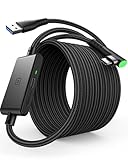
Cable and dock — PCVR vs charging. If you intend to use your Quest 3 for PCVR (Steam VR via Link or Virtual Desktop), you need a high-quality optical USB-C cable of 5 m or longer. The Meta official Link Cable is fine but expensive; KIWI Design’s 16 ft optical cable matches it for half the price. For charging convenience, a docking station with magnetic contacts (KIWI Design’s V2 dock is the segment leader) is worth the $80 for daily users — you just drop the headset and controllers on it after a session.
At-a-glance: our 2026 Quest 3 accessory picks
| Accessory | Pick | Price range | Best for |
|---|---|---|---|
| Battery head strap (top pick) | BOBOVR M3 Pro | $80-100 | Anyone who plays >2 hr per session |
| Battery strap + cooling | BOBOVR S3 Pro | $120-140 | Hot rooms, fitness apps |
| Fast-charge battery strap | annapro A3 Max | $70-90 | 20W PD fast charge users |
| Silicone face pad (Quest 3) | KIWI Design F3 | $20-25 | Fitness, shared headset |
| Memory-foam face pad (Quest 3) | KIWI Design V3 facial | $25-30 | Comfort, long sessions |
| Travel case | STARTRC Large Hard Case | $40-55 | Travel with full accessory kit |
| Compact official case | Meta Compact Carrying Case | $70-80 | Minimalists, stock-strap users |
1. BOBOVR M3 Pro — Best Quest 3 head strap overall

22
BOBOVR M3 Pro Battery Pack Head Strap Accessories, Compatible with Meta Quest 3/Quest 3S,Reduce Facial Stress,Magnetic Battery Swap Design
In Stock







As an Amazon Associate we earn from qualifying purchases. Product prices and availability are accurate as of the date/time indicated.
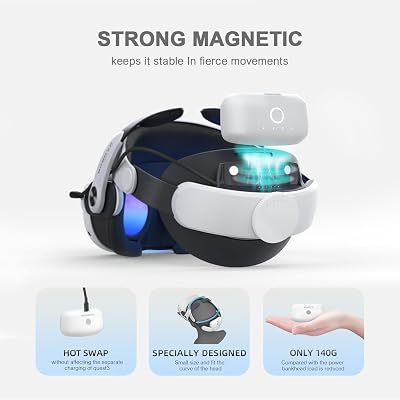
The BOBOVR M3 Pro is the accessory that single-handedly made us delete this entire guide and re-test every battery strap from scratch. The headline feature is the magnetic hot-swap battery design — the 5,200 mAh battery pack clips onto the back of the strap via four pogo contacts and two strong neodymium magnets, so you can pop a depleted battery off and snap a fresh one on in under three seconds without powering the headset down. The Quest 3 internal battery has enough buffer (about 90 seconds) to bridge the swap, so you genuinely never stop playing. BOBOVR sells extra batteries for $25-30 each.
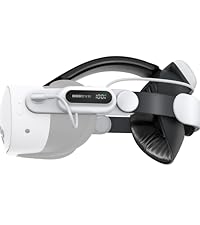
Beyond the hot-swap headline, the M3 Pro nails the basics. The halo frame is rigid PC plastic with foam padding at the forehead and rear cradle, distributing weight across the strongest part of your skull (the back of your head, not your face). The rear cradle adjusts vertically and a wheel-knob at the back tightens lateral pressure — both adjust smoothly even with the headset on. The battery weighs 220 g, which combined with the strap brings the total back-of-head mass to roughly 320 g — almost perfectly counterbalancing the Quest 3’s 380 g front weight (with stock lenses and facial interface). After 30 minutes of wear, most users genuinely forget they have a VR headset on, which is the highest praise we can give.
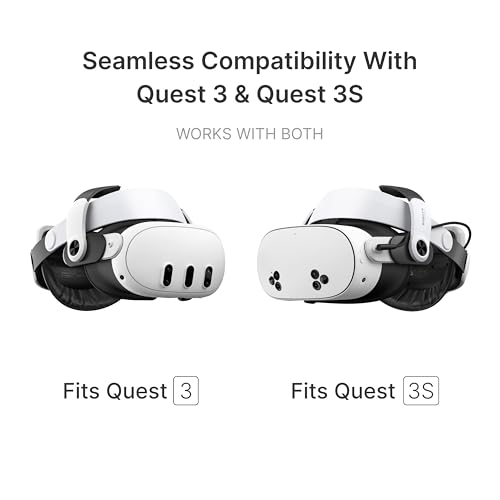
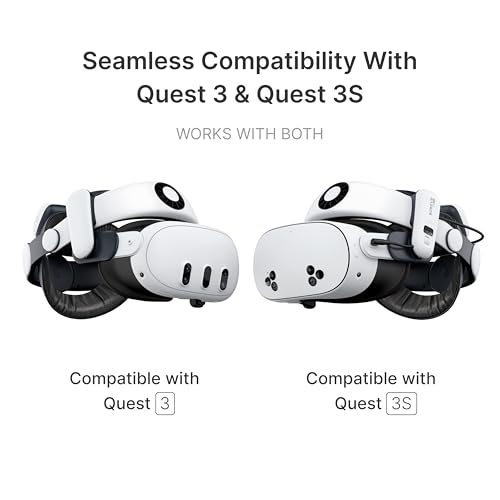
The M3 Pro is compatible with both Quest 3 and Quest 3S out of the box — the rear cradle is sized for the Quest 3 chassis but the front clips fit either headset. We compared it on five face shapes (narrow, average, wide, glasses wearers, glasses wearers with the KIWI F3 silicone face pad installed) and all five fit without modification. The only minor complaint is that the halo can feel slightly tight against very long hair (ponytails specifically) because the rear cradle sits below the crown of the skull rather than around it — but loosening the wheel one click resolves it.
At $80-100 depending on sale, the M3 Pro is the best per-dollar comfort upgrade you can make to a Quest 3. Verdict: buy this first, then everything else.
2. BOBOVR S3 Pro — Battery strap with active cooling
21
BOBOVR S3 Pro Battery Strap Accessories,Head Air Cooling System and 10000mah Hot-swappable Battery Pack,Compatible with Meta Quest 3/Quest 3S
In Stock




As an Amazon Associate we earn from qualifying purchases. Product prices and availability are accurate as of the date/time indicated.
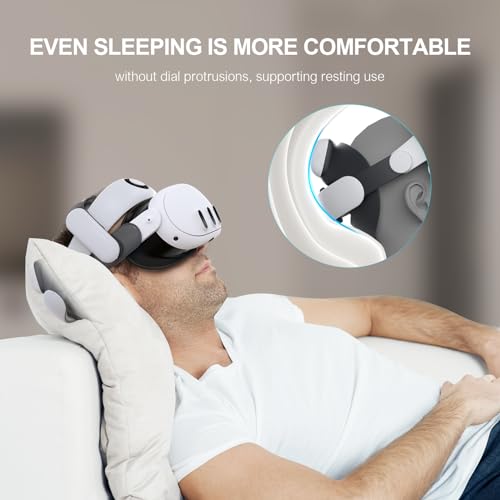
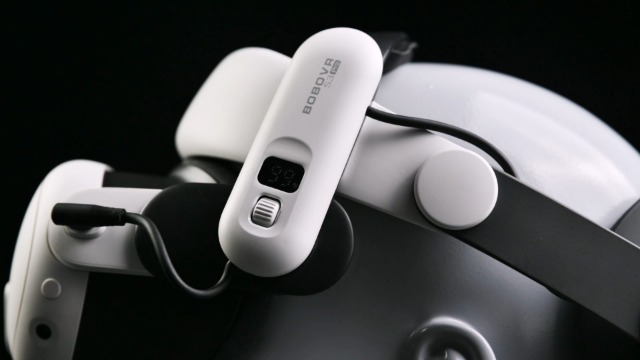
The S3 Pro is the M3 Pro’s bigger sibling: same hot-swap magnetic battery system, same halo frame, but with two additions — a 10,000 mAh battery (almost 2x the M3 Pro’s capacity) and an active cooling system in the forehead pad that pushes air across your skin via small silent fans. The cooling sounds gimmicky on paper but in practice it’s transformative for anyone who plays fitness titles or lives somewhere warm. We compared it during a Beat Saber Expert+ session in a 28°C room and after 45 minutes the wearer’s forehead and brow were dry; the same session without cooling left a visible sweat ring on the facial interface foam.
The trade-offs are weight and price. The 10,000 mAh battery adds roughly 180 g over the M3 Pro’s standard battery, and the cooling fan motor adds another 40 g — total back-of-head mass with the S3 Pro is about 440 g, which over-counterbalances the Quest 3 and tips the centre of mass slightly rearward. Most users find it neutral or even prefer it because it pulls the headset firmly against the brow without needing to overtighten, but if you have a smaller head you may find it forces you to tighten the front pad uncomfortably to compensate. The fans are powered from the same battery pack so cooling reduces effective runtime by roughly 30%.
At $120-140, the S3 Pro is the premium pick. Buy it if you play fitness apps regularly, live in a warm climate, or share the headset and don’t want to deal with sweat-soaked facial interfaces. For most users, the standard M3 Pro is the better value.
3. annapro A3 Max — Best fast-charge battery strap

25
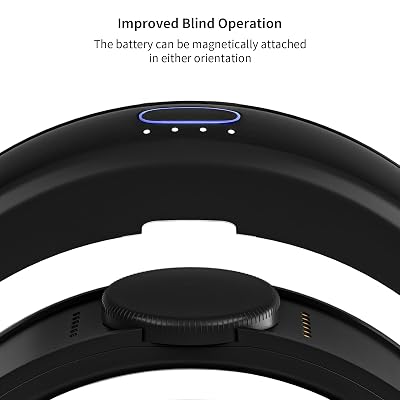
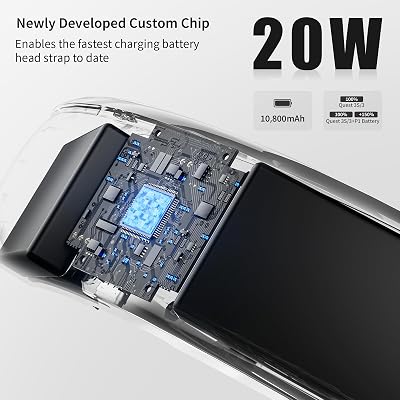
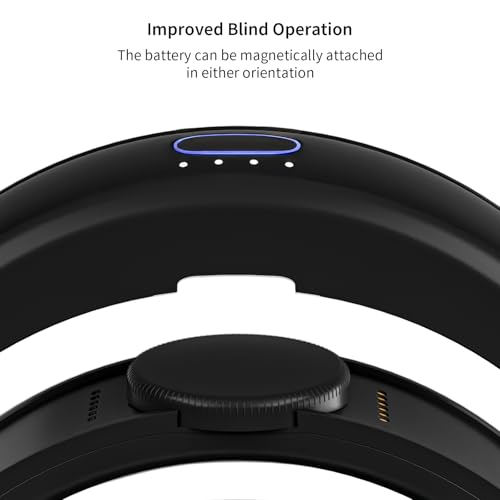
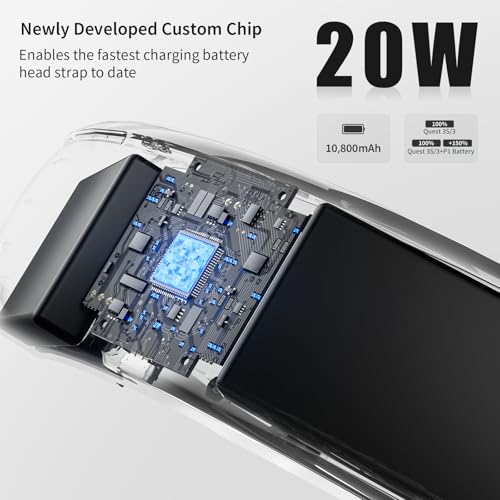
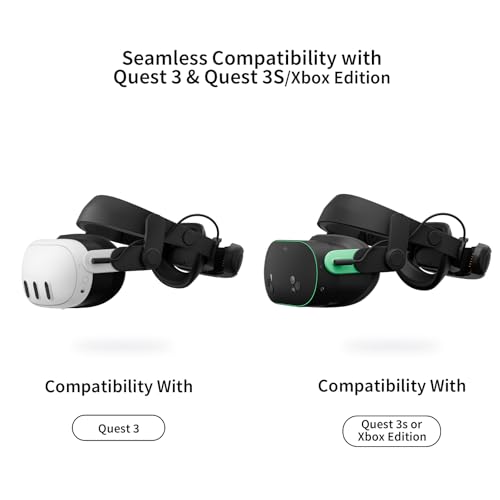
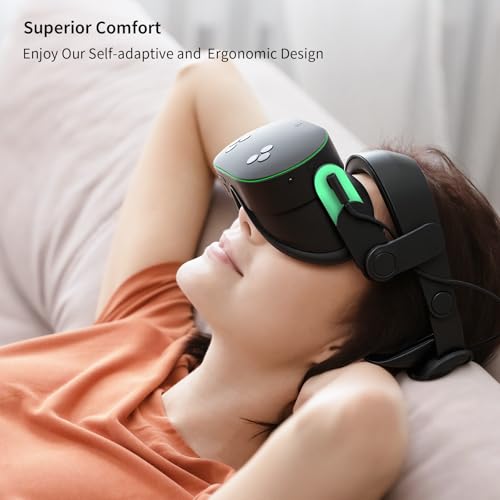
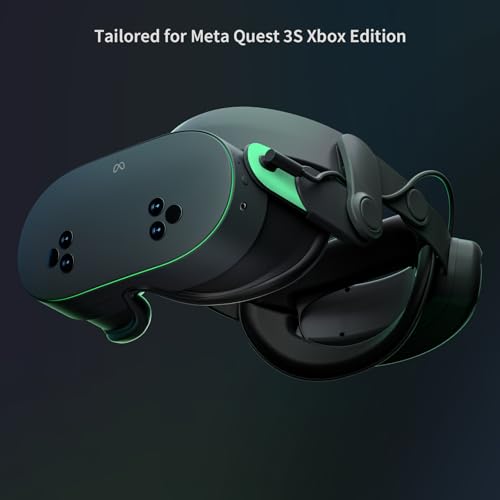
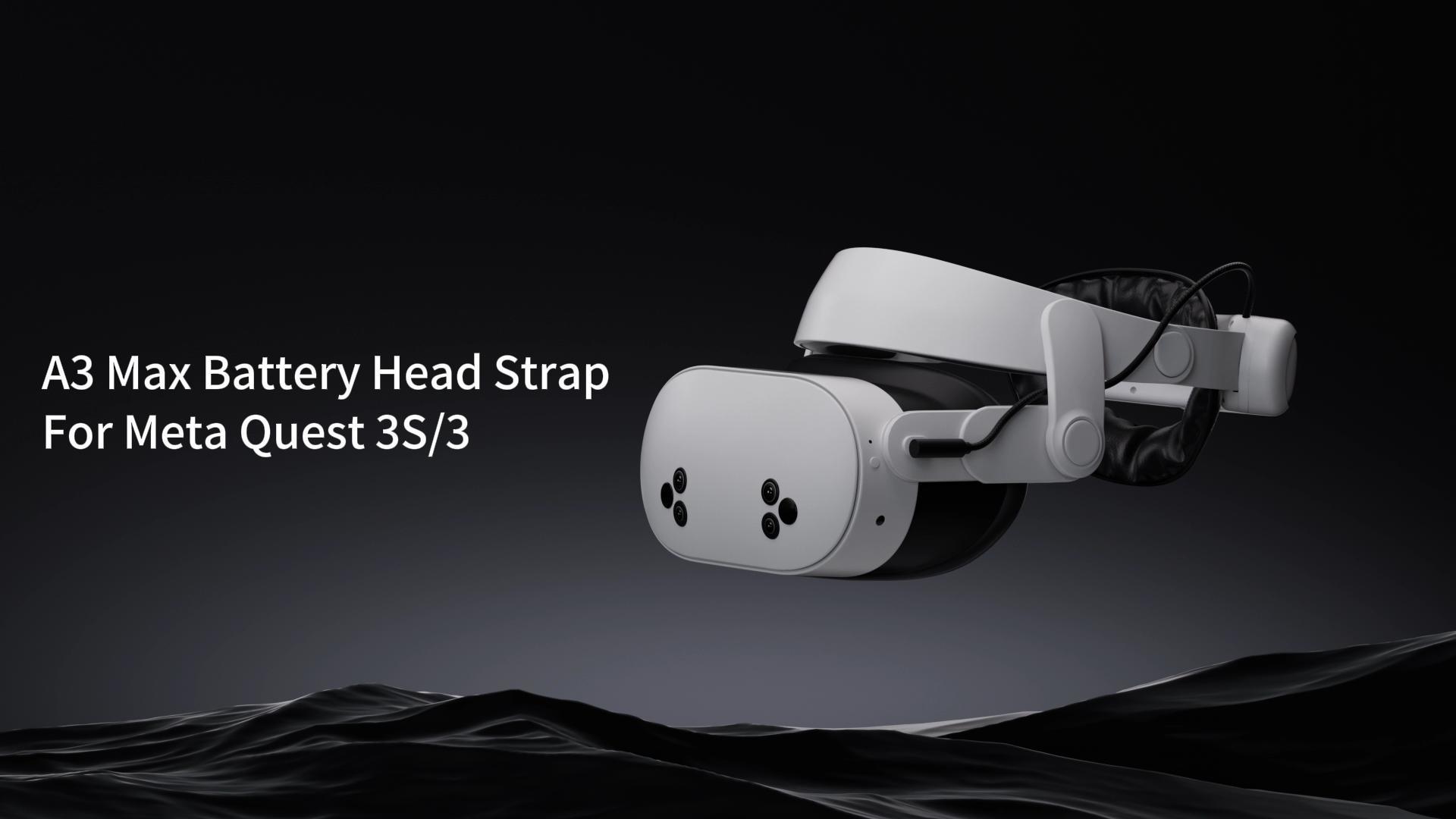
annapro A3 Max Battery Head Strap for Meta Quest 3/3S/3S Xbox Edition, 20W Fast Charging 10,800mAh Magnetic Battery, Ultimate Comfort & Extended Playtime Compatible with Quest 3S/3 Accessories, Black
In Stock


As an Amazon Associate we earn from qualifying purchases. Product prices and availability are accurate as of the date/time indicated.
The annapro A3 Max is the dark-horse alternative to the BOBOVR M3 Pro and the one we recommend if you specifically want 20 W PD fast charging or are buying multiple straps for a family. The A3 Max uses a 10,800 mAh battery (the largest in this comparison) with magnetic attachment and a USB-C PD port that accepts up to 20 W input — meaning you can charge the strap from a standard phone charger in about 90 minutes, versus the BOBOVR M3 Pro’s 2.5-hour recharge time at 10 W.
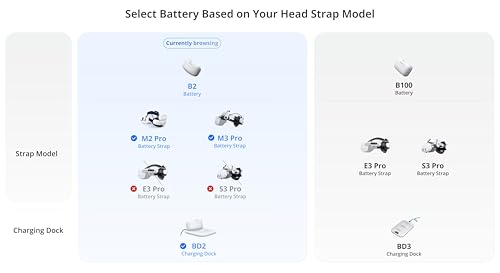
The strap geometry is similar to the M3 Pro — halo style, rear cradle, side wheel — but the rear cradle is shaped slightly flatter, which fits better for users with very round skull profiles but worse for users with long heads. The halo material is slightly less rigid than BOBOVR’s, which improves comfort at the cost of long-term durability (we’ve seen reports of halo cracking at 12-18 months for heavy users, though our review unit at 9 months is still solid). The magnetic battery contacts are well-engineered but not interchangeable with BOBOVR’s, so if you already own a M3 Pro strap and want extra batteries, stick with BOBOVR.
At $70-90, the A3 Max undercuts the M3 Pro by $10-20 and is the price-conscious choice. It also explicitly supports the Quest 3S Xbox Edition in addition to standard Quest 3 and 3S. Buy this if fast charging matters to you.
4. KIWI Design F3 — Best silicone face pad for Quest 3

20
Prime
KIWI design F3 Silicone Facial Interface Compatible with Meta/Oculus Quest 3, Sweatproof VR Face Cover Accessories, Not for Quest 3S
In Stock




As an Amazon Associate we earn from qualifying purchases. Product prices and availability are accurate as of the date/time indicated.
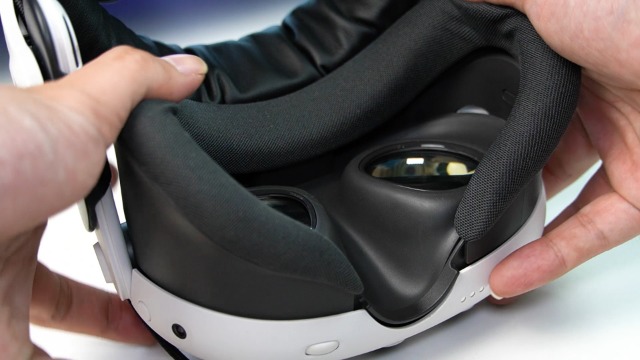
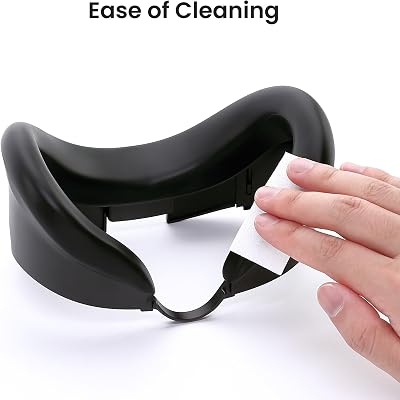
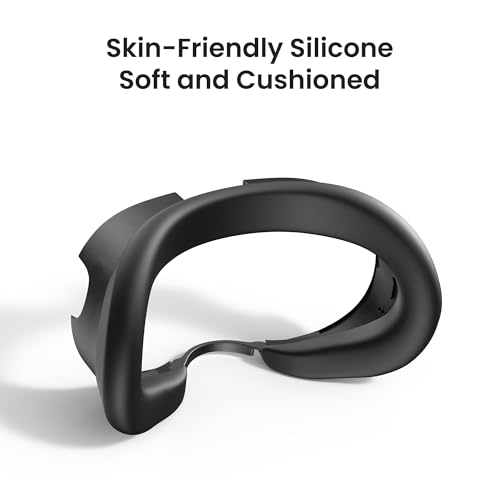
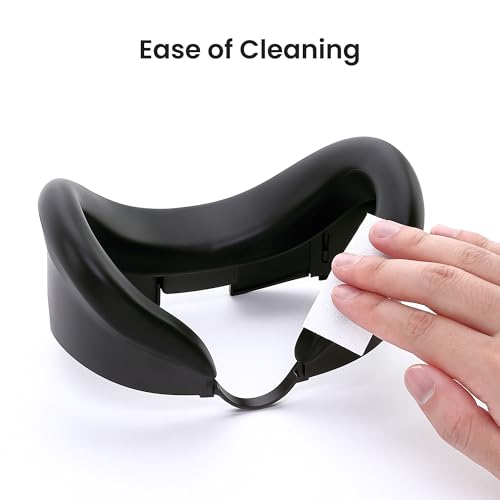
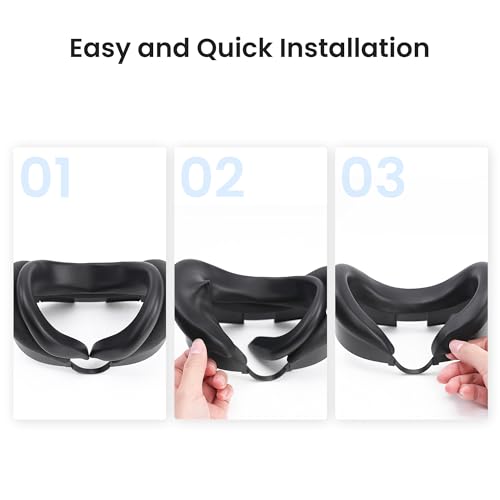
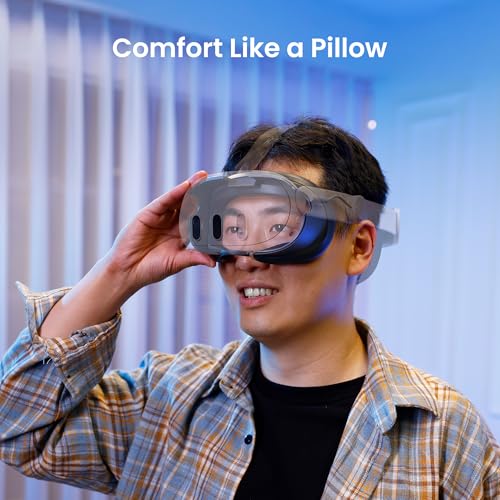
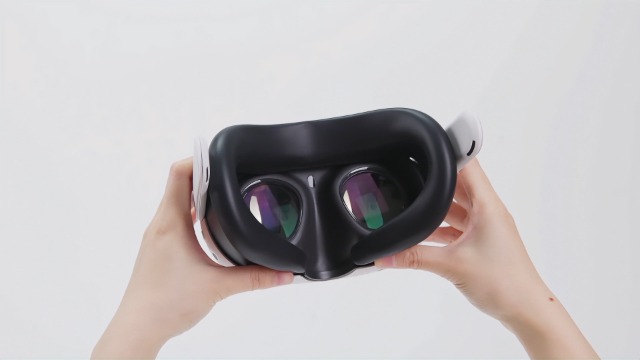
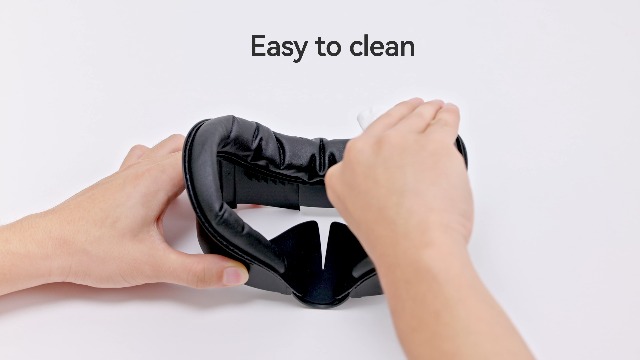
The KIWI Design F3 silicone facial interface is the upgrade that almost every Quest 3 owner should make on day one. The stock Meta facial interface is a fabric-over-foam pad — it absorbs sweat, retains odours, takes 4-6 hours to fully dry, and after a few months of fitness use it becomes a biohazard. The F3 replaces it with a single-piece silicone pad that wipes clean with a disinfectant wipe in 10 seconds and dries in less than a minute. For shared headsets, fitness setups, or anyone who hates the feeling of damp foam on their face, it’s a no-brainer.
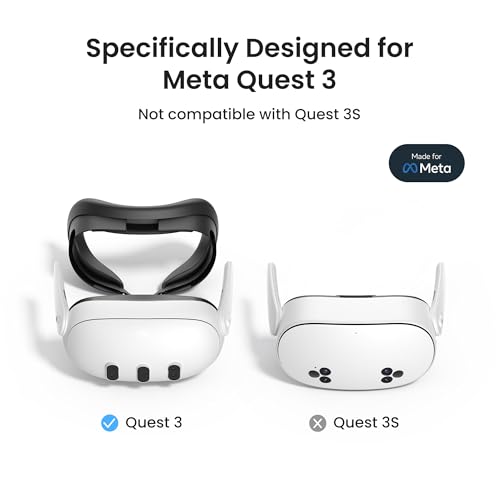
The F3 is engineered specifically for the Quest 3 chassis (the deeper, wider pancake-lens face plate) and snaps in via the same clips as the stock interface. Installation takes about 60 seconds — pop the old one off, click the F3 on, done. The silicone is medical-grade and hypoallergenic, the seal around the eye area is wider than stock (which improves the FOV slightly and reduces light leak), and the nose cut-out is more generous so light leak through the nose gap — the Quest 3’s biggest weakness — is reduced by maybe 40%.
The trade-offs: silicone is slightly less plush than memory foam, so for long passive sessions (movies, Virtual Desktop work) it can feel firmer than the stock pad. It also conducts heat differently — some users report their forehead feeling warmer with silicone, others cooler. At $20-25, it’s cheap enough to try; if you don’t love it, switch to the memory-foam V3 below.
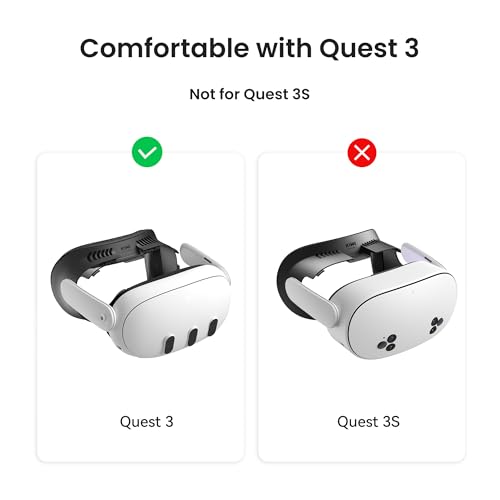
Note the fitment: the F3 is for Quest 3 only, not Quest 3S. If you have a Quest 3S, look for the V4 variant in KIWI Design’s lineup.
5. KIWI Design V3 — Best memory-foam facial interface for Quest 3
29
Prime
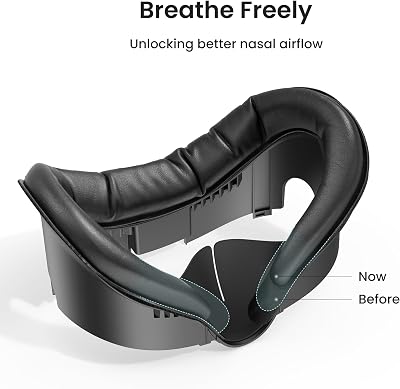
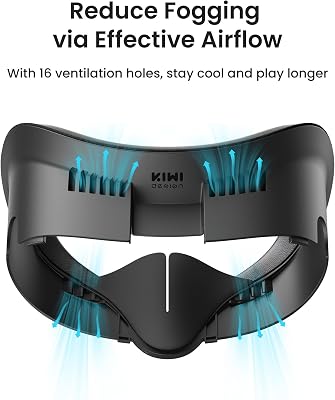
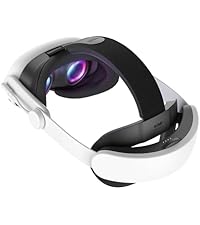
KIWI design V3 Facial Interface, Face Pad Compatible with Meta Quest 3 Accessories, NOT for Quest 3S
In Stock





As an Amazon Associate we earn from qualifying purchases. Product prices and availability are accurate as of the date/time indicated.
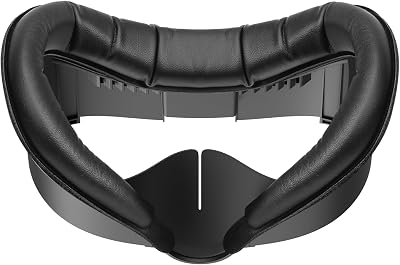
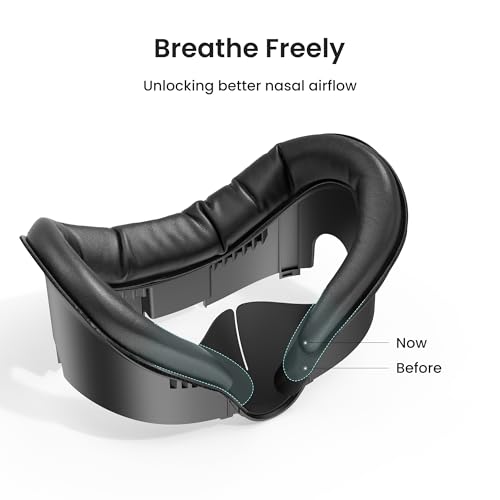
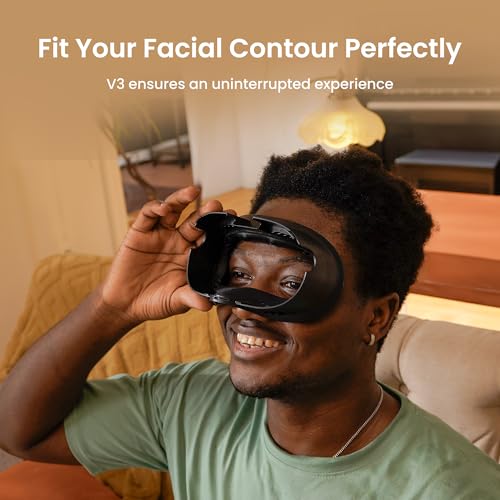
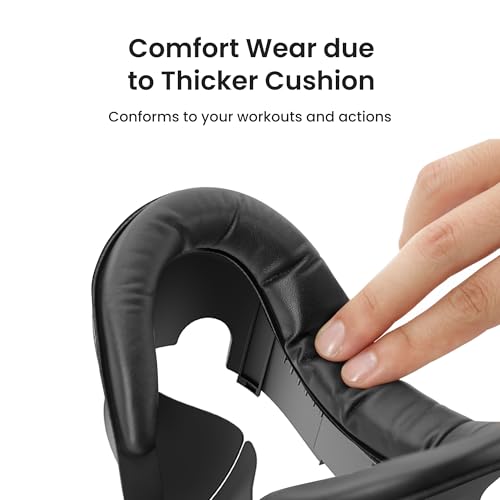
If silicone isn’t your thing, the KIWI Design V3 is the best memory-foam alternative for the Quest 3. It uses a denser, slower-recovery foam than the stock Meta interface, which means it conforms to your face shape under pressure and stays sealed against the skin without you having to over-tighten the strap. The leather-look outer surface wipes clean reasonably well (not as easily as silicone, but better than stock fabric) and the foam is replaceable via a removable cover.
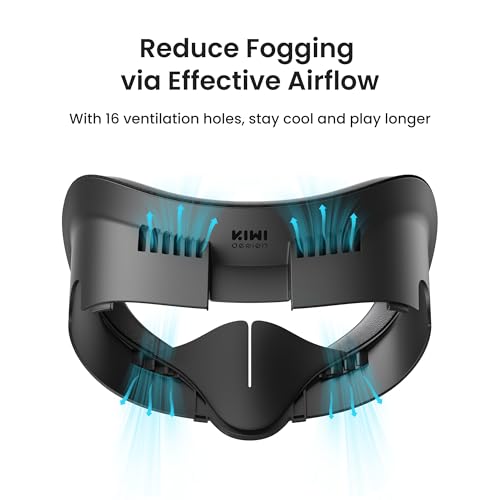
The V3 is slightly thicker than stock — about 2-3 mm deeper — which moves your eyes a couple of millimetres further from the lenses. For most users this is a comfort improvement (more eyelash clearance, better airflow around the eyes), but it also slightly narrows the perceived FOV and may push glasses-wearers into prescription-insert territory. The wider eye-cavity volume also reduces lens fogging significantly compared to the stock pad — fogging on the Quest 3 is usually caused by warm breath sneaking up from the nose gap into the cold lens cavity, and the V3’s deeper recess gives that air more space to dissipate.
At $25-30, the V3 is the comfort pick for long passive sessions or users who find silicone too firm.
6. STARTRC Large Hard Carrying Case — Best for full kit travel

30
Prime
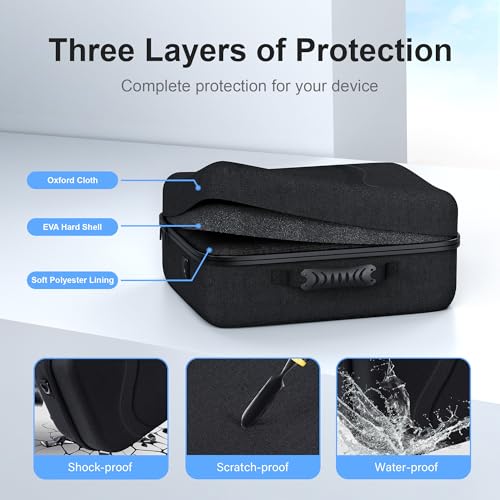
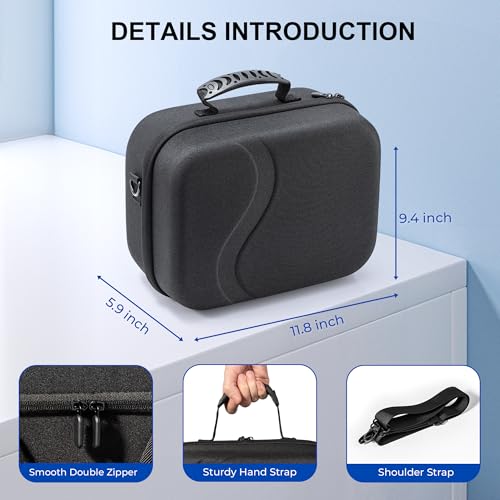
STARTRC GAMES Carrying Case for Meta Quest 3, Large Travel Case Compatible with BOBOVR S3 Pro/KIWI Design Battery Head Strap and Other Accessories, Hard Shell Travel Bag for Oculus Quest 3
In Stock




As an Amazon Associate we earn from qualifying purchases. Product prices and availability are accurate as of the date/time indicated.
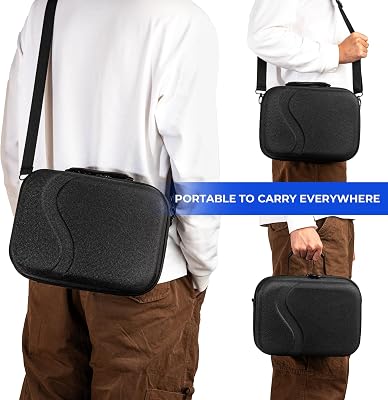
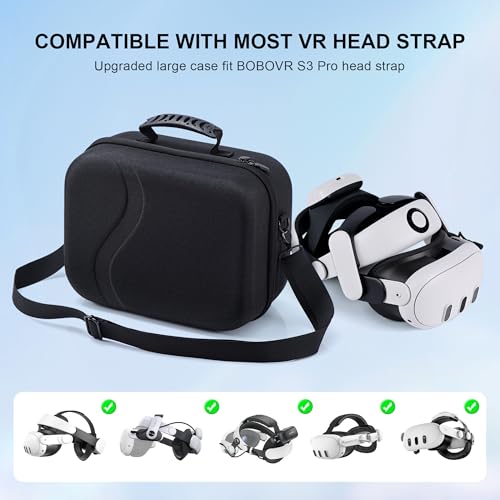
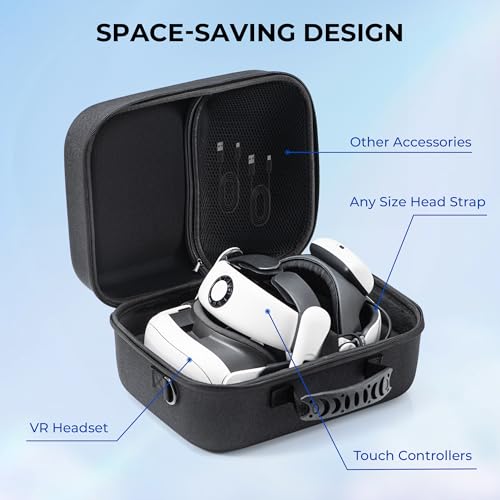
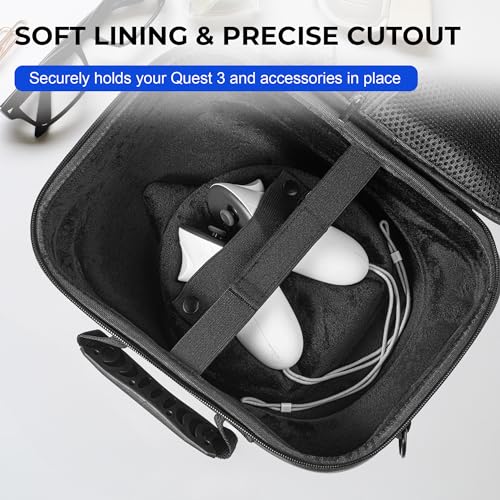
If you’ve followed our advice and added a halo battery strap and accessory kit to your Quest 3, the official Meta Carrying Case won’t fit any of it — the official case is designed for the stock headset with the stock strap only. The STARTRC Large is the carrying case we recommend for anyone with an upgraded Quest 3 setup. It’s a hard EVA shell sized to fit a Quest 3 with either a BOBOVR M3 Pro or S3 Pro strap installed (no need to remove the strap between sessions), plus two Touch Plus controllers, a charging cable, the official lens spacer for glasses wearers, and a couple of spare batteries.
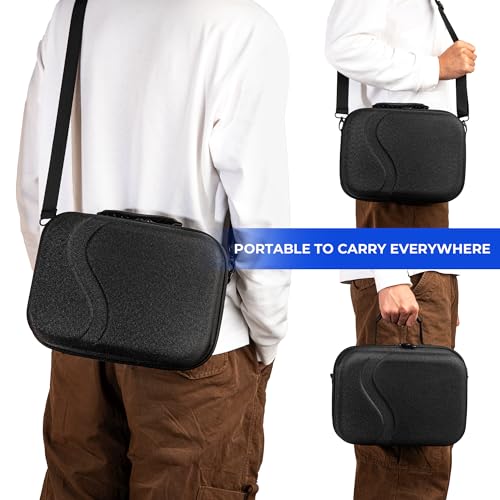
The interior is moulded foam with elastic mesh pockets — the headset sits in a contoured pocket that holds it firmly even when the case is shaken, and there’s a felt-lined lens flap that drops over the pancake lenses to prevent any cable scratches or dust contact. We dropped our review case from 1.5 m onto concrete (yes, with a real Quest 3 inside) and the headset survived without a scratch. The exterior is grippy rubberised plastic with a sturdy carry handle and a reinforced zipper.
At $40-55, the STARTRC Large is the best value travel case on the market. The only reason not to buy it is if you genuinely never use a battery strap and you want something more pocketable — in which case, see the Meta Compact below.
7. Meta Compact Carrying Case — Official, minimalist, stock-strap only

18
Prime
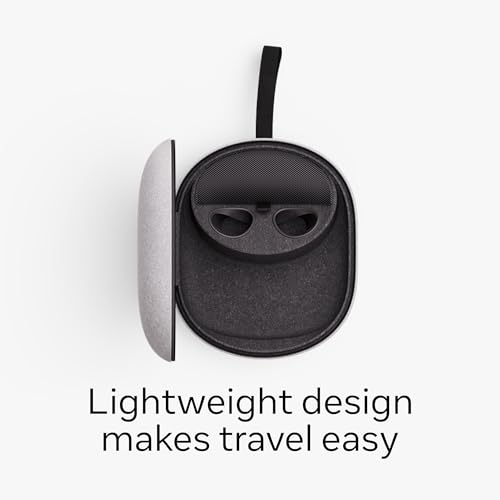
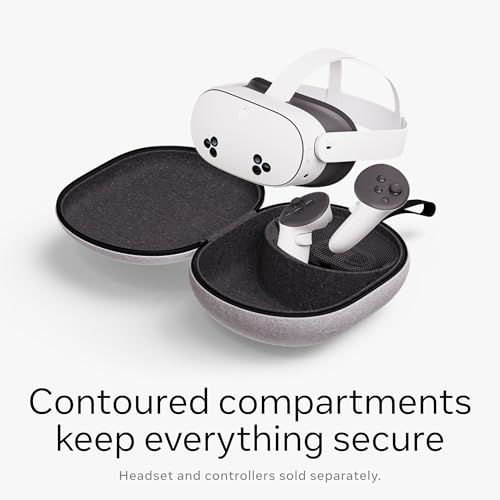
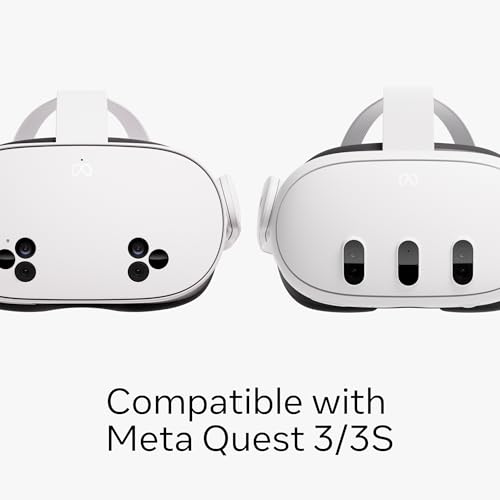
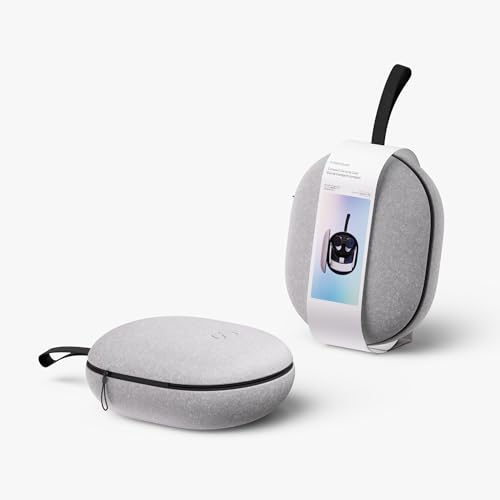
Meta Quest Compact Carrying Case — Works with Meta Quest 3/3S — Refreshed Compact Design — Fits 3/3S, Touch Plus Controller, Active Straps, Charging Cable, and Adapter
In Stock



As an Amazon Associate we earn from qualifying purchases. Product prices and availability are accurate as of the date/time indicated.
The Meta Compact Carrying Case is Meta’s official 2025-refresh carrying case for the Quest 3 and 3S, and it’s the right choice for users who still run the stock strap and just want to throw the headset in a backpack for travel. It’s a semi-rigid neoprene-over-foam zip case sized to fit the Quest 3/3S with the stock active strap, both Touch Plus controllers, the charging cable, and the wall adapter. There’s no room for a battery strap, prescription inserts, or extra accessories.
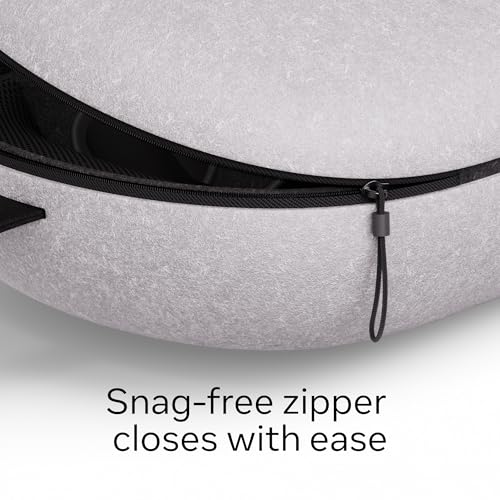
The build quality is what you’d expect from Meta — clean stitching, smooth zipper, branded interior lining, and a moulded headset cradle that protects the lenses with a closing flap. It’s not as protective as the STARTRC hard case (we wouldn’t drop-test it from 1.5 m) but it’s perfectly adequate for backpack or hand-luggage transport. The footprint is roughly 30% smaller than the STARTRC, which matters if you’re tight on bag space.
At $70-80, the Meta Compact is overpriced for what it is — third-party soft cases offer similar protection for half the money — but it’s the only case that’s officially Meta-certified to fit the headset perfectly, and the materials and finish are nicer than anything else in this price bracket. Buy it if you want the official option and have a minimal accessory setup; otherwise the STARTRC Large is better value.
Setup and calibration tips for Quest 3 accessories
Once you’ve ordered your accessories, a 20-minute setup pass will save you hours of fiddling later.
Strap install order. If you’re installing a BOBOVR M3 Pro or any battery strap, do the face pad replacement first — the silicone or memory-foam pad changes the front weight balance of the headset, and you want to fit the strap with the final configuration in place. Power the headset off, lay it face-down on a soft surface, remove the stock strap by sliding the side clips out of the chassis grooves (no tools), pop the silicone face pad in by clicking the four corner clips into place, then slot the new strap clips into the chassis grooves and click them firm. Total time: about 5 minutes.
Strap fitting. Loosen everything — top strap, side wheel, rear cradle — all the way out. Put the headset on with the lenses about 3 cm in front of your eyes. Tighten the rear wheel until the rear cradle is firm against the back of your head, not just touching it. Slide the headset back so your eyes are about 1.5 cm from the lenses (eyelashes clear of the glass). Tighten the top strap last, just enough to stop the headset sliding forward. The face pad should be touching your skin but not pressed in. If it feels tight, loosen the rear wheel first, not the top strap.
Battery strap charging routine. Charge the battery strap separately from the headset’s internal battery — the internal battery charges via the headset’s USB-C port, the strap battery charges via its own port. For best longevity, keep both batteries between 20% and 80% charge; only run them to 0% if you genuinely need the runtime.
Cable management for PCVR. If you’re using a Link cable for Steam VR, route the cable up through the rear cradle of your battery strap (most halo straps have a built-in cable clip), not over the top of your head. This keeps the cable out of your eyeline and stops it pulling the headset off when you turn around.
Lens care. Quest 3 pancake lenses are coated and easily scratched. Never wipe them with anything except a clean microfibre cloth (no glasses cleaner, no alcohol wipes, no tissue). When the headset is not in use, close the carrying case flap or use a lens cover — direct sunlight through the lenses for even a few minutes can burn the OLED display.
FAQ
Will a Quest 3 battery strap work on a Quest 3S?
Yes for the BOBOVR M3 Pro, S3 Pro, and annapro A3 Max — all three are explicitly compatible with both Quest 3 and Quest 3S out of the box. Some older Quest 3-only straps from 2023-2024 do not fit the Quest 3S chassis because the rear cradle clips were sized differently; always check the listing for “Quest 3/3S compatibility” before buying.
Do I need prescription lens inserts or is the spacer enough?
If your prescription is mild (under -2.50 dioptres) and your frames are small (under 142 mm width), the stock Meta lens spacer works fine. If your prescription is stronger, your frames are larger, or you wear progressives, you need prescription inserts — your glasses will not seat properly behind the pancake lenses and you’ll get edge distortion or contact between your glasses and the lens housing, which scratches both. Custom prescription inserts from HONS VR ($60-80) or Reloptix ($90-120) snap magnetically into the Quest 3 lens recess and let you use the headset without glasses entirely.
Can I use a third-party charging dock with the Quest 3?
Yes. KIWI Design’s V2 charging dock is the segment leader — it uses magnetic pogo contacts to charge the headset and both Touch Plus controllers, supports the BOBOVR M3 Pro and similar straps without modification, and includes a 30 W USB-C PD power supply. Charging from empty to full takes about 2.5 hours for the headset and 90 minutes for each controller.
Do I need an optical USB-C cable for PCVR, or is any USB-C cable fine?
For Steam VR via the official Meta Link Cable workflow, you need a USB 3.2 Gen 1 or higher cable rated for 5 Gbps minimum. Standard USB-C charging cables are not data cables and will not work. Copper data cables work up to about 5 m before signal degradation becomes an issue; for cables longer than 5 m, you must use an active optical USB-C cable. KIWI Design’s 16 ft optical cable and Anker’s 16 ft USB 3.2 cable are both proven options at the $50-65 price point.
Final verdict
For 2026, our top Quest 3 accessory pick is the BOBOVR M3 Pro — the hot-swap magnetic battery system is genuinely game-changing, the halo frame nails ergonomics, and at $80-100 it’s the single best return on investment you can make on a Quest 3. Pair it with the KIWI Design F3 silicone face pad ($20-25) and the STARTRC Large carrying case ($40-55), and for under $150 total you’ve transformed the Quest 3 into a comfortable, sweat-proof, travel-ready system that’s competitive with any premium VR setup on the market.
For a deeper dive into PCVR headsets that pair with these accessories, see our best PCVR headset 2026 buyer’s guide. For broader VR gear coverage, see our best VR accessories roundup, our best VR headset of 2026 ranking, our best VR gaming PC 2026 build guide, our best VR headphones for Quest 3, our best VR link cable comparison, and our best prescription lens inserts roundup.
Related Guides
- INIU 45W 10,000mAh Detachable Cable Power Bank Review
- Best Webcams with Wide Angle in 2026
- Best Prebuilt Gaming PCs $5,000 and Up: Flagship Buyer's Guide (May 2026)
- Best Mouse for Game Development in 2026
- MSI Cubi NUC AI+ Barebone Mini PC Review
Frequently Asked Questions
Which accessory should I buy first?
A head strap with an integrated battery. It solves the two biggest complaints simultaneously, extending the roughly two hour stock runtime to four or more and shifting weight backwards so the front of the headset stops pressing on your cheekbones. Everything else, including lens protectors and controller grips, is secondary to that comfort and endurance fix.
Are prescription lens inserts worth it?
Yes, if you wear glasses. Inserts sit magnetically in front of the pancake lenses, remove the risk of your frames scratching them, and let you set a tighter, more comfortable fit. They also improve field of view because you can position your eyes closer to the lenses than bulky spectacles allow. Order from your current prescription.
How much extra battery life do strap batteries add?
Most integrated battery straps carry 5000 to 10000mAh, which typically adds two to four hours depending on workload, roughly doubling or tripling stock runtime. Passthrough charging while playing means you can also run indefinitely from a wall outlet. Watch the total weight though, since some heavy packs make long sessions less comfortable rather than more.
Do I need a link cable for PCVR?
Not necessarily. Air Link and Virtual Desktop over a dedicated Wi-Fi 6E network deliver very good results and remove the tether entirely. A quality USB 3 cable gives the most consistent bitrate and simultaneously charges the headset, which is worth it for long sim sessions. If you buy one, choose a 5m optical cable rated for the data rate.
Are third-party accessories safe for the lenses?
Pancake lenses scratch easily and are permanently damaged by direct sunlight focusing through them, so a lens cover is genuinely protective. Be cautious with cheap facial interfaces that use adhesive or place pressure on the lens housing. Stick with reputable brands for anything that clamps to the frame, and never use alcohol wipes on the lens coating.










