Choosing a cinema camera shapes everything else on an independent production: the lenses you can use, the media you buy, how dialogue is recorded, and how much grading the footage will tolerate in post. A body that suits a two-person documentary crew can be the wrong tool for a scripted short, and the reverse is also true.
This guide compares four professional cinema cameras currently sold on Amazon US, each aimed at a different kind of production. Every specification below comes from manufacturer documentation or the Amazon listing for that model. Confirm the exact kit contents on the product page before ordering, because bundles vary between sellers.
As an Amazon Associate we earn from qualifying purchases.
How to Read This Guide
Independent productions rarely struggle because a camera lacked resolution. They struggle because media filled up mid-take, batteries ran short, audio was recorded badly, or the lens mount locked the crew out of glass it already owned. Each camera below is therefore covered the same way: recording formats and resolution as documented, sensor type and size as documented, lens mount, connectivity including audio inputs and video outputs, power options, and required accessories. Each section ends by stating which production type the camera suits best.
Sound deserves the same planning as picture; our guide to the best audio recorders for independent filmmakers covers recording dialogue on a separate device.
Comparison Table
| Camera | Sensor as documented | Recording as documented | Lens mount | Audio inputs as documented | Media as documented |
|---|---|---|---|---|---|
| Sony FX30 | Super 35 (APS-C) | 4K with high frame rates | Sony E | Via XLR handle unit | SD / CFexpress Type A |
| Canon EOS C70 | Super 35mm DGO | 4K up to 120fps | Canon RF | Two mini-XLR | Dual SD slots |
| Blackmagic 6K Pro | Super 35, 6144 x 3456 | RAW and ProRes, 6K up to 50 fps | Canon EF | Two mini-XLR | CFast 2.0, SD UHS-II, USB-C |
| Panasonic S5IIX | 24.2MP full-frame CMOS | 5.8K ProRes, RAW over HDMI | Leica L | Microphone input | SD / USB-SSD |
The Cameras
Sony FX30

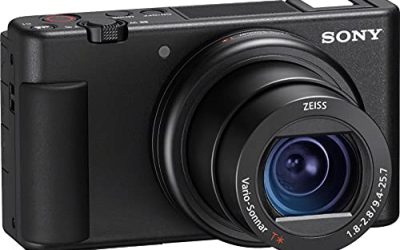
Sony positions the FX30 as the entry point into its Cinema Line, built around a Super 35 sensor in APS-C format. Sony material describes 4K recording including 4K at 60p and 120p with 10-bit 4:2:2 colour, plus S-Log3 capture and custom LUT import, for either fast turnaround or a graded finish.
The FX30 uses the Sony E mount, one of the deepest lens ecosystems available to a small crew. APS-C lenses are generally smaller and lighter than full-frame equivalents, which helps on gimbals.
Read the listing carefully on audio: the FX30 is sold in more than one configuration, and the version with an XLR handle unit is the one that adds professional XLR connections. Power comes from the NP-FZ100 battery system, shared with several Alpha cameras. A working kit still needs fast media, an E mount lens, spare batteries, and a cage or handle.
Best suited to: first professional productions, small documentary crews, and use as a second camera alongside larger Sony Cinema Line bodies.
Canon EOS C70
View the Canon EOS C70 on Amazon
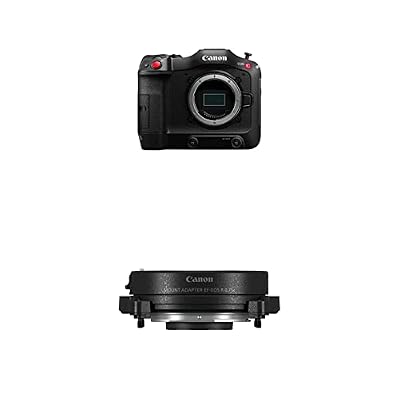
The EOS C70 packs a dedicated Cinema EOS feature set into a compact body. Canon and its Amazon listing describe a 4K Super 35mm Dual Gain Output (DGO) sensor with 16+ stops of total dynamic range, DIGIC DV7 processing, and Dual Pixel CMOS autofocus. Documented recording includes 4K at up to 120fps and 2K at up to 180fps, Canon Log 2 and 3, and XF-AVC and MP4 recording across dual SD card slots.
The C70 was the first Cinema EOS camera with Canon’s RF mount, so it uses RF lenses natively, and Canon documents EF lens compatibility through the EF-EOS R 0.71x mount adapter. For a filmmaker who already owns EF glass, that adapter path can decide the purchase.
Connectivity is a strength. The listing documents two built-in mini-XLR inputs with manual dials, built-in ND filters, an HDMI Type-A output, and a BNC timecode connection documented in manufacturer material. Power uses Canon’s BP-A system, with a BP-A30 pack, charger, and AC adapter documented among the supplied items. Budget for extra BP-A packs, fast SD cards, and lenses.
Best suited to: scripted shorts, documentaries, and client work where built-in ND, in-camera XLR audio, and timecode matter most.
Blackmagic Design Pocket Cinema Camera 6K Pro

View the Blackmagic Pocket Cinema Camera 6K Pro on Amazon
The Pocket Cinema Camera 6K Pro is built around a Super 35 sensor with a native resolution of 6144 x 3456. Blackmagic Design documents 13 stops of dynamic range, dual native ISO up to 25,600, recording in Blackmagic RAW and ProRes, and 6K at up to 50 fps at full resolution, with higher frame rates at reduced resolutions. For filmmakers who grade heavily, that RAW-first workflow is the core appeal.
The lens mount is Canon EF, in the active EF/EF-S form described in listing material, giving access to a huge pool of EF lenses. The body adds built-in motorised ND filters in 2, 4 and 6 stop steps and a tilting 5 inch HDR touchscreen documented at 1500 nits brightness.
The manufacturer documents two mini-XLR connections, allowing two audio tracks without an external mixer, alongside HDMI output and USB-C. Specifications list one CFast 2.0 slot, one SD UHS-II slot, and a high-speed USB-C port for external media. Power comes from an NP-F570 battery, with battery, USB charger, and an external power supply documented in the box. Kits usually add a grip, cage, or external battery, because RAW recording draws power steadily, and the body has no in-body stabilisation.
Best suited to: narrative shorts where Blackmagic RAW, built-in ND, and flexible media are the priority, and the crew is comfortable rigging the camera.
Panasonic LUMIX S5IIX

View the Panasonic LUMIX S5IIX on Amazon
The S5IIX is the hybrid entry here: a mirrorless body that Panasonic documents with serious cinema tools. The Amazon listing describes a 24.2-megapixel 35mm full-frame CMOS sensor, Phase Hybrid autofocus, Active I.S. stabilisation, and unlimited video recording supported by a heat dispersion design. Documented video features include 5.8K ProRes internal recording, RAW output over HDMI, 14+ stop V-Log/V-Gamut capture, and wireless and wired IP streaming.
The lens mount is Leica L, shared across the L-Mount Alliance, so lenses from Panasonic, Leica, and Sigma fit the same body without adapters.
Because this is a hybrid body, connectivity centres on HDMI output, including RAW over HDMI to an external recorder, rather than an SDI and mini-XLR layout. Listing material also documents USB-SSD recording for long takes and ProRes workflows. Audio runs through the body’s microphone input, so crews needing XLR microphones should plan an adapter or separate recorder. The listing configuration covered here includes a 20-60mm L mount lens, but most productions will still add a fast prime, media, and spare power.
Best suited to: hybrid filmmakers, long interviews and events needing unlimited recording, and creators who want internal ProRes in a full-frame body.
Selection Criteria: How to Choose
Start with the lens mount. Glass outlives bodies. If your crew owns EF lenses, the Blackmagic 6K Pro and, through its adapter, the Canon C70 fit that investment. If you own Sony E mount lenses, the FX30 is the natural step. Starting from zero, price the full L mount and RF mount lens ranges before committing.
Match the recording format to your post workflow. Blackmagic RAW and ProRes give large, flexible files and demand fast media and generous storage. Canon Log with XF-AVC and MP4, and Sony’s 10-bit recording, can be kinder to a small team’s drives.
Count the audio connections you need. Two built-in mini-XLR inputs, as documented on the C70 and the 6K Pro, let a small crew record two microphones in camera. A hybrid body such as the S5IIX may push a dialogue-heavy production toward an adapter or separate recorder.
Plan power and media as part of the camera cost. Every body here needs spare batteries, chargers, and media matched to its highest intended recording mode, plus a cage or grip where the shooting style demands it, and ND filtration on any body that does not include it.
Consider the shape of your shooting day. Built-in ND speeds up exterior work, unlimited recording suits interviews and events, and a compact body suits travel and gimbal work. Production type matters more than any headline specification.
Frequently Asked Questions
Do independent filmmakers need 6K recording?
Not always. A 6K sensor, as documented on the Blackmagic 6K Pro, gives room to reframe in a 4K finish, and the S5IIX documents 5.8K ProRes and 6K/4K 10-bit options. A 4K camera such as the C70 or FX30 can still be the better buy if its audio, ND filters, or lens mount fit your production more closely.
Can these cameras record professional audio without a separate recorder?
The C70 and the 6K Pro document two mini-XLR inputs each, covering two microphones in camera. The FX30 offers XLR audio through its handle unit configuration. The S5IIX is more likely to need an adapter or separate recorder for XLR microphones, so check the configuration before a dialogue-heavy shoot.
What accessories should be budgeted for alongside the body?
At minimum: lenses, media fast enough for your recording format, spare batteries and charging, a cage or support rig, microphones and cables, and ND filtration for any body without built-in ND filters.
Conclusion
There is no single best professional cinema camera for independent filmmakers, only the best match for a particular production. Choose the Sony FX30 for a compact Super 35 start in the E mount system, the Canon EOS C70 for built-in ND, mini-XLR audio, and timecode in a dedicated cinema body, the Blackmagic Pocket Cinema Camera 6K Pro for a RAW-centred workflow with flexible media, and the Panasonic LUMIX S5IIX for full-frame hybrid shooting with internal ProRes and unlimited recording. Price out the complete kit — body, lenses, media, power, audio, and rigging — for your two finalists, and confirm the exact contents on the Amazon product page before deciding.