- Top Pick: VINGVO 4 Axis CNC Controller Board, Compatible with 300W and 500W Spindles
- Best Value: 30 in. Haven Coll 500 CFM Ducted Under Cabinet Range Hood, LED, Stainless
- Premium Choice: Intel Core i9-11900K Desktop Processor 8 Cores up to 5.3 GHz Unlocked LGA1200 (Intel 500 Series & Select 400 Series Chipset) 125W
A $500 budget is a generous ceiling for a motherboard — high enough to reach genuinely premium boards, yet most builders spend far less and put the savings toward a better CPU or GPU. The point of an under-$500 guide is not to spend $500; it is to show the full range available beneath that ceiling, from value-focused boards that cover the essentials to a feature-rich flagship that approaches the limit. This guide rounds up the best motherboards under $500 in 2026 across both AMD and Intel platforms, so you can find the right board for your CPU and your budget.
- Best Motherboards under $500 at a Glance
- 1. MSI MAG B550 Tomahawk Gaming Motherboard (AMD Ryzen 5000, AM4, DDR4, PCIe)
- 2. GIGABYTE B650 AORUS Elite AX AMD AM5 ATX Motherboard (Ryzen 9000/8000/7000)
- 3. Asus ROG Strix Z390-E Gaming Motherboard LGA1151 (Intel 8th/9th Gen) ATX DDR4
- 4. ASUS Prime Z390-P LGA1151 (Intel 8th and 9th Gen) ATX Motherboard
- 5. Gigabyte B550 Gaming X V2 Motherboard (AM4/4xDDR4/HDMI/DVI-D/USB 3.2/M.2)
- 6. Gigabyte A520M K V2 Motherboard (AM4/2xDDR4/HDMI/D-Sub/M.2/USB 3.2)
- How to Choose a Motherboard under $500
- Frequently Asked Questions
- Related Guides
- Related Articles
Our picks were chosen on the things that actually matter in a motherboard: the right socket and chipset for your processor, solid power delivery for stable operation, useful connectivity like M.2 slots and USB, and overall value for the money. The list spans AMD’s AM4 and modern AM5 platforms and Intel’s LGA1151, with prices from around $64 to around $400, all sitting under the $500 cap. We are honest about each board’s generation and intent — including the older Z390 boards and the entry-level chipsets. Below is an at-a-glance comparison, then a closer look at each board and a buyer’s guide built around socket, chipset, power delivery and features.
As an Amazon Associate we earn from qualifying purchases at no extra cost to you.


![WD_BLACK 500GB SN770 NVMe Internal Gaming SSD Solid State Drive - Gen4 PCIe, M.2 2280, Up to 4,000 MB/s - WDS500G3X0E - [Previous Generation]](https://m.media-amazon.com/images/I/310UZVOtlfL._SL160_.jpg)
🛒 Best Price Today on Amazon
Prime members get fast, free shipping on everything above, plus member-only deals. New members get a 30-day free trial — cancel anytime.
Best Motherboards under $500 at a Glance
| Motherboard | Best For | Standout Spec | Approx Price |
|---|---|---|---|
| MSI MAG B550 Tomahawk | Best all-round AM4 board | B550, strong VRM, AM4 DDR4 | around $160 |
| GIGABYTE B650 AORUS Elite AX | Modern AM5 (Ryzen 9000/8000/7000) | B650, DDR5, PCIe 5-ready, WiFi | around $138 |
| ASUS ROG Strix Z390-E Gaming | Flagship-tier near the ceiling | Z390 ATX, premium feature set | around $400 |
| ASUS Prime Z390-P (LGA1151) | Value Intel 8th/9th-gen ATX | Z390 ATX, multi-GPU/DDR4 | around $194 |
| Gigabyte B550 Gaming X V2 | Budget AM4 all-rounder | B550, M.2, USB 3.2, DDR4 | around $92 |
| Gigabyte A520M K V2 | Cheapest AM4 entry board | A520 micro-ATX, DDR4, M.2 | around $64 |
1. MSI MAG B550 Tomahawk Gaming Motherboard (AMD Ryzen 5000, AM4, DDR4, PCIe)

MSI MAG B550 Tomahawk MAX WiFi Gaming Motherboard (AMD Ryzen 5000 Series, AM4, DDR4, PCIe 4.0, SATA 6Gb/s, M.2, USB 3.2 Gen 2, HDMI/DP, Wi-Fi 6E, Bluetooth 5.2, 2.5Gbps LAN, ATX)

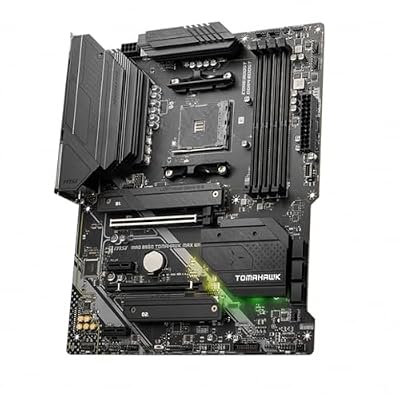


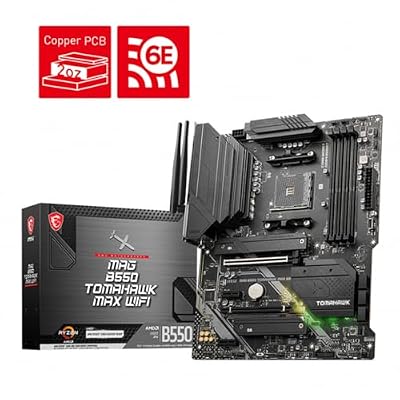
As an Amazon Associate we earn from qualifying purchases. Product prices and availability are accurate as of the date/time indicated.
The MSI MAG B550 Tomahawk is our top pick under $500 because it nails the balance most builders actually want. It is a B550 board for AMD’s AM4 socket with DDR4 memory and PCIe support, long celebrated for a robust VRM and power delivery that comfortably handles Ryzen 5000 chips up to the high end. At around $160 it sits well under the ceiling while feeling like a far more expensive board.
This is the board for anyone building a capable AM4 system who wants stability and headroom without overspending. The strong power delivery keeps even higher-core Ryzen CPUs running cool and steady, the B550 chipset brings useful modern connectivity including M.2 storage and fast USB, and the build quality is a cut above typical mid-range boards. If you are on AM4 and want one dependable, well-rounded motherboard that does everything well for sensible money, the B550 Tomahawk is the standout.
Pros: Excellent VRM and power delivery, strong B550 feature set, well under $500, great value.
Cons: AM4/DDR4 platform (not the newest AM5/DDR5); no integrated WiFi on this model.
2. GIGABYTE B650 AORUS Elite AX AMD AM5 ATX Motherboard (Ryzen 9000/8000/7000)

GIGABYTE B650 AORUS Elite AX AMD AM5 ATX Motherboard, Support Ryzen 9000/8000/7000 Series, DDR5, 14+2+1 Power Phase, PCIe 5.0 M.2, USB-C 3.2 Gen 2, WIFI6E, 2.5GbE, EZ-Latch, Q-Flash, RGB Fusion

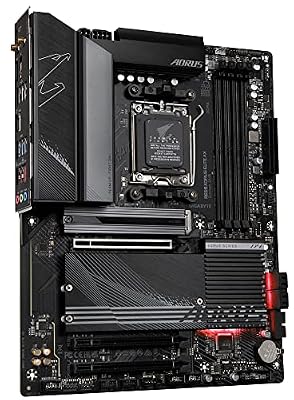


As an Amazon Associate we earn from qualifying purchases. Product prices and availability are accurate as of the date/time indicated.
The GIGABYTE B650 AORUS Elite AX is the pick for a modern, future-facing AMD build. It is a B650 board on AMD’s current AM5 socket, supporting DDR5 memory and the latest Ryzen 9000, 8000 and 7000 processors, with built-in WiFi and PCIe 5-ready storage and graphics support. At around $138 it is remarkable value for a current-generation board and sits far below the $500 ceiling.
This is the board to choose if you want to build on AMD’s newest platform rather than the older AM4 socket. AM5 and DDR5 give you a modern upgrade path for future Ryzen chips, the AORUS Elite AX pairs that with a solid VRM, integrated WiFi for clean connectivity and PCIe 5 readiness for the fastest drives and GPUs. For a builder who wants longevity and the latest features without paying flagship prices, this B650 board is the smart, forward-looking choice on the list.
Pros: Modern AM5/DDR5 platform, supports latest Ryzen, built-in WiFi, PCIe 5-ready, great value.
Cons: DDR5 and AM5 cost more to build around than older AM4; mid-tier VRM, not flagship.
3. Asus ROG Strix Z390-E Gaming Motherboard LGA1151 (Intel 8th/9th Gen) ATX DDR4

Asus ROG Strix Z390-E Gaming Motherboard LGA1151 (Intel 8th 9th Gen) ATX DDR4 DP HDMI M.2 USB 3.1 Gen2 802.11AC Wi-Fi


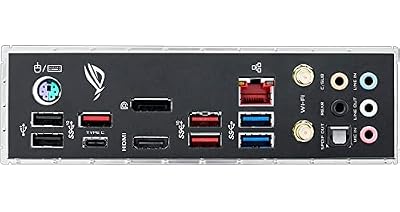
As an Amazon Associate we earn from qualifying purchases. Product prices and availability are accurate as of the date/time indicated.
The ASUS ROG Strix Z390-E Gaming is the flagship-tier pick that shows what the upper end of an under-$500 budget buys. It is a premium ROG-series Z390 ATX board for Intel’s LGA1151 socket (8th and 9th gen CPUs) with DDR4 memory, a rich feature set, strong power delivery and the polished build ASUS reserves for its ROG line. At around $400 it approaches the ceiling, and the premium engineering is what you are paying for.
We are honest about the catch: Z390 and LGA1151 are an older Intel platform, so this is not the board for a brand-new CPU generation. Where it makes sense is a high-end build on 8th or 9th-gen Intel — a powerful upgrade for an existing system, or a premium board for that platform — where its top-tier VRM, extensive connectivity and ROG features genuinely shine. If you are committed to LGA1151 and want a flagship-class board that still slots under $500, the Strix Z390-E is the showpiece option here.
Pros: Flagship ROG build, premium VRM and features, rich connectivity, still under $500.
Cons: Older Z390/LGA1151 platform (Intel 8th/9th gen); by far the priciest board here.
4. ASUS Prime Z390-P LGA1151 (Intel 8th and 9th Gen) ATX Motherboard

ASUS Prime B550M-A WiFi II AMD Micro ATX DDR4 Motherboard with PCIe 4.0, WiFi 6, ECC Memory, HDMI 2.1, RGB Header

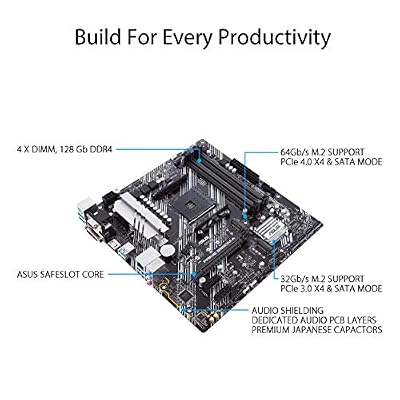
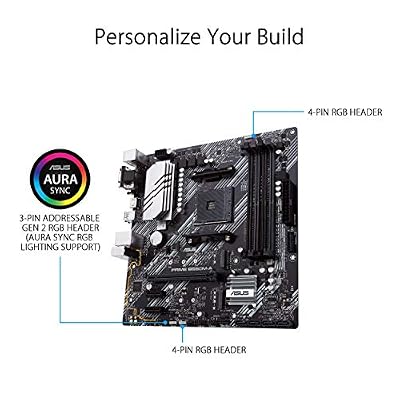


As an Amazon Associate we earn from qualifying purchases. Product prices and availability are accurate as of the date/time indicated.
The ASUS Prime Z390-P is the value Intel ATX pick for the same LGA1151 platform. It is a more affordable Z390 ATX board for Intel 8th and 9th-gen CPUs with DDR4 support and multi-GPU capability, stripping the ROG extras down to a clean, dependable feature set. At around $194 it offers Z390 capability for roughly half the price of the flagship Strix.
This is the board for a builder on Intel’s 8th or 9th-gen platform who wants a solid, no-frills Z390 ATX foundation rather than a premium showpiece. The Prime line is known for stability and straightforward BIOS, the DDR4 support and ATX layout suit a standard build, and multi-GPU support adds flexibility. As with the Strix, be aware this is an older platform — but if you are building or upgrading on LGA1151 and want sensible value over flagship features, the Prime Z390-P is a practical, well-priced choice.
Pros: Affordable Z390 ATX, reliable ASUS Prime build, DDR4 and multi-GPU support, good value.
Cons: Older Intel 8th/9th-gen platform; fewer premium features than ROG boards.
5. Gigabyte B550 Gaming X V2 Motherboard (AM4/4xDDR4/HDMI/DVI-D/USB 3.2/M.2)

Gigabyte B550 Gaming X V2 Motherboard (AM4/4xDDR4/HDMI/DVI-D/USB 3.2/M.2)


As an Amazon Associate we earn from qualifying purchases. Product prices and availability are accurate as of the date/time indicated.
The Gigabyte B550 Gaming X V2 is the budget AM4 all-rounder. It is a B550 board for AMD’s AM4 socket with four DDR4 slots, M.2 storage, USB 3.2, and HDMI and DVI-D outputs, covering the modern essentials at a wallet-friendly price. At around $92 it is a low-cost way to get the B550 chipset and a tidy, functional feature set.
This is the board to choose for a value AM4 build where you want B550 features without paying for a premium VRM or extras. The four DDR4 slots give room to expand memory, the M.2 slot supports a fast NVMe boot drive, and USB 3.2 keeps connectivity current, all while leaving budget for the parts that affect performance more. It pairs especially well with mainstream Ryzen CPUs rather than the most power-hungry chips. For an affordable, sensible B550 foundation, the Gaming X V2 is a solid pick.
Pros: Affordable B550, four DDR4 slots, M.2 and USB 3.2, good essentials for the money.
Cons: Lighter VRM than the Tomahawk; best with mainstream rather than top-end CPUs.
6. Gigabyte A520M K V2 Motherboard (AM4/2xDDR4/HDMI/D-Sub/M.2/USB 3.2)


As an Amazon Associate we earn from qualifying purchases. Product prices and availability are accurate as of the date/time indicated.
Rounding out the list is the Gigabyte A520M K V2, the cheapest entry point here. It is an A520 micro-ATX board for AMD’s AM4 socket with two DDR4 slots, an M.2 slot, USB 3.2, and HDMI and D-Sub outputs — the essentials of a working AM4 system in a compact form. At around $64 it is the budget foundation for a simple, cost-conscious build.
This is the board for the tightest budgets or a small-form-factor AM4 system where you want a functional, reliable base rather than features. The A520 chipset and micro-ATX layout keep things affordable and compact, the M.2 slot still allows a fast NVMe drive, and it pairs well with budget and mainstream Ryzen CPUs. Be honest about its limits: A520 lacks the overclocking and higher-end connectivity of B550, so it suits efficient, value builds rather than high-power chips. For a cheap, no-frills AM4 board that works, it does the job.
Pros: Lowest price here, compact micro-ATX, M.2 and USB 3.2, fine for budget Ryzen builds.
Cons: Entry-level A520 chipset: no overclocking, only two RAM slots, basic VRM.
How to Choose a Motherboard under $500
The first rule of an under-$500 budget is that you almost never need to spend anywhere near it. The ceiling exists to show the range, but most builders are better served by a strong mid-range board like the MSI B550 Tomahawk or the GIGABYTE B650 AORUS Elite AX and putting the saved money toward a faster CPU or GPU. So decide what you genuinely need from a board before you fixate on the budget — for most people, a great board costs far less than $500.
Socket and chipset come first, because the board must match your CPU exactly. AMD’s modern AM5 socket (the B650 AORUS Elite AX) takes the latest Ryzen 9000, 8000 and 7000 chips with DDR5; AMD’s older AM4 socket (the B550 boards and A520) uses DDR4 and Ryzen 5000-era CPUs; and Intel’s LGA1151 (the two Z390 boards) is for 8th and 9th-gen Intel with DDR4. Pick your CPU and platform first, then choose a board that fits it — there is no universal socket.
Power delivery and chipset tier shape stability and headroom. A robust VRM, as on the B550 Tomahawk and the ROG Strix Z390-E, keeps higher-core or higher-power CPUs running cool and steady, while lighter boards like the A520M K V2 and B550 Gaming X V2 are better matched to mainstream chips. Chipset also decides features: B-series and Z-series boards support faster memory and, on AMD, overclocking, whereas entry chipsets like A520 keep things basic. Match the board’s tier to how demanding your CPU is.
Finally, weigh connectivity and be honest about platform age. Look at the number of M.2 slots for NVMe drives, USB speed and ports, and whether WiFi is built in — the B650 AORUS Elite AX includes it, while the B550 Tomahawk does not. And remember the older Z390 boards, premium as the ROG Strix is, sit on an Intel generation from several years ago, so they suit existing LGA1151 builds rather than new ones. Set your platform, match the VRM and features to your CPU, and pick the board on this list that fits your build and budget rather than just maxing out the price.
Frequently Asked Questions
How much should I actually spend on a motherboard?
Usually far less than $500. The ceiling shows the range, but most builders get the best value from a strong mid-range board like the MSI B550 Tomahawk (around $160) or the GIGABYTE B650 AORUS Elite AX (around $138) and spend the savings on a better CPU or GPU, which affect performance more. Buy the features and power delivery your CPU needs, not the most expensive board you can afford.
Should I build on AMD AM5 or the older AM4 platform?
For a new build, AM5 (the B650 AORUS Elite AX) is the forward-looking choice: it uses DDR5 and supports the latest Ryzen 9000, 8000 and 7000 chips with a longer upgrade path. AM4 boards like the B550 Tomahawk and Gaming X V2 remain great value and pair with Ryzen 5000-era CPUs, often making for a cheaper overall build. Choose AM5 for longevity, AM4 for value.
Are the older Z390 boards still worth buying?
Only if you are building or upgrading on Intel’s 8th or 9th-gen LGA1151 platform. The ASUS ROG Strix Z390-E is a genuine flagship-class board and the Prime Z390-P is a solid value option, but both sit on an older Intel generation. They make sense for that specific platform — say, a powerful upgrade to an existing system — rather than for a brand-new CPU generation.
What does the chipset (B550, B650, Z390, A520) actually change?
The chipset sets your platform, features and limits. B650 is modern AMD AM5 with DDR5 and PCIe 5 support; B550 is AM4 with DDR4 and good features including overclocking; Z390 is Intel LGA1151 with strong features for 8th/9th-gen CPUs; and A520 is an entry AMD chipset that keeps things basic with no overclocking. Higher tiers add faster memory support, more M.2 and USB, and overclocking headroom.
Related Guides
- Best Motherboards
- Best AM5 Motherboards
- Best CPUs for Gaming
- Best NVMe SSDs
- Best RAM for Gaming
- Best Gaming PCs
Affiliate Disclosure: As an Amazon Associate, we earn from qualifying purchases. If you click a link and make a purchase, we may earn a small commission at no extra cost to you. Prices and availability are accurate as of publication and may change.