NPUs went from a marketing checkbox to an actual factor worth considering in about two years. If you’re shopping now, the question isn’t whether a laptop has one, almost everything new does, but whether that NPU is fast enough to matter and whether the rest of the machine still fits what you actually do with it. Here’s what’s real and what’s noise.
What the NPU actually does for you
An NPU (neural processing unit) handles AI inference tasks, think background blur and noise suppression in video calls, Windows Studio Effects, live captions and translation, and local AI features like Copilot+ experiences, without pulling that work from your CPU or GPU. The practical upside is battery life and thermals: your fan doesn’t spin up just because you’re on a Teams call with background blur on, and your CPU stays free for actual work.
What it doesn’t do is make games run faster or speed up video exports in most editing software today. Those still lean on your GPU and CPU. So if your mental model is “NPU = faster laptop,” that’s wrong. It’s a power-efficiency and specific-feature chip, not a general accelerator.
How much NPU power you actually need
Microsoft’s Copilot+ PC tier requires at least 40 TOPS (trillion operations per second) of NPU performance to unlock on-device features like Recall, Cocreator, and live translation across more apps. Below that, you still get an NPU, it just handles lighter tasks like webcam effects and basic voice processing, and won’t run the newer on-device AI features.
For most work-and-browsing use, a sub-40 TOPS NPU is genuinely fine. You’re not missing much day to day. If you specifically want Recall, local image generation, or you’ve seen a Copilot+ feature demoed that you actually want to use, that’s when crossing the 40 TOPS line becomes worth paying for.
| NPU tier | Typical chips | What you get | Who it’s for |
|---|---|---|---|
| Under 20 TOPS | Older Intel/AMD laptop chips (pre-2024) | Basic webcam/audio AI effects | Budget buyers, light office work |
| 20-40 TOPS | Intel Meteor Lake, early Ryzen AI chips | Better call effects, some Windows AI features | Mainstream work laptops |
| 40+ TOPS (Copilot+) | Qualcomm Snapdragon X, Intel Lunar Lake, AMD Ryzen AI 300 | Recall, Cocreator, live translation, full feature set | Buyers who want current and future on-device AI |
If you game, don’t buy for the NPU
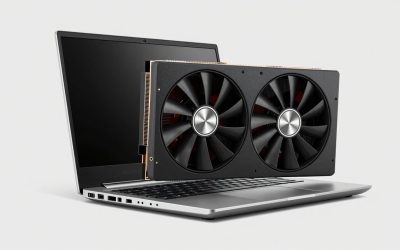
Gaming laptops are the one category where an NPU should be low on your priority list. Frame rates come from the GPU and CPU, full stop. A Copilot+ badge on a gaming laptop is a nice side feature, maybe your voice chat sounds cleaner, maybe background noise gets filtered better during streams, but it won’t help a single benchmark. If you’re choosing between two similarly priced gaming laptops and one has a stronger GPU while the other has a higher NPU TOPS count, take the GPU every time. For this category it’s worth browsing a gaming laptop with a dedicated RTX GPU and treating the NPU as a bonus, not a deciding factor.
If you work on it, the NPU earns its keep
This is where NPUs actually change daily experience. Video calls are lighter on battery and fan noise. Transcription and live captions run locally instead of needing cloud round-trips, which also matters if you handle sensitive client info and don’t want audio shipped to a server. If your job involves back-to-back meetings on battery power, a Copilot+ machine genuinely feels calmer, less heat, quieter fans, longer runtime between charges.
For general productivity shopping, it’s reasonable to look at a Copilot+ certified laptop if you want to be future-proofed for whatever Microsoft ships next on these machines. If you’re on a tighter budget and mostly do email, docs, and browser-based work, don’t stretch for it, a mainstream business laptop with a modest NPU will do everything you need.
Snapdragon vs Intel/AMD: the trade-off nobody mentions
The highest TOPS counts right now mostly come from Qualcomm Snapdragon X chips, which are ARM-based. Battery life on these is excellent and the NPU performance is strong, but app compatibility is the catch. Most mainstream software runs fine through emulation now, but some older or niche Windows apps, certain drivers, and most games still don’t run natively or at all. If you depend on a specific professional tool, check compatibility before buying, don’t assume.
Intel Lunar Lake and AMD Ryzen AI 300 chips run x86, so compatibility is a non-issue, and their NPUs now also clear the 40 TOPS bar. For most buyers who want Copilot+ features without compatibility risk, x86 is the safer pick. Browsing a Ryzen AI or Intel Lunar Lake laptop sidesteps the emulation question entirely.
Where people get burned
The most common mistake is paying a premium for “AI PC” branding on a laptop with a weak GPU, then being disappointed it doesn’t game or render video any faster. The second mistake is buying a Snapdragon machine without checking if a required work app runs on it. The third is assuming NPU specs listed in marketing material are directly comparable across brands, TOPS numbers are measured differently enough between vendors that treating them as exactly equivalent is a bit of a reach, use them as a rough tier indicator, not a precise ranking.
FAQ
Does a better NPU mean better gaming performance?
No. Gaming performance depends on the GPU and CPU. The NPU handles separate background tasks and has no meaningful effect on frame rates.
Do I need a Copilot+ PC right now?
Only if you specifically want features like Recall, Cocreator, or on-device translation today. For normal browsing, email, and office work, a non-Copilot+ laptop is still fully capable.
Will my old software run on a Snapdragon laptop?
Most mainstream apps now run through emulation, but check compatibility for specialized software, drivers, or games before buying, since not everything runs natively on ARM.
Is it worth paying extra just for a higher TOPS number?
Only if you’ll actually use the features it unlocks. If you’re not using Copilot+ features, that money is better spent on RAM, storage, or a better display.