- Top Pick: iFFALCON 55" 4K MiniLED Smart TV | PS5 & Xbox Ready, 4X HDMI 2.1 | Hotel, Home & Office Use | 144Hz VRR 240Hz, Dolby Vision Gaming, Dolby Atmos, IMAX Enhanced, Google TV, Alexa | 55U85
- Best Value: LG 65-Inch Class OLED evo C4 Series Smart TV 4K Processor Flat Screen with Magic Remote AI-Powered with Alexa Built-in (OLED65C4PUA, 2024)
- Premium Choice: LG 42-Inch OLED evo AI 4K C6 Series Smart TV (2026) a11 AI Processor Gen3, Dolby Vision, Dolby Atmos, HDR10, 165Hz, AI Super Upscaling 4K OLED42C6PUA Bundle with Deco Essentials Protection +Guidebook
G-Sync on a big screen is what finally makes console and PC gaming on a TV feel as smooth as a desktop monitor. The key thing to understand up front is the label: a handful of premium TVs are certified ‘G-Sync Compatible’, but most modern sets achieve the same tear-free result through VRR (Variable Refresh Rate) over HDMI 2.1 or HDMI Forum VRR — and some budget 4K smart TVs offer little or no variable refresh at all. This guide rounds up six displays people shop for under this search and is honest about exactly which ones deliver real G-Sync or VRR and which do not.
- Best Gaming TVs with G-Sync at a Glance
- 1. LG 48-Inch Class OLED evo AI Super Upscaling 4K C5 Series Smart TV w/Dolby Atmos
- 2. Samsung 49-Inch Odyssey OLED G9 (G95SC) Curved Smart Gaming Monitor, QD-OLED, 240Hz
- 3. Samsung 49-Inch Odyssey G93SC Series Curved Gaming Monitor, QD-OLED, 240Hz, 0.03ms
- 4. Hisense 85-Inch U7 Mini-LED ULED 4K UHD Gaming Google Smart TV (85U75QG)
- 5. Sony 75-Inch Class 4K Ultra HD BRAVIA 3 LED Smart TV with Google TV, Dolby Vision
- 6. LG UN73 Series 55-Inch Alexa Built-in, 4K UHD IPS Smart TV, Bluetooth Surround Ready
- How to Choose a Gaming TV with G-Sync
- Frequently Asked Questions
- Related Guides
- Related Articles
Our picks were chosen on what genuinely matters for tear-free big-screen gaming: variable refresh support (G-Sync Compatible or VRR), panel quality, refresh rate, low input lag potential and value. Two important caveats: a couple of entries here are technically large gaming monitors rather than living-room TVs, and a couple of the cheaper 4K TVs are smart-TV panels whose variable-refresh support is limited — we flag both clearly rather than pretend otherwise. Prices span from around $399 up to around $1,699, across IPS LED, Mini-LED ULED and OLED. Below is an at-a-glance comparison, then a closer look at each display and a buyer’s guide covering G-Sync Compatible, VRR, HDMI 2.1 and panel type.
As an Amazon Associate we earn from qualifying purchases at no extra cost to you.




🛒 Best Price Today on Amazon
Prime members get fast, free shipping on everything above, plus member-only deals. New members get a 30-day free trial — cancel anytime.
Best Gaming TVs with G-Sync at a Glance
| Display | Best For | VRR / G-Sync Status | Approx Price |
|---|---|---|---|
| LG 48″ OLED evo C5 (Dolby Atmos) | True G-Sync OLED gaming | G-Sync Compatible + VRR (HDMI 2.1) | around $897 |
| Samsung 49″ Odyssey OLED G9 (G95SC) | Ultrawide PC G-Sync | G-Sync Compatible (monitor, VRR) | around $1,699 |
| Samsung 49″ Odyssey G93SC QD-OLED 240Hz | Curved high-refresh PC play | G-Sync Compatible (monitor, VRR) | around $1,169 |
| Hisense 85″ U7 Mini-LED ULED 4K | Big-screen VRR value | VRR / FreeSync (HDMI 2.1) | around $1,300 |
| Sony 75″ BRAVIA 3 4K LED (Google TV) | Large living-room screen | Limited VRR — check before buying | around $848 |
| LG 55″ UN73 4K UHD IPS Smart TV | Budget 4K all-rounder | No dedicated G-Sync/VRR | around $400 |
1. LG 48-Inch Class OLED evo AI Super Upscaling 4K C5 Series Smart TV w/Dolby Atmos

LG 48-Inch Class OLED evo AI Super Upscaling 4K C5 Series Smart TV w/Dolby Atmos & Vision, HDR10, Filmmaker Mode, Wow Orchestra, Alexa Built-in (OLED48C5PUA, 2025)


As an Amazon Associate we earn from qualifying purchases. Product prices and availability are accurate as of the date/time indicated.
The LG 48-inch OLED evo C5 is the standout for genuine G-Sync gaming on a TV, and it leads this list for that reason. LG’s C-series OLEDs are certified G-Sync Compatible and also support HDMI Forum VRR over HDMI 2.1, so when you connect an NVIDIA GPU or a current console you get true variable refresh that eliminates tearing and stutter. At around $897 the 48-inch size is the sweet-spot OLED for a desk or compact living room.
This is the display to choose if your priority is tear-free, low-lag gaming with the perfect blacks and per-pixel contrast that only OLED delivers. The self-lit panel gives instant pixel response for crisp motion, the C5 supports the high-refresh and auto low-latency features serious players want, and Dolby Atmos rounds out the experience. Of everything here, the C5 is the one that satisfies the literal intent of this search: a real, certified G-Sync Compatible TV with OLED image quality to match.
Pros: Certified G-Sync Compatible plus VRR over HDMI 2.1, OLED blacks, instant pixel response, ideal 48-inch size.
Cons: OLED carries a burn-in caution with static HUDs; premium price for the size.
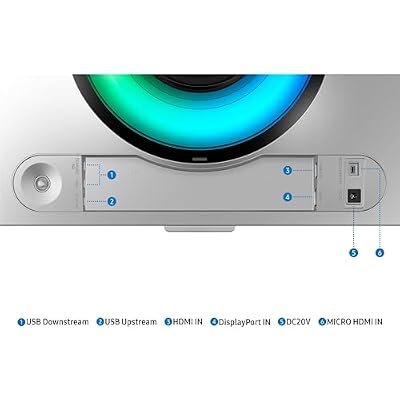
2. Samsung 49-Inch Odyssey OLED G9 (G95SC) Curved Smart Gaming Monitor, QD-OLED, 240Hz

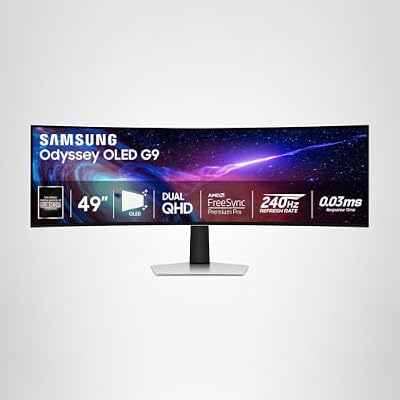
Samsung 49" Odyssey (G93SC) Series QD-OLED Curved Gaming Monitor | 240Hz, 0.03ms, DQHD, G-Sync Compatible, FreeSync Premium Pro, Adjustable Stand (LS49CG932SNXZA)




As an Amazon Associate we earn from qualifying purchases. Product prices and availability are accurate as of the date/time indicated.
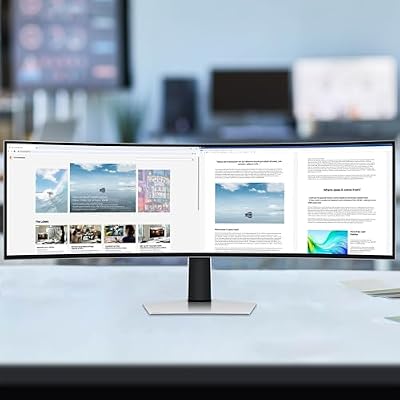
The Samsung Odyssey OLED G9 (G95SC) is the ultrawide G-Sync pick, though it is important to be clear about what it is: a 49-inch curved QD-OLED gaming monitor, not a living-room TV. It is G-Sync Compatible and supports VRR, runs at a blistering 240Hz, and uses a super-ultrawide 32:9 QD-OLED panel for an immersive, wraparound view. At around $1,699 it is the premium choice here for PC-centric players.
This is the display for the desktop gamer who wants the smoothest, most immersive G-Sync experience and sits close to a single, enormous screen. The QD-OLED panel delivers vivid color and true blacks, the 240Hz refresh with G-Sync Compatible VRR is exceptionally fluid, and the 32:9 aspect ratio effectively gives you a dual-monitor canvas in one curved sheet. If you are shopping for a TV to sit across the room, look elsewhere — but for a high-refresh G-Sync PC monitor, the G95SC is spectacular.
Pros: G-Sync Compatible with VRR, 240Hz QD-OLED, immersive 49-inch 32:9 curve, vivid color and deep blacks.
Cons: It is a monitor, not a TV — built for desk use; highest price on the list.
3. Samsung 49-Inch Odyssey G93SC Series Curved Gaming Monitor, QD-OLED, 240Hz, 0.03ms
Samsung 49" Odyssey (G93SC) Series QD-OLED Curved Gaming Monitor | 240Hz, 0.03ms, DQHD, G-Sync Compatible, FreeSync Premium Pro, Adjustable Stand (LS49CG932SNXZA)
As an Amazon Associate we earn from qualifying purchases. Product prices and availability are accurate as of the date/time indicated.
The Samsung Odyssey G93SC is the more attainable curved QD-OLED option, and like the G9 it is a gaming monitor rather than a television. It shares the 49-inch 32:9 QD-OLED format with a 240Hz refresh and a rapid 0.03ms response, and it is G-Sync Compatible with VRR support. At around $1,169 it brings much of the flagship’s tear-free, high-refresh experience at a more sensible price.
This is the pick for the PC gamer who wants the wraparound immersion and buttery G-Sync smoothness of a super-ultrawide QD-OLED without paying top-tier money. The 240Hz panel with G-Sync Compatible VRR keeps fast games tear-free, the 0.03ms response gives crisp motion clarity, and the curved 32:9 canvas is excellent for both gaming and productivity. Just remember it is a desk display — if you want a real TV with G-Sync, the LG C5 is the answer, but for a curved PC monitor the G93SC is outstanding value.
Pros: G-Sync Compatible VRR, 240Hz QD-OLED, ultra-fast 0.03ms response, more affordable than the G9.
Cons: Also a monitor rather than a TV; super-ultrawide format suits desks, not couches.
4. Hisense 85-Inch U7 Mini-LED ULED 4K UHD Gaming Google Smart TV (85U75QG)
The Hisense 85-inch U7 Mini-LED is the big-screen VRR value pick. It is a genuine living-room television built with gaming in mind: a large 85-inch Mini-LED ULED 4K panel that supports VRR (including FreeSync) and HDMI 2.1 features for tear-free, low-lag play. At around the $1,300 mark (across its size range) it delivers an enormous, bright, high-contrast picture for the money.
This is the display to choose if you want the biggest possible screen for console and PC gaming and value VRR over the strict G-Sync Compatible badge. Mini-LED backlighting gives strong brightness and deep local-dimming contrast for HDR, the 85-inch panel is genuinely cinematic, and HDMI 2.1 VRR keeps supported sources smooth. Note that Hisense markets VRR/FreeSync rather than official G-Sync certification — in practice an NVIDIA GPU’s G-Sync runs over VRR here, but if you specifically need the certified badge, the LG C5 is the safer call.
Pros: Huge 85-inch Mini-LED ULED panel, VRR/FreeSync over HDMI 2.1, bright high-contrast HDR, strong value per inch.
Cons: Marketed as VRR/FreeSync, not certified G-Sync Compatible; very large footprint.
5. Sony 75-Inch Class 4K Ultra HD BRAVIA 3 LED Smart TV with Google TV, Dolby Vision

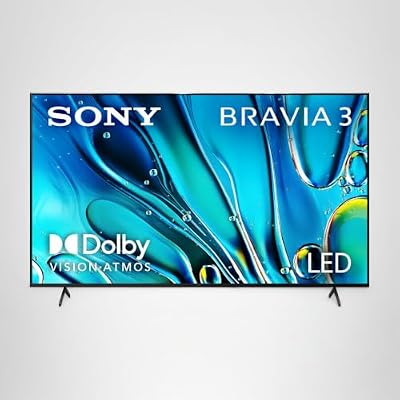
Sony 75 Inch BRAVIA 3 LED 4K HDR Smart Google TV (K-75S30) | Dolby Vision/Atmos, Exclusive Features for PlayStation®5, 4K Processor X1, Triluminos Pro, 4K movie credits included


As an Amazon Associate we earn from qualifying purchases. Product prices and availability are accurate as of the date/time indicated.
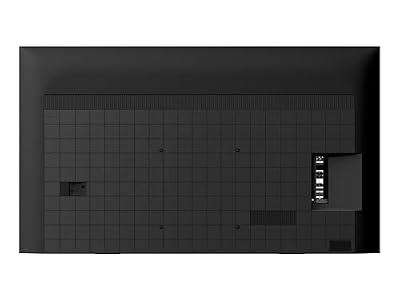
The Sony 75-inch BRAVIA 3 is the large living-room screen on this list, and honesty matters here: the BRAVIA 3 is Sony’s entry 4K LED line, focused on a big, well-processed picture with Google TV and Dolby Vision rather than headline gaming features. At around $848 it is an affordable way to get a 75-inch Sony with strong everyday image quality, but its variable-refresh support is limited compared with the gaming-first sets here.
This is the pick for the buyer who mainly wants a big, reliable Sony TV for movies, streaming and casual console play, and who is not chasing strict G-Sync. Sony’s processing delivers a clean, natural image and Dolby Vision HDR looks excellent, but you should verify the current model’s VRR/HDMI 2.1 support before buying if tear-free high-refresh gaming is essential — entry BRAVIA LED sets typically do not match the VRR capabilities of the LG OLED or Hisense Mini-LED. Bought for what it is, it is a fine large-screen TV.
Pros: Large 75-inch screen, Sony picture processing, Google TV, Dolby Vision HDR, sensible price for the size.
Cons: Entry LED line with limited VRR — confirm before buying for G-Sync gaming.
6. LG UN73 Series 55-Inch Alexa Built-in, 4K UHD IPS Smart TV, Bluetooth Surround Ready

LG 55-Inch Class UR9000 Series Alexa Built-in AI-Powered 4K Smart TV (3840 x 2160),Bluetooth, Wi-Fi, USB, Ethernet, HDMI 60Hz Refresh Rate, 2023


As an Amazon Associate we earn from qualifying purchases. Product prices and availability are accurate as of the date/time indicated.
Rounding out the list is the LG UN73 55-inch, and it is here for transparency: it is a budget 4K UHD IPS smart TV, not a gaming-grade VRR display. At around $400 it is by far the cheapest entry, with a 4K IPS panel, webOS smarts and Alexa built in, but it does not offer dedicated G-Sync or robust VRR support. We include it because it commonly appears in this search, and we would rather tell you plainly what it is.
This is the pick only if your real need is an affordable all-round 4K TV for streaming, everyday viewing and the occasional game, rather than tear-free high-refresh play. The IPS panel gives wide viewing angles and a decent 4K picture for the money, and webOS is a capable smart platform. But if G-Sync or VRR is genuinely your goal, step up to the LG C5 OLED or the Hisense U7 Mini-LED — the UN73 is a value 4K TV first and does not deliver variable refresh.
Pros: Very affordable 4K UHD, wide-angle IPS panel, webOS smart platform, Alexa built in.
Cons: No dedicated G-Sync/VRR and a standard refresh rate — not a gaming-first TV.
How to Choose a Gaming TV with G-Sync
Start by understanding the labels, because they are the whole game here. ‘G-Sync Compatible’ is NVIDIA’s certification that a display’s VRR works reliably with GeForce GPUs — the LG C5 OLED and the Samsung Odyssey monitors carry it. ‘VRR’ (Variable Refresh Rate), including HDMI Forum VRR and AMD FreeSync, achieves the same tear-free result and, in practice, lets G-Sync run over it on sets like the Hisense U7. If a TV lists none of these — as with the budget LG UN73 — it cannot give you variable refresh, no matter how good the picture is.
HDMI 2.1 is the connection that unlocks the best big-screen gaming. It carries 4K at high refresh rates and the VRR and Auto Low Latency Mode (ALLM) features that keep input lag low and motion tear-free. The gaming-focused displays here — the LG OLED, the two Odyssey monitors and the Hisense Mini-LED — lean on HDMI 2.1 (or DisplayPort, on the monitors) for this. Entry sets like the BRAVIA 3 and UN73 are built around the picture rather than these gaming connectivity features, so check the ports and supported modes if smooth high-refresh play is the point.
Decide honestly whether you want a TV or a monitor, because two of these picks are monitors. The Samsung Odyssey G9 and G93SC are superb 49-inch curved QD-OLED displays, but they are 32:9 desk panels meant to sit close, not across a room with a couch. For living-room gaming on a console or a PC at distance, a real TV — the LG C5 OLED or Hisense U7 Mini-LED — is the right tool. Match the form factor to where and how you actually play before anything else.
Finally, weigh panel type and budget against your priorities. OLED, as on the LG C5 and the Odyssey QD-OLEDs, gives perfect blacks, per-pixel contrast and instant response for the best motion, with a mild burn-in caution around static elements. Mini-LED, like the Hisense U7, counters with high brightness and strong HDR at a large size for less money. If your single goal is a certified G-Sync Compatible TV, the LG C5 is the clear answer; if you want the biggest VRR screen for the money, the Hisense U7; and if you are a desk-bound PC gamer, the Odyssey monitors. Pick the display whose strengths line up with how you game.
Frequently Asked Questions
Which of these displays truly support G-Sync?
The LG 48-inch C5 OLED is certified G-Sync Compatible (and supports VRR over HDMI 2.1), and the two Samsung Odyssey monitors — the OLED G9 and the G93SC — are G-Sync Compatible as well. The Hisense U7 supports VRR/FreeSync, over which G-Sync runs in practice but without the official badge. The Sony BRAVIA 3 and the LG UN73 are not gaming-first sets and do not provide dependable G-Sync/VRR — verify before buying if that is your goal.
What is the difference between G-Sync Compatible and VRR?
VRR (Variable Refresh Rate) is the general technology — including HDMI Forum VRR and AMD FreeSync — that syncs the display’s refresh to your GPU’s frame rate to eliminate tearing and stutter. ‘G-Sync Compatible’ is NVIDIA’s certification that a display’s VRR works reliably with GeForce cards. On most modern TVs an NVIDIA GPU’s G-Sync simply runs over the set’s VRR, so both deliver tear-free gaming; the badge just guarantees tested compatibility.
Are the Samsung Odyssey models TVs or monitors?
They are monitors. The 49-inch Odyssey OLED G9 (G95SC) and the Odyssey G93SC are super-ultrawide 32:9 curved QD-OLED gaming monitors designed for desk use and close viewing, not living-room televisions. They are excellent G-Sync Compatible PC displays, but if you want a TV to sit across a room, choose the LG C5 OLED or the Hisense U7 Mini-LED instead.
Do I need HDMI 2.1 for G-Sync on a TV?
For the best experience, yes. HDMI 2.1 carries 4K at high refresh rates and enables VRR and Auto Low Latency Mode, which together give tear-free, low-lag big-screen gaming. The gaming-focused picks here use HDMI 2.1 (or DisplayPort on the monitors). Make sure both your TV’s port and your GPU or console support HDMI 2.1 VRR to get smooth variable refresh.
Related Guides
- Best Gaming Monitors
- Best 4K Monitors
- Best OLED Monitors
- Best Ultrawide Monitors
- Best Gaming PCs
- Best HDMI 2.1 Cables for Gaming
Affiliate Disclosure: As an Amazon Associate, we earn from qualifying purchases. If you click a link and make a purchase, we may earn a small commission at no extra cost to you. Prices and availability are accurate as of publication and may change.