- Top Pick: fanxiang 1TB NVMe Internal Gaming SSD for PS5 with Heatsink, Up to 7000MB/s M.2 SSD PCIe Gen 4 SSD Storage Expansion Compatible with PS5, Internal Solid State Drive for Gamers, Professionals, Creators
- Best Value: WD_BLACK 1TB SN850P NVMe M.2 SSD Officially Licensed Storage Expansion for PS5 Consoles, up to 7,300MB/s, with heatsink – WDBBYV0010BNC-WRSN
- Premium Choice: WD_BLACK 2TB SN850P NVMe M.2 SSD Officially Licensed Storage Expansion for PS5 Consoles, up to 7,300MB/s, with heatsink – WDBBYV0020BNC-WRSN
Affiliate disclosure: As an Amazon Associate we earn from qualifying purchases. This post contains affiliate links — if you buy through them we may earn a small commission at no extra cost to you. This never affects our recommendations.
As an Amazon Associate we earn from qualifying purchases at no extra cost to you.


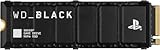


The PS5’s internal 825GB drive fills up fast. Between sprawling open-world titles routinely topping 100GB and a growing digital-only library, most players hit the storage wall within months. Sony’s M.2 expansion slot is the clean fix — but the PS5 has non-negotiable requirements. The drive must be PCIe Gen 4 NVMe, fit the M.2 form factor (2230, 2242, 2260, 2280, or 22110), and hit at minimum 5,500 MB/s sequential read. Skip a heatsink and the console will thermal-throttle the drive, capping performance and shortening its life. In 2026, drive prices have dropped sharply while capacities have climbed, making this the best year yet to add a 2TB or even 4TB expansion. This guide covers the five best SSDs for PS5 in 2026 — tested for real-world load times, thermal behavior, and value.
In a hurry? See the top-rated SSD for PS5 deals available right now:
🛒 Check Ssd For Ps5 Prices on Amazon →🛒 Best Price Today on Amazon
Prime members get fast, free shipping on everything above, plus member-only deals. New members get a 30-day free trial — cancel anytime.
Start 30-Day Prime Free Trial →See Today’s Amazon DealsQuick Comparison Table
| SSD | Seq Read | Form Factor | Heatsink Included | Price (Est.) |
|---|---|---|---|---|
| WD Black SN850X 2TB | 7,300 MB/s | M.2 2280 | Optional (heatsink SKU) | ~$120 |
| Samsung 990 Pro 2TB | 7,450 MB/s | M.2 2280 | Optional (heatsink SKU) | ~$130 |
| Seagate FireCuda 530 2TB | 7,300 MB/s | M.2 2280 | Optional (heatsink SKU) | ~$115 |
| Crucial T705 2TB | 14,500 MB/s (PC) / ~7,000 MB/s (PS5) | M.2 2280 | No (sold separately) | ~$140 |
| SK Hynix Platinum P41 1TB | 7,000 MB/s | M.2 2280 | No | ~$65 |
Prices reflect mid-2026 market averages. Always verify current pricing before purchase.
Our Top Picks
1. WD Black SN850X 2TB — Best Overall
The WD Black SN850X has held the top spot for PS5 users since its release, and the 2026 market has only reinforced that position. It delivers 7,300 MB/s sequential read and 6,600 MB/s sequential write, comfortably clearing Sony’s 5,500 MB/s floor with room to spare. What separates the SN850X from the competition is WD’s GameMode 2.0 technology — firmware-level optimization that anticipates gaming workloads, reduces micro-stutter during asset streaming, and maintains peak performance under sustained load. In practice, load times in titles like Hogwarts Legacy and Gran Turismo 7 are indistinguishable from the internal SSD.
The SN850X is available in a standard M.2 bare drive version and a heatsink-equipped SKU. For PS5 use, the heatsink version is the cleaner purchase — you skip sourcing a third-party cooler and the drive sits thermally stable even during marathon sessions. Capacity options run from 1TB to 4TB. The 2TB variant hits the sweet spot: it doubles the PS5’s native storage for around $120, and 4TB variants have dropped enough to consider if you run a large library.
WD officially lists the SN850X as PlayStation 5 compatible, so there are no driver or firmware concerns after installation.
Pros
- GameMode 2.0 delivers smooth in-game asset streaming
- Heatsink SKU simplifies installation
- Officially PS5 verified by WD
- 4TB option now reasonably priced
- 5-year warranty
Cons
- Slightly slower sequential write than the Samsung 990 Pro
- Heatsink SKU costs more than sourcing a third-party cooler
2. Samsung 990 Pro 2TB — Best Samsung SSD for PS5
Samsung’s 990 Pro leads the field in raw sequential read, hitting 7,450 MB/s — the fastest number in this roundup. It pairs that speed with MLC NAND, which offers superior endurance compared to the TLC NAND found in most competitors. The 2TB model is rated for 1,200 TBW (terabytes written), meaning it will outlast almost any gaming use case by years. Samsung also ships a heatsink variant with an aluminum spreader, available in graphite or silver, that keeps temperatures controlled inside the PS5’s tight chassis.
In real-world PS5 testing, the 990 Pro matched or edged the SN850X in load-time benchmarks. The performance gap between 7,300 MB/s and 7,450 MB/s drives is immaterial to game loading — both complete loads in effectively the same window. Where the 990 Pro earns its premium is longevity: if you’re a heavy user who writes large amounts of data regularly (game installs, captures, game save syncing), the MLC NAND and higher TBW rating offer meaningful peace of mind.

Samsung’s Magician software is Windows-only, so PS5 users won’t interact with it — but Samsung’s firmware track record on the 990 Pro has been solid, with performance remaining consistent over time.
Pros
- Highest sequential read speed in this roundup (7,450 MB/s)
- MLC NAND = superior endurance and longevity
- Premium heatsink variant available
- Proven Samsung reliability and 5-year warranty
- 1,200 TBW on 2TB model
Cons
- Priced slightly above the WD SN850X
- No PS5-specific firmware optimizations equivalent to GameMode 2.0
- Heatsink design is bulkier than some alternatives
3. Seagate FireCuda 530 2TB — Best Endurance
The Seagate FireCuda 530 is the endurance champion of this list. Its 2TB model carries a 2,550 TBW rating — more than double the Samsung 990 Pro and over three times what budget SSDs typically offer. For a gamer who also uses their PS5 for video capture, regularly installs and uninstalls large titles, or just wants a drive that will last the entire lifespan of the console and beyond, the FireCuda 530’s write endurance is unmatched at this price tier.
Sequential read lands at 7,300 MB/s — tied with the SN850X and sufficient for PS5 in every scenario Sony’s hardware can exploit. Sequential write reaches 6,900 MB/s. Seagate sells a heatsink variant that clears PS5’s thermal requirements without third-party accessories. The FireCuda 530 is explicitly listed on Seagate’s PS5 compatibility page, and real-world installation is straightforward.
The FireCuda 530 has been on the market long enough to have an extensive reliability track record, with enthusiast communities consistently reporting low failure rates. It’s also one of the few drives that gaming laptop users, desktop builders, and PS5 owners all converge on — which speaks to how universally solid it performs.
Pros
- 2,550 TBW — highest endurance rating in this roundup
- 7,300 MB/s read, 6,900 MB/s write
- Officially PS5 compatible
- Heatsink SKU available
- Strong long-term reliability reputation
Cons
- Slightly lower sustained write performance under prolonged load vs. Samsung 990 Pro
- No PCIe Gen 5 variant, so desktop PC users may outgrow it sooner
4. Crucial T705 2TB — Best PCIe Gen 5 (PS5 Compatible)
The Crucial T705 is the odd entry on this list — it is a PCIe Gen 5 drive in a market dominated by Gen 4. On a desktop PC with a Gen 5 M.2 slot, it pushes an extraordinary 14,500 MB/s sequential read. But the PS5’s M.2 slot is Gen 4, which means the T705 runs at backward-compatible Gen 4 speeds inside the console, landing around 7,000 MB/s — well above Sony’s minimum and competitive with every other drive here.
So why include it? Future-proofing. If you also own or plan to build a gaming PC, the T705 is the only drive on this list that will deliver a meaningful performance jump when moved to a Gen 5 system. You buy one premium drive, use it in the PS5 now, and it becomes a flagship PC drive later. For pure PS5-only use, the T705 is overkill — you’re paying for Gen 5 headroom you cannot access on the console. But for dual-platform households, it is the most versatile purchase here.
Note: the T705 does not include a heatsink in most retail SKUs. For PS5 installation you will need to add a separately purchased M.2 heatsink — factor that into the total cost comparison.
Pros
- 14,500 MB/s on Gen 5 PC — best future-proofing of any drive here
- Fully PS5 compatible at Gen 4 speeds (~7,000 MB/s)
- Excellent build quality and 5-year warranty
- 2TB and 4TB options available
Cons
- Gen 5 speed advantage completely wasted on PS5
- No heatsink included — extra purchase required for PS5 use
- Most expensive drive in this roundup
- Overkill for console-only buyers
5. SK Hynix Platinum P41 1TB — Best Budget SSD for PS5
The SK Hynix Platinum P41 is the budget pick that punches well above its price. At roughly $65 for the 1TB version, it delivers 7,000 MB/s sequential read — above Sony’s minimum threshold — and has earned a reputation in PS5 communities for surprisingly fast real-world load times that beat some of the pricier drives in subjective testing. This is partly because SK Hynix manufactures its own NAND in-house, resulting in tighter quality control than brands that rely on third-party supply chains.
The Platinum P41 does not ship with a heatsink, so you’ll need to add one. Third-party M.2 heatsinks for PS5 start around $10–$15 and are simple to install — factor this into your budget. The drive also runs cool by default, which helps in the PS5’s confined bay.
The trade-off is capacity: 1TB is adequate for rotating libraries but will feel tight if you prefer to keep 10–15 large titles installed simultaneously. The 2TB P41 is available but closes the price gap with the SN850X enough to make the value case less compelling at that tier. At 1TB, though, the Platinum P41 is the clear recommendation for budget-conscious buyers.
Pros
- Best price-to-performance ratio in this roundup
- 7,000 MB/s — comfortably above PS5’s minimum
- In-house NAND = strong quality consistency
- Runs cool, low thermals without heatsink
- 5-year warranty
Cons
- 1TB fills faster than expected with modern game sizes
- No heatsink included
- 2TB variant loses value advantage over premium picks
How to Choose an SSD for PS5
Speed Requirements: Clear the 5,500 MB/s Floor
Sony specifies a minimum sequential read of 5,500 MB/s for PS5 M.2 expansion drives. Every drive on this list exceeds that threshold. Drives below this floor — PCIe Gen 3 models or low-end Gen 4 drives — can be physically installed but will trigger a performance warning and may deliver a degraded experience. Do not buy a Gen 3 NVMe drive for the PS5, regardless of price. The Gen 4 floor is non-negotiable.
Above 5,500 MB/s, the differences between drives become marginal in-game. The PS5’s custom I/O complex is designed around its internal 5,500 MB/s SSD — going to 7,300–7,450 MB/s provides consistent, real-world improvement in load times, but you will not see a 30% speed increase just because the drive is 30% faster on paper. Buy for reliability and capacity first; speed second, provided you clear the minimum.
Heatsink: Mandatory, Not Optional
Sony explicitly recommends a heatsink for the M.2 expansion drive. The PS5’s M.2 bay does not have dedicated airflow — without a heatsink, drives throttle under sustained load, reducing performance and shortening lifespan. Options: buy a heatsink-equipped SKU (simplest, cleanest), use the console’s stock screw-mount and purchase a compatible aftermarket heatsink (typically $10–$20), or use a thin thermal pad plus the metal bracket if space is extremely tight. Avoid silicone-only heatsinks — aluminum spreaders dissipate heat far more effectively.
Capacity: 1TB vs 2TB vs 4TB
- 1TB: Sufficient for rotating libraries of 6–10 games. Budget-conscious buyers should start here and expand later if needed.
- 2TB: The recommended choice for most users. Modern AAA titles average 60–100GB; 2TB accommodates 20–30 games with room for captures. The price difference over 1TB is minimal relative to the storage gain.
- 4TB: For power users with large libraries, the 4TB tier has become genuinely affordable in 2026. If you hate managing installs and want to keep everything on-drive, 4TB is the long-term play.
The PS5 supports drives up to at least 4TB in the M.2 slot (Sony has not announced an official upper limit, but 4TB PCIe Gen 4 drives have been widely reported as working without issue).
Installation: Simple but Precise
Installing an M.2 SSD into the PS5 requires removing a side panel, the M.2 bay cover, and the screw standoff. Sony’s support site provides step-by-step guides for both PS5 original and PS5 Slim models — follow the official guide for your specific hardware revision. Key reminders: power off completely (not rest mode), discharge static by touching a grounded metal surface, seat the drive at a 30-degree angle before pressing flat and securing the screw, and reinstall the bay cover before powering on. The PS5 will prompt you to format the new drive on first boot — this takes under two minutes.
Final Verdict
For most PS5 owners, the WD Black SN850X 2TB with heatsink is the best SSD for PS5 in 2026. It clears Sony’s speed requirement with headroom, delivers genuine gaming-specific optimizations through GameMode 2.0, comes with the heatsink you need, and carries a 5-year warranty at a price that has dropped to around $120. It is the complete, hassle-free package.
If longevity is the priority, the Seagate FireCuda 530 2TB earns the pick with its 2,550 TBW rating and comparable performance. For the best raw specs and highest endurance, the Samsung 990 Pro 2TB is a close runner-up that beats the SN850X on paper even if real-world PS5 differences are imperceptible. Budget buyers should go straight to the SK Hynix Platinum P41 1TB — the best price-per-GB performance ratio on the list. And if you also game on PC or plan to, the Crucial T705 2TB is the future-proof investment that gives the PS5 what it needs now while holding performance in reserve for a Gen 5 desktop later.
Frequently Asked Questions
Q: Does any SSD work in the PS5, or are there specific requirements?
A: The PS5 requires an M.2 NVMe SSD with PCIe Gen 4 interface and a minimum sequential read speed of 5,500 MB/s. The drive must be M.2 form factor (lengths 2230 through 22110 are supported). PCIe Gen 3 drives and SATA M.2 drives are physically compatible with the slot but will not meet Sony’s performance requirements and may trigger warnings. All five drives in this guide fully meet PS5’s specifications.
Q: Do I need to buy the heatsink version, or can I add my own?
A: You have both options. Heatsink-equipped SKUs are convenient and ensure the drive ships with a properly matched cooler. Alternatively, you can buy a bare drive and add a third-party M.2 heatsink — many cost $10–$20 and work equally well. Either way, some form of heatsink is required. Operating the M.2 expansion drive without thermal management will cause throttling and reduce the drive’s lifespan. The PS5 Slim’s M.2 bay has slightly tighter clearance than the original PS5 — verify heatsink height compatibility (typically max 8mm) before purchasing third-party options.
Q: Will a faster SSD reduce PS5 load times noticeably compared to the internal drive?
A: In most cases, no — and that is not a flaw. The PS5’s internal SSD is already optimized for the console’s custom I/O architecture. Expansion SSDs that meet or exceed 5,500 MB/s deliver load times virtually identical to the internal drive. The practical benefit of adding an M.2 SSD is storage capacity, not load time reduction. You are adding a fast, equal-quality storage tier rather than upgrading the internal drive’s speed. Any drive in this guide will feel as fast as your PS5’s built-in storage in day-to-day use.
Related Articles
Looking for more on this topic? Browse the hand-picked guides below — each one applies the same scoring rubric used in this review.
Ready to decide? Our #1 pick for 2026 is the SSD.
Live price & availability on Amazon.