Casual gaming still makes one demanding request: a PC should run Fortnite, Rocket League, Minecraft, Apex Legends and similar favourites smoothly at 1080p, without turning settings into homework. The real decision is not chasing the strongest graphics card on the page. It is paying for enough GPU power, memory and storage for the games you actually return to, while avoiding headroom that sits unused for years.

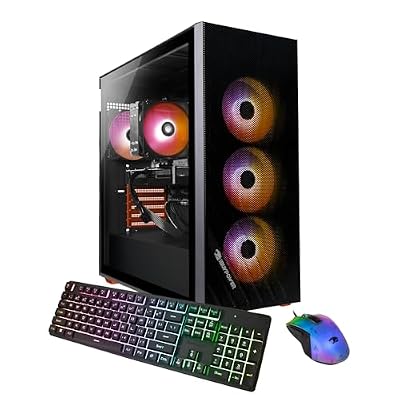
This guide serves first-time prebuilt buyers, families sharing one desktop, and lapsed players replacing an ageing tower. Every pick below was chosen from the processor, graphics card, memory and storage named on its Amazon product page, rather than from a headline claim. Upgrade notes only appear where the listing or manufacturer states the relevant slots or limits.
Quick Picks
As an Amazon Associate we earn from qualifying purchases.
| Product | Best for | Key spec from title |
|---|---|---|
| CyberPowerPC Gamer Xtreme VR GXiVR8060A24 | Balanced first tower for mixed 1080p play | Intel Core i5-13400F, GeForce RTX 4060 8GB, 16GB DDR5, 1TB PCIe Gen4 SSD |
| Skytech Azure 3 | Players who want a stronger CPU for everyday use too | Ryzen 7 9700X, NVIDIA RTX 4060 8GB, 1TB NVMe SSD, 16GB DDR5 RAM 6000 |
| iBUYPOWER Scale SCA5N46T01 | Casual players who want a 4060 Ti step up | Ryzen 5 7600, NVIDIA GeForce RTX 4060 Ti 8GB, 16GB DDR5, 1TB NVMe SSD |
| Skytech Nebula | Simpler DDR4 value for esports and older favourites | Ryzen 5 5500, NVIDIA RTX 4060 8GB GDDR6X, 1TB SSD, 16GB DDR4 RAM 3200 |
| CyberPowerPC Gamer Xtreme VR GXiVR8040A14 | Heavier multitasking beside casual gaming | Intel Core i7-13700F, GeForce RTX 4060 Ti 16GB, 16GB DDR5, 1TB NVMe SSD |
How to Choose
Match the graphics card to a 1080p target
Start with the display you already own, because a 1080p screen changes the sensible GPU completely. An RTX 4060 is the natural centre of this guide: it suits esports titles, Fortnite and most popular games at high settings without forcing a casual buyer into a larger tower. The RTX 4060 Ti adds breathing room for denser scenes and longer ownership, especially in its 16GB form. Chasing a much stronger card for a basic 60Hz or 144Hz 1080p monitor usually buys numbers you will rarely notice during relaxed evening sessions.
Balance the processor against memory, not hype
A gaming PC feels responsive when the CPU, RAM and storage stop interrupting the graphics card. Look for a modern six-core or better processor paired with 16GB of memory as the practical floor for Windows, launchers, voice chat and a browser running together. The exact configuration matters, though. One 16GB stick, as listed on the iBUYPOWER Scale, leaves a clear upgrade path but is not the same arrangement as two matched sticks. Before ordering, read the title and specification table literally, including memory speed, DDR generation and whether the installed amount uses one module or two.
Leave room for storage and simple upgrades
Game libraries grow quietly, so 1TB should be treated as the comfortable starting point for casual players who rotate several large titles. A 500GB drive fills quickly once Windows, two launchers and a few modern releases settle in. Upgradeability deserves the same attention: spare memory slots, an accessible M.2 position and enough power supply headroom decide whether a later improvement is simple. Listings do not always publish every detail, so confirm the motherboard slots and PSU wattage on the exact model page instead of assuming every tower in a familiar case offers identical room.
Notice where cheaper prebuilts cut corners
Savings often hide in parts that receive less attention than the GPU badge. Check whether Wi-Fi is built in, whether the power supply is named, how the processor is cooled, and which keyboard or mouse is actually included. A vague graphics line such as brand may vary is not automatically bad, yet it means the exact card maker can differ from the photos. Also inspect the Windows edition, warranty wording and port selection before checkout. Those details affect daily convenience far more than decorative lighting.
If Fortnite is the main reason for buying, our guide to gaming PCs built around Fortnite narrows the same decision to that one game and its settings.
The 5 Best Options
CyberPowerPC Gamer Xtreme VR GXiVR8060A24
This is the straightforward recommendation for a casual player who wants one tower to handle a varied library at 1080p. Its Core i5-13400F and RTX 4060 pairing avoids the common trap of a flashy processor beside a weak graphics card, while 16GB of DDR5 and a 1TB PCIe Gen4 SSD cover the basics without immediate additions. The Amazon listing also states four memory slots and a 128GB maximum, which gives this model clearer long-term memory room than many compact prebuilts. Choose it when you want balance first and have no need for the extra graphics memory of the Ti model below.
Specs
- Processor: Intel Core i5-13400F 2.5GHz
- Graphics: NVIDIA GeForce RTX 4060 8GB GDDR6
- Memory: 16GB DDR5, 5200 MHz
- Memory slots: 4, with 128GB maximum listed
- Storage: 1TB PCIe Gen4 SSD
- Operating system: Windows 11 Home
- Connectivity: WiFi Ready
- Included: Desktop, keyboard and mouse
Best for: A first prebuilt that should stay balanced across esports, family favourites and everyday Windows use.
Watch out for: Confirm the exact graphics outputs on the listing before pairing it with an older monitor that lacks DisplayPort.
ASIN: B0DCMPRRFD
Skytech Azure 3
The Azure 3 suits a household desktop that games casually but also handles schoolwork, office tasks, photo sorting and plenty of browser tabs. Its Ryzen 7 9700X is stronger than a casual 1080p library strictly requires, yet that headroom is paired sensibly with an RTX 4060 rather than an oversized graphics card. Skytech lists DDR5 6000 memory, a 1TB NVMe SSD, a 650W Gold power supply and a 360mm liquid cooler, so the supporting hardware is unusually explicit. Pick this version when processor longevity matters more to you than stepping up to a 4060 Ti on day one.
Specs
- Processor: AMD Ryzen 7 9700X 3.8 GHz, up to 5.5GHz Turbo Boost
- Graphics: NVIDIA GeForce RTX 4060 8GB GDDR6, brand may vary
- Memory: 16GB DDR5 RAM 6000 with heat spreader
- Storage: 1TB NVMe M.2 SSD
- Power supply: 650W Gold PSU
- Cooling: 360mm ARGB AIO liquid CPU cooler
- Operating system: Windows 11 Home 64-bit
- Case: Skytech Azure gaming case with tempered glass, white
- Warranty: 1 year on parts and labor as listed
Best for: A shared home PC where strong everyday performance matters alongside relaxed 1080p gaming.
Watch out for: The listing says the graphics card brand may vary, so do not buy expecting one specific RTX 4060 model shown in photos.
ASIN: B0DQ6PVLCV
iBUYPOWER Scale SCA5N46T01
Choose the Scale when your casual library includes heavier releases and you would rather begin with an RTX 4060 Ti than plan an early graphics upgrade. The Ryzen 5 7600 and DDR5 platform keep the build current, while the 1TB NVMe SSD avoids the cramped feeling of smaller entry towers. Its orange Scale case will not blend into every room, but the hardware brief is clear and focused. The important compromise sits in the memory line: the listing describes 16GB as a single 16×1 configuration, so a second matched DDR5 stick is the obvious first improvement when budget allows later.
Specs
- Processor: AMD Ryzen 5 7600
- Graphics: NVIDIA GeForce RTX 4060 Ti 8GB
- Memory: 16GB DDR5 Non-RGB 5200MHz RAM, listed as 16×1
- Storage: 1TB NVMe SSD
- Connectivity: WiFi Ready
- Operating system: Windows 11 Home
- Model: SCA5N46T01
- Case: iBUYPOWER Scale Orange gaming PC case
- Cooling: Tower air fan and RGB fans as described by iBUYPOWER
Best for: Casual players who play some demanding titles and want the 4060 Ti step without moving to a flagship tower.
Watch out for: Budget for a second matching 16GB DDR5 stick later if you want to move beyond the listed single-stick memory layout.
ASIN: B0DFLN7114
Skytech Nebula

The Nebula makes sense for a narrower job: esports, older favourites and popular games on a 1080p screen, using a mature DDR4 platform to keep the specification simple. Its Ryzen 5 5500 is modest beside the other processors here, but the RTX 4060 remains the part doing most of the gaming work, and the 1TB NVMe SSD is the right size for a rotating library. Skytech also names a 650W Gold power supply, which is reassuring in a value-focused build. Buy it knowingly as a present-day 1080p machine, not as the longest upgrade platform in this group.
Specs
- Processor: AMD Ryzen 5 5500 3.6 GHz, up to 4.2GHz Turbo Boost
- Graphics: NVIDIA GeForce RTX 4060 8GB GDDR6X
- Memory: 16GB DDR4 RAM 3200 with heat spreader
- Storage: 1TB NVMe M.2 SSD
- Power supply: 650W Gold PSU
- Connectivity: Wi-Fi
- Operating system: Windows 11 Home 64-bit
- Model: ST-NEBULA-1343-B-AM
- Case: Skytech Nebula gaming case, black
Best for: Players focused on esports and established favourites who value a full 1TB drive and a named power supply.
Watch out for: DDR4 and the Ryzen 5 5500 give this tower less future platform room than the DDR5 picks, so check that trade-off suits your plans.
ASIN: B0D9KVXPP6
CyberPowerPC Gamer Xtreme VR GXiVR8040A14

This second CyberPowerPC earns its place for buyers whose casual gaming sits beside heavier multitasking, large downloads, creative hobbies or frequent streaming apps. The Core i7-13700F brings more processor capacity than a Fortnite-only machine needs, while the RTX 4060 Ti 16GB offers more graphics memory than the standard 4060 models above. CyberPowerPC lists a B760 chipset and a 1TB PCIe Gen4 NVMe SSD, keeping storage aligned with the stronger hardware. It is the least minimal option here, so choose it for the combined workload, not because a casual 1080p library alone demands an i7 processor.
Specs
- Processor: Intel Core i7-13700F 2.1GHz, 8+8 cores
- Chipset: Intel B760
- Graphics: NVIDIA GeForce RTX 4060 Ti 16GB
- Graphics outputs: 1x HDMI and 2x DisplayPort as listed
- Memory: 16GB DDR5
- Storage: 1TB PCIe Gen4 NVMe SSD
- Connectivity: Wi-Fi Ready
- Operating system: Windows 11 Home 64-bit
- Model: GXiVR8040A14
Best for: A busier household PC that mixes casual gaming with demanding everyday multitasking and longer ownership.
Watch out for: Check the listing’s current configuration carefully, because similar Gamer Xtreme model numbers use different processors and graphics cards.
ASIN: B0CBL8N3FC
Which One Fits Your Situation
You are buying your first gaming tower
Start with the CyberPowerPC Gamer Xtreme VR GXiVR8060A24. Its RTX 4060, 16GB of DDR5 and 1TB SSD match a typical 1080p library without pushing you toward hardware meant for a high-refresh 1440p desk. The listed memory slots also leave a simple path forward if your habits change over the next few years.
The PC will be shared by the whole household
Look at the Skytech Azure 3 when gaming shares time with homework, office work and general family use. The Ryzen 7 9700X gives the machine extra everyday headroom, while the RTX 4060 still keeps the focus on popular 1080p titles. Its named 650W Gold power supply and liquid cooler make the specification easier to judge.
Your library includes heavier new releases
The iBUYPOWER Scale is the cleaner fit when you occasionally move beyond esports into larger releases. Its RTX 4060 Ti provides more graphics room than the standard 4060 picks, and the Ryzen 5 7600 keeps the platform modern. Just remember that the listed memory arrives as one 16GB stick, not a matched pair.
You mainly play esports and older favourites
The Skytech Nebula covers that narrower routine without shrinking the SSD to a frustrating size. An RTX 4060 drives the gaming side, the Ryzen 5 5500 handles lighter titles, and 1TB leaves room for several installations. Accept the older DDR4 platform as the compromise that makes this particular configuration work.
Common Mistakes
- Choosing by processor name alone and overlooking a weak graphics card, even though the GPU does most of the work in games.
- Buying a 500GB tower for a modern library, then juggling installs every time a large update or new release arrives.
- Assuming 16GB always means two memory sticks, when some listings install one 16GB module and leave performance and upgrades different.
- Ignoring the power supply, Wi-Fi, monitor outputs and warranty because the case lighting dominates the product photos.
- Paying for a much stronger graphics card while keeping an old 1080p 60Hz monitor that cannot show the extra output well.
Frequently Asked Questions
Is 16GB of RAM enough for casual gaming?
For the use case in this guide, yes. Sixteen gigabytes covers Windows, a game, a launcher and voice chat comfortably at 1080p. The configuration still matters: two matched sticks are preferable where listed, and a single-stick system such as the Scale gives you a clear later upgrade rather than the ideal starting layout.
Should a casual gamer choose the RTX 4060 or 4060 Ti?
Choose the RTX 4060 for esports, Fortnite, Minecraft and most popular titles at 1080p. Pick the 4060 Ti if you play heavier releases, prefer higher settings or expect to keep the tower longer. The 16GB Ti model adds graphics memory, but it is not necessary for a light library.
How much storage should a first gaming PC have?
One terabyte is the sensible target for most casual players. It leaves room for Windows, several large games, updates and everyday files without constant deleting. A smaller SSD can work for one or two favourite titles, yet it becomes restrictive quickly once friends rotate through different multiplayer games together.
Can these prebuilt PCs be upgraded later?
Most towers here can accept more storage or memory, but the easy path depends on spare slots, physical clearance and power supply capacity. Check the exact listing before buying, especially for graphics upgrades. A named PSU wattage and available memory slots are useful signs, though neither guarantees compatibility with every future component.