Affiliate disclosure: As an Amazon Associate we earn from qualifying purchases. This post contains affiliate links — if you buy through them we may earn a small commission at no extra cost to you. This never affects our recommendations.
As an Amazon Associate we earn from qualifying purchases at no extra cost to you.


The line between gaming and creative work has never been thinner. Today’s content creators stream their gameplay, edit 4K footage between sessions, and render 3D assets on the same machine they use to run AAA titles at ultra settings. That dual-purpose demand has created a new category: the creator gaming laptop — a machine that refuses to compromise on either front.
The challenge is that gaming laptops and creative workstations traditionally optimize for different things. Gaming rigs prioritize raw GPU throughput and fast refresh rates, often at the expense of display color accuracy. Creative workstations lean into wide color gamuts, factory calibration, and thermal headroom for sustained rendering loads — but rarely ship with the kind of GPU firepower needed for modern titles at high frame rates.
The best dual-purpose machines in 2026 solve this tension through three key pillars. First, a display that covers at least 100% of the DCI-P3 color space (for accurate creative work) while also delivering a high refresh rate of 120Hz or above (for smooth gameplay). Second, a discrete GPU with enough VRAM to handle both rasterized gaming and GPU-accelerated tasks like CUDA rendering, video transcoding, and AI-assisted editing. Third, sufficient RAM — 32GB is the practical minimum if you routinely run DaVinci Resolve, Blender, or Adobe Premiere alongside a game or browser-heavy research workflow.
Below, we rank the five best creator gaming laptops of 2026, with full reviews, a head-to-head comparison table, and a buying guide to help you pick the right machine for your specific workload.
In a hurry? See the top-rated Creator Gaming Laptop deals available right now:
🛒 Check Creator Gaming Laptop Prices on Amazon →🛒 Best Price Today on Amazon
Prime members get fast, free shipping on everything above, plus member-only deals. New members get a 30-day free trial — cancel anytime.
Start 30-Day Prime Free Trial →See Today’s Amazon DealsQuick Comparison: Top 5 Creator Gaming Laptops (2026)
| Model | GPU | Display | RAM | Storage | Weight | Price Range |
|---|---|---|---|---|---|---|
| ASUS ProArt Studiobook 16 | RTX 4070 | 4K OLED, 120Hz, 100% DCI-P3 | 32GB DDR5 | 1TB NVMe | 2.4 kg | $2,199+ |
| Razer Blade 16 | RTX 4090 (opt.) | QHD+ OLED, 240Hz, 100% DCI-P3 | 32GB DDR5 | 1TB NVMe | 2.17 kg | $2,799+ |
| MSI Creator Z16 HX Studio | RTX 4070 | QHD+ mini LED, 165Hz, 100% DCI-P3 | 32GB DDR5 | 1TB NVMe | 2.0 kg | $2,099+ |
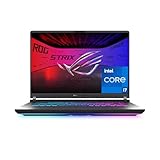
| ASUS ROG Zephyrus G16 | RTX 4080 | QHD+ OLED, 240Hz, 100% DCI-P3 | 32GB DDR5 | 1TB NVMe | 1.85 kg | $2,499+ |
| Lenovo ThinkBook 16p | RTX 4070 | 3.2K IPS, 165Hz, 100% sRGB | 32GB DDR5 | 1TB NVMe | 2.1 kg | $1,799+ |
5 Best Creator Gaming Laptops Reviewed
1. ASUS ProArt Studiobook 16
The professional’s choice that can hold its own in-game.
The ProArt Studiobook 16 is what happens when a workstation manufacturer takes gaming seriously without losing its creative DNA. Built around an Intel Core Ultra 9 185H and NVIDIA RTX 4070 Laptop GPU, this machine ships with factory-calibrated color accuracy that meets the Delta E < 2 standard out of the box — something most gaming laptops still don't bother with. The 4K OLED panel at 120Hz is a creative dream: blacks are absolute, contrast is effectively infinite, and every color-critical decision you make in Lightroom, Premiere, or Blender reflects what your audience will actually see.
For gaming, the RTX 4070 handles 1080p and 1440p titles comfortably on high-to-ultra settings. At native 4K, you’ll need to dial settings down in more demanding titles, but the DLSS 3 support means you rarely have to sacrifice visual quality. The Studiobook’s ASUS ProArt Creator Hub software lets you switch between “Creator” and “Performance” thermal profiles on the fly — a thoughtful touch when you need to move from a Blender render to a gaming session without rebooting. Battery life lands around 5–6 hours in mixed creative use, which is average for this class.
The trade-off is weight (2.4 kg) and a price that reflects its professional pedigree. But for a creator who bills clients and needs their display to be trustworthy, no other laptop on this list ships with the same level of certified color accuracy at a comparable resolution.
Pros:
- Factory-calibrated 4K OLED display (Delta E < 2)
- Excellent sustained performance in long renders
- ASUS Creator Hub for workload-switching
- Strong build quality with MIL-STD-810H rating
Cons:
- Heaviest on the list at 2.4 kg
- RTX 4070 struggles at native 4K in demanding games
- Battery life is average
Best For: Professional creators — photographers, video editors, 3D artists — who also game regularly and need color accuracy they can stake client work on.
2. Razer Blade 16
The most powerful dual-purpose laptop money can buy.
The Razer Blade 16 is the benchmark against which every other creator gaming laptop is measured. In its top configuration, it pairs an Intel Core i9-14900HX with an NVIDIA RTX 4090 Laptop GPU — making it one of the few laptops capable of running modern AAA titles at 1440p on maxed-out settings without breaking a sweat. The QHD+ OLED display at 240Hz is the best gaming display on any laptop in this category: fast enough for competitive titles, color-accurate enough for professional post-production work, and bright enough at 500 nits to use comfortably in a variety of environments.

What sets the Blade 16 apart from pure gaming machines is Razer’s restraint. The chassis is machined aluminum, understated, and more at home in a production studio than a LAN party. The display’s 100% DCI-P3 coverage is hardware-verified, and Razer includes color calibration software that lets you lock the panel to specific presets for different workflows. Adobe Premiere’s GPU acceleration, DaVinci Resolve’s CUDA rendering, and even Stable Diffusion all benefit from the RTX 4090’s 16GB of GDDR6 VRAM. For streamers, the NVIDIA Broadcast integration runs on-GPU, meaning your CPU stays free for encoding while AI noise cancellation and background removal run silently in the background.
The RTX 4090 configuration commands a significant premium, and battery life suffers accordingly — expect 3–4 hours in mixed use at full performance. The laptop also runs warm under sustained creative or gaming loads, and the fan profile can be aggressive. But if you want the most capable machine on this list and can afford it, the Blade 16 doesn’t ask you to compromise.
Pros:
- RTX 4090 option for uncompromising GPU performance
- Best-in-class 240Hz OLED display
- Premium, understated build quality
- Excellent NVIDIA ecosystem integration (Broadcast, DLSS 3, CUDA)
Cons:
- Expensive, especially at RTX 4090 tier
- Battery life is limited at max performance
- Runs warm under sustained loads
Best For: Power users — streamers, 3D artists, VFX creators — who refuse to accept any performance trade-off and have the budget to match.
3. MSI Creator Z16 HX Studio
The content creator’s laptop that secretly games.
The MSI Creator Z16 HX Studio takes a different approach to the dual-purpose problem: it leads with content creation credentials and layers gaming capability on top, rather than the other way around. The result is a machine with a 16-inch QHD+ mini LED display that hits 165Hz and 100% DCI-P3, powered by an Intel Core i9-13980HX and RTX 4070. The mini LED panel deserves special mention — it delivers local dimming that produces near-OLED blacks while maintaining the brightness advantage of LCD technology, making it one of the most versatile displays on any laptop in this price range.
For creative workloads, the Z16 excels. MSI’s Creator Center lets you switch between Silent, Balanced, and Turbo modes, and the machine sustains high clock speeds well under extended rendering loads thanks to a robust dual-fan cooling system. DaVinci Resolve, Adobe After Effects, and Blender all run without the thermal throttling that plagues thinner machines. For gaming, the RTX 4070 delivers solid 1440p performance and the 165Hz panel keeps gameplay feeling responsive. The keyboard is comfortable for long writing or coding sessions — an underrated advantage for creators who spend as much time at the keyboard as at a mouse.
The Z16’s main limitation is its aesthetic conservatism, which some creators will appreciate (it doesn’t scream “gamer” in a client meeting) and others may find dull. It’s also slightly thicker and heavier than the ROG Zephyrus G16, though the trade-off is better thermal headroom for sustained workloads.
Pros:
- Excellent mini LED display with local dimming
- Strong sustained performance under creative workloads
- Versatile Creator Center software
- Professional, understated design
Cons:
- RTX 4070 is mid-tier for GPU-heavy creative tasks
- Heavier than the Zephyrus G16
- No OLED option
Best For: Content creators and video editors who game casually and want a professional-looking machine with serious creative chops.

4. ASUS ROG Zephyrus G16
The thinnest machine that refuses to compromise on either front.
The ASUS ROG Zephyrus G16 is the engineering achievement of the group. At 1.85 kg, it’s the lightest and thinnest laptop on this list, yet it houses an RTX 4080 Laptop GPU and a 240Hz QHD+ OLED panel that covers 100% of DCI-P3. ASUS achieves this through a vapor chamber cooling system that keeps thermals manageable even under sustained gaming or rendering loads — a genuine feat given the chassis dimensions. For creators who travel frequently between shoots, studio sessions, or events, the Zephyrus G16 is the machine that fits in a camera bag without breaking your back.
The RTX 4080 sits between the RTX 4070 of the Studiobook and the RTX 4090 of the Blade 16, but in practice it’s more than sufficient for most creative workloads. GPU-accelerated video exports in Premiere are fast, Blender Cycles renders complete in competitive times, and the 16GB VRAM handles most AI-assisted editing tasks without hesitation. For gaming, the 240Hz OLED panel is a genuine competitive advantage — fast enough for esports titles and beautiful enough for single-player games that reward visual fidelity.
Battery life is the Zephyrus G16’s strongest suit relative to competitors: expect 7–8 hours in light creative work or productivity tasks. It drops to 3–4 hours under gaming loads, but the MUX switch and AMD’s integrated graphics allow the system to intelligently throttle GPU usage when discrete power isn’t needed. The ROG Armoury Crate software is more feature-rich than most competitors, offering granular fan curve control, per-key RGB customization, and workload-based performance profiles.
Pros:
- Lightest and thinnest on the list (1.85 kg)
- 240Hz OLED display with 100% DCI-P3
- RTX 4080 hits the sweet spot for gaming and creative work
- Best battery life in the group
Cons:
- ROG Armoury Crate software can feel bloated
- Slightly smaller keyboard deck due to thin chassis
- Gaming aesthetic may not suit all professional environments
Best For: Creators who move constantly — travel photographers, event videographers, mobile streamers — and need high performance in a genuinely portable form factor.
5. Lenovo ThinkBook 16p
The business-first hybrid with gaming DNA.
The Lenovo ThinkBook 16p occupies a unique position: it’s the only laptop on this list that targets business users first and gamers second, while still delivering enough GPU horsepower to handle both. Powered by AMD Ryzen 9 7945HX and NVIDIA RTX 4070, it offers a 3.2K IPS display at 165Hz that covers 100% of sRGB and 95% of DCI-P3 — not quite the color accuracy of the OLED options above, but sufficient for most video editing and photography workflows that don’t demand print-grade precision. The ThinkBook’s calling card is its enterprise-grade build quality: it meets MIL-STD-810H standards, includes a fingerprint reader and IR camera for business authentication, and ships with Windows 11 Pro.
Performance is strong across both workloads. AMD’s Ryzen 9 architecture excels at multi-threaded tasks — video encoding, audio processing, batch photo exports — often outpacing Intel competitors in pure CPU workloads. The RTX 4070 handles gaming at 1440p on high settings without issue, and the DLSS 3 support ensures demanding titles stay playable. Lenovo’s Intelligent Cooling system adapts thermal profiles automatically, reducing fan noise during lighter tasks and ramping up intelligently under load. The keyboard is widely regarded as one of the best on any laptop — a reflection of ThinkBook’s business heritage that creative professionals who type extensively will appreciate.
The entry price is the most attractive on this list, making the ThinkBook 16p the best value pick for creators who don’t need the cutting-edge display or chassis engineering of the Razer or ASUS options. The IPS panel’s slightly narrower color gamut and lack of OLED contrast are the main trade-offs at this price point.
Pros:
- Best value for money on the list
- AMD Ryzen 9 excels in CPU-intensive creative tasks
- Exceptional keyboard quality
- Business-grade build and security features
Cons:
- IPS panel (not OLED) with slightly narrower DCI-P3 coverage
- Less premium chassis feel vs. Razer or ASUS
- Gaming aesthetic is intentionally absent
Best For: Business professionals and hybrid workers who game after hours and want a single machine that is equally credible in a boardroom and a game session.
How to Choose the Best Creator Gaming Laptop
1. GPU: Unified Power for Both Workloads
The GPU does the heaviest lifting in both gaming and creative workflows. For 2026, an RTX 4070 Laptop GPU is the practical floor for a machine that takes both use cases seriously — it handles 1440p gaming on high settings and accelerates tasks like CUDA rendering, AI upscaling in video editing tools, and hardware encoding for streaming. If your creative work involves heavy 3D rendering, machine learning, or VFX compositing, step up to the RTX 4080 or 4090 for their additional VRAM (12–16GB) and raw CUDA core count. AMD GPU options exist but the NVIDIA ecosystem — DLSS, CUDA, NVENC, Broadcast — remains meaningfully better integrated for creators who also game.
2. Display: Color Accuracy and Refresh Rate Are Not Mutually Exclusive
In 2026, you no longer have to choose between a color-accurate display and a high-refresh gaming panel. OLED technology delivers both simultaneously: 100% DCI-P3 coverage, near-zero response times, and refresh rates up to 240Hz in a single panel. For professional color work, look for factory calibration (Delta E < 2) rather than relying on software calibration alone. For gaming, prioritize 165Hz or higher. Every OLED display on this list meets both standards. If budget forces you toward IPS, ensure the panel covers at least 95% of DCI-P3 and hits 120Hz minimum.
3. RAM: 32GB Is the New Minimum
16GB of RAM was acceptable two years ago. In 2026, running DaVinci Resolve alongside a Chrome browser with 20+ tabs and Discord in the background will push a 16GB machine to swap constantly, degrading creative workflow performance significantly. 32GB DDR5 is the practical minimum for a dual-purpose machine. All five laptops on this list ship with 32GB as standard or as the recommended configuration. If you work with large Premiere Pro timelines, high-resolution Blender scenes, or multiple virtual machines, look for models with upgradeable RAM slots and target 64GB.
4. Battery Life: Manage Expectations by Workload
No creator gaming laptop delivers all-day battery life under gaming or rendering loads — physics and thermals make this impossible at current GPU TDP levels. The realistic question is how long the machine lasts during lighter creative tasks: writing, reviewing footage, color grading in a low-performance mode. The ROG Zephyrus G16 leads this group at 7–8 hours in mixed productivity use. The Razer Blade 16 at RTX 4090 configuration is the shortest at 3–4 hours. If you regularly work away from power outlets, prioritize machines with MUX switches that can disable the discrete GPU entirely during lighter workloads.
5. OS Ecosystem: Windows vs. macOS
Apple’s MacBook Pro M4 is conspicuously absent from this list, and intentionally so: its gaming library remains fundamentally limited in 2026, making it a weak choice for serious gamers regardless of its creative excellence. Windows dominates PC gaming, and all five laptops here run Windows 11. If your creative workflow is heavily invested in Apple’s ecosystem (Final Cut Pro, Logic Pro, iCloud), a MacBook Pro M4 is a compelling creative workstation — but you will sacrifice gaming breadth. For most creators who game regularly, Windows remains the only practical choice.
Final Verdict
Best overall: The ASUS ROG Zephyrus G16 strikes the best balance of weight, display quality, GPU performance, and battery life for most dual-purpose users. The 240Hz OLED panel and RTX 4080 handle everything from competitive gaming to serious creative work without forcing significant trade-offs.
Best for professionals: The ASUS ProArt Studiobook 16 is the right call if display color accuracy is non-negotiable for client deliverables. No other machine on this list matches its factory calibration credentials.
Best for power users: The Razer Blade 16 with RTX 4090 is the top-tier pick for creators who run GPU-intensive workflows and want the best gaming performance available in a laptop form factor.
Best value: The Lenovo ThinkBook 16p delivers genuine dual-purpose capability at the lowest entry price, with AMD’s Ryzen 9 offering a CPU performance advantage that pays dividends in multi-threaded creative tasks.
Whatever your budget, the creator gaming laptop market in 2026 has matured to the point where you genuinely no longer have to own two machines. The five options above prove that gaming and creative excellence can — and do — share the same chassis.
Frequently Asked Questions
What makes a laptop good for both gaming and content creation?
A strong GPU and multi-core CPU, plenty of RAM, fast storage, and a color-accurate display. The display matters for creative work, while the GPU drives both gaming and rendering.
Do I need a color-accurate screen for creative work?
Yes, if you do photo, video, or design work. Look for high sRGB or DCI-P3 coverage and factory calibration. Gaming-focused laptops sometimes skimp on color accuracy.
How much RAM does a creator gaming laptop need?
32GB is recommended for content creation alongside gaming, as video editing and 3D work are memory-hungry. 16GB is a minimum that may limit heavier creative projects.
Creator laptop or pure gaming laptop?
A creator gaming laptop adds a better display and more RAM for productivity at a higher price. If you only game, a pure gaming laptop offers more performance per dollar.
Related Articles
Looking for more on this topic? Browse the hand-picked guides below — each one applies the same scoring rubric used in this review.