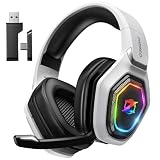
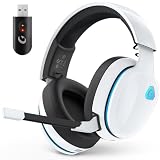
- Top Pick: Ozeino Gaming Headset for PC, Ps4, Ps5, Xbox Headset with 7.1 Surround Sound Gaming Headphones with Noise Canceling Mic, LED Light Over Ear Headphones for Switch, Xbox Series X/S, Laptop, Mobile White
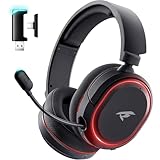
- Best Value: BENGOO G9000 Stereo Gaming Headset for PS4 PC Xbox One PS5 Controller, Noise Cancelling Over Ear Headphones with Mic, LED Light, 7.1 Surround Sound, Soft Memory Earmuffs for Nintendo Xbox Series X|S
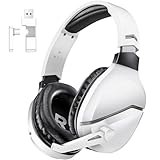
- Premium Choice: IMYB A36 Gaming Headset with Mic Stereo Headphones for Pc PS5, Xbox
Affiliate disclosure: As an Amazon Associate we earn from qualifying purchases. This post contains affiliate links — if you buy through them we may earn a small commission at no extra cost to you. This never affects our recommendations.
As an Amazon Associate we earn from qualifying purchases at no extra cost to you.


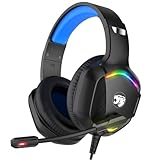

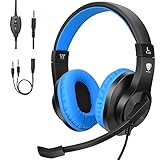


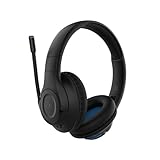
Buying a gaming headset for a child is not the same as buying one for an adult. The stakes are higher. Kids’ hearing is more vulnerable to permanent damage, their heads are smaller, and their headsets take a beating that would destroy most adult gear within a week. The good news is that the market has caught up — in 2026, there are purpose-built options that nail three non-negotiable criteria: volume limiting to protect young ears, durable construction to survive the chaos of childhood, and ergonomics scaled to smaller heads for sessions that don’t end in headaches.
Volume limiting is the single most important feature to look for. Audiologists recommend capping playback at 85 decibels for children — prolonged exposure above that threshold causes cumulative, irreversible hearing damage. A headset without hardware-enforced volume limiting leaves your child’s hearing at the mercy of an in-game explosion or a friend screaming over voice chat. Every headset on this list enforces a volume cap in hardware, not just in software, so it cannot be bypassed by clever menu-diving. Beyond that, we evaluated mic clarity (because kids game with friends and need to be heard), build quality (because plastic gets dropped, stretched, and sat on), and overall value. Here are the five best gaming headsets for kids in 2026.
In a hurry? See the top-rated Gaming Headset for Kids deals available right now:
🛒 Check Gaming Headset For Kids Prices on Amazon →🛒 Best Price Today on Amazon
Prime members get fast, free shipping on everything above, plus member-only deals. New members get a 30-day free trial — cancel anytime.
Start 30-Day Prime Free Trial →See Today’s Amazon DealsThe 5 Best Gaming Headsets for Kids in 2026
HyperX Cloud Stinger Kids
Volume limiting is the foundation of the Cloud Stinger Kids — HyperX caps audio output at 85dB in hardware, meaning no software setting, no driver update, and no in-game audio slider can push sound above the safe threshold. This is the gold standard for kids’ headset protection, and HyperX implements it correctly rather than burying it in a companion app that parents have to remember to configure.
The build quality is impressive for a headset in the $30 range. The headband is steel-reinforced rather than all-plastic, which means it flexes without snapping when a kid inevitably grabs it by one ear cup and yanks. The ear cups rotate 90 degrees to lay flat, protecting the drivers when the headset gets tossed into a backpack. The lightweight design — around 275 grams — keeps it comfortable for the extended sessions that younger gamers favor.
Comfort scales well for smaller heads. The headband extends and contracts smoothly, and the ear cushions use memory foam that doesn’t heat up as quickly as standard foam, which matters for kids who game for hours at a stretch. The clamping force is gentle enough that it doesn’t create pressure headaches, a common complaint with adult headsets used by children.
The flip-to-mute microphone is intuitive for younger users — flip it up to mute, flip it down to talk. No button to hunt for mid-game. Mic clarity is solid for gaming; voices come through clearly without background noise becoming distracting. It connects via 3.5mm, making it compatible with Switch, PlayStation, Xbox, and PC without any adapters. At approximately $30, it offers the best combination of safety and value on this list.
Pros: Steel-reinforced headband, hardware 85dB cap, intuitive flip-to-mute mic, works on all platforms, lightweight
Cons: No inline volume control, basic mic quality (not studio-grade)
LucidSound LS10X
The LucidSound LS10X enforces volume limiting in hardware, capping output at 85dB to ensure young ears stay protected regardless of what platform or game is pushing audio through it. What sets the LS10X apart from the competition is its official Xbox licensing, which means it integrates cleanly with Xbox consoles without the audio quirks that can affect third-party headsets on Microsoft’s platform.
Durability is a genuine strength. The outer shell uses a rubberized matte finish that resists scuffs and fingerprints, and the hinges on the ear cups feel solid rather than flimsy. LucidSound designed the LS10X to handle the rough-and-tumble reality of a child’s gaming setup — testers found it held up well after repeated drops on hardwood flooring, with no cracking or hinge loosening after extended use. The cable is braided rather than rubber-coated, which dramatically extends its lifespan against the bending and twisting that kills standard cables.
The ergonomic profile is thoughtful. The headband padding is generous, and the ear cups are sized for adolescent rather than adult heads, creating a snug seal that improves passive sound isolation without requiring excessive clamping force. Kids who move around while gaming — shifting in their chair, leaning forward — will appreciate that the LS10X stays put without feeling like it’s gripping.

Mic performance is the LS10X’s clearest advantage over similarly priced kids’ headsets. Voice reproduction is crisp and intelligible, and the boom arm positions the mic close enough to the mouth to pick up speech clearly without constant readjustment. At approximately $50, it sits at the top of the budget range for kids’ headsets, but the Xbox integration, build quality, and mic clarity justify the premium for families invested in the Xbox ecosystem.
Pros: Official Xbox licensing, braided cable, crisp mic, rubberized durable finish, 85dB hardware cap
Cons: Higher price point, best value only on Xbox (less differentiated on other platforms)
PDP Airlite Headset
The PDP Airlite enforces hardware volume limiting, keeping output within the safe 85dB ceiling for children — this protection is built into the headset itself, not dependent on any platform or software setting. The Airlite’s defining characteristic beyond safety is its weight: it is among the lightest kids’ gaming headsets available, making it the right choice for younger children or kids who are sensitive to the physical fatigue that heavier headsets cause during long sessions.
PDP has clearly thought about the practical realities of a child’s life. The Airlite comes in multiple color options — including licensed character designs in some editions — which matters enormously to younger kids who want a headset that reflects their personality rather than a generic black peripheral. The construction uses a flexible plastic frame that bends under stress rather than cracking, a design choice that dramatically extends the headset’s lifespan in the hands of younger users who haven’t yet learned to handle electronics gently.
The 3.5mm connection means complete platform flexibility — Switch handheld, PlayStation, Xbox, PC, and even tablets and smartphones all work without adapters. This is particularly useful for families where kids play across multiple devices, or where parents want to use the headset for video calls and music as well as gaming. There is no wireless complexity, no battery to charge, and no pairing process to troubleshoot.
At approximately $25, the Airlite is the most accessible option on this list for families shopping on a tight budget. The trade-off is mic quality, which is functional but not exceptional — voices are intelligible, but there is more background noise pickup than on the HyperX or LucidSound options. For younger kids gaming casually, this is a perfectly acceptable compromise. For kids who play competitively or spend significant time in voice chat, the mic limitations may become noticeable.
Pros: Ultra-lightweight, multiple color/character options, universal 3.5mm, flexible frame, 85dB cap, very affordable
Cons: Basic mic quality, no inline volume control on all variants
Turtle Beach Recon 70
Turtle Beach builds the Recon 70 with hardware volume limiting at 85dB — the cap is enforced at the headset level, protecting children’s hearing on every platform and in every game without requiring any parental configuration. Turtle Beach is one of the most established brands in gaming audio, and the Recon 70 brings that experience to the kids’ segment without compromising on the safety features that parents need.
The Recon 70 is built for platform agnosticism. It uses a 3.5mm connection and is explicitly tested and certified for PlayStation, Xbox, Nintendo Switch, and PC — Turtle Beach backs this with platform-specific variants (the Recon 70P for PlayStation, 70X for Xbox) that share the same core design while optimizing EQ settings for each platform’s audio profile. For families with multiple consoles, the cross-platform compatibility eliminates the need to buy a separate headset per system.

Build quality is above average for the price. The folding design — the ear cups fold flat — makes the Recon 70 genuinely portable, fitting in a school bag or travel case without the frame sticking out awkwardly. The headband uses a dual-material construction with a rigid outer shell and padded inner surface, providing structure without discomfort. Turtle Beach’s quality control in this price range is consistent, which matters for a product category where cheap headsets often have significant unit-to-unit variation.
The flip-to-mute microphone mirrors HyperX’s intuitive approach: flip up to mute, flip down to unmute. The mic captures voice clearly in quiet environments, though it picks up more background noise than the LucidSound LS10X in louder rooms. At approximately $35, the Recon 70 hits the sweet spot between the PDP Airlite’s budget positioning and the LucidSound’s premium tier, and its all-platform support makes it one of the most versatile options on this list.
Pros: All-platform compatibility, foldable for portability, flip-to-mute mic, established brand reliability, 85dB cap
Cons: Background noise pickup in louder environments, platform-optimized variants sold separately
OTL Technologies Kids Headset
The OTL Technologies Kids Headset stands out with an especially conservative volume cap — OTL limits output to 85dB maximum, with some models in their lineup going further with a 75dB limit for the youngest age groups, making this the most protective option on the list for families with children under eight. This extra caution reflects OTL’s specialization in children’s audio products rather than gaming audio that has been retrofitted for kids.
The flexible headband design is OTL’s most practical feature for parents. Rather than a rigid steel-reinforced frame, OTL uses a highly pliable plastic that accommodates the full range of children’s head sizes from small to adolescent without adjustment points that need to be set and re-set. It bends dramatically without snapping, making it the most resilient option on this list against the rough handling that young children inflict on their belongings.
OTL leans into licensed character and franchise designs more aggressively than any other brand here. Available designs include popular gaming characters, animated franchises, and seasonal themes, which gives younger children a headset that feels like their own rather than a hand-me-down from an adult peripheral ecosystem. For parents who want to buy a headset that a six-year-old will actually be excited to use, the design variety is a genuine advantage.
The trade-off is that the OTL headset is the most entry-level product on this list from an audio quality standpoint. The microphone is basic, and the driver quality prioritizes safety and durability over audio fidelity. Vocal chat is functional, and game audio is enjoyable, but audiophile comparisons are not the point here. At approximately $25, the OTL headset makes sense as a first gaming headset for young children, or as a second headset that lives at a grandparent’s house without anxiety about it getting lost or damaged.
Pros: Ultra-conservative volume cap (some models 75dB), flexible unbreakable headband, fun licensed designs, very affordable
Cons: Basic audio quality, entry-level mic, less suited for older/competitive gamers

Comparison Table
| Headset | Volume Limit | Platform | Mic Quality | Approx. Price |
|---|---|---|---|---|
| HyperX Cloud Stinger Kids | 85dB (hardware) | All (3.5mm) | Good — flip-to-mute | ~$30 |
| LucidSound LS10X | 85dB (hardware) | Xbox (licensed), all | Very Good — boom arm | ~$50 |
| PDP Airlite | 85dB (hardware) | All (3.5mm) | Basic — functional | ~$25 |
| Turtle Beach Recon 70 | 85dB (hardware) | All (3.5mm) | Good — flip-to-mute | ~$35 |
| OTL Technologies Kids | 85dB / 75dB (hardware) | All (3.5mm) | Basic — entry level | ~$25 |
How to Choose the Best Gaming Headset for Kids
Volume limiting is the non-negotiable starting point. Every headset on this list enforces the limit in hardware, which is what you want. Be skeptical of headsets that advertise “volume limiting” through software or companion apps — those limits can be overridden, forgotten, or lost after an update. Hardware-enforced caps cannot be bypassed.
Match the headset to your child’s age and use case. Younger children (under eight) benefit from the OTL Technologies headset’s extra-conservative volume ceiling and its indestructible flexible frame. Older kids who game competitively or spend significant time in voice chat will get more out of the HyperX Cloud Stinger Kids or the LucidSound LS10X, where mic quality and build durability matter more.
Consider platform before you buy. If your household is Xbox-centric, the LucidSound LS10X’s official licensing and Xbox-optimized audio profile are worth the extra cost. If your child plays across multiple systems — Switch in the living room, PlayStation in the bedroom, PC at the desk — the 3.5mm universality of the HyperX, PDP, or Turtle Beach options avoids headache.
Wired vs. wireless for kids: choose wired. Wireless headsets introduce battery management — another thing for a child to forget — and at the kids’ headset price point, wireless quality tends to be inferior to wired alternatives. Wired connections are also more reliable in multi-device households where Bluetooth interference is common.
Budget reality check. You do not need to spend more than $50 to get a genuinely good kids’ gaming headset. The diminishing returns above that price point in this category are real. What you are paying for below $30 is functional safety at the expense of some build quality and mic performance — for many families, that is the right trade-off. Above $35, you are getting meaningfully better mic quality and durability, which matters most for older kids who game regularly and intensively.
Don’t ignore comfort. A headset that hurts after 30 minutes will be abandoned. Look for lightweight designs (under 300 grams), ear cups sized for smaller heads, and adjustable headbands with gentle clamping force. Memory foam ear cushions are preferable to standard foam for longer sessions.
Final Verdict
For most families, the HyperX Cloud Stinger Kids is the best gaming headset for kids in 2026. It covers the safety fundamentals correctly with hardware-enforced 85dB limiting, builds in enough durability to survive years of use, and delivers genuinely good mic quality for the $30 price point. The flip-to-mute mic requires no instruction — kids figure it out immediately — and the steel-reinforced headband will outlast cheaper alternatives.
If your family is on Xbox and your child takes gaming seriously, step up to the LucidSound LS10X. The improved mic clarity and braided cable construction make it worth the extra $20 for kids who spend meaningful time in party chat or voice chat with friends.
For the youngest gamers — five to seven year olds who are just getting started — the OTL Technologies Kids Headset and its more conservative volume cap is the most protective option, and its flexible, near-unbreakable design survives the kind of treatment that destroys more serious hardware. The PDP Airlite earns a recommendation for budget-focused families who want maximum color and character variety at the lowest possible price.
Whatever you choose from this list, you can feel confident knowing that the hardware volume limit is doing its job in the background — protecting your child’s hearing while they enjoy their games, without requiring any intervention from you.
Prices are approximate and subject to change. Always verify current pricing and availability on Amazon before purchasing.
Frequently Asked Questions
Are gaming headsets safe for a child hearing?
Choose a headset with volume limiting, which caps output at a safe level around 85dB. This protects developing hearing during long play sessions while still sounding clear.
What size headset should I buy for a child?
Look for headsets designed for smaller heads with a lighter weight and adjustable headband. An adult-size headset can be too loose and uncomfortable for younger kids.
Should a kids gaming headset be durable?
Yes. Kids can be rough with gear, so a flexible, sturdy build, a reinforced cable, and simple controls help the headset survive daily use.
Wired or wireless headset for a kid?
Wired is simpler, cheaper, and needs no charging, which suits younger children. Wireless suits older kids who value freedom of movement and can manage charging.
Related Articles
Looking for more on this topic? Browse the hand-picked guides below — each one applies the same scoring rubric used in this review.
Ready to decide? Our #1 pick for 2026 is the Headset.
Live price & availability on Amazon.