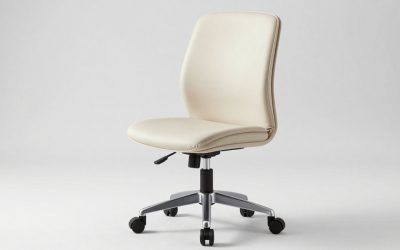
- Top Pick: Marsail Ergonomic Office Chair: Office Desk Chair with High Back Mesh and Adjustable Lumbar Support Rolling Work Swivel Task Chairs with Wheel 3D Armrests and Headrest
- Best Value: TRALT Office Chair – Ergonomic Desk Chair with Adjustable Lumbar Support, Mesh Computer Chair, Executive Chairs for Home Office Comfortable Lumbar Support (Black)
- Premium Choice: GABRYLLY Ergonomic Office Chair, High Back Home Desk Chair with Headrest, Flip-Up Arms, 90-120° Tilt Lock and Wide Cushion, Big and Tall Mesh Chairs for Man Woman, Black Task Chair
Affiliate disclosure: As an Amazon Associate we earn from qualifying purchases. This post contains affiliate links — if you buy through them we may earn a small commission at no extra cost to you. This never affects our recommendations.
Chronic back pain from prolonged sitting costs office workers millions of lost workdays annually. The right ergonomic chair doesn’t just make you more comfortable — it actively supports spinal alignment, reduces muscle fatigue, and can prevent the cumulative damage that builds up over years of poor posture. We ranked the best ergonomic office chairs of 2026 by adjustability, lumbar effectiveness, long-term durability, and real-world value.
These picks range from accessible mid-range options to the industry-leading premium chairs that occupational therapists actually recommend.
In a hurry? See the top-rated Ergonomic Office Chairs deals available right now:
🛒 Check Ergonomic Office Chairs Prices on Amazon →🛒 Best Price Today on Amazon
Prime members get fast, free shipping on everything above, plus member-only deals. New members get a 30-day free trial — cancel anytime.
Start 30-Day Prime Free Trial →See Today’s Amazon DealsTop Picks at a Glance
| Chair | Best For | Price Range | Standout Feature |
|---|---|---|---|
| Herman Miller Aeron | Best overall (premium) | ~$1,395 | PostureFit SL, 8Z Pellicle mesh |
| Steelcase Leap V2 | Best for active sitting | ~$1,200 | LiveBack technology |
| Branch Ergonomic Chair | Best mid-range value | ~$329 | Adjustable lumbar + seat depth |
| SIHOO Doro C300 | Best budget ergonomic | ~$299 | Auto-adaptive lumbar arch |
| Autonomous ErgoChair Ultra | Best full-feature mid-range | ~$499 | Natural flex back, 12 adjustments |
As an Amazon Associate we earn from qualifying purchases at no extra cost to you.


Herman Miller Aeron
- PostureFit SL sacral and lumbar support system independently supports both the sacrum and lumbar spine
- 8Z Pellicle mesh suspension distributes weight evenly across eight zones of varying tension
- Available in three sizes (A, B, C) to fit bodies from 4’10” to 6’7″ with appropriate proportions
- Tilt limiter with five positions and forward tilt option for task-intensive work
- 12-year full warranty covers all components including the mesh and foam elements
Steelcase Leap V2
- LiveBack technology mimics the movement of the spine by continuously changing shape as you shift positions
- Lower back firmness control lets you dial in how much resistance the lumbar zone provides
- Natural glide system allows you to recline while staying close to your work — no sliding away from the desk
- Adjustable seat edge reduces pressure behind the knees during extended seated periods
- 12-year warranty with exceptional build quality; chairs regularly last 15+ years with daily use
Branch Ergonomic Chair
- Vertically adjustable lumbar pad lets you position support exactly where your lower back needs it
- Sliding seat pan extends forward up to 2 inches for customized thigh support
- 3D armrests adjust height, forward/back position, and pivot angle independently
- Breathable woven mesh back with stiff outer frame for consistent posture support
- Ships fully assembled in under 20 minutes; 1-year warranty with responsive customer service
SIHOO Doro C300
- Auto-adaptive lumbar arch system automatically contours to your spine’s natural curvature
- Dual-zone backrest flexes at the thoracic and lumbar regions independently for multi-point support
- Breathable mesh throughout the back and seat reduces heat during long sessions
- Armrests adjust in four dimensions: height, width, depth, and rotation
- Recline range of 96 to 126 degrees with smooth tension knob for resistance control
Autonomous ErgoChair Ultra
- Flexible spine frame bends naturally with your body instead of forcing a fixed sitting posture
- 12 adjustment points including headrest angle, armrest depth, seat tilt, and lumbar height
- Woven mesh back and foam seat cushion combination for breathability with comfortable pressure distribution
- Reclines up to 135 degrees and locks at any angle in the range for break-time relaxation
- Eco-friendly production with recyclable materials; available in multiple colorways
Buying Guide: What Makes a Chair Truly Ergonomic
Understanding Lumbar Support Systems
Not all lumbar support is created equal. Basic chairs offer a fixed foam bump at a pre-determined height — useful for some, useless for others. Mid-range chairs like the Branch and SIHOO Doro C300 offer adjustable or adaptive lumbar that moves with your position. Premium chairs like the Herman Miller Aeron use a dual-zone system (PostureFit SL) that supports both the lumbar curve and the sacrum below it — this is the clinically backed approach that physical therapists recommend for chronic lower back pain sufferers.
Dynamic vs. Static Back Support
The Steelcase Leap V2’s LiveBack system is the best example of dynamic support: the backrest actually changes shape as your spine moves, supporting you in every position rather than just the neutral upright one. Static backrests — even well-designed ones — only support you optimally in one posture. If you shift position frequently throughout the day (which is healthier than staying static), a dynamic back significantly reduces fatigue and muscle tension.
Sizing — the Detail Most Buyers Miss
Herman Miller is the only major manufacturer that produces chairs in three sizes. The Aeron comes in Size A (petite/small), Size B (medium, fits most), and Size C (large/tall). Sitting in the wrong size Aeron is worse than sitting in a cheaper chair that fits correctly. Before buying any premium ergonomic chair, check the manufacturer’s sizing guide against your height, weight, and hip width measurements.
Budget Allocation Strategy
A quality ergonomic chair is a 10-year purchase if you buy well. At $1,200–$1,400, the Herman Miller Aeron and Steelcase Leap amortize to roughly $10–$12 per month over a decade — less than a daily coffee. If that’s beyond your current budget, the $299–$499 range from Branch and Autonomous ErgoChair Ultra delivers genuine ergonomic benefit. Avoid the $80–$150 “ergonomic” chairs that use the label without providing real adjustability.

FAQ
Does an ergonomic chair actually help with back pain?
Yes, when used correctly. A chair with proper lumbar support, correct seat height, and appropriate seat depth reduces the compressive forces on spinal discs during prolonged sitting. Multiple occupational health studies have documented reductions in lower back pain severity after switching from standard office chairs to properly fitted ergonomic models. The key word is “properly fitted” — an expensive chair set up incorrectly still causes pain.
Is the Herman Miller Aeron worth the price in 2026?
For people who sit 6+ hours daily, yes. The Aeron’s 12-year warranty, PostureFit SL support system, and 8Z Pellicle mesh that doesn’t bottom out after years of use make it the most cost-effective long-term option despite the high upfront price. If you work from home or spend significant time at a desk, the Aeron is one of the highest-ROI purchases you can make for your health and productivity.
What is the best ergonomic chair under $300?
The SIHOO Doro C300 is the standout pick under $300. Its auto-adaptive lumbar arch and dual-zone flexible backrest deliver features that were only available in $600+ chairs a few years ago. The 4D armrests and 126-degree recline round out a feature set that competes well against chairs costing twice as much.
How long should an ergonomic office chair last?
A quality ergonomic chair should last 8–12 years with daily use. Herman Miller and Steelcase chairs often last 15+ years and back that up with 12-year warranties. Mid-range chairs from Branch and Autonomous typically last 5–8 years with normal home office use. Signs it’s time to replace: seat foam that doesn’t spring back, a tilting mechanism that won’t lock, or armrests that no longer hold position.
Should I get a headrest on my ergonomic chair?
It depends on your work style. Headrests are beneficial if you lean back frequently during calls or reading — they take pressure off the neck and upper traps. For active, forward-leaning task work (typing, coding, design work), headrests often go unused. If you’re unsure, choose a chair that offers a headrest as an add-on accessory rather than paying for one built-in that you may not use.
Final Verdict
If budget is not a constraint, the Herman Miller Aeron is the clear recommendation — three decades of refinement, clinical endorsement, and a 12-year warranty make it the definitive ergonomic office chair. The Steelcase Leap V2 is the better choice for users who shift position constantly throughout the day, thanks to its LiveBack dynamic support system.
For buyers who want serious ergonomics without the four-figure price tag, the Autonomous ErgoChair Ultra at ~$499 offers the most comprehensive feature set in the mid-range. The Branch Ergonomic Chair is the smart buy for most home office workers at ~$329. And for a genuinely ergonomic chair at an accessible price, the SIHOO Doro C300 is difficult to beat under $300.
Related Articles
Looking for more on this topic? Browse the hand-picked guides below — each one applies the same scoring rubric used in this review.
Frequently Asked Questions
Which chair features actually reduce lower back pain?
Adjustable lumbar support that moves up and down as well as in and out matters most, because everyone’s lumbar curve sits at a different height. Pair it with a seat depth adjustment so you keep two to three fingers of clearance behind your knees, and a synchro-tilt recline that lets you sit back at roughly 100-110 degrees rather than bolt upright.
Is mesh or foam better for back support?
Mesh distributes weight evenly, breathes well and resists sagging over years of use, which suits warm rooms and long sittings. High-density moulded foam feels more cushioned and supportive for heavier users, but cheap foam compresses within a year and starts transmitting pressure to your tailbone. Quality of the material matters more than the category itself.
Do I need a headrest?
Only if you recline. When you sit upright and type, a headrest goes unused and can even push your head forward if it is fixed. If you lean back for calls, reading or thinking, an adjustable headrest that moves in height and angle supports your neck properly and reduces upper trapezius strain.
How much do I need to spend for genuine ergonomics?
Below roughly 200 dollars you generally get fixed lumbar, thin foam and limited armrest movement. The 300-600 dollar band is where adjustable lumbar, 4D armrests and real warranties appear. Flagship chairs from Herman Miller or Steelcase cost far more but carry 12-year warranties and hold resale value, so cost per year can be competitive.
Will a good chair fix my back pain on its own?
No chair compensates for a bad setup or eight motionless hours. Set the seat so your feet rest flat and thighs sit level, put the monitor top at eye level, keep elbows near 90 degrees, and stand up every 30-45 minutes. A chair removes obstacles to good posture; movement does the rest.
Ready to decide? Our #1 pick for 2026 is the Herman Miller Aeron.
Live price & availability on Amazon.