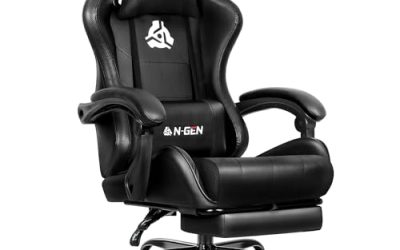
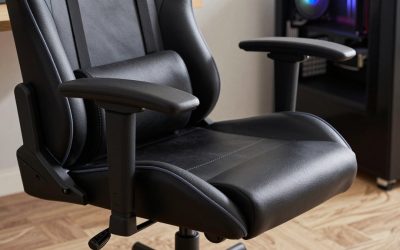
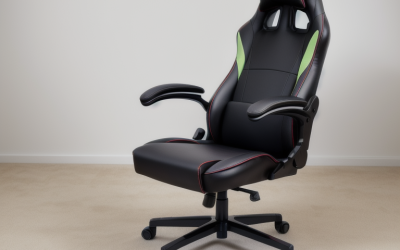
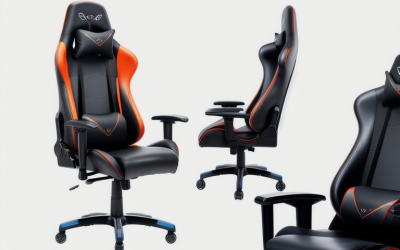
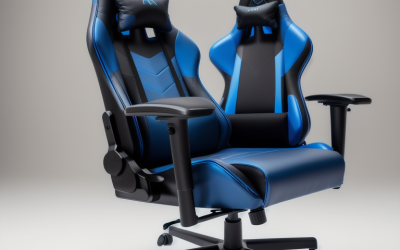
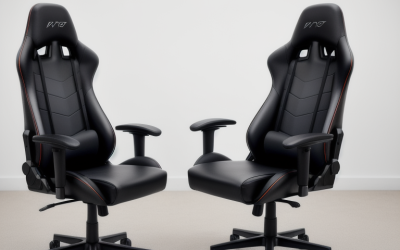
- Top Pick: N-GEN GAMING Gaming Chair with Footrest, Lumbar, High-Back, All Black | Reclining Backrest, Linkage Armrests, Durable PU Leather, Adjustable Comfort for Extended Computer, Desk, or Home Office Use
- Best Value: Homall Gaming Chair, Ergonomic, Footrest & Massage Lumbar Support, White | PU Leather, Massage Lumbar, Slide-out Footrest, 135° Recline, 360° Swivel, 300lbs Capacity, Adjustable Office Computer Chair
- Premium Choice: GTPLAYER Gaming Chair, Computer Chair with Footrest and Lumbar Support, Height Adjustable Game Chair with 360°-Swivel Seat and Headrest and for Office or Gaming (Pearl White)
A budget cap of under 150 dollars changes how you shop for a gaming chair. At that level you are not chasing a premium frame or a multi-tilt mechanism. You are deciding which compromise you can live with for long sessions: a padded racing-style seat with a footrest, a pocket spring cushion, or a breathable mesh back that stays cooler. This guide frames the choice around those trade-offs rather than around brand hype. Anyone who has bought a chair on looks alone knows the regret of a seat that is too narrow or a backrest that stops below the shoulder blades, and that is the problem this shortlist tries to prevent.
The ten chairs below are selected for 2026 and split into two camps. Seven are cushioned, high-back designs, most with a footrest and lumbar support. Three are mesh-style office-gaming hybrids that suit warm rooms and desk work. Everything said here comes from the specs in each product title, so confirm the current listing falls under your cap, along with seat dimensions and weight limits, before ordering.
Quick Picks
As an Amazon Associate we earn from qualifying purchases at no extra cost to you.


| Product | Best for | Key spec from the title |
|---|---|---|
| N-GEN GAMING High-Back | Long desk sessions | Footrest, lumbar, linkage armrests |
| Homall Massage Lumbar | Back comfort | 135-degree recline, 300lbs capacity |
| GTPLAYER Pearl White | Bright setups | Footrest, headrest, 360-degree swivel |
| Mistpeople Ergonomic | Home office crossover | Pocket spring cushion, high back |
| JECQCUPG Pocket-Spring | Heavier users | 400lbs load, 51cm wide seat |
| NZFYTRT Wide-Seat | Roomy seating | 52cm seat, 4-layer pocket spring |
| GTPLAYER Fabric Big and Tall | Larger frames | 350lbs, pocket spring cushion |
| PayLessHere Mesh | Warm rooms | Mesh back, lumbar support |
| NEO CHAIR Mid-Back Mesh | Compact desks | Breathable mesh, height adjustment |
| FDW Mesh and Leather | Style-minded buyers | Fixed armrests, 360-degree swivel |
How to Choose
Seat width and weight capacity
Titles in this group list seat widths of 51cm and 52cm and capacities of 300, 330, 350 and 400lbs. If you are broad-shouldered or near a capacity figure, pick the wider seat and the higher capacity on the spec sheet, not a chair that matches your weight exactly. Leave a margin of at least 50lbs for a chair you will use daily.
Cushion type: foam, pocket spring or mesh
Pocket springs, listed on several chairs here, add a layered feel under the seat bones and tend to hold shape longer than plain foam. Mesh backs breathe better but feel firmer. If your room runs warm or you sit for hours, mesh is worth considering; if you prefer a cushioned wraparound feel, pick the foam or pocket spring models.
Recline range and armrest style
Look for a lock-in recline range like the 90 to 135 degrees listed on several titles, which suits both upright work and a leaned-back break. Linkage or sync armrests move together with the seat, while fixed armrests stay put and are simpler. Neither is wrong; it depends on whether you want adjustability or a quieter design.
Where budget chairs cut corners
At this tier expect plain steel frames, basic gas lifts and PU leather that can flake after years of friction. Footrests and massage motors are marketing add-ons, so treat them as extras rather than reasons to pick a chair. Prioritize the lumbar shape, seat depth and cushion over novelty features. Also check how the chair is described for assembly and wheel type, because hard casters scratch wood floors and a mat becomes part of the setup.
The 10 Best Options
N-GEN GAMING High-Back
This all-black chair lists a footrest, lumbar support, a reclining backrest, linkage armrests and durable PU leather. It is pitched at extended computer, desk or home office use, which makes it a flexible daily chair for someone who splits time between work and play.
- Linkage armrests move with the seat.
- Footrest and reclining backrest support breaks between sessions.
- Trade-off: the title gives no seat width or weight capacity.
Skip it if you need documented dimensions before you buy, or if you would rather confirm seat depth against your own height before committing to a high-back shape.
Homall Massage Lumbar
Homall lists a slide-out footrest, massage lumbar support, PU leather, a 135-degree recline, 360-degree swivel and a 300lbs capacity. The white finish stands out from the usual black-and-red look.
- Massage lumbar support adds a comfort feature.
- Slide-out footrest tucks away when not needed.
- Trade-off: 300lbs is the lowest capacity in this group.
Skip it if you are near the weight limit or dislike light-colored faux leather that shows wear over time, particularly around the armrests and seat edges.
GTPLAYER Pearl White
This GTPLAYER model lists a footrest, lumbar support, height adjustment, a 360-degree swivel seat and a headrest. It is built for office or gaming and comes in a pearl white color.
- Headrest supports the neck during leaned-back play.
- Height adjustment fits a range of desks.
- Trade-off: the title does not mention a spring cushion or capacity.
Skip it if you want a heavy-duty spec listing, because the listing leaves seat width and weight limits for you to verify, which matters for taller or heavier buyers.
Mistpeople Ergonomic
The Mistpeople chair lists an ergonomic high back, footrest, lumbar support and a pocket spring cushion for home office use. It aims at people who want a gaming look with an office-chair feel.
- Pocket spring cushion adds seat support.
- High back covers the upper spine.
- Trade-off: no recline range or weight limit appears in the title.
Skip it if you need exact measurements before you buy, since the title offers cushion and back details but leaves out recline range and capacity.
JECQCUPG Pocket-Spring
This chair lists pocket springs and foam, a 51cm wide seat, sync armrests, a 90 to 135-degree backrest range, PU leather and a 400lbs load. It carries the highest capacity on the list.
- 400lbs load suits heavier users.
- Seat width and recline range are stated clearly.
- Trade-off: PU leather can run warm in summer.
Skip it if you prefer a breathable mesh surface, or if you plan to place the chair in a sunny room where PU leather warms up quickly.
NZFYTRT Wide-Seat
NZFYTRT lists an extra wide 52cm seat, a 4-layer pocket spring cushion, linkage armrests, a 330lbs capacity, removable head pillows, a lock recline from 90 to 135 degrees and tech fabric.
- Widest seat in the group at 52cm.
- Tech fabric avoids the sticky feel of leather.
- Trade-off: removable head pillows shift around over time.
Skip it if you want a more minimal look, or if you dislike chairs that arrive with extra accessories to position and adjust.
GTPLAYER Fabric Big and Tall
A fabric chair with a pocket spring cushion, a 350lbs capacity, a high back, footrest and lumbar support in a light black finish. The big and tall label points to larger frames.
- 350lbs capacity sits between the mid and high tiers.
- Fabric upholstery breathes better than leather.
- Trade-off: seat width is not stated in the title.
Skip it if you want a mesh back or a racing-style bolster, since this is a plain fabric high-back built around cushion support instead of styling.
PayLessHere Mesh
A mesh desk chair marketed for office and gaming, with 360-degree swivel wheels, armrests and lumbar support in white. It leans toward the office end of the gaming spectrum.
- Mesh construction suits warm rooms.
- White finish fits light desk setups.
- Trade-off: no footrest or recline range is listed.
Skip it if you want a cushioned wraparound seat, or if you like to recline fully, because no recline range or footrest is listed in the title.
NEO CHAIR Mid-Back Mesh
This mid-back mesh chair lists breathable mesh, lumbar support, height adjustment and smooth rolling casters for home office, study or gaming setups. The mid-back height keeps it compact.
- Mid-back design suits small desks.
- Mesh back helps airflow.
- Trade-off: a mid-back leaves your shoulders and head unsupported.
Skip it if you like leaning back with a headrest, or if you are tall and need the backrest to reach the upper shoulders.
FDW Mesh and Leather
The FDW chair lists a breathable mesh and leather design in red, fixed armrests, a 360-degree swivel, adjustable height and rolling casters. It reads as a daily-use desk chair with gaming colors.
- Mix of mesh and leather balances airflow and padding.
- Fixed armrests keep the design simple.
- Trade-off: armrests do not adjust.
Skip it if you need adjustable arm height, or if you want a footrest and a deep recline range, which the title does not list.
Which One Fits Your Situation
You sit eight hours a day for work and play
Choose the Mistpeople Ergonomic or the N-GEN GAMING High-Back, both with lumbar support and a footrest. Both list the features that matter most for long sitting, and neither depends on a gimmick.
You need more capacity or a wider seat
The JECQCUPG at 400lbs and the NZFYTRT with a 52cm seat are the two to compare. The GTPLAYER Fabric Big and Tall is the middle option at 350lbs. Measure your hip width and the gap between your desk legs before deciding, because a wide seat that does not fit under the desk is a daily annoyance.
Your room runs warm
The NEO CHAIR Mid-Back Mesh and PayLessHere Mesh both list breathable construction. The FDW Mesh and Leather splits the difference with a mixed surface. Mesh also suits anyone who sits close to a hot tower or a sunny window, where a padded seat holds heat.
You want comfort extras
The Homall adds a massage lumbar feature, and the GTPLAYER Pearl White includes a headrest for leaned-back sessions. If you are still undecided, ask whether you value a cushioned wraparound feel or airflow more, and let that answer eliminate half the list.
Common Mistakes
- Choosing by color or racing looks without checking seat width.
- Ignoring the weight capacity margin on a chair you plan to use daily.
- Counting a massage motor or footrest as a substitute for lumbar shape.
- Choosing PU leather for a hot room instead of mesh or fabric.
- Skipping assembly instructions and over-tightening the gas lift base.
How Weight Capacity and Seat Width Actually Work
A weight rating printed on a gaming chair’s spec sheet is a ceiling, not a comfort target. Chairs under 150 dollars are commonly specified in the 250 to 300 pound range, and foam density, gas-lift cylinder class, and frame bracing all degrade faster the closer actual body weight sits to that ceiling. A person near the top of the rated range should expect the cushion to compress and the gas lift to lose height retention sooner than someone well under it. Seat width behaves the same way: a published width measured wall to wall at the widest point is not the usable sitting width once side bolsters and padding are accounted for, so a seat listed as roughly 20 inches wide often sits a few inches narrower in practice between the raised edges.
Fabric, PU Leather and Mesh: How They Wear Over Time
The three common surface materials on budget frames age in different ways, and the failure mode matters more than the initial feel. PU leather looks the most premium out of the box but is the surface most likely to crack or peel where the body flexes most, typically the seat edge and the point where the back meets the headrest, usually within one to two years of daily use. Woven fabric resists cracking entirely but can pill, stain, or absorb odor over time, and it is harder to wipe clean after spills. Mesh backs avoid both failure modes and breathe better in warm rooms, but a mesh panel that stretches out under sustained weight loses tension permanently rather than bouncing back, so a slightly firmer mesh at the time of purchase tends to hold its shape longer.
What Ships in the Box and What You Will Assemble
Almost no chair in this price range arrives fully built. The base, casters, gas lift, seat, and back are packed separately, and assembly commonly takes a single person 20 to 40 minutes with the included hex tools. The step most likely to go wrong is aligning the back bracket to the seat plate before tightening bolts; doing this loosely first and tightening every bolt only after the chair sits level avoids the wobble that otherwise gets blamed on the chair itself. Casters matter more than they look: hard plastic wheels specified for carpet can scratch or roll poorly on hardwood, so checking the caster type against your flooring before assembly, rather than after, saves a return.
Recognizing When a Budget Chair Has Reached Its Limit
Every chair in this range eventually shows the same handful of wear signs, and catching them early is cheaper than replacing the whole chair. A gas lift that slowly sinks over a few hours of sitting has lost gas pressure and is not repairable by adjustment. Armrests that creak or wobble side to side usually mean the mounting screws have backed out under repeated leaning, which a seasonal tightening pass with a hex key often fixes. A tilt mechanism that feels loose in the locked position, rather than firmly braced, points to wear in the tension spring rather than user error. None of these are reasons to assume the whole frame is failing, but ignoring them tends to accelerate wear in the parts around them.
Matching a Chair to Desk Height and Room Layout
A chair’s comfort depends as much on the desk it sits at as on the chair itself, which buying guides rarely mention. Standard desks sit around 28 to 30 inches high, and a chair’s seat height range needs enough overlap with that to let forearms rest level on the desk surface without shoulders hunching up. Armrest height adjustability, where offered, exists mainly to close this gap rather than for comfort alone. Chairs with a wide base and full recline also need floor clearance behind them; a chair that reclines to nearly flat but sits a foot from a wall will hit that wall before reaching its rated recline angle, which is worth checking against actual room measurements rather than the spec sheet.
Noise and Squeaking: Causes and Fixes in a Budget Frame
Budget gaming chairs use a tilt mechanism and gas cylinder built to a lower tolerance than chairs twice the price, so a small amount of play between metal parts is normal rather than a sign of a defective unit. Squeaking usually traces back to the tilt tension bolt, the base plate where the cylinder meets the seat pan, or dry pivot points on the armrests. A drop of silicone-based lubricant on the tilt mechanism and armrest pivots, followed by tightening the base bolts with the included hex key, resolves most noise within the first month of regular use. Petroleum-based lubricants are worth avoiding on plastic tilt housings, since they can soften the material with repeated contact.
Returning or Exchanging a Budget Chair: What to Check First
Chairs in this price range ship flat-packed, and most sellers tie the return window to the original packaging rather than the chair itself. Photograph the box and every included part before assembly starts, and keep the hardware bag for at least a week after building, since a missing bolt discovered later is harder to resolve than one caught during unboxing. Check the weight capacity and seat width printed on the box against the figures covered earlier in this guide before building; a chair returned pre-assembly is far simpler to process than one that has already been bolted together, and some sellers add a restocking step for chairs returned fully built.
Assembling Solo vs. With a Second Person
The seat pan and backrest on chairs in this tier typically bolt together through a single recline hinge, a step that goes noticeably faster with a second person holding the backrest upright while the bolts thread in. Working alone, propping the backrest against a wall before aligning the bolt holes avoids the most common assembly frustration: the hinge plate shifting out of place the moment a hand leaves it to reach for a bolt. Budget chairs vary in how much the factory pre-threads the captive nuts, so turning each bolt by hand for the first few turns prevents a power driver from forcing past a misalignment and stripping the thread.
What You Gain Moving Into The Next Price Tier Up
Chairs in this budget range typically use single-density foam, a simpler multi-tilt mechanism, and PU leather or polyester fabric rather than a woven or performance mesh. Moving into the next tier up usually buys three specific things: a dual-density or cold-cure foam that resists compression longer, a locking tilt mechanism with a wider recline range, and a steel frame rated for a higher weight capacity with less flex under load. None of that makes a budget chair a poor choice for shorter sessions or a secondary setup; it simply means the trade-offs concentrate in long-term durability and recline comfort rather than in day-one build quality, which is usually comparable across both tiers for the first several months of ownership.
Upgrading Casters, Lumbar, and Headrest Later Without Buying a New Chair
Several of the weak points on a budget chair are replaceable without buying an entirely new frame. Stock casters are often the first thing worth swapping, since many budget chairs ship with hard plastic wheels sized to a common 5-prong base, and a rubber or polyurethane caster set reduces both noise and floor marking. Clip-on lumbar pillows and headrests can also be upgraded independently of the chair itself if the stock versions feel thin or sit at the wrong height. The frame, tilt mechanism, and seat pan are the parts that actually define the chair’s lifespan, so spending a little extra on accessories is usually a better return than hoping a future chair avoids the same compromises entirely.
Floor Type and Caster Compatibility on a Budget Frame
Hard plastic casters that ship standard on most budget chairs are built with carpet in mind, where the pile adds friction and cushions the ride. On hardwood, laminate, or tile, those same casters roll faster than expected and can leave fine scratch marks over time, especially under a heavier frame that presses the wheel into the surface. A clear plastic chair mat solves most of the scratching problem immediately, while a caster swap to soft rubber wheels addresses both the noise and the surface wear at the source. Checking the caster stem size before buying a replacement set avoids the common mismatch between residential casters and a chair’s actual 5-prong base diameter.
Related guides
- Battery Operated Smoke And Carbon Monoxide Detectors
- Combination Smoke And Carbon Monoxide Detectors
- Aio Liquid Coolers For High Performance Gaming
Frequently Asked Questions
Is a gaming chair under 150 dollars worth it?
For casual and mid-length sessions, yes. Expect a simpler frame, but a good cushion and lumbar shape deliver most of the comfort at this level. The real gaps show up in frame thickness, gas lift quality and upholstery durability, which a title cannot fully describe, so favor listings that state seat width, capacity and recline range.
Mesh or PU leather?
Mesh breathes and stays cooler; PU leather feels padded and looks bolder. The right pick depends on room temperature and how long you sit.
Do footrests help?
They help during breaks when you recline, but most people keep their feet on the floor while typing or gaming. Treat a footrest as a bonus, not a core feature, and check that it stows neatly under the seat so it does not trip you.
How long should a budget chair last?
That depends on use and weight. Cushions flatten and PU can flake over time, so choose designs with a stated weight limit and a sturdy frame. Rotating the seat height settings now and then and tightening bolts after the first weeks of use also helps any chair last longer.