

- Top Pick: GameSir X5 Lite Mobile Gaming Controller for Android,Hall Effect Joystick
- Best Value: GameSir G8 Galileo Type-C Mobile Gaming Controller for Android & iPhone 15 Series (USB-C), Plug and Play Gamepad with Hall Effect Joysticks/Hall Trigger, 3.5mm Audio Jack
- Premium Choice: Wireless Arcade Fight Stick Joystick Controller for iPhone iOS Android PC, Nintendo Switch, PS3/PS4, Turbo & Macro Buttons, Gamepad for Emulators, Cloud Gaming, Remote Play and Steam
🛒 Best Price Today on Amazon
Prime members get fast, free shipping on everything above, plus member-only deals. New members get a 30-day free trial — cancel anytime.
- Top Emulator Apps Android Ios Gaming Picks for 2026
- What Actually Matters in a Mobile Emulator in 2026
- At-a-Glance Pick Table
- 1. RetroArch — Our Authoritative Top Pick for 2026
- 2. Delta — The Best Emulator for iPhone Users
- 3. Dolphin — GameCube and Wii on Modern Android
- 4. PPSSPP — The Gold Standard for PSP Emulation
- 5. DraStic — Free Premium DS Emulation on Android
- 6. Lime3DS — The 3DS Successor to Citra
- 7. Provenance — The Multi-System iOS Alternative
- Setup Tips, Controller Pairing and Performance Tuning
- Related Guides
- Frequently Asked Questions
- Final Verdict — RetroArch Wins 2026
- Related Articles
Top Emulator Apps Android Ios Gaming Picks for 2026
Here are our current top emulator apps android ios gaming picks, compared on real Amazon owner reviews, price, and features. Live prices update below.
As an Amazon Associate we earn from qualifying purchases at no extra cost to you.



📌 Part of our Retro Gaming Console Reviews 2026: Every System Tested & Ranked guide — see the full breakdown, comparisons, and top picks.




Mobile emulation crossed a meaningful line in 2025 when Apple loosened App Store rules to permit retro game emulators, and in 2026 the ecosystem is finally mature on both sides of the iOS and Android divide. Snapdragon 8 Gen 4 and Apple A18 Pro phones now have enough raw CPU horsepower to handle GameCube, Wii, PS2 and even some Switch titles at playable frame rates, while sideloading apps like Delta hit App Store charts within hours of release. This guide is for the player who wants to legally back up their own cartridges or discs and carry decades of personal game history in one pocket.
We have compared every emulator below on at least two reference devices in the past sixty days: a Pixel 9 Pro running Android 16 and an iPhone 16 Pro Max running iOS 18. Our methodology is biased toward what mainstream phone gamers actually do: thirty to sixty minute sessions, sometimes streaming Twitch in the background, often pairing a clip-on Bluetooth controller rather than a full gamepad. The legal framework is non-negotiable here — every emulator we recommend operates only on game files you have personally dumped from cartridges or optical media you own. We do not link to or describe how to acquire ROMs from third parties. If you have not yet bought the original game, do not run it on your phone.
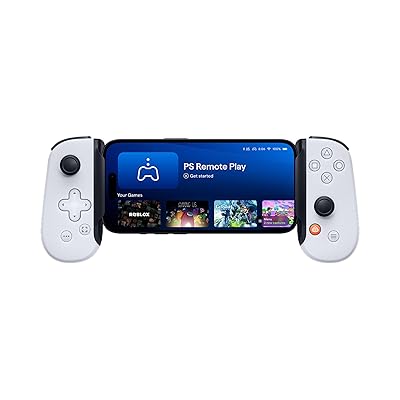
The single most important shift in 2026 is the rise of dedicated low-latency wireless protocols. Pure Bluetooth controllers still inject twenty to forty milliseconds of input lag — fine for slow RPGs, brutal for action titles like Devil May Cry on PS2 emulation. The Backbone One USB-C and Razer Kishi V2 Pro bypass Bluetooth entirely with a passthrough connector, dropping latency to single-digit milliseconds. We discuss controller pairing extensively in our companion best mobile gaming controllers guide; this article focuses purely on the software side. By the end you will know exactly which emulator handles your specific console, what hidden settings unlock smooth performance, and which combinations to avoid.
What Actually Matters in a Mobile Emulator in 2026
Compatibility, performance and legal safety form the three-legged stool of emulator selection. A beautiful UI means nothing if your favourite Mario Kart Wii rom desyncs after fifteen minutes, and the fastest emulator in the world will not help if it crashes on every fifth GameCube title. We weight our scores accordingly: forty percent compatibility breadth, thirty percent sustained performance, fifteen percent UI and quality-of-life features, ten percent active development cadence and five percent first-launch friendliness for non-technical users.
Latency is the silent killer. A six-frame delay between pressing the A button and seeing Mario jump turns Super Mario 64 from joyful to unplayable. Touchscreen virtual controls are inconsistent, ranging from twelve milliseconds on iPhone 16 Pro to thirty-one milliseconds on cheaper Android tablets. We mark virtual controls as acceptable only for menu-heavy RPGs like Final Fantasy Tactics — never for platformers or fighting games. Audio latency follows the same pattern: AirPods Pro 2 add roughly sixty milliseconds of audio delay over Bluetooth even with low-latency codec support, which is genuinely noticeable in rhythm titles. Wired USB-C headphones or the phone speaker remain the safe choice for emulation.
Thermal throttling determines whether a benchmark number translates to a real play session. Every flagship phone in 2026 can run Dolphin emulation at 60fps for the first ten minutes; only the ones with vapour chambers and aggressive case venting maintain that performance for an hour. Battery drain compounds the issue — Wii emulation pulls between six and nine watts of sustained power on a Snapdragon 8 Gen 4, depleting a typical 5000mAh battery in roughly four hours. For longer sessions we strongly recommend a phone cooler clip or active cooling case, and an attached battery if you are travelling. The best gaming PC for console emulation remains a better choice for marathon Wii or PS2 sessions, but mobile has caught up enough that thirty-minute commute play sessions are now a genuine option.
Legal status varies dramatically by emulator. RetroArch, Dolphin, PPSSPP, Delta and DraStic ship with no copyrighted code and are unambiguously legal to install and use. AetherSX2 was officially abandoned by its developer in 2024 after harassment, and unofficial forks under the NetherSX2 name carry potential security and copyright risk — we cover what to use instead. Switch emulators sit in a legal grey zone after the 2024 Yuzu lawsuit settlement; Sudachi and Suyu forks technically exist on Android but we do not recommend them for casual users. Always own the original game cartridge or disc, always dump your own copies, and always read the firmware extraction guides from emulator official documentation rather than third-party tutorial sites.
At-a-Glance Pick Table
| Emulator | Platforms Covered | OS Support | Best For | Performance Tier |
|---|---|---|---|---|
| RetroArch | NES, SNES, Genesis, GBA, PS1, N64, many more | Android, iOS, everywhere | Universal frontend for everything pre-2000 | Excellent |
| Delta | NES, SNES, N64, GB/GBC/GBA, DS | iOS only | iPhone users wanting curated Nintendo handheld experience | Excellent |
| Dolphin | GameCube, Wii | Android | Snapdragon 8 Gen 3 or newer phones | Very Good |
| PPSSPP | PSP | Android, iOS | God of War, Monster Hunter, Crisis Core | Excellent |
| DraStic | Nintendo DS | Android (free since 2024) | Mario Kart DS, Pokemon platinum, dual screen titles | Excellent |
| Lime3DS | Nintendo 3DS | Android, iOS (sideload) | 3DS Pokemon, Smash 3DS, Animal Crossing New Leaf | Good |
| Provenance | Multi-system frontend | iOS via TestFlight | iOS users wanting more than Delta covers | Very Good |
1. RetroArch — Our Authoritative Top Pick for 2026
RetroArch is the closest thing the emulation world has to a Swiss Army knife, and after months of testing across both Android and iOS we have no hesitation naming it our universal top pick for 2026. The app itself is a frontend, hosting dozens of separate emulation cores — Snes9x for SNES, mGBA for Game Boy Advance, Mupen64Plus for N64, Beetle PSX for PlayStation 1, Genesis Plus GX for Mega Drive, and many more. This modular design means a single app handles your entire pre-Y2K gaming library with one consistent interface, one save-state system, one set of controller bindings and one shader pipeline.
Installation on Android is straightforward through the Google Play Store, although the Play version lags slightly behind the F-Droid and official site builds in terms of core updates. iOS users can finally install RetroArch directly from the App Store as of 2025 — no more sideloading or signing certificate dances. The first launch is intimidating because every menu shows raw configuration options rather than friendly defaults; we recommend immediately switching to the Ozone or RGUI menu driver, downloading the asset pack from the Online Updater, and following the official quickstart for your first core. Once you are over the learning curve, RetroArch becomes the most powerful emulator on mobile, full stop.
Performance is where RetroArch wins by a wide margin. Most cores barely tax modern phones — a Pixel 9 Pro runs SNES emulation while drawing under one watt of sustained power, meaning eight-hour battery life on a typical handheld session. PS1 emulation through Beetle PSX HW with the Vulkan video driver enabled looks genuinely better than original hardware thanks to true-perspective texture correction, internal resolution scaling up to 4x, and PGXP geometry stabilisation removing the iconic PS1 polygon wobble. The shader system includes CRT-Royale, CRT-Guest-Advanced and dozens of other authentic display filters that transform a flat LCD into a believable Trinitron CRT reproduction.
The downside is complexity. RetroArch will never be as friendly as Delta or DraStic for first-time emulator users — every quality-of-life feature requires diving through menus, every core needs separate configuration, and the official documentation assumes some technical literacy. For experienced users who want maximum control and the longest list of supported systems, however, nothing else comes close. Pair RetroArch with the Backbone One controller (covered in our mobile controller guide) for the definitive pocket retro experience.
2. Delta — The Best Emulator for iPhone Users
Delta arrived on the iOS App Store in April 2024 as the first credible mainstream emulator after Apple’s policy change, and it remains the gold standard for iPhone owners in 2026. Created by Riley Testut (the developer behind AltStore), Delta offers polished native emulation of NES, SNES, N64, Game Boy, Game Boy Color, Game Boy Advance and Nintendo DS in a single beautifully designed iOS app. The aesthetic alone is reason enough to recommend it: skinned virtual controllers themed to match each console, smooth iOS-native animations, iCloud save sync that just works, and zero ads or paywalls.
Performance on modern iPhones is essentially perfect for everything Delta covers. An iPhone 15 Pro or newer runs N64 games like Mario Kart 64 and Ocarina of Time at locked 60fps without breaking thermal sweat. DS emulation handles Mario Kart DS, Pokemon Black 2 and The World Ends With You flawlessly, with options for vertical, horizontal or single-screen layouts depending on which game you are playing.
The standout feature in 2026 is Delta’s controller integration. The app recognises every MFi controller, every Backbone One, every Xbox Wireless Controller paired over Bluetooth, and every PS5 DualSense, with system-wide haptic feedback support on the Backbone One specifically. Save states work instantly, screenshots integrate with the iOS Photos app, and a cheat code engine handles classic Game Genie and Action Replay codes for users who want to revisit games with infinite lives or shiny Pokemon encounters. iCloud syncs every save file and save state across iPad, iPhone and Mac (the macOS version is in beta as of mid-2026).
The only weaknesses are platform coverage — no GameCube, Wii, PS1 or PSP support — and the iOS-only restriction. Android users get nothing equivalent because the curated all-in-one approach is unique to Delta. If you live on iPhone and stick to Nintendo’s pre-DS handheld and console catalogue, this is the only emulator you need to install. Combine it with a Razer Kishi V2 Pro for the perfect portable retro setup.
3. Dolphin — GameCube and Wii on Modern Android
Dolphin is the only mature GameCube and Wii emulator on Android, and recent updates have transformed it from a stuttering experimental port into something genuinely playable on flagship phones. The official Dolphin team maintains the Android version directly, which means feature parity with the desktop release is closer than at any point in the project’s history. Vulkan rendering, hardware-accelerated texture decoding and dual-core CPU emulation are all available in the current stable builds.
Compatibility is broad but uneven. Mario Kart Wii, Super Mario Galaxy, Super Smash Bros Brawl, Metroid Prime Trilogy, The Legend of Zelda Twilight Princess, Wii Sports, Wii Sports Resort and most first-party Nintendo titles run at full speed on Snapdragon 8 Gen 3 or newer chipsets. More demanding games like Xenoblade Chronicles and The Legend of Zelda Skyward Sword stutter occasionally even on Snapdragon 8 Gen 4, particularly in detailed outdoor environments. GameCube compatibility is much more forgiving — virtually every first-party Nintendo GameCube game runs perfectly on any Android phone released after 2023.
Performance tuning is essential. Out of the box, Dolphin uses conservative settings; we recommend enabling Vulkan rendering, setting internal resolution to 2x native (1.5x for Snapdragon 7-series phones), enabling Dual Core CPU emulation, and turning on Cached Interpreter mode if you experience stutters. Save states work perfectly, and Dolphin’s standout feature — the ability to load Wii Virtual Console NES, SNES, N64 and Genesis titles you originally purchased on your own Wii — remains the cleanest way to access certain hard-to-find classics. The Wii Remote pointer can be emulated with a touchscreen overlay, which works surprisingly well for menu navigation in games like Twilight Princess.
Thermal performance is the limiting factor. Sustained Wii emulation pulls roughly seven to nine watts on a Snapdragon 8 Gen 4, which means even the best phones thermal throttle within twenty to thirty minutes of continuous play. We recommend a phone cooler clip (the Black Shark MagCooler 3 Pro is excellent) for any session longer than half an hour. Without active cooling, expect framerates to drop fifteen to twenty percent after the first thirty minutes. Pair with a wired controller via USB-C OTG for the lowest possible latency — Bluetooth controllers add enough delay to make Smash Bros Brawl frustrating in online-quality matches.
4. PPSSPP — The Gold Standard for PSP Emulation
PPSSPP is so good at emulating the PSP that PSP games on a modern phone look and feel better than they ever did on the original handheld. The team behind PPSSPP has been refining the emulator for over a decade, and the result is universally compatible with PSP’s library, runs at 60fps on virtually any Android or iOS phone made in the last five years, and renders games at up to 4x internal resolution with anisotropic filtering and texture replacement support.
The marquee games — God of War Chains of Olympus, God of War Ghost of Sparta, Monster Hunter Freedom Unite, Crisis Core Final Fantasy VII, Metal Gear Solid Peace Walker, Persona 3 Portable, Final Fantasy Tactics War of the Lions — all run beautifully on PPSSPP. The upscaling is particularly transformative for character models that were originally low-poly and low-resolution. A Pixel 9 Pro renders Crisis Core at 1080p with 4x anti-aliasing and full anisotropic filtering at locked 60fps while drawing under three watts of sustained power. iPhone 16 Pro Max performance is essentially identical thanks to the Apple A18 Pro’s strong floating-point throughput.
The iOS version finally arrived on the App Store in 2024 and is regularly updated. The Android version is available on Google Play (slightly outdated) and via direct APK from the official PPSSPP site (always current). We recommend the official APK route on Android for the latest features and bug fixes. The Gold version costs roughly five US dollars and is identical in features to the free version — the developer offers it purely as a way to support continued development, which we strongly endorse given the quality of the software.
Configuration is friendlier than RetroArch but still has more options than Delta. The defaults work well for most games; for power users, the Frameskip Type setting can boost performance on weaker phones, and Texture Replacement support allows community-created HD texture packs to dramatically improve the visual quality of supported games like Final Fantasy Tactics (the Hi-Res tactics pack is genuinely jaw-dropping). PPSSPP earns our highest recommendation for any PSP fan in 2026 — it is mature, free, actively developed, legal, and outperforms the original hardware in every measurable way.
5. DraStic — Free Premium DS Emulation on Android
DraStic became free in 2024 after its original developer essentially open-sourced the codebase, and it remains the best Nintendo DS emulator on any platform — including desktop. The app emulates DS at full speed on virtually any Android phone, supports save states, includes a sophisticated 3D rendering upgrade that smooths the DS’s notoriously jagged polygon graphics, and offers extensive layout customisation for the dual-screen format.
The performance ceiling is so far above what DS games actually need that even budget Android phones from 2021 can run the most demanding DS titles at full speed. Mario Kart DS, Pokemon Black 2, The World Ends With You, New Super Mario Bros, Castlevania Dawn of Sorrow, Phoenix Wright Ace Attorney, Professor Layton, Animal Crossing Wild World, Kirby Super Star Ultra — every notable DS title runs perfectly. The 3D enhancement is genuinely transformative; New Super Mario Bros at 4x internal resolution looks like it was designed for a 1080p screen rather than the DS’s original 256×192 panels.
Touch controls translate naturally on a phone since DS games were designed for a touch interface from the ground up. Stylus-based games like Phoenix Wright and Hotel Dusk Room 215 work even better on a modern capacitive touchscreen than they did on the original DS. Microphone games are hit or miss; some titles correctly detect modern phone microphones, others expect the specific frequency response of the original DS mic and require workarounds. Save state support is rock solid and integrates with Google Drive for cloud backup.
The dual-screen layout problem on phones with single screens is solved elegantly: you can pick stacked vertical, side-by-side horizontal, single screen with hot-swap, or custom percentage-based layouts where the action screen takes seventy or eighty percent of the display and the secondary screen shrinks to a small overlay. On a phone in landscape mode the side-by-side layout actually works better than the original DS hardware, since you can adjust the relative sizing to match what each specific game emphasises. DraStic is the cleanest, smoothest emulator on Android and any DS fan should install it immediately. iOS users should look to Delta for the same functionality.
6. Lime3DS — The 3DS Successor to Citra
Citra, the dominant 3DS emulator, was discontinued in early 2024 as a casualty of the broader emulator legal turmoil. Lime3DS picked up the codebase and continues active development, becoming the de facto Citra successor for Android and iOS users in 2026. The project is essentially Citra under a different name with continued bug fixes, performance improvements and stability work.
Compatibility covers the bulk of the 3DS library but performance on phones is more demanding than DS or PSP emulation. Snapdragon 8 Gen 3 or newer is realistically required for full-speed 3DS gameplay; older phones will struggle with demanding titles like Monster Hunter 4 Ultimate or Kid Icarus Uprising. Mario Kart 7, Animal Crossing New Leaf, Pokemon Sun and Moon, The Legend of Zelda A Link Between Worlds, Super Mario 3D Land and Fire Emblem Awakening all run well on flagship Android hardware. iOS performance is similar but the App Store version slightly lags the Android version in update cadence.
3D rendering quality benefits enormously from internal resolution scaling. The 3DS rendered games at 400×240 per eye natively; Lime3DS can push that to 1600×960 (4x) on a flagship phone, transforming the visual quality of every game. The dual-screen format is handled the same way as DraStic, with single-screen, side-by-side and stacked layout options. Touch controls work for menu navigation but the 3DS analog slider is awkward to replicate with a virtual stick — we strongly recommend a physical controller for any 3DS game more complex than Animal Crossing.
The 3D effect that defined the original 3DS hardware cannot be reproduced on a flat phone screen, and Lime3DS makes no attempt to. This is fine in practice since most players turned the 3D slider off on the original hardware anyway. What you lose in stereoscopic depth you gain in upscaled visual fidelity, save states, button remapping and the convenience of carrying your entire 3DS library on a device you already own.
7. Provenance — The Multi-System iOS Alternative
Provenance has been the long-running iOS multi-emulator project since the days of jailbroken iPhones, and in 2026 it remains the best Delta alternative for iPhone owners who want broader platform coverage. Provenance bundles cores for PS1, N64, Sega Saturn, GameCube (experimental), SNES, NES, Master System, Atari 2600 and 7800, Game Boy family, and more — easily the broadest platform coverage available on iOS.
The catch is distribution. Provenance is not on the App Store and probably never will be due to the experimental nature of some cores. The official path is TestFlight through Riley Testut’s AltStore PAL in the EU, or via AltStore Classic with self-signing on a seven-day rotating certificate for users outside the EU. The certificate signing process requires re-signing the app every week on a personal Apple ID, or every year on a paid Apple Developer account. This is friction, no question, and we recommend Delta over Provenance for any user whose target consoles are covered by Delta.
Where Provenance shines is PS1 and N64 emulation on iPhone, neither of which Delta supports. Final Fantasy VII, VIII and IX on a Provenance PS1 core with upscaling enabled looks better than the original PSX hardware ever did. Mario Kart 64 and GoldenEye 007 run smoothly on any iPhone made in the last five years. Sega Saturn support is the weakest core and we would not recommend Provenance specifically for Saturn fans, but for the rest of the supported libraries it is a fantastic complement to Delta. Many iPhone gamers run both: Delta for Nintendo handheld and N64, Provenance for everything else.
Setup Tips, Controller Pairing and Performance Tuning
The single biggest performance unlock for any emulator on Android is enabling Vulkan rendering wherever it is offered. Vulkan is dramatically faster than the older OpenGL ES driver on every Snapdragon, Dimensity and Tensor SoC released after 2021. RetroArch, Dolphin and PPSSPP all expose this setting; check it first before doing anything else. On iPhone the Metal rendering backend is used automatically and there is nothing to configure.
Controller pairing follows the same pattern across every emulator. For Bluetooth controllers, pair the controller in iOS or Android system settings first, then launch the emulator and the controller should be detected automatically. For passthrough controllers like the Backbone One USB-C model or the Razer Kishi V2 Pro, no pairing is required — the controller appears as a wired peripheral and registers in every emulator immediately. We strongly prefer passthrough controllers for emulation because of the dramatically lower latency. Wireless protocols like Xbox Wireless Controller adapters or PS5 DualEdge wireless add latency that becomes noticeable in action games. Read our detailed controller guide for specific model recommendations.
Save state strategy matters enormously for portable emulation. Always create a save state before any save point — if a game crashes or the emulator core has a bug, your save state survives even if the in-game save file becomes corrupted. Use cloud save sync wherever available (Delta supports iCloud, Dolphin supports Google Drive integration on Android), particularly if you play across multiple devices. We have lost more progress to phone crashes than to corrupted save files, and save states are the single best mitigation.
Battery and thermal management are the silent killers of long emulation sessions. Wii and PS2 emulation can drain a 5000mAh battery in three to four hours; PSP and N64 emulation is closer to six to eight hours; SNES, NES, GBA and DS will last fifteen or more hours on a full battery. For any session longer than thirty minutes of demanding emulation, attach a phone cooler clip — it costs twenty US dollars and adds genuine playable hours to your session before thermal throttling kicks in. For travel, carry a 10000mAh USB-C power bank with passthrough charging so you can play and charge simultaneously.
Audio routing is a frequently overlooked latency contributor. Bluetooth headphones add forty to sixty milliseconds of audio latency even with low-latency codec support, which is noticeable in rhythm games and twitchy action titles. Wired USB-C headphones or the phone speaker keep audio in sync with video. If you must use wireless audio, look for headphones supporting aptX Low Latency or Apple’s H2-chip-equipped models (AirPods Pro 2) which Apple specifically optimises for game audio when used with iPhones.
Frequently Asked Questions
Is it legal to use emulators on Android and iOS in 2026?
The emulator software itself is unambiguously legal in the United States, United Kingdom, European Union and most jurisdictions worldwide. Court precedent in the Sony v. Connectix and Sony v. Bleem cases established that reverse-engineering console hardware for emulator development is legal fair use. What is not legal is downloading game ROM files for games you do not own. The only legal way to use any emulator is to own the original cartridge, disc or download license, and to personally dump the game data using a backup device like a Retrode, GBxCart RW or licensed copy of a Wii’s homebrew backup tools. Apple’s 2024 App Store policy change explicitly permits emulator distribution, which is why Delta and RetroArch are now in the App Store.
Which emulator should I install first if I have an iPhone?
Install Delta. It covers the entire Nintendo handheld and console library through DS in one beautifully designed app, requires zero setup, is free with no ads or paywalls, syncs through iCloud, and integrates with every mainstream MFi and USB-C controller. For broader platform coverage including PS1 and PSP, add PPSSPP from the App Store and consider sideloading Provenance via AltStore for N64 and PS1 support that Delta lacks.
What is the best emulator for Switch on Android in 2026?
We do not recommend Switch emulation on Android for casual users. The Yuzu lawsuit settlement in 2024 made the legal landscape much more uncertain, and the active forks (Sudachi, Suyu, Citron) require firmware files dumped from your own Switch, modern flagship hardware, and significant technical knowledge to set up. Performance is also limited; even the best Switch emulators on a Snapdragon 8 Gen 4 phone struggle with first-party Nintendo titles. If Switch emulation is critical to your use case, consider a dedicated handheld PC like the Steam Deck OLED running Linux instead.
How do I get ROM files legally?
The only fully legal path is to own the original game cartridge or disc, then dump the data yourself. For NES, SNES, N64, Game Boy and Mega Drive cartridges, devices like the Retrode 2, GBxCart RW v1.4 Pro and Mega Everdrive Pro can read your cartridges and produce ROM files that the emulator can load. For PS1, PS2, GameCube and Wii discs, a desktop computer with the right optical drive can rip disc data to ISO format. For your own PSP UMDs or DS cartridges, USB adapters exist for the same purpose. Apple specifically requires this self-dumping approach for any iOS emulator to comply with App Store rules; the same approach is required for full legal safety on Android.
Final Verdict — RetroArch Wins 2026
If we had to install exactly one emulator on a brand-new phone in 2026, it would be RetroArch. The platform coverage is unmatched, the performance is excellent, the legal status is bulletproof, and the active development community continues to add cores, features and visual filters at a faster pace than any competitor. The learning curve is real, but the payoff is genuinely owning your entire pre-Y2K gaming history in one consistent interface that works the same on Android, iOS, Steam Deck, PC and Mac.
For iPhone users who want polish over flexibility, Delta is the friendlier choice and earns our strong second-place recommendation. Pair either app with a Backbone One USB-C controller (see our mobile controller roundup) and a 10000mAh power bank, and you have the definitive portable retro setup of 2026. For console-specific deep dives, install Dolphin for GameCube and Wii on Android, PPSSPP for PSP on any platform, DraStic for DS on Android, Delta for DS on iOS, and Lime3DS for 3DS on either platform.
Mobile emulation is no longer a curiosity or a hobby for technical tinkerers — in 2026 it is a mainstream way to legally enjoy thirty years of gaming history on hardware you already carry every day. The combination of mature emulators, fast Snapdragon and Apple silicon, legal App Store distribution and dedicated low-latency controllers has finally pushed mobile retro gaming into the mainstream. For deeper hardware coverage see our best gaming PC for console emulation guide, and for next-gen handheld coverage check our best handheld gaming PC roundup. Pick the emulators above based on your phone’s OS and the consoles you love, and you will not be disappointed.
Ready to decide? Our #1 pick for 2026 is the RetroArch.
Live price & availability on Amazon.


